Beginner Novice

NewbieSolo

Suspended / Banned
Messages
8
Name
Riley
Edit My Images
Yes
Not sure where to start lol just looking for any bits of advice what did you all do when first starying out xx

 
Welcome. I think everyone will have a different way in which they came to photography. Myself, it was always a hobby. I had cameras as a child and have always dabbled in taking pictures. I can't say there was ever a desire to make more of it. It just gives me pleasure. But, everyone is different and they will have very different stories. That's okay. We all enjoy it in our way. It would be a mistake to think you have to do this or that. You find your own way and level of commitment.
 
I am also starting out. I don't suggest I have it right but here's what I'm doing

1. Reading a book called "understanding Exposure" by Bryan Peterson, which was recommended to me on here. It's very good for understanding how exposure works and how to use the settings to create the effects you want

2. I bought a camera at the cheaper end of the spectrum (as per my signature) which I chose on basis of some reviews and because it is REALLY small so I'll take it out and about with me often

3. I'm reading another book on composition but not getting on with it so well. Author style doesn't really work well. May find another

4. Spent a while working out whether to use free software or paid for processing images (which I take as Raw+jpg). Ended up going with Adobe Lightroom cloud version as it has an intuitive interface and there's loads of online help. I downloaded a free guide from a website called 'Lightroom queen' which was superb. And have now bought her book (which is online and updates as new features are added).

5. I've set myself a goal of producing at least one photograph a month I'm happy to share on Flickr / here and seek advice from people on. It doesn't have to be perfect.
 
Not sure where to start lol just looking for any bits of advice what did you all do when first starying out xx

Learning by yourself is hard and takes a lot of time, especially as you don't initially know what's Good or Bad in your photos

For most, its far easier & faster to learn from someone else on a shoot, so see if you can find anyone local who seems to know what they're doing and go on a few shoots with them; consider a camera club too as a way of meeting others that may help, ours does monthly 'walkabouts' with a range of members from outright newbies to seasoned skilled members; or just find someone offering 1-2-1 tuition local to you and pay them for a few sessions

The age old mantra of "Practice, Practice, Practice" is of no use to beginners as, without learning & understanding, all you'll do is become good at being frustrated with your photography

A fairly basic "How to shoot... (whatever)" is a good starting point too :)

Have fun
 
Learning by yourself is hard and takes a lot of time, especially as you don't initially know what's Good or Bad in your photos

For most, its far easier & faster to learn from someone else on a shoot, so see if you can find anyone local who seems to know what they're doing and go on a few shoots with them; consider a camera club too as a way of meeting others that may help, ours does monthly 'walkabouts' with a range of members from outright newbies to seasoned skilled members; or just find someone offering 1-2-1 tuition local to you and pay them for a few sessions

The age old mantra of "Practice, Practice, Practice" is of no use to beginners as, without learning & understanding, all you'll do is become good at being frustrated with your photography

A fairly basic "How to shoot... (whatever)" is a good starting point too :)

Have fun
Thank you so much il get looking xx
 
I am also starting out. I don't suggest I have it right but here's what I'm doing

1. Reading a book called "understanding Exposure" by Bryan Peterson, which was recommended to me on here. It's very good for understanding how exposure works and how to use the settings to create the effects you want

2. I bought a camera at the cheaper end of the spectrum (as per my signature) which I chose on basis of some reviews and because it is REALLY small so I'll take it out and about with me often

3. I'm reading another book on composition but not getting on with it so well. Author style doesn't really work well. May find another

4. Spent a while working out whether to use free software or paid for processing images (which I take as Raw+jpg). Ended up going with Adobe Lightroom cloud version as it has an intuitive interface and there's loads of online help. I downloaded a free guide from a website called 'Lightroom queen' which was superb. And have now bought her book (which is online and updates as new features are added).

5. I've set myself a goal of producing at least one photograph a month I'm happy to share on Flickr / here and seek advice from people on. It doesn't have to be perfect.
Thanks babes appreciate it seems so much easier on the other side of the lens lol… il get there xx
 
One big mistake I made was getting a camera at the bottom of the range. I soon found out what I wanted to do the camera wasn't able to. What so many forget is that every camera has an "auto" setting where the camera does everything for you. from that one can start using or getting used to the other settings, step by step. This I didn't do and it cost me a lot of money going up to more expensive in the range example Nikon d70s-D200-D300-D800 to D810. Dont make the same mistake.
The problem is new models of camera are always comming out with new features and many always want the latest and fall into that trap..


My addage is " if I like the picture I took then it is good enough, if others like it as well treat it as a bonus"
 
Last edited:
This sounds pretty stupid, but if you've already got a digital camera, just go out and use it. Take it with you on walks and days out etc You'll soon discover what you like to take photos of and what type of location you enjoy.

And, whilst you are doing all of that, you can be learning the more technical stuff that goes with it.
 
One big mistake I made was getting a camera at the bottom of the range. I soon found out what I wanted to do the camera wasn't able to. What so many forget is that every camera has an "auto" setting where the camera does everything for you. from that one can start using or getting used to the other settings, step by step. This I didn't do and it cost me a lot of money going up to more expensive in the range example Nikon d70s-D200-D300-D800 to D810. Dont make the same mistake.
The problem is new models of camera are always comming out with new features and many always want the latest and fall into that trap..


My addage is " if I like the picture I took then it is good enough, if others like it as well treat it as a bonus"
Mine is the Olympus E-M10 Mark III

I think it has a pretty good range of functionality.

I have promised myself not to fall into trap of spending more on kit until I've spent a full year with the camera and am regularly using it
 
Tell us what kind of photos you would like to take so that we can offer better advice.
This is the key.

In any case, digital cameras have long been sufficiently well designed and made, that there are very few subjects beyond even the lowest end camera. So: why not get a cheap camera which appeals to you and just get out (or even stay in) and record the world.
 
There are loads of good tutorials on YouTube. Key really (I think) is understanding the exposure triangle. Until you feel confident with that though, there's no shame in using the auto modes on your camera; and sometimes they're a good way to learn because you can see what settings the camera chose.
 
There are loads of good tutorials on YouTube. Key really (I think) is understanding the exposure triangle. Until you feel confident with that though, there's no shame in using the auto modes on your camera; and sometimes they're a good way to learn because you can see what settings the camera chose.
Isn’t it amazing, some of us had been taking photos quite successfully for decades before we ever heard the phrase ‘exposure triangle’.

I don’t want to be contrary, but I think most writing on the subject misses the key ingredient, the ‘why’. And it’s only an exposure triangle that hangs on the key variable which is how much light you have so there’s 4 variables, but we can only control 3 with the camera. But we can also think about whether we want to control the other one by adding our own light, bringing in another whole area of creativity.

Many newbies nowadays seem perplexed that they can’t just choose any ISO that they want, or that sometimes their pictures are noisier than at other times. All because, whilst they understand the triangle, they’ve no idea ‘why’
 
Last edited:
Isn’t it amazing, some of us had been taking photos quite successfully for decades before we ever heard the phrase ‘exposure triangle’.

I don’t want to be contrary, but I think most writing on the subject misses the key ingredient, the ‘why’. And it’s only an exposure triangle that hangs on the key variable which is how much light you have.

Many newbies nowadays seem perplexed that they can’t just choose any ISO that they want, or that sometimes their pictures are noisier than at other times. All because, whilst they understand the triangle, they’ve no idea ‘why’
Me included! My personal experience though is that once that was explained to me properly, a lot of the other bits I thought I knew suddenly made more sense.
 
Me included! My personal experience though is that once that was explained to me properly, a lot of the other bits I thought I knew suddenly made more sense.
We’ll agree to disagree :).

I personally think too much discussion is had regarding the maths of exposure and not enough on how to create interesting or pleasing or thought provoking images.

The maths is simple, and let’s be honest for most people the cameras computer does the heavy lifting. Being in the right place at the right time is much more complicated.
 
We’ll agree to disagree :).

I personally think too much discussion is had regarding the maths of exposure and not enough on how to create interesting or pleasing or thought provoking images.

The maths is simple, and let’s be honest for most people the cameras computer does the heavy lifting. Being in the right place at the right time is much more complicated.

The voice of reason still going strong I see :)

When teaching, I generally AVOID bothering with the "Exposure Triangle" as some just don't grasp it despite for many it being simple enough

My approach to the techie bit for most photo subjects in daylight, where most newbies especially want to shoot, (so ignoring looking for light, composition etc.) is...

Aperture RULES - there are relatively few cases where the DoF isn't the most important factor in either isolating the subject or showing it completely within its environment; you could shoot most things at either wide-open or f11, and ignoring all the stops in between. So my 'rule' is to decide on Aperture first

The Shutter speed needs a look, to make sure its fast enough for no camera shake (forgetting any arty motion blur effects)

And if the Shutter Speed is too low - up the ISO until its fast enough or use a tripod

For many & most situations, this means Aperture Priority is all that's needed - which is why I HATE that 'Everyone's a photographer until M' bullsh*t
 
I'm around two thirds of the way through the book on 'understanding exposure' by Peterson and he describes the exposure triangle (in fact I think he claims to have invented the phrase) and a lot on depth of field, shutter speed etc but he does so by explaining why you might choose different exposures and explains how they give different effects etc. So I think he treads a reasonable balance between 'explaining the maths' and explaining how to create interesting images
 
Last edited:
Isn’t it amazing, some of us had been taking photos quite successfully for decades before we ever heard the phrase ‘exposure triangle’.
That's because when we loaded our film there were only two things we could control.

I personally think too much discussion is had regarding the maths of exposure and not enough on how to create interesting or pleasing or thought provoking images.
That should be the starting point. Learning to improve the pictures from a technical perspective should be secondary.

IMO, of course.
 
And if the Shutter Speed is too low - up the ISO until its fast enough or use a tripod
Or, if your camera isn’t ancient, just use auto ISO with a minimum shutter speed that’ll keep you out of trouble.

I’ll add, if shooting sports, wildlife, aviation, etc then turn Dave’s advice upside down, and shoot shutter priority.
 
We’ll agree to disagree :).

I personally think too much discussion is had regarding the maths of exposure and not enough on how to create interesting or pleasing or thought provoking images.

The maths is simple, and let’s be honest for most people the cameras computer does the heavy lifting. Being in the right place at the right time is much more complicated.
Not at all Phil; reading this back I didn't explain myself very well last night, and I totally agree with what you're saying.

The voice of reason still going strong I see :)

When teaching, I generally AVOID bothering with the "Exposure Triangle" as some just don't grasp it despite for many it being simple enough

My approach to the techie bit for most photo subjects in daylight, where most newbies especially want to shoot, (so ignoring looking for light, composition etc.) is...

Aperture RULES - there are relatively few cases where the DoF isn't the most important factor in either isolating the subject or showing it completely within its environment; you could shoot most things at either wide-open or f11, and ignoring all the stops in between. So my 'rule' is to decide on Aperture first

The Shutter speed needs a look, to make sure its fast enough for no camera shake (forgetting any arty motion blur effects)

And if the Shutter Speed is too low - up the ISO until its fast enough or use a tripod

For many & most situations, this means Aperture Priority is all that's needed - which is why I HATE that 'Everyone's a photographer until M' bullsh*t
Very much agree with all of this. I think when I first started out if I'd read a post like this it would have got me up to speed a lot quicker than the route I took.
 
Find out what you'd like to try and try it. Look through others' works for inspiration, take your camera whenever you're going for a walk, try looking for interesing places in your city or nearby. If you want to photograph people, ask your friends or family members to help you and pose, go for a walk and take "real life" pictures of them. Then check out Youtube videos or articles on lightning and composition and see the mistakes you've made, then think of ways to avoid them. Rinse, repeat.

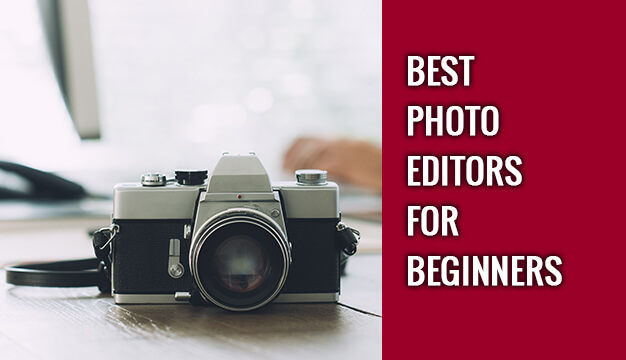
You'll need a photo editor to fix some mistakes and add adjustments, here are several lists of best photo editing software for beginners:
Try some and choose the most convenient one(s), don't force something popular on yourself if you don't like it.
 
Back
Top