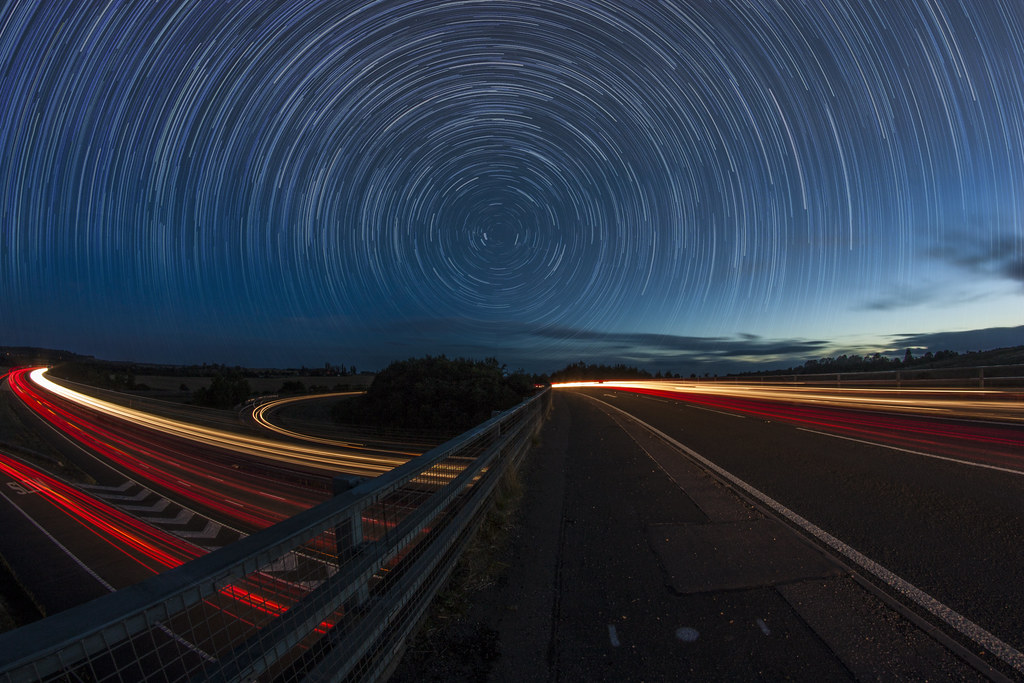
"No processing"

ghoti

Suspended / Banned
Messages
1,355
Edit My Images
Yes
Why is this often considered a good thing? That presenting a photo that hasn't been manually processed is somehow pure and to be strived for?
The important word here is "manually", and this leads me to my main point: ALL digital photos are "processed". If you shoot jpg, the photo is processed in camera using "safe" settings determined by the manufacturer. If you shoot RAW and run your picture through a default in a converter the picture is "processed" using settings determined by the software designers.
Manual processing (if you shoot RAW - jpg slightly different as that is processed automatically) puts you in control of that process. I don't understand why this is artistically impure. Surely it's worthier to do it yourself? You might make a dog's dinner of it, but it's your image. If you go "straight from camera" part of your image's worth belongs to your software manufacturer.
"Straight from camera" is the digital equivalent of taking your film to Boots when you have your own photo-lab right there in your house. Even more than that, having RAW conversion software (especially curves and saturation &c) is a bit like being able to design your own film. Why is this not a fantastic thing? Why isn't "straight from camera" the strategy that should be sneered at?

Talking purely of basic processing here. Actual manipulation - cloning and all that - is a different debate.

In summary: ALL of your photos are processed. It's just a question of whether you processed them yourself or whether you let Mr Nikon or Mr Canon and their cronies do it for you.
 
I wouldn't worry about it, as long as the end result your happy with that's all that matters.

Realspeed
 
Who says it is a good thing?
Lots of people. Both explicitly and implicitly.
I've seen it expressed in bare terms by people on this forum that anything other than straight out camera is cheating.
I don't think everyone thinks this, of course. That would be daft. But it's a common enough view that manual processing is cheating or, at least, is not artistically pure.
I think it's nonsense. For the reasons set out above.
 
It's a minority view, mostly held by newbies, I wouldn't (don't) worry too much about it - I do try to educate people to understand though.

Like you see it as being a largely digital phenomenon, where I see the 2 step process that's been photography ever since Fox-Talbot. Of course there was slide film, but even with that people manipulated the process to create different 'looks'.
 
You won't meet a single one of the "don't process" people who are actually competent in Photoshop. That says it all really.

They also, by and large, aren't very good photographers, either.
 
It's a minority view, mostly held by newbies, I wouldn't (don't) worry too much about it - I do try to educate people to understand though.

Like you see it as being a largely digital phenomenon, where I see the 2 step process that's been photography ever since Fox-Talbot. Of course there was slide film, but even with that people manipulated the process to create different 'looks'.
But even leaving aside the fact the very good argument serious photography has always been a two-stage process, you're* kidding yourself anyway if you think "straight from camera" is unprocessed. It's just been processed using Mr Nikon's (or whoever) man-made algorithms, without any creative input from you.

*not you, obviously, I mean third person "you"
 
And this too.

You won't meet a single one of the "don't process" people who are actually competent in Photoshop. That says it all really.

They also, by and large, aren't very good photographers, either.

It's a view largely held by people no good at photography who assume that their photo's aren't any good because they refuse to 'cheat':lol:
 
You won't meet a single one of the "don't process" people who are actually competent in Photoshop. That says it all really.

They also, by and large, aren't very good photographers, either.

^^ Spot on.....

Processing has been around since the dawn of time, it used to be done in the darkroom, now it's done on a computer.

What you have now though, is a lot of technophobics who have shunned technology for a long time and now won't PP because of pride and fear of failing to master it.

They'll probably also be using Nokia 6310's and claiming that "smartphones are for stupid people".

The irony is that digital camera's do a lot of processing internally before you even see the image.
 
Last edited:
I try and get it as right in camera a possible but as I shoot RAW only I have to do post on all my photos, I'll be honest and say in the past I only did minimal PP but that was because I was some what useless at it, in the last 12 months though I've made a real push to develop my photoshop skills and force myself to make use of layers etc

This is a recent one that went nut's on flickr


It's a Curved World (Explored) by mwhcvt, on Flickr

There's no way I'd have been able to complete this one without a hell of a lot of PP, this is actually made up of around 200 individual photos :eek: shot on 2 different cameras
 
You won't meet a single one of the "don't process" people who are actually competent in Photoshop. That says it all really.

They also, by and large, aren't very good photographers, either.

It is possible to be a very good photographer without the need of Photoshop or any other software.

I do all of my post processing with light and bits of oddly cut cardboard.


Steve.
 
It is possible to be a very good photographer without the need of Photoshop or any other software.

I do all of my post processing with light and bits of oddly cut cardboard.

Steve.
Edit: sorry. Misunderstood. I take it you do film processing/printing.
 
Last edited:
I do all of my post processing with light and bits of oddly cut cardboard.

In which case you're processing and doing exactly the same stuff some people say is cheating if done in PS, this is the point the silly 'processing is cheating' gang all miss by a mile.


You won't meet a single one of the "don't process" people who are actually competent in Photoshop. That says it all really.

They also, by and large, aren't very good photographers, either.

This. :)
 
Lots of people. Both explicitly and implicitly.
I've seen it expressed in bare terms by people on this forum that anything other than straight out camera is cheating.

Don't agree. It is rarely raised seriously and whenever it is it is soon knocked back. Bit of a non-issue based on that.
 
There's nothing to disagree with, he's saying it's been expressed which is a 100% fact.

I am not saying it has never been seen, just that it is rarely seen and soon responded to. It is a non-issue like I said.
 
I regularly get "that is a nice shot if you didnt use photoshop..."
 
I think part of the problem is that for a lot of people photoshop(ing) has become something bad.
We all know that magazines have photoshopped models so they look thinner & have perfect skin. newspaper stories where photographs have been manipulated to suite the story.
When we look at photographs like these http://www.thepoke.co.uk/2013/04/25/extreme-animal-hybrids-photoshop-edition/ that we all know are fake but still look believable then you can understand why a lot of people think photshopping is bad.

Maybe we should just say it is post proccesing
 
I am not saying it has never been seen, just that it is rarely seen and soon responded to. It is a non-issue like I said.
My main point, which has been somewhat overlooked, concerns the fact that post-processing is completely inescapable. If you don't post-process manually then you're just letting an algorithm do it for you. There is no such thing as an unprocessed image.
The question is: does this make a "straight from camera" shot actually less artistically worthy? Okay you maybe got the composition and lighting right, but you've handed the processing over to your software designer.
 
The question is: does this make a "straight from camera" shot actually less artistically worthy? Okay you maybe got the composition and lighting right, but you've handed the processing over to your software designer.

Less artistically worthy than a shot that has been through Photoshop? Of course not.

Although artistic worthiness can be added to any shot, it all depends what the artist is trying to achieve doesn't it?
 
Last edited:
All digital photographs are processed somehow. If you shoot RAW the processing may be more obvious but if you shoot JPEG's you're getting the processing that a bunch of engineers at Canon or Nikon have decided looks nice.

If you shoot film the processing the image undergoes should be obvious as should its effect on how the final image looks and of course your choice of film can have a major effect on the look of the final image.

I think that there's a difference between processing for aesthetic reasons and to misrepresent and mislead. For example fiddling with the contrast and saturation of a landscape shot is perfectly fine IMVHO, as is cloning out a stray bit of paper that blew into shot, cloning out dust spots or even power lines...

However, if you take a shot of a military aircraft and add some small details like a few bombs falling from it and then attempt to sell it to the BBC that's a very bad thing IMVHO.
 
technically with film thats still "processing".

different film development/processing gives different effects/results..

I know, that's my point. It's handing control over that aspect (post-processing) of your work to a third party.
 
Less artistically worthy than a shot that has been through Photoshop? Of course not.

Although artistic worthiness can be added to any shot, it all depends what the artist is trying to achieve doesn't it?
Why "of course not"?
If you don't post-process manually then you have essentially handed over control of that aspect of your image to a third party; namely your software designer. I'm talking about basic adjustments here - curves, contrast, saturation, et al. Not whole scale image manipulation.
 
To quote one of the great modern day photographers

"You don't take a photograph, you make it."

"Dodging and burning are steps to take care of mistakes God made in establishing tonal relationships."

Both by a certain Ansel Adams
 
No, why would it?
Because you've given up a layer of control to a third party.
It doesn't make it artistically worthless by any stretch of the imagination, but it would always be better, in my opinion, to know that the artist hadn't just handed control of those aspects of their image to software.

If you take your photo "straight from camera" you are essentially using a preset.
 
Because you've given up a layer of control to a third party.
It doesn't make it artistically worthless by any stretch of the imagination, but it would always be better, in my opinion, to know that the artist hadn't just handed control of those aspects of their image to software.

I have to admit that's the most bizarre way of looking at this I've ever read. DSLR designers don't sit there and think... 'Hmm... Well I personally like high contrast highly saturated images so that's what I'm going to make this DSLR's default output look like'. No artistic control whatsoever has been taken away from you by not processing; it's still you clicking the shutter release, still you producing the image and still your fault whether it's good or crap. All the camera designers have done is give you a tool in order to do that.
 
Because you've given up a layer of control to a third party.
It doesn't make it artistically worthless by any stretch of the imagination, but it would always be better, in my opinion, to know that the artist hadn't just handed control of those aspects of their image to software.

If you take your photo "straight from camera" you are essentially using a preset.

[Devils Advocate]

Isn't this akin to saying that film photographers handed over artistic control to the chemists at Fuji or Kodak?

If i have been using the same camera make for years and understand how the camera processes, is my picture built on this knowledge less artistically worthy?

[/Devils Advocate]
 
[Devils Advocate]

Isn't this akin to saying that film photographers handed over artistic control to the chemists at Fuji or Kodak?

If i have been using the same camera make for years and understand how the camera processes, is my picture built on this knowledge less artistically worthy?

[/Devils Advocate]
In a sense, yes. Although it is far less easy to design and manufacture your own film, of course. But if if was easy then you would be justified in saying more artistic control had been exercised by a photographer who HAD designed his or her own film.
 
Why even worry about it? The images that come from your camera come from you, not the designers sitting in an office in Japan somewhere or anyone else. This is kind of like saying you'd have more control over how your car runs if it didn't have an engine and you pushed it everywhere; it needs an engine to work and there's no way round that, digital cameras need a degree of processing to work and there's no way round that either.

You are your own artist, nothing and no-one can ever take anything away from you that you've created.
 
I have to admit that's the most bizarre way of looking at this I've ever read. DSLR designers don't sit there and think... 'Hmm... Well I personally like high contrast highly saturated images so that's what I'm going to make this DSLR's default output look like'.
Well...they kind of do in a loose sense. Your digital camera processes images to a set of contrast, saturation, etc parameters that are decided by the software design team as a "best fit" for the majority of images. The option is open to you to take control of that (to a large degree) yourself by shooting RAW and post-processing the conversion, rather than going with the camera or software default.
 
Why even worry about it? The images that come from your camera come from you, not the designers sitting in an office in Japan somewhere or anyone else. This is kind of like saying you'd have more control over how your car runs if it didn't have an engine and you pushed it everywhere; it needs an engine to work and there's no way round that, digital cameras need a degree of processing to work and there's no way round that either.

You are your own artist, nothing and no-one can ever take anything away from you that you've created.

It's not like saying that at all. If anything, it's like saying that you'd have more control over how the car runs if you built the engine yourself. Which you would. But it's impractical.

Look at it this way: if you shot film, what is more creative - taking your film to boots for their one-size-fits-all processing (this is what your dSLR does)? Or doing the processing in your own darkroom to satisfy your own particular vision?
 
It depends on what your needs are, if you have what you want without additional processing then why do more to it? If you need to process then do so.

You've made a massive question out of something where there's really no question to be asked. The most creative photo is the one that looks the most like what you saw in your mind's eye when you took it, how you arrived at that photo doesn't matter in the slightest.
 
I have to admit that's the most bizarre way of looking at this I've ever read. DSLR designers don't sit there and think... 'Hmm... Well I personally like high contrast highly saturated images so that's what I'm going to make this DSLR's default output look like'. No artistic control whatsoever has been taken away from you by not processing; it's still you clicking the shutter release, still you producing the image and still your fault whether it's good or crap. All the camera designers have done is give you a tool in order to do that.

Eh? Of course the manufacturers decide what the image should look like. Why do you think that some makes like Fuji and Olympus are praised for producing lovely JPEG's whilst others are criticised.

Denying that this happens is simply.... bizarre. Of course someone at Olympus, Fuji, Canon and everywhere else has decided what changes should be made to RAW files to produce they JPEG output that they want.
 
Eh? Of course the manufacturers decide what the image should look like. Why do you think that some makes like Fuji and Olympus are praised for producing lovely JPEG's whilst others are criticised.

You missed my point. They generally try make the images look neutral if there's no in-camera processing (like contrast, saturation, etc) applied rather than giving them a specific style, hence my high contrast high saturation example.
 
Last edited:
Back
Top