

You are using an out of date browser. It may not display this or other websites correctly.
You should upgrade or use an alternative browser.
You should upgrade or use an alternative browser.
Nikon D7xxx owners thread
- Thread starter tim_uk
- Start date


redhed17
Suspended / Banned
- Messages
- 7,316
- Edit My Images
- Yes
For AF fine tuning the metering mode has nothing to do with it, that only affects exposure, and how the camera measures the exposure. Whatever metering mode you choose is irrelevant afaik. I would think you would need your widest aperture and good light so as to give the camera the best chance to focus, and to easily tell when it has missed focus, but that depends on how you are fine tuning the AF, internally, or with a external calibration device.When af fine tuning should the camera be set to spot metering ? If not what mode will give the more meaningful remote

Bobsyeruncle
Suspended / Banned
- Messages
- 17,422
- Name
- Bob
- Edit My Images
- Yes
Can't you claim on your house insurance for a repair/new camera?After a leak in the cupboard where my D7000 was kept and my reat screen no longer working, I no longer use mine and now use my D700 exclusively.
Anyone still shooting with a D7000?
Yep, great camera. Having issues with 18-105 on it though. May try out the fine tuning. Upgrading to D7200 but keeping 7000 as back up.

metroman
Suspended / Banned
- Messages
- 1,298
- Name
- Brian
- Edit My Images
- Yes
Mine gave a little trouble yesterday, there was a shudder on pressing the shutter and then Err came up, it's done this before and always on cold days. I took the lens off and pressed the shutter without a lens and all is well until I go to use it again and I had to abandon using it and revert to mt D300 backup camera.
I will look at it in the home environment later today and see if it's ok in a warmer environment.
I will look at it in the home environment later today and see if it's ok in a warmer environment.

chuckles
Suspended / Banned
- Messages
- 4,470
- Name
- Barry
- Edit My Images
- Yes
Mine gave a little trouble yesterday, there was a shudder on pressing the shutter and then Err came up, it's done this before and always on cold days. I took the lens off and pressed the shutter without a lens and all is well until I go to use it again and I had to abandon using it and revert to mt D300 backup camera.
I will look at it in the home environment later today and see if it's ok in a warmer environment.
I tend to shudder in the cold too

A while ago I sold my D750 and obtained a Sony A6000 in an attempt to use a camera more, the theory being it was smaller and lighter to carry everywhere. I never really got on with such a small package, finding the handling a bit fiddly so it’s hardly been used. Also had some illness in the family that took me away from photography so am now looking to get back into it.
I have a Go Pro Hero 7 I can use for some interesting pictures or video if I want a small package now so am thinking of selling the Sony and getting another dslr.
I kept my Nikon 50mm f1.8 and also have a spare battery from the D750 which I believe will fit the D7200/7500 so it makes sense to get one of those (although I’m also tempted by a canon 80d as I had a Canon 20d many years ago and really enjoyed using that).
Both the Sigma and Tamron 17-50 f2.8 can be obtained for not very much money at all on the grey market, does anyone here use them / what would be the better choice?
Thank you!
I have a Go Pro Hero 7 I can use for some interesting pictures or video if I want a small package now so am thinking of selling the Sony and getting another dslr.
I kept my Nikon 50mm f1.8 and also have a spare battery from the D750 which I believe will fit the D7200/7500 so it makes sense to get one of those (although I’m also tempted by a canon 80d as I had a Canon 20d many years ago and really enjoyed using that).
Both the Sigma and Tamron 17-50 f2.8 can be obtained for not very much money at all on the grey market, does anyone here use them / what would be the better choice?
Thank you!

Mozziephotography
Suspended / Banned
- Messages
- 1,850
- Name
- Stephen
- Edit My Images
- Yes
D7200 is a steal at the moment from e-infinity. Looking to buy another one and SAVE it for when my old one conks out. It's a brilliant camera.
D7200 is a steal at the moment from e-infinity. Looking to buy another one and SAVE it for when my old one conks out. It's a brilliant camera.
Yes I noticed that price earlier, seems a bargain and would be less than £250 to change if I sell the A6000!

snerkler
Suspended / Banned
- Messages
- 26,078
- Name
- Toby
- Edit My Images
- No
Not according to the user manual, just has the same 4 displays as the D7200 i.e. Info on, info off, virtual horizon and grid lines.Hi,
quick Q: does D7500 support histogram in LV ? D7200 not ... I am considering to upgrade my D7200 -> D7500 and I was always missing this feature
thanks, ~dan

firewireguy
Suspended / Banned
- Messages
- 642
- Edit My Images
- Yes
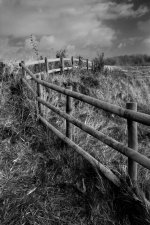
I've owned the D7100 since the day it was released. Took it for a walk yesterday for the first time in a while. And while I'm moderately happy with the results, I think the time has come to finally put it to rest and catch up with the rest of the world.
Last edited:
Mozziephotography
Suspended / Banned
- Messages
- 1,850
- Name
- Stephen
- Edit My Images
- Yes
I've had most of the the D7*** range and still have the D7500. Bought a Canon M50 for a walk round camera but have a Nikon 24mm pre D series lens on it. How will an upgrade improve your photography ... think about this before you splash out on an upgrade. Happy snapping.I've owned the D7100 since the day it was released. Took it for a walk yesterday for the first time in a while. And while I'm moderately happy with the results, I think the time has come to finally put it to rest and catch up with the rest of the world.
View attachment 408910
I've had most of the the D7*** range and still have the D7500 ...
Hi, then you might be able to shed a light on if D7500 has a histogram while shooting stills in LV (see please my question 4 posts above) .. According to internet it seems it does but according to manual it doesn't seem like. D7200 doesn't support histogram (with any firmware version) while shooting stills in LV .. thanks much in forward ...
Mozziephotography
Suspended / Banned
- Messages
- 1,850
- Name
- Stephen
- Edit My Images
- Yes
You've taught me something. Didn't realise it could do this. Watched a you tube video and hey presto, it works!
Mozziephotography
Suspended / Banned
- Messages
- 1,850
- Name
- Stephen
- Edit My Images
- Yes
Here we go, evidence.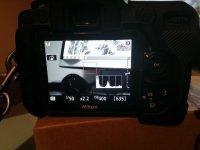
firewireguy
Suspended / Banned
- Messages
- 642
- Edit My Images
- Yes
I appreciate that. I guess my thoughts are similar to those of everyone else who has already made the switch. No AF fine tune, live view, articulating screen, much cleverer electrics, ISO noise, video recording improvements.I've had most of the the D7*** range and still have the D7500. Bought a Canon M50 for a walk round camera but have a Nikon 24mm pre D series lens on it. How will an upgrade improve your photography ... think about this before you splash out on an upgrade. Happy snapping.
If I were to stick with DSLR I'd want to be switching to full frame rather than D7500 or D500 for the ISO improvements, but that would mean changing my main 17-55 2.8 lens also, so either mirrorless or DSLR are a big change and I figure the Z system is here to stay longer.
My only reservation is I have a 50mm Sigma Macro lens which is really nice and at an equivalent FOV of 75mm worked great on crop sensors. But it is screw drive so will become manual focus with an FTZ. My plan is to try it as a MF lens, but will probably go for a Sigma 105 macro and an FTZ.
Oh, second reservation is the ergonomics of the new bodies. But I really don't like the D7100 either from that POV. I adored the D2H ergonomics and from that to a D300 was a definite downgrade, and then to the D7100 was another leap down. From what I can tell the Z6 makes a lot sense and offers a lit of configurability as to what buttons do what, coupled with a touch screen and joystick I think would be a big step up from the D7100.
The depth of the hand grips (horizontal and vertical) on the D2H were a dream. I could hold that on my fingertips really securely all day. And the speed! I miss it even if the images from it were not the greatest.
Mozziephotography
Suspended / Banned
- Messages
- 1,850
- Name
- Stephen
- Edit My Images
- Yes
Owning a £5000 camera such as a Leica would make no difference to my ability as a photographer. Really happy with my first camera, a D7000 and money spent on travel rather than gear.

shapeshifter
Suspended / Banned
- Messages
- 1,444
- Edit My Images
- Yes
With the D7100 24mp, you need to sharpen the photos. Sharpen the above and more detail will be shown in the wood and greater seperation in the grass will also show up. The D7100 has such high pixel density it benefits from sharpening in most circumstances.I've owned the D7100 since the day it was released. Took it for a walk yesterday for the first time in a while. And while I'm moderately happy with the results, I think the time has come to finally put it to rest and catch up with the rest of the world.
View attachment 408910

TVRTim
Suspended / Banned
- Messages
- 1,012
- Name
- Tim
- Edit My Images
- Yes
I was going through some old images on my hard drives and on Flickr, I really enjoyed the shots I had taken with a D7200, I got quite nostalgic about them and was pleased with how well the quality of them stacked up against my current cameras.
I honestly believe that they are better than what I'm getting from my Canon R7. So much so, I have bought another D7200 I found one on ebay with a shutter count of 553, it comes with a nikkor 18-105, added to that I've bought a 35mm 1.8 G to go with it.
I'm looking forward to getting out with it at the weekend. Bloody nostalgia
I honestly believe that they are better than what I'm getting from my Canon R7. So much so, I have bought another D7200
I found one on ebay with a shutter count of 553, it comes with a nikkor 18-105, added to that I've bought a 35mm 1.8 G to go with it.I'm looking forward to getting out with it at the weekend. Bloody nostalgia
Mozziephotography
Suspended / Banned
- Messages
- 1,850
- Name
- Stephen
- Edit My Images
- Yes
The D7200 is a cracking camera. I started my return to photography in 2013 with a D7000. Took it on a trip to India and well chuffed with the images it produced. Dropped it in a river and not a sign of any problems.

macvisual
Suspended / Banned
- Messages
- 7,193
- Name
- Peter
- Edit My Images
- No
Just pulled the trigger on a minty/as new D700 body. Is there a dedicated D700 thread on here I wonder..?£300 from most shops for a good D700. If you meant D7000 it would be less.
Cheers.
peter
Not sure how active this thread is, but I have a D7200 and am hoping to start using it as more than just a point-and-shoot, so trying to work out it's (many) settings. Does anyone have any tips about some easy settings (I've got back button focus, single point autofocus and auto ISO limits set up)? I'm thinking about the programmable settings more, I think (though any tips about anything obvious I have missed would also be welcomed!). Thanks!
Mozziephotography
Suspended / Banned
- Messages
- 1,850
- Name
- Stephen
- Edit My Images
- Yes
Have a play with setting up the U1 and U2 "modes".
Yes, it was the U1 / U2 modes I was really thinking about - but I'm a bit thick when it comes to what to do with them! Is it just for storing ISO/AP/Speed for specific purposes?Have a play with setting up the U1 and U2 "modes".
Don't use manual to start with.
Try aperture priority, setting it for about f/7 for general pictures. Minimum shutter speed about 1/125 on auto-iso. Lower aperture number if you want to blur the background or get more light on the sensor (inside or in the dark).
For wildlife, use shutter priority or push up the minimum shutter speed a lot.
Set it up so you can see the histogram on replay and learn how to get the exposure right for the picture you want to take. The camera will probably want to over or under expose some pictures depending upon the exposure settings so you will have to learn how to adjust for that (the +/- button). Start with matrix management but also look at single point exposure, where the camera exposes based upon the light at the focus point when you press the shutter. This will seem really hard so...
Don't obsessed about settings. It is easy to spend a lot of time learning and playing about with settings. A boring scene taken with perfect camera control is still a boring scene (it may even be extra-boring). A fabulous scene taken badly will be better. So if you find the settings getting in the way, switch back to auto.
The D7200 has a bunch of scene modes which you can use as a cheat sheet. Put it in the scene mode and note the aperture and shutter speed. When you point it at something brighter or darker, what changes? If the aperture is fixed at f/9 in landscape mode, that is aperture priority at f/9 because you probably want a good depth of field.
Try aperture priority, setting it for about f/7 for general pictures. Minimum shutter speed about 1/125 on auto-iso. Lower aperture number if you want to blur the background or get more light on the sensor (inside or in the dark).
For wildlife, use shutter priority or push up the minimum shutter speed a lot.
Set it up so you can see the histogram on replay and learn how to get the exposure right for the picture you want to take. The camera will probably want to over or under expose some pictures depending upon the exposure settings so you will have to learn how to adjust for that (the +/- button). Start with matrix management but also look at single point exposure, where the camera exposes based upon the light at the focus point when you press the shutter. This will seem really hard so...
Don't obsessed about settings. It is easy to spend a lot of time learning and playing about with settings. A boring scene taken with perfect camera control is still a boring scene (it may even be extra-boring). A fabulous scene taken badly will be better. So if you find the settings getting in the way, switch back to auto.
The D7200 has a bunch of scene modes which you can use as a cheat sheet. Put it in the scene mode and note the aperture and shutter speed. When you point it at something brighter or darker, what changes? If the aperture is fixed at f/9 in landscape mode, that is aperture priority at f/9 because you probably want a good depth of field.
Thanks very much for this! I am def guilty of getting scared and jumping back to auto as soon as it is important and I am trying to stop that from happening (quite) as often. The tip about using aperture priority except for wildlife is useful as I am heading of on safari next month. I've only really used manual to try to get some pics of the moon (which was surprisingly successful) and the Aurora Borealis in May last year, when it was visible UK-wide (vaguely successful, but needed a tripod which I didn't have available).Don't use manual to start with.
Try aperture priority, setting it for about f/7 for general pictures. Minimum shutter speed about 1/125 on auto-iso. Lower aperture number if you want to blur the background or get more light on the sensor (inside or in the dark).
For wildlife, use shutter priority or push up the minimum shutter speed a lot.
Set it up so you can see the histogram on replay and learn how to get the exposure right for the picture you want to take. The camera will probably want to over or under expose some pictures depending upon the exposure settings so you will have to learn how to adjust for that (the +/- button). Start with matrix management but also look at single point exposure, where the camera exposes based upon the light at the focus point when you press the shutter. This will seem really hard so...
Don't obsessed about settings. It is easy to spend a lot of time learning and playing about with settings. A boring scene taken with perfect camera control is still a boring scene (it may even be extra-boring). A fabulous scene taken badly will be better. So if you find the settings getting in the way, switch back to auto.
The D7200 has a bunch of scene modes which you can use as a cheat sheet. Put it in the scene mode and note the aperture and shutter speed. When you point it at something brighter or darker, what changes? If the aperture is fixed at f/9 in landscape mode, that is aperture priority at f/9 because you probably want a good depth of field.
Histograms are still a dark art for me, so I need to learn how to use them and make good decisions from what they tell me!
Try this chap's YouTube channel:
 youtube.com
His work on how to take wildlife pictures is really good.
I'd set up U1 for general photographs and U2 specifically for what you are after (wildlife?) so you can switch quickly if something interesting happens.
If you haven't been down your local park/beach and taken lots of pictures of the wildlife and dogs then please do that a lot before you go on safari. In lots of different conditions including bright sunlight and dusk. You've got a month to make mistakes which you won't regret. If you post pictures on the wildlife section with the exif data on them people will be very happy to help.
Simon d'Entremont
My name is Simon d'Entremont and I'm a Canon Ambassador as well as a Kase Filters Ambassador, and a nature and wildlife photographer living in Nova Scotia, Canada. I’m a photographer first, YouTuber second, and my mission is to lift the knowledge, skills, and spirits of the people around me so...
youtube.com
His work on how to take wildlife pictures is really good.
I'd set up U1 for general photographs and U2 specifically for what you are after (wildlife?) so you can switch quickly if something interesting happens.
If you haven't been down your local park/beach and taken lots of pictures of the wildlife and dogs then please do that a lot before you go on safari. In lots of different conditions including bright sunlight and dusk. You've got a month to make mistakes which you won't regret. If you post pictures on the wildlife section with the exif data on them people will be very happy to help.
Thanks for advice - I will try to find some time to practice with the lenses I will be taking with me so I can work out what's possible and how best to set up the U1/U2 options. I'll also have to get the courage to post my (generally extremely imperfect) shots to get feedback on how to improve!Try this chap's YouTube channel:
Simon d'Entremont
My name is Simon d'Entremont and I'm a Canon Ambassador as well as a Kase Filters Ambassador, and a nature and wildlife photographer living in Nova Scotia, Canada. I’m a photographer first, YouTuber second, and my mission is to lift the knowledge, skills, and spirits of the people around me so...
His work on how to take wildlife pictures is really good.
I'd set up U1 for general photographs and U2 specifically for what you are after (wildlife?) so you can switch quickly if something interesting happens.
If you haven't been down your local park/beach and taken lots of pictures of the wildlife and dogs then please do that a lot before you go on safari. In lots of different conditions including bright sunlight and dusk. You've got a month to make mistakes which you won't regret. If you post pictures on the wildlife section with the exif data on them people will be very happy to help.