Nikon CEO confirms they are working on a pro mirrorless system.

The Sony A9 sensor was chosen because it was the best compromise to select for a high speed sports camera. It's dynamic range is in fact quite poor by any modern standard. But it is most definitely "Fit for Purpose"
Poor? It's better than the 1dx2 and d5
 
Someone back along in the posts said that in order to provide FF coverage the lanses had to be big - not at all. I was lucky enough to be an ambassador for Hasselblad, and had an X-pan given to me to use with 30mm, 45mm and 90mm lenses. I know absolutely NOTHING about lens design. Much of what you lot have been arguing about has gone right over my head because I don't have a clue what you were talking about. I am and have been a photographer, not a lens designer. All I knew was what kind of picture a certain lens produced and I went out and made pictures - I didn't need to know about retro focus (whatever that is - I didn't know my Nikon lenses with the D4s had it!!)

What I do know is, the X-pan was no bigger than my FE2 or FA, in body size, but without the great prism on the top. The 90mm lens was about the same size as an Actimel bottle, maybe a little smaller....the 45 lens was, predictably, half as long physically as well as focal length wise. The 30 was no bigger than the wide angle adaptor for my Coolpix P7800 (which I still love and have a full bleed DPS in Saltwater Boat Angling this current month from, I have had several front covers from it too). Now, the crux of me saying about the size of these lenses, with regard to the Full Frame argument is this - those lenses had the image circle to cover a 6x7 frame, because the X-pan used 35mm film to produce a masked off panoramic picture from a 6x7, instead of throwing away a slice of roll film from each side of the mask (RZ had a panoramic mask adaptor film carrier to allow the use of 35mm film through the monster body).

If those lenses can cover TWICE the image circle of a 35mm full frame, certainly they can produce one nowadays to cover half that (Full Frame) in a mirrorless system. The X-pan was a rangefinder camera, but how that differs from a mirrorless I have absolutely no idea - I just looked through the viewfinder and pressed the tit. Magic happened and I got paid.....!

 
Depends on which criteria you're using to make that statement.

Or are you saying it's better at everything than those two cameras.

Why is Nikon even considering mirrorless?
To compete with Sony, Fuji etc and to try and retain existing customers, no matter which way you spin it, mirrorless has far greater advantages than a DSLR.
The DR is not that far behind the A7RII and that is no slouch for DR/ISO.

There have been so many professionals who have moved to Fuji / Sony from Canon and Nikon systems, there is a reason why.

If Nikon thought mirrorless technology wasn't going to be the future they wouldn't have made this announcement.
 
Why is Nikon even considering mirrorless?
To compete with Sony, Fuji etc and to try and retain existing customers, no matter which way you spin it, mirrorless has far greater advantages than a DSLR.
The DR is not that far behind the A7RII and that is no slouch for DR/ISO.

There have been so many professionals who have moved to Fuji / Sony from Canon and Nikon systems, there is a reason why.

If Nikon thought mirrorless technology wasn't going to be the future they wouldn't have made this announcement.
I don't think anyone's disputed that mirrorless is the future, but just that some people do prefer certain things DSLR give and that won't change. Just like some people prefer analogue controls over digital etc etc. For me using an OVF is a nicer experience than EVF regardless of the indisputable benefits of EVF. But at some point I'll have to resign myself to full time EVF use.
 
I don't think anyone's disputed that mirrorless is the future, but just that some people do prefer certain things DSLR give and that won't change. Just like some people prefer analogue controls over digital etc etc. For me using an OVF is a nicer experience than EVF regardless of the indisputable benefits of EVF. But at some point I'll have to resign myself to full time EVF use.

I agree totally, I guess it's just how technology progresses sometimes.... manual gearboxes are being replaced by auto these days.
 
Last edited:
No it is not. The 1dx2 has more DR all the way till 1600 iso.

But with the EVF you can expose correctly with little reason to apply DR adjustments during post-processing ;)
 
Last edited:
Someone back along in the posts said that in order to provide FF coverage the lanses had to be big - not at all. I was lucky enough to be an ambassador for Hasselblad, and had an X-pan given to me to use with 30mm, 45mm and 90mm lenses. I know absolutely NOTHING about lens design. Much of what you lot have been arguing about has gone right over my head because I don't have a clue what you were talking about. I am and have been a photographer, not a lens designer. All I knew was what kind of picture a certain lens produced and I went out and made pictures - I didn't need to know about retro focus (whatever that is - I didn't know my Nikon lenses with the D4s had it!!)

What I do know is, the X-pan was no bigger than my FE2 or FA, in body size, but without the great prism on the top. The 90mm lens was about the same size as an Actimel bottle, maybe a little smaller....the 45 lens was, predictably, half as long physically as well as focal length wise. The 30 was no bigger than the wide angle adaptor for my Coolpix P7800 (which I still love and have a full bleed DPS in Saltwater Boat Angling this current month from, I have had several front covers from it too). Now, the crux of me saying about the size of these lenses, with regard to the Full Frame argument is this - those lenses had the image circle to cover a 6x7 frame, because the X-pan used 35mm film to produce a masked off panoramic picture from a 6x7, instead of throwing away a slice of roll film from each side of the mask (RZ had a panoramic mask adaptor film carrier to allow the use of 35mm film through the monster body).

If those lenses can cover TWICE the image circle of a 35mm full frame, certainly they can produce one nowadays to cover half that (Full Frame) in a mirrorless system. The X-pan was a rangefinder camera, but how that differs from a mirrorless I have absolutely no idea - I just looked through the viewfinder and pressed the tit. Magic happened and I got paid.....!


You have pretty much said it yourself. Those lenses were designed for use in a camera with out a mirror box. They had no need of designs ( retro focus) to artificially extend the back focus. This is ever more exaggerated in wide angle lenses for Dslr cameras, which are enormous compared to a non Dslr lens of the same focal length and aperture.
This is of course why Aps mirrorless cameras and lenses like fuji are relatively small. And why leica FF lenses are equally small.
It is actually much more difficult and expensive to make a high quality DSLR lens,

Medium format lenses for cameras with movements have problems of coverage and vignetting to solve, and are constructed more like large format lenses, usually of symetrical design and very often with something of an hour glass shape, with an oversize fron element.

At least mirrorless cameras will lead to simpler and better lens designs. But will need to take into account the difficulties of even light coverage on sensors, that are covered in micro lenses. One can even expect to see some novel new constructions.
 
To be honest though, this isn't an announcement or confirmation from Nikon. The CEO has said in interview that they'd like to do something to compete with camera phones using industrial hardware (depending on which translation you read). It appears to be more of an off the cuff remark with no actual facts or basis behind it so it may be better not getting ahead of yourselves.

As someone said before, companies like CaNikon won't savage their existing money-makers (all levels of DSLR), just to please those that want a mirrorless option. If someone wants to shoot Nikon glass on mirrorless, use any of the current offerings from FF to M4/3rds.
 
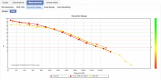
Depends where you get your info from I guess

View attachment 105951

I prefer Bill's results (link I posted) because his method is fully transparent and anyone can reproduce his results. Plus you can contact him personally and he'll happily answer and clarify all your doubts.
In absence of all other resource I resort to dxomark.

I would suggest you too have a look at his literature and use his graphs over DXO they are more accurate.
 
Last edited:
I prefer Bill's results (link I posted) because his method is fully transparent and anyone can reproduce his results. Plus you can contact him personally and he'll happily answer and clarify all your doubts.
In absence of all other resource I resort to dxomark.

I would suggest you too have a look at his literature and use his graphs over DXO they are more accurate.
I'm not that hung up on the odd 0.1 ev tbh, it's just a rough guide for me. I was just pointing out that there are different charts giving different info (y)
 
But with the EVF you can expose correctly with little reason to apply DR adjustments during post-processing ;)
am I missing something here,doesnt the meter indicate correct exposure apart from when adding subtracting with ex comp?
 
am I missing something here,doesnt the meter indicate correct exposure apart from when adding subtracting with ex comp?

you'll also see exactly how much or how little DOF is present. which takes away some of the guess work & chimping.
 
you'll also see exactly how much or how little DOF is present. which takes away some of the guess work & chimping.
Most DSLRs have DOF preview, no guesswork. The only time it falls down is if the light's low as it can make it difficult to see. However, who stops down lenses ;) :p

I don't have to do any more reshooting with my D750 compared to my EM1 due to bad exposure, wrong DOF etc etc.
 
Last edited:
you'll also see exactly how much or how little DOF is present. which takes away some of the guess work & chimping.

Phew good thing there's live view or a dof button for people who actually change aperture.
 
Most DSLRs have DOF preview, no guesswork. The only time it falls down is if the light's low as it can make it difficult to see. However, who stops down lenses ;) :p

not if i can help it!

but it doesn't show you exactly how the image has rendered until you take the camera away from you face and review it.
 
Phew good thing there's live view or a dof button for people who actually change aperture.

im not going to get involved in the argument over evf vs ovf, as its just subjective. having used both i know of the benefits and disadvantages of each and i know which I prefer.
 
not if i can help it!

but it doesn't show you exactly how the image has rendered until you take the camera away from you face and review it.

Why's that? Can't you push the button while looking through the ovf?
 
im not going to get involved in the argument over evf vs ovf, as its just subjective. having used both i know of the benefits and disadvantages of each and i know which I prefer.

Exactly. Both have pluses and minuses.
 
The graphic you linked to shows that the 1DX MkII has more DR than the A9 up to around ISO 1600 and that the D5 has more above 3200.

So it doesn't really support the fact that you disagree with twists post.
you and I must be seeing different things then. At base ISO A9 is higher and then again overtakes 1DXii around ISO640.
 
not if i can help it!

but it doesn't show you exactly how the image has rendered until you take the camera away from you face and review it.
Tbh viewing through the EVF still looks different to reviewing on the LCD which again looks different to viewing on my laptop anyway due to being able to see clearer on a larger screen. How many times have you reviewed a shot on the LCD and really liked it only to be disappointed when you've looked at it on the computer? That's even more magnified looking at the small EVF.

I'm not disputing the benefits of EVF, but the reality (for me at least) is that exposure preview doesn't really give me any benefits in day to day shooting.

That being said there was one time at the Photography show when I'd been trying out some studio lights and so had ISO fixed on 100 and forgot to change it back to Auto and ruined a series of shots of the Star Wars characters walking through from Comicon :facepalm: But for those times I'm not being a total muppet I don't find it any more beneficial ;)
 
Someone back along in the posts said that in order to provide FF coverage the lanses had to be big - not at all. I was lucky enough to be an ambassador for Hasselblad, and had an X-pan given to me to use with 30mm, 45mm and 90mm lenses. I know absolutely NOTHING about lens design. Much of what you lot have been arguing about has gone right over my head because I don't have a clue what you were talking about. I am and have been a photographer, not a lens designer. All I knew was what kind of picture a certain lens produced and I went out and made pictures - I didn't need to know about retro focus (whatever that is - I didn't know my Nikon lenses with the D4s had it!!)

What I do know is, the X-pan was no bigger than my FE2 or FA, in body size, but without the great prism on the top. The 90mm lens was about the same size as an Actimel bottle, maybe a little smaller....the 45 lens was, predictably, half as long physically as well as focal length wise. The 30 was no bigger than the wide angle adaptor for my Coolpix P7800 (which I still love and have a full bleed DPS in Saltwater Boat Angling this current month from, I have had several front covers from it too). Now, the crux of me saying about the size of these lenses, with regard to the Full Frame argument is this - those lenses had the image circle to cover a 6x7 frame, because the X-pan used 35mm film to produce a masked off panoramic picture from a 6x7, instead of throwing away a slice of roll film from each side of the mask (RZ had a panoramic mask adaptor film carrier to allow the use of 35mm film through the monster body).

If those lenses can cover TWICE the image circle of a 35mm full frame, certainly they can produce one nowadays to cover half that (Full Frame) in a mirrorless system. The X-pan was a rangefinder camera, but how that differs from a mirrorless I have absolutely no idea - I just looked through the viewfinder and pressed the tit. Magic happened and I got paid.....!

Format size is only one factor that determines the physical size/weight of a lens - focal length is another and probably aperture is the most significant, eg f/1.4 gathers 8x more light than f/4. Also, really good lenses (eg Sigma Art, or Zeiss Otus) with a high standard of correction need a lot of big and heavy glass. The Hasselbald XPan lens is 45mm f/4, and the new lenses for the X1D are also f/4 because they have in-lens leaf shutters running at a very fast 1/2000sec - very fast for a leaf shutter. Leaf shutters, big apertures and fast speeds don't go well together, and they also impose other optical restrictions.
 
Tbh viewing through the EVF still looks different to reviewing on the LCD which again looks different to viewing on my laptop anyway due to being able to see clearer on a larger screen. How many times have you reviewed a shot on the LCD and really liked it only to be disappointed when you've looked at it on the computer? That's even more magnified looking at the small EVF.

I'm not disputing the benefits of EVF, but the reality (for me at least) is that exposure preview doesn't really give me any benefits in day to day shooting.

That being said there was one time at the Photography show when I'd been trying out some studio lights and so had ISO fixed on 100 and forgot to change it back to Auto and ruined a series of shots of the Star Wars characters walking through from Comicon :facepalm: But for those times I'm not being a total muppet I don't find it any more beneficial ;)

my photos are equally disappointing on both the lcd and cpu ;)
 
you and I must be seeing different things then. At base ISO A9 is higher and then again overtakes 1DXii around ISO640.


That all depends on which source is used... but tbh it's so damn close there's no clear winner when looking at both sources.
 
Last edited:
Well the info i saw showed A9 have beter dynamic range than the 1dx2 and d5 especially at high ISO
 
you and I must be seeing different things then. At base ISO A9 is higher and then again overtakes 1DXii around ISO640.


Anyway, whichever one you choose to take as gospel, the A9 sensor hasn't set the world alight. But hey, it's a Sony, so it must be the greatest, even when it's not.
 
Well the info i saw showed A9 have beter dynamic range than the 1dx2 and d5 especially at high ISO

Put up a link. Might as well have everyone's proof as to how wonderful this sensor is. Then we can take whatever little bit suits us to prove our point that it either is or isn't better than this one or that one.
 
Well the info i saw showed A9 have beter dynamic range than the 1dx2 and d5 especially at high ISO
which info is that?

Anyway, whichever one you choose to take as gospel, the A9 sensor hasn't set the world alight. But hey, it's a Sony, so it must be the greatest, even when it's not.

erm... it keeps up well with the competition and strikes a good balance between d5 and 1dxii. whether its best/greatest or not is up to the user, for me all 3 are not of much use.
 
Back
Top