Nikon AF-S Nikkor 85mm f/1.8G

d00d

Suspended / Banned
Messages
9,095
Name
David
Edit My Images
Yes
Suffering the gear acquisition syndrome, with a terrible craving for the above, (and to justify it to myself I'm flogging my Tokina 12-28).

This would be for my D5300, but I wonder if I'm missing something. I've read the reviews, seen many a glorious image on the net but most of the time I don't know which body was used, and when it is stated, the glorious image was taken with a FF body. Does anyone know the difference between FX and DX results with this lens? The way I see it is: the same - near as damn it - but I'd need to be further away from the subject with my cropped body. Also, there's no VR, is that an issue?

Thanks.
 
I've had the 85 on both DX and FX. It's a lovely lens.

The DX body will give you a similar FOV to 127mm on FX which is a nice FL for portraits imo. Do you have a lens that covers 85mm atm? If so then set it to it and try it for a few days to see how you get on. The DOF will be a little different but it's not a deal breaked really.

It's a fab piece of glass.


I currently have the ƒ 1.4 and both (the ƒ1.8 too)
are beautiful glasses.

I have some lenses with VR… but I never use it!
 
I love the 85mm on my D800. I don't have a DX camera anymore, but I guess it wouldn't be my first choice on the DX.

On the DX it would work well for outdoor portraits when you have a plenty of space, but it could be very very tight indoors. Together with natively long minimum focus distance it could be a tricky lens to use.

Consider also 50mm 1.8G/1.4G.
 
I had one with my d7k - as already said, it's a wonderful lens. Just be aware that the DoF is narrow - at 3m, it's just 8.6cm so it's quite easy to miss focus and the get frustrated.

But when you hit it :banana::love:
 
I've had the 85 on both DX and FX. It's a lovely lens.

The DX body will give you a similar FOV to 127mm on FX which is a nice FL for portraits imo. Do you have a lens that covers 85mm atm? If so then set it to it and try it for a few days to see how you get on. The DOF will be a little different but it's not a deal breaked really.

It's a fab piece of glass.
Thanks David ... yes I have a 18-200, my favourite lens for when out & about around town. I have tried in the past setting it at 85mm to try to get a feel for what it would be like if it was stuck there. I've played some more this week and portrait at f.5 (max) does result in the subject standing out from the BG quite nicely, not the same as the 85 f.1.8 of course. The nearest I usually get to doing portraits is candid street where the 18-200 gives so much flexibility.


I currently have the ƒ 1.4 and both (the ƒ1.8 too)
are beautiful glasses.

I have some lenses with VR… but I never use it!
OH I love VR.

I'm in love with mine, rarely leaves my camera
Hmmm ... I suppose one could get used to that. :thinking:

I love the 85mm on my D800. I don't have a DX camera anymore, but I guess it wouldn't be my first choice on the DX.

On the DX it would work well for outdoor portraits when you have a plenty of space, but it could be very very tight indoors. Together with natively long minimum focus distance it could be a tricky lens to use.

Consider also 50mm 1.8G/1.4G.
I like to distance myself from the subject. I do have a 35mm f.1.8 for that indoor situation.

I had one with my d7k - as already said, it's a wonderful lens. Just be aware that the DoF is narrow - at 3m, it's just 8.6cm so it's quite easy to miss focus and the get frustrated.

But when you hit it :banana::love:
Narrow wide open, but this lens has other uses? And is focusing any more difficult than with any other lens?

>
>

Thanks everyone ... I'm still umming & ahhing :D It'll soon be Christmas.


EDIT .... HERE is a portrait, taken in a cemetery in case you're wondering what's in the BG, with my 18-200mm at 200mm f.5.6 and I'm quite pleased with that. o_O
 
Last edited:
Thanks Peter

The Samyang (does it sometimes go by a different name?) is something I've googled up before and ruled it out mainly because it's MF only

But, enjoy. :)
 
I use the Nikon 85mm f1.8 professionally for Weddings, Portraits and Landscapes, and usually wide open for all three genres; and yes on DX too

Its a superb lens and great value too :)

Dave
Thanks Dave

I've seen some of your work ... Excellent!

Do you, by any chance, have an album of Nikon DX 85mm f.1.8 shots only.
 
Last edited:
I use it on my D750 and when I first got it I was caught out by the narrow DOF a few times. Trying to capture my 14month old running towards me at f1.8 is very hard! Stop to f3.2/f4 and it's perfect. The shallow DOF is fine at closer distances though but I did take some getting used to when I moved to FF.
 
@ Dave @dg

Thanks for sharing.

The last one's real Hollywood.

So what about tabletop and landscape extremes.

Nikon DX only please. ;)
 
Last edited:
David, is there no one locally that you could possibly borrow a 85mm f1.8 lens from for for a week or so to try out yourself..? They're not too expensive on the second hand market.

Regards;
Peter
 
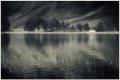
Buttermere Pines 2 BW - WEB.jpg Castlerigg Stones set 1 - BW - WEB.jpg Ullswater misty morning 1 WEB.jpg

That's Buttermere with reeds coming through the water, but where the 85mm has thrown the famous background OoF while also foreshortening the distance to it making it still recognisable

Castlerigg Stone Circle (part thereof), where its given separation from the background rocks and far hills

And a long view down to an island on Ullswater, again softening the background for separation too

All at f1.8

I don't do tabletop :p

Dave
 
Just head out and buy one, after viewing these kindly produced images and advice from folk here it really shows its a stellar piece of glass for really not big money.

As Nike say........"Just Do It".
 
I much prefer the 85mm on full frame. Found it to be a tad long on dx cameras
 
Just head out and buy one, after viewing these kindly produced images and advice from folk here it really shows its a stellar piece of glass for really not big money.

As Nike say........"Just Do It".

"Just Did It" :D

After no luck finding a used one, I picked up a new one today at Grays of Westminster for £369.

My favourite camera shop sold out a couple of months ago, John Lewis are sold out too, elsewhere the going price seems to be £399.

The salesman at Grays seemed to think I needed a clear protective filter ... Nikon new at £50 something, used at £30 ... said I'd think about it.

How about you guys ... filter or no filter ... and if yes, which one?

(y)
 
Last edited:
"Just Did It" :D

After no luck finding a used one, I picked up a new one today at Grays of Westminster for £369.

My favourite camera shop sold out a couple of months ago, John Lewis are sold out too, elsewhere the going price seems to be £399.

The salesman at Grays seemed to think I needed a clear protective filter ... Nikon new at £50 something, used at £30 ... said I'd think about it.

How about you guys ... filter or no filter ... and if yes, which one?

(y)
Personally I wouldn't even think of putting a cheap clear filter on a nice new expensive lens with quality optics.

But that's just me.
 
Thanks guys but are you saying you wouldn't use a protective filter or you would but it wouldn't be a cheap one?

(that's two wouldn'ts and a would in one short sentence)
 
Thanks guys but are you saying you wouldn't use a protective filter or you would but it wouldn't be a cheap one?)


Where ever I can, sadly, I will set a good protection
filter… I must protect my gear but i said a "good" one.
 
Another thought ...

I was playing with my new lens (on D5300) at home last night before and after dark and found I got better results with EV -1 or -2

Does one generally have to think more about EV with a lens like this?


Where ever I can, sadly, I will set a good protection
filter… I must protect my gear but i said a "good" one.

Thanks Kodiak.

I remember when I bought my 35mm 1.8G and the advice on here was "no protective filter".
 
Last edited:
Does one generally have to think more about EV with a lens like this?


No, with a lens like this or any other lens for
that matter as this is to respond to the light
meter that reads the scene.


Personally, what ever lens I use, I always take
a test shot keeping an eye on the histogram so
to be sure that it is well centred.
…the advice on here was "no protective filter".
That's right IF you are in studio where less risks
are present. Some lenses I only use in studio
have no such filters.
 
Thanks guys but are you saying you wouldn't use a protective filter or you would but it wouldn't be a cheap one?

(that's two wouldn'ts and a would in one short sentence)

I wouldn't use any filter*. Personally I feel the front elements are pretty strong, and in the unlikely event of having an incident, I'm insured.

Any 2nd hand less I've ever got that came with a clear filter was immediately removed and binned/sold.

* I do of course use ND grads or polarisers.
 
Suffering the gear acquisition syndrome, with a terrible craving for the above, (and to justify it to myself I'm flogging my Tokina 12-28).

This would be for my D5300, but I wonder if I'm missing something. I've read the reviews, seen many a glorious image on the net but most of the time I don't know which body was used, and when it is stated, the glorious image was taken with a FF body. Does anyone know the difference between FX and DX results with this lens? The way I see it is: the same - near as damn it - but I'd need to be further away from the subject with my cropped body. Also, there's no VR, is that an issue?

Thanks.

Angle-of-view will be wider on full-frame (85mm is equivalent to 127mm on a 1.5x DX camera), there will be less depth of field on full-frame (equivalent at just over one stop less when the subject is framed the same), and images will be slightly sharper on full-frame FX (pretty much regardless of pixel count).
 
You might want to explain this a bit more as you'll be panicking some unnecessarily :D

Dave

Just for you Dave :)

It is a common misunderstanding that sharpness is defined by the number of pixels. That has an impact of course, but it's relatively minor compared to the size/area/format of the sensor - size matters, and bigger is better. It's physics (as opposed to marketing talk ;)) and the bottom line is basically this - using the same lens at same settings, on average images will be about 10-12% sharper on full-frame.

What we call 'sharpness' has two components - resolution (the fineness of detail) and contrast (how clearly those details are shown). Of the two, contrast has the most influence on our visual perception of sharpness. The physics of it is, as resolution demands go up, so image contrast goes down. It's like a car that will accelerate from 0-60 in six seconds, takes twice that time (or more) to get from 60-120. The more you ask, the harder it gets, and lenses are the same. DX cameras have smaller sensors, so they demand higher lens resolution - 1.5x higher for DX vs FX.

Good explanation here, but just look at the first couple of diagrams that show as the black and white lines get closer, so the contrast gets lower. Blacks get lighter, whites get darker, ultimately turning to grey porridge http://www.cambridgeincolour.com/tutorials/lens-quality-mtf-resolution.htm

Lens MTF tests (Modulation Transfer Function) compare resolution vs contrast. Here's one example of MTF graphs for four 84mm f/1.4 lenses, plotting contrast at different resolution levels - 10-lines-per-mm, 20, 30, 40, 50 https://www.lensrentals.com/blog/2016/04/sony-fe-85mm-f1-4-g-master-lens-mtf-and-variance/ Just look at the Y-axis up the left (which is the centre of the frame, you can ignore everything else*) and note how with every increase in resolution of 10-lpmm, contrast drops by roughly 0.1 (that's actually 10%, with 1.0 at the top being 100% theoretical maximum). The orange 20-lpmm and green 30-lpmm lines are good ones to look at. That's a decent standard for high quality working, and conveniently, the difference between them is 1.5x - exactly the Nikon DX crop factor. In other words, if you put the same lens on a DX camera with 20mp sensor, the green line shows the standard of sharpness; but on a 20mp FX camera, you'll get the orange line and a jump of maybe 10-12% in sharpness.

*Those graphs are only a snapshot of lens performance. In particular, they're at f/1.4 only, with % contrast up the left, and mm from the centre of the frame along the bottom. It's worth noting the Zeiss Otus 85/1.4 with outstanding sharpness in the centre at f/1.4, though the others catch up and get much closer at f/2.8-4. That's what you get for £4k :)

 
Same for me, and you won't regret your purchase it's a stunning value for money lens one I quite often wish I'd never sold

Me too, I first started kicking myself the day of my daughter's nativity and haven't stopped since. Legs so bruised now I am thinking of buying a replacement..
 
Just for you Dave :)

It is a common misunderstanding that sharpness is defined by the number of pixels. That has an impact of course, but it's relatively minor compared to the size/area/format of the sensor - size matters, and bigger is better. It's physics (as opposed to marketing talk ;)) and the bottom line is basically this - using the same lens at same settings, on average images will be about 10-12% sharper on full-frame.

What we call 'sharpness' has two components - resolution (the fineness of detail) and contrast (how clearly those details are shown). Of the two, contrast has the most influence on our visual perception of sharpness. The physics of it is, as resolution demands go up, so image contrast goes down. It's like a car that will accelerate from 0-60 in six seconds, takes twice that time (or more) to get from 60-120. The more you ask, the harder it gets, and lenses are the same. DX cameras have smaller sensors, so they demand higher lens resolution - 1.5x higher for DX vs FX.

Good explanation here, but just look at the first couple of diagrams that show as the black and white lines get closer, so the contrast gets lower. Blacks get lighter, whites get darker, ultimately turning to grey porridge http://www.cambridgeincolour.com/tutorials/lens-quality-mtf-resolution.htm

Lens MTF tests (Modulation Transfer Function) compare resolution vs contrast. Here's one example of MTF graphs for four 84mm f/1.4 lenses, plotting contrast at different resolution levels - 10-lines-per-mm, 20, 30, 40, 50 https://www.lensrentals.com/blog/2016/04/sony-fe-85mm-f1-4-g-master-lens-mtf-and-variance/ Just look at the Y-axis up the left (which is the centre of the frame, you can ignore everything else*) and note how with every increase in resolution of 10-lpmm, contrast drops by roughly 0.1 (that's actually 10%, with 1.0 at the top being 100% theoretical maximum). The orange 20-lpmm and green 30-lpmm lines are good ones to look at. That's a decent standard for high quality working, and conveniently, the difference between them is 1.5x - exactly the Nikon DX crop factor. In other words, if you put the same lens on a DX camera with 20mp sensor, the green line shows the standard of sharpness; but on a 20mp FX camera, you'll get the orange line and a jump of maybe 10-12% in sharpness.

*Those graphs are only a snapshot of lens performance. In particular, they're at f/1.4 only, with % contrast up the left, and mm from the centre of the frame along the bottom. It's worth noting the Zeiss Otus 85/1.4 with outstanding sharpness in the centre at f/1.4, though the others catch up and get much closer at f/2.8-4. That's what you get for £4k :)

 
Just for you Dave :)

It is a common misunderstanding that sharpness is defined by the number of pixels. That has an impact of course, but it's relatively minor compared to the size/area/format of the sensor - size matters, and bigger is better. It's physics (as opposed to marketing talk ;)) and the bottom line is basically this - using the same lens at same settings, on average images will be about 10-12% sharper on full-frame.

What we call 'sharpness' has two components - resolution (the fineness of detail) and contrast (how clearly those details are shown). Of the two, contrast has the most influence on our visual perception of sharpness. The physics of it is, as resolution demands go up, so image contrast goes down. It's like a car that will accelerate from 0-60 in six seconds, takes twice that time (or more) to get from 60-120. The more you ask, the harder it gets, and lenses are the same. DX cameras have smaller sensors, so they demand higher lens resolution - 1.5x higher for DX vs FX.

Good explanation here, but just look at the first couple of diagrams that show as the black and white lines get closer, so the contrast gets lower. Blacks get lighter, whites get darker, ultimately turning to grey porridge http://www.cambridgeincolour.com/tutorials/lens-quality-mtf-resolution.htm

Lens MTF tests (Modulation Transfer Function) compare resolution vs contrast. Here's one example of MTF graphs for four 84mm f/1.4 lenses, plotting contrast at different resolution levels - 10-lines-per-mm, 20, 30, 40, 50 https://www.lensrentals.com/blog/2016/04/sony-fe-85mm-f1-4-g-master-lens-mtf-and-variance/ Just look at the Y-axis up the left (which is the centre of the frame, you can ignore everything else*) and note how with every increase in resolution of 10-lpmm, contrast drops by roughly 0.1 (that's actually 10%, with 1.0 at the top being 100% theoretical maximum). The orange 20-lpmm and green 30-lpmm lines are good ones to look at. That's a decent standard for high quality working, and conveniently, the difference between them is 1.5x - exactly the Nikon DX crop factor. In other words, if you put the same lens on a DX camera with 20mp sensor, the green line shows the standard of sharpness; but on a 20mp FX camera, you'll get the orange line and a jump of maybe 10-12% in sharpness.

*Those graphs are only a snapshot of lens performance. In particular, they're at f/1.4 only, with % contrast up the left, and mm from the centre of the frame along the bottom. It's worth noting the Zeiss Otus 85/1.4 with outstanding sharpness in the centre at f/1.4, though the others catch up and get much closer at f/2.8-4. That's what you get for £4k :)
Yes, well, that's probably why the bigger one's cost more.
 
Back
Top