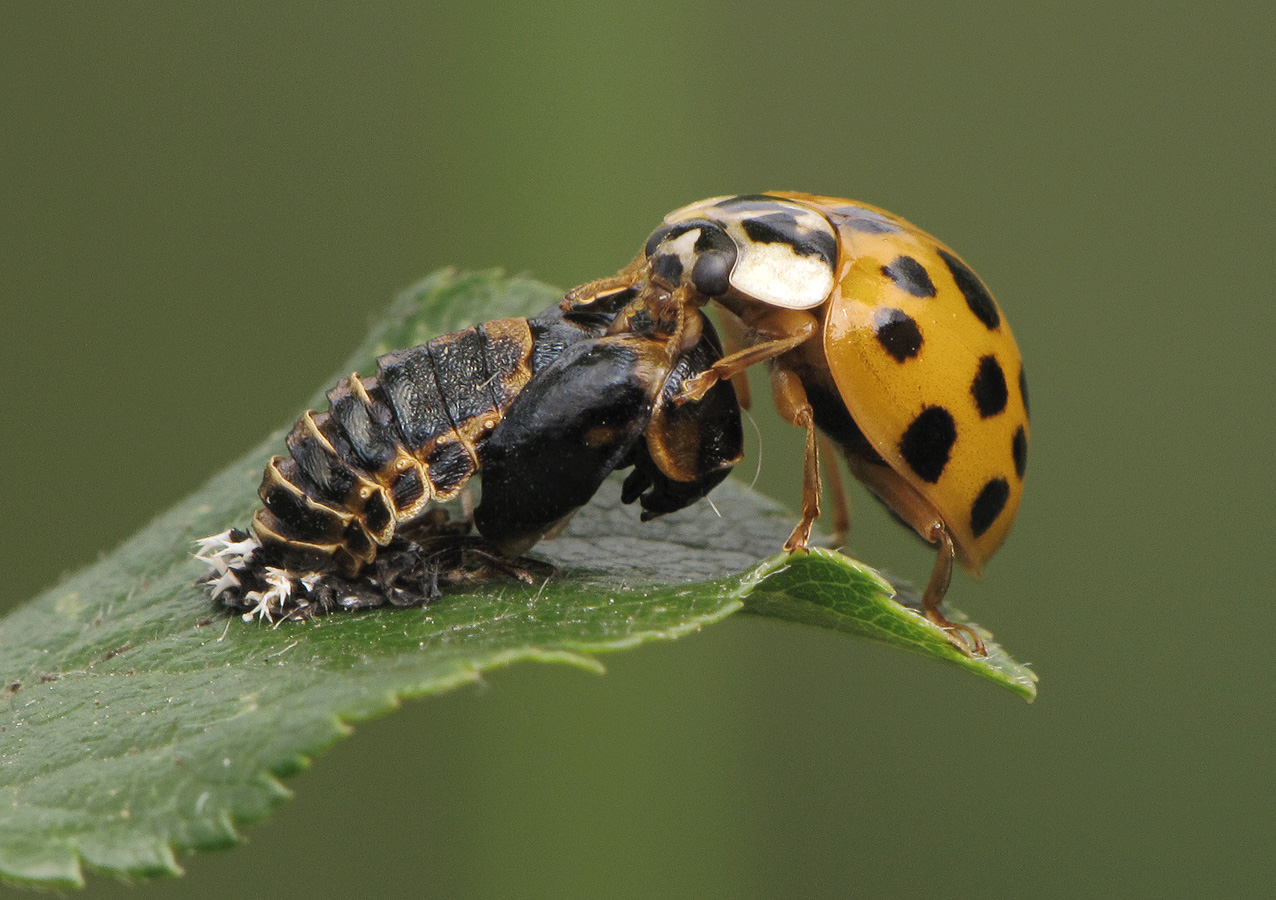
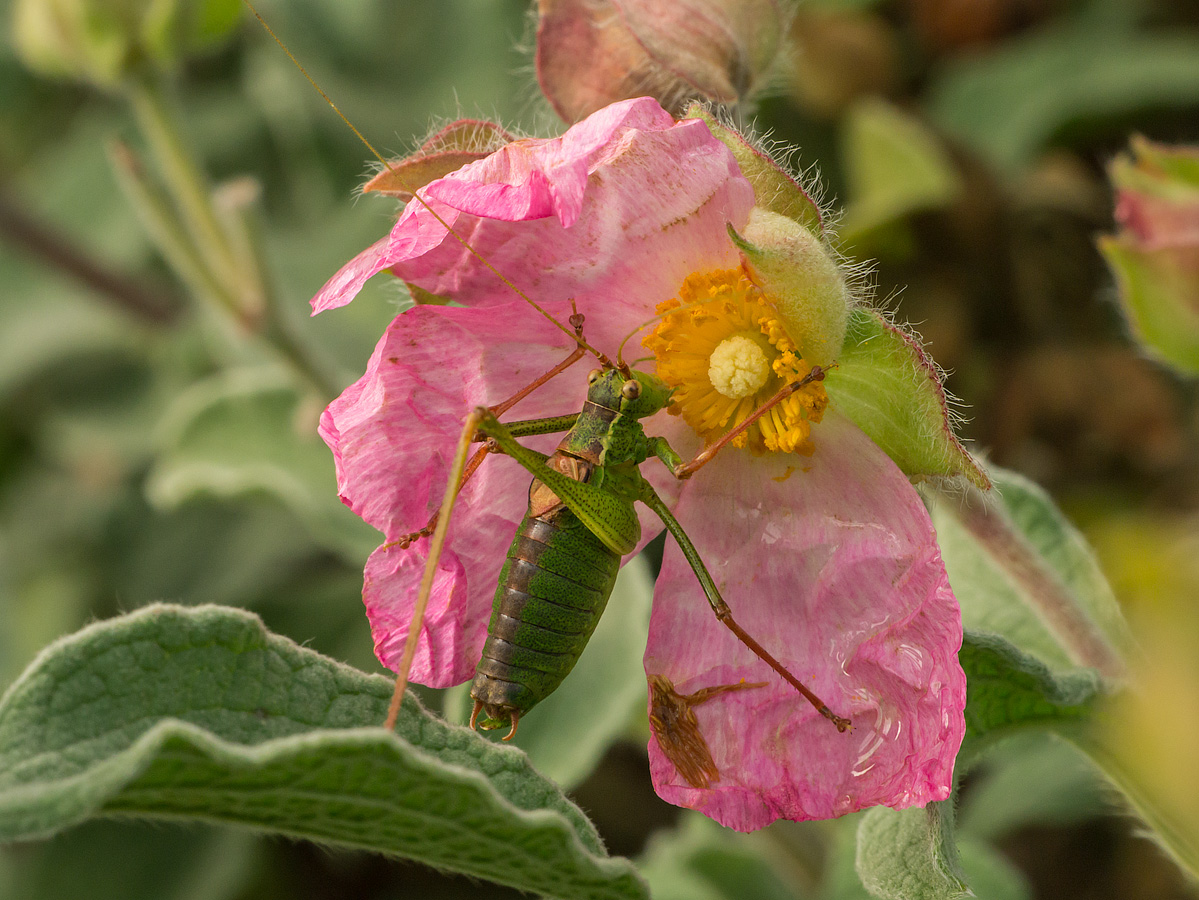
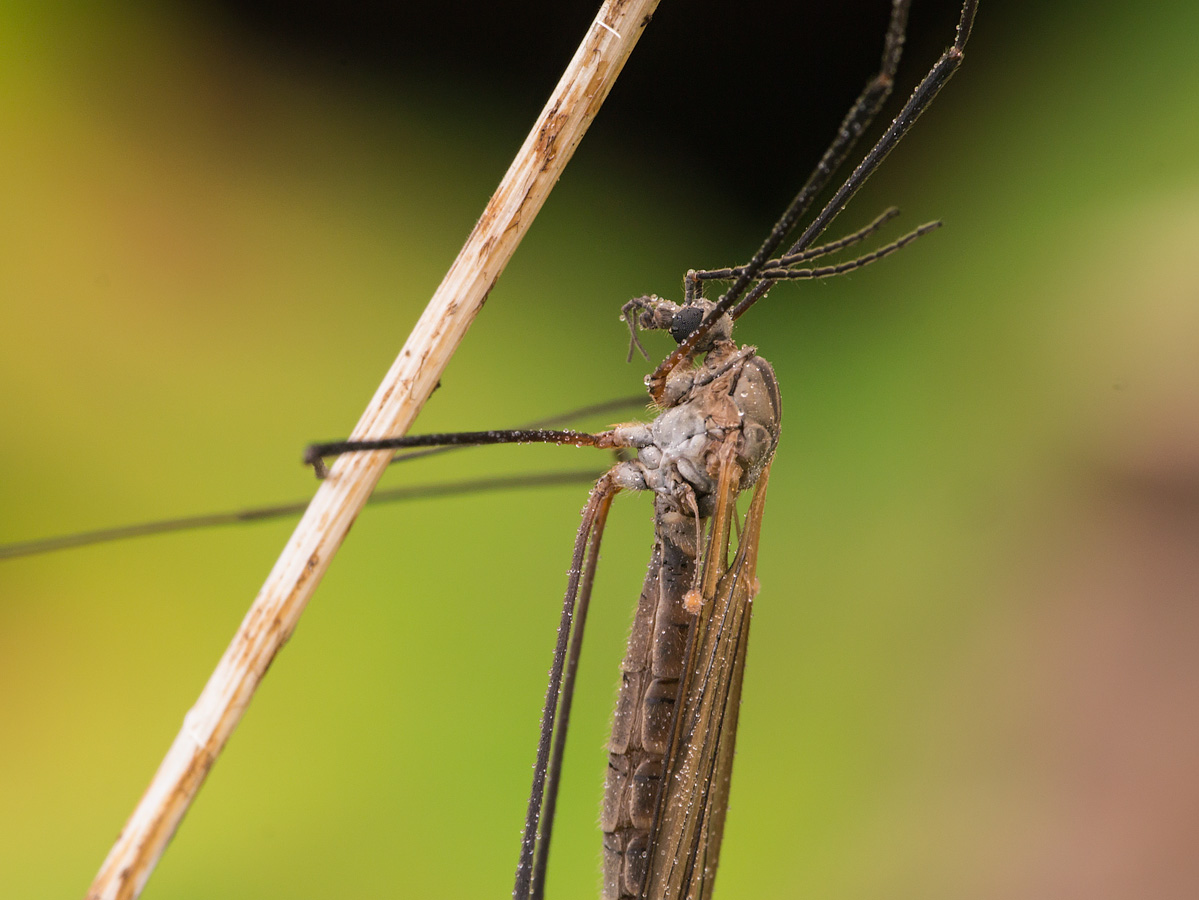
Nikon 105mm Micro lens

355858

Suspended / Banned
Messages
679
Name
Ben
Edit My Images
Yes
Hi Guys,

How does everyone get the best they can out of this lens? I find that my photos are alway blurry compared to other peoples uploads. I have tubes but i'm shooting with any type of flash..

Do you need a raynox to get the detail on insects?

Thanks

Ben
 
I think if you add another lens you will degrade the image.
Rock steady tripod. Use manual focus. Small aperture because depth of field is very shallow in macro work. Cable release and mirror up option if your camera has that.
 
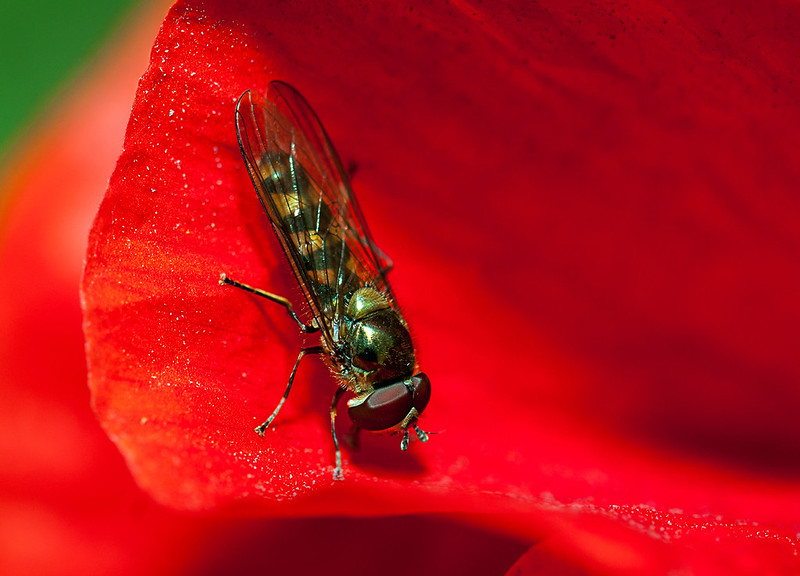
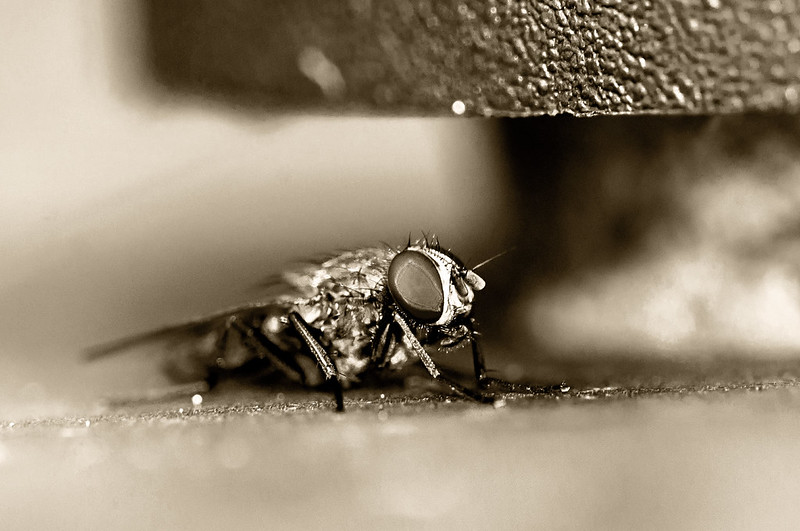
I only ever use it hand-held. Especially for insects. I'm no full on macro shooter, I just like to dabble in it now and then. I get good results using this lens, and a speed light:


Hoverfly on poppy by Cagey75, on Flickr


Monofly by Cagey75, on Flickr
 
So if I get a flash it should be much more usable?
 
Definitely. As with macro, you mostly want to be shooting at very small apertures, as the DOF can be incredibly shallow. Using apertures like f/16 - f/32 or even smaller, cuts out a lot of light. Flash is a must, preferably off camera. Even hand held, using CLS or wireless triggers.
 
It's like with anything, practice and practice and when you have practiced-- practice some more. Get to know how your camera and lens feels and works, practice hand holding you will get better as time goes on. Macro is a skill that does not come easy, but the rewards far outway the trials and tribulations of getting there
 
Bumblebee%20B_ter%200026.jpg


Taken with a Nikon D90, Nikon 105mm Macro, Pop-up Flash; 1/200s f22 Manual Mode!
 
For insect macro a tripod can be a pain, best to hand hold in most situations.

The trick is to rock backwards and forward slightly. Obviously the usual 1/focal length applies but to get just the right focus (especially if the insects are moving, either by their own motion or wind blowing, which is why tripods are a massive pain) take a dozen pictures rapidly, moving backwards and forwards slightly, moving the focus plane back and forwards a few mm/inch. Then you choose the shot that is correctly focussed.
 
For insect macro a tripod can be a pain, best to hand hold in most situations.

The trick is to rock backwards and forward slightly. Obviously the usual 1/focal length applies but to get just the right focus (especially if the insects are moving, either by their own motion or wind blowing, which is why tripods are a massive pain) take a dozen pictures rapidly, moving backwards and forwards slightly, moving the focus plane back and forwards a few mm/inch. Then you choose the shot that is correctly focussed.

Mileage varies. Each macro/close-up photographer has his or her own favourite approach(es), and they can vary considerably from one person to another, and from one time to another for a particular photographer. For example ...

On the rare occasions I have completely still air with a subject that isn't moving (e.g. post-dawn insects that haven't warmed up yet), I use a hands-off, tripod-based approach with a remote shutter release.

More commonly I use a hybrid "hand hold with tripod support" technique, using a strange tripod with a jointed arm. Sometimes I have the ball head and/or one or more joints a bit loose to let me follow subject movement, and/or sometimes (with all the joints tightened) I use the residual flexibility of the rig to let me push and pull to make changes to camera position/direction.

Mostly I use this hybrid technique with available light, sometimes with flash, either as the main light source or for fill. I use one of two rather different diffusion arrangements with an external flash if I use flash in this configuration.

In good light, especially with subjects that are moving around a lot, I may take the camera off the tripod and use available light, or use fill flash, for which I might or might not use diffusion, and might use an external flash or the on-board flash.

In less good light, for subjects that are moving around a lot, I may take the camera off the tripod and use flash as the main light source, with one of the two diffusion arrangements using an external flash.

I don't rock for focus; I use autofocus, most of the time.

I have a focus rail on the ball head. I use this to get the distance to the subject within range. (I use achromats, not a macro lens, so getting the distance within range is critical, especially for the more powerful achromats.) I generally use the quick release mechanism rather than the much slower fine screw adjustment. Using my most powerful achromat (which can capture scenes down to 4.5mm across), for which the distance to the subject has to be plus or minus 1.5mm, I do occasionally use the fine screw adjustment, although more often I use push/pull with the rig fully tightened.

I don't think there are any universal solutions for macro and close-ups. What works well for one person may not work so well, or at all, for someone else.

 
Last edited:
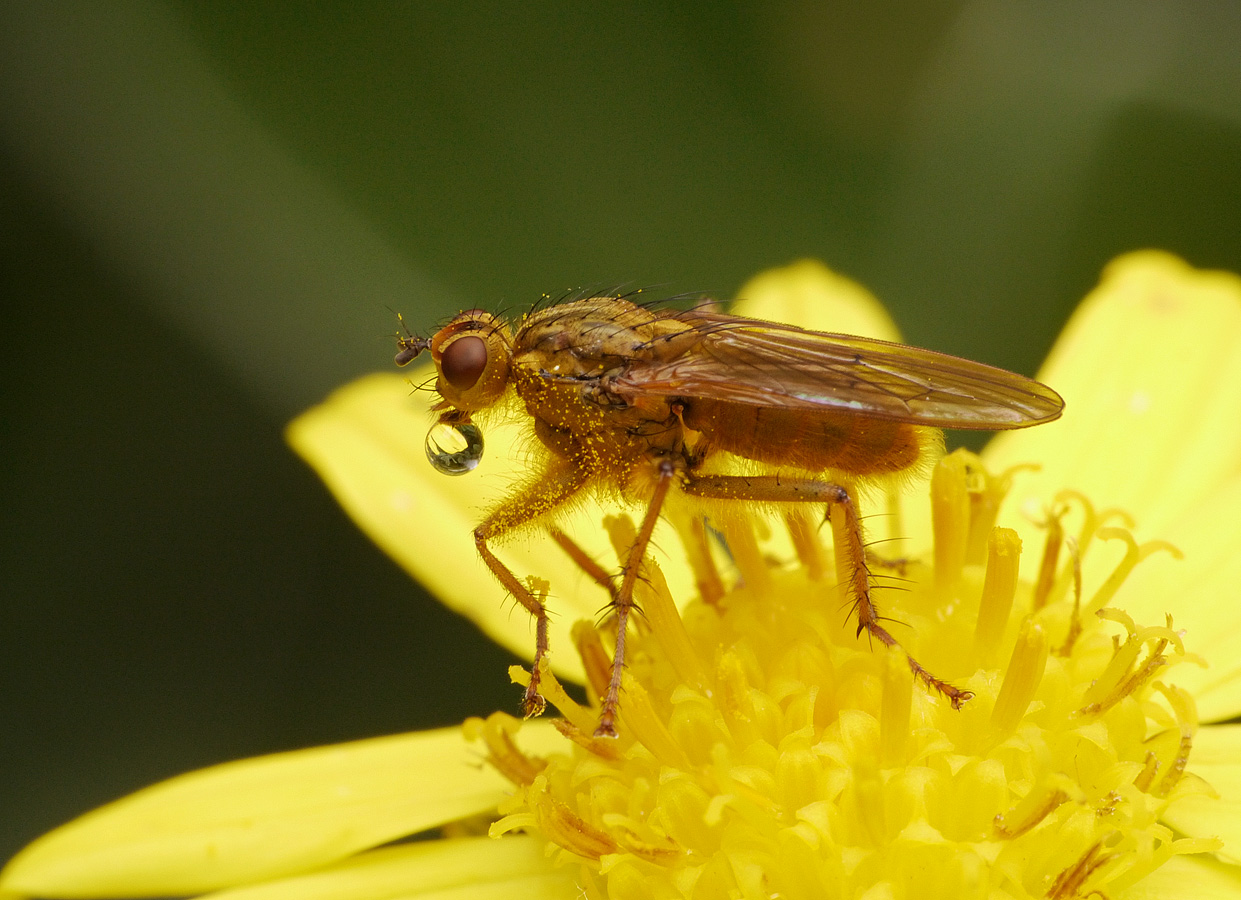
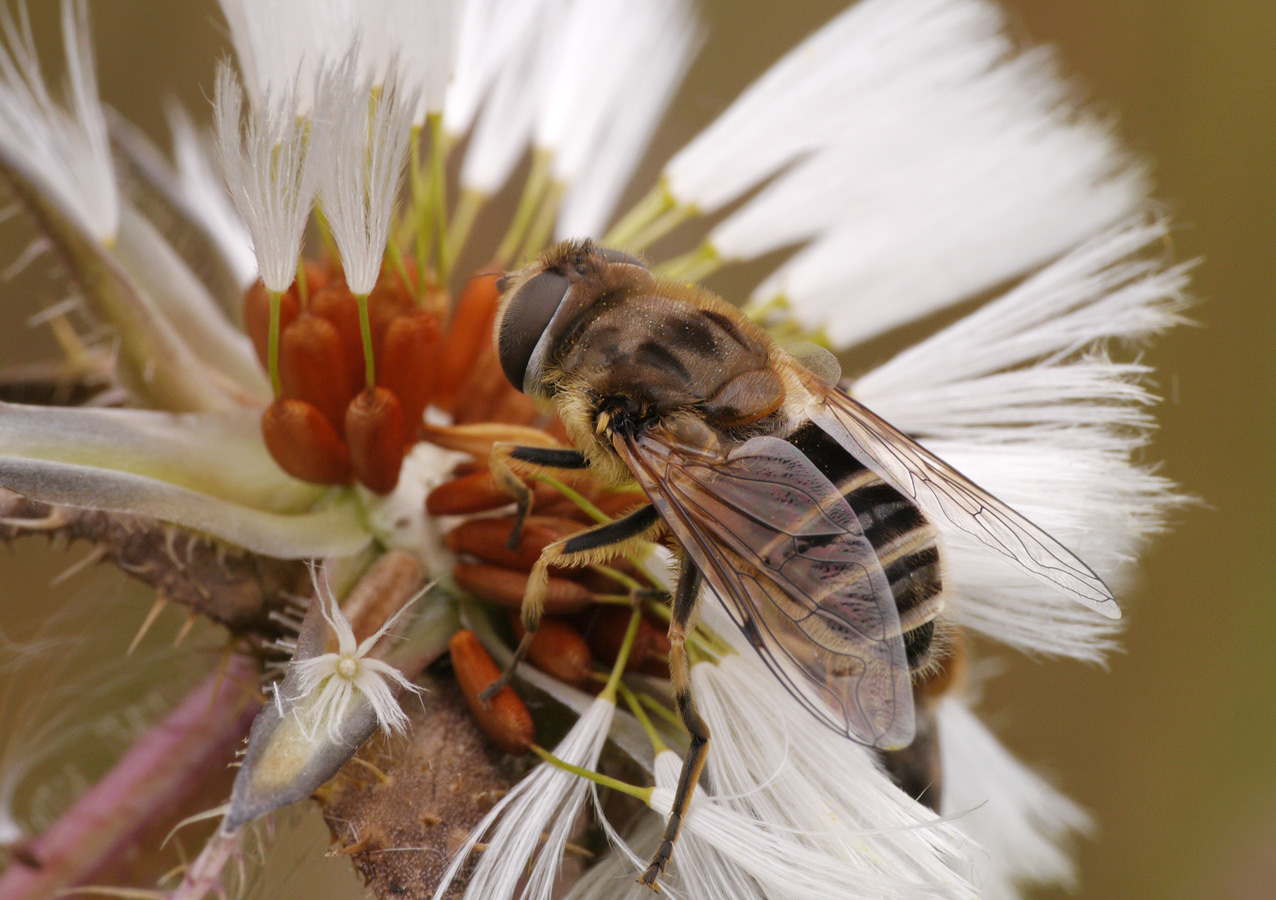
Not really. I use available light much more than I use flash. Here are three examples.


Try the same this month, in dim lighting ;)

I have plenty of examples of natural light macro too, but that's when the light permits. When I say flash is a must, it covers you for all situations, you don't have to use it of course. If you're handy with macro, steady and able to freeze right in that extreme shallow DOF plane, sure, natural light can be great too.


_DSC1876 by Cagey75, on Flickr

Natural light ^ on a mid september eve, didn't have flash at hand.
 
Last edited:
Ben. I think this is all probably relevant to your original questions, but if not let us know and we can continue this discussion elsewhere.

Try the same this month, in dim lighting ;)

Natural light ^ on a mid september eve, didn't have flash at hand.

You used ISO 800, f/9, 1/250 sec. These all used natural light. If my arithmetic is right the light levels were respectively, 5 stops, 4 stops, 7 and 2/3 and 7 and 2/3 stops lower than in your example. I suspect that might qualify as "dim lighting".


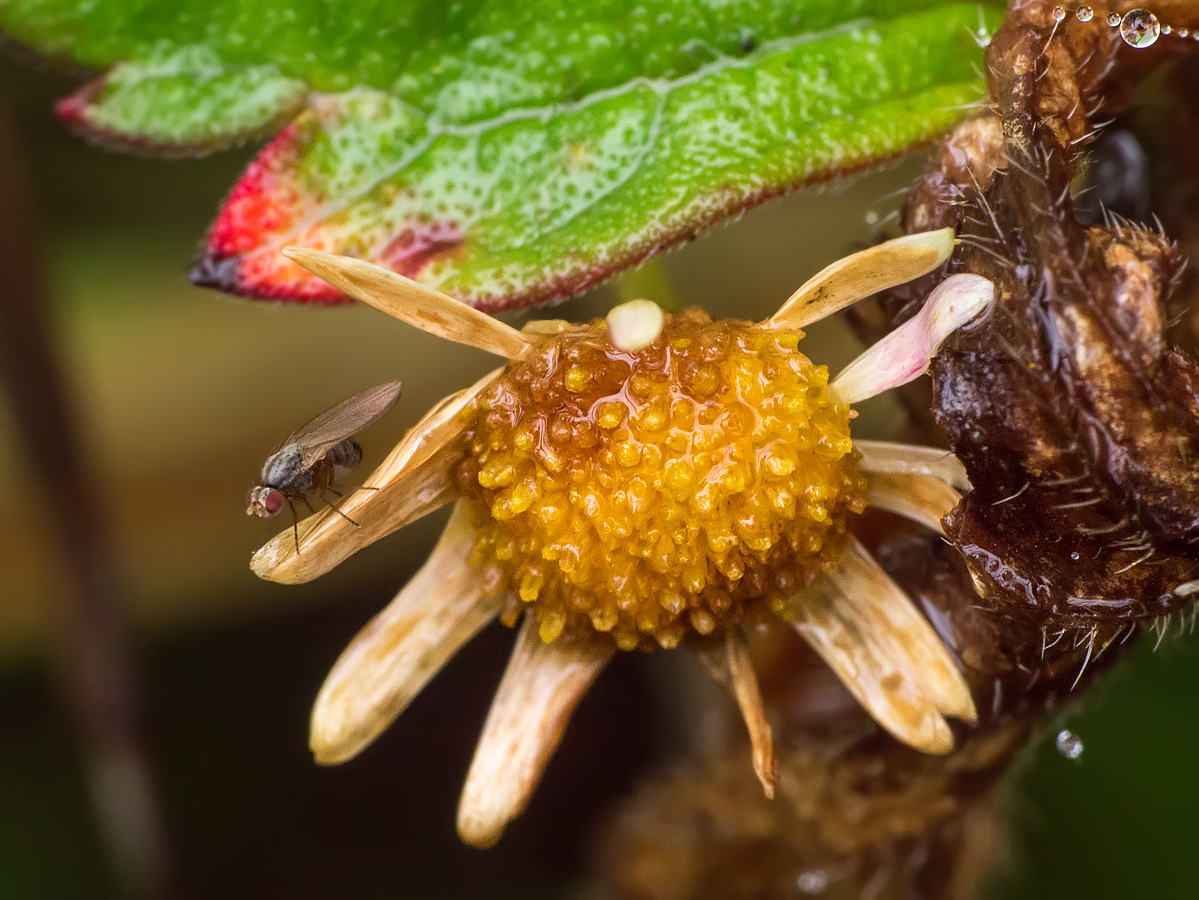
ISO 800, f/22, 1/50 sec, late September


0459 13 2012_10_29 P1710921-Edit by gardenersassistant, on Flickr

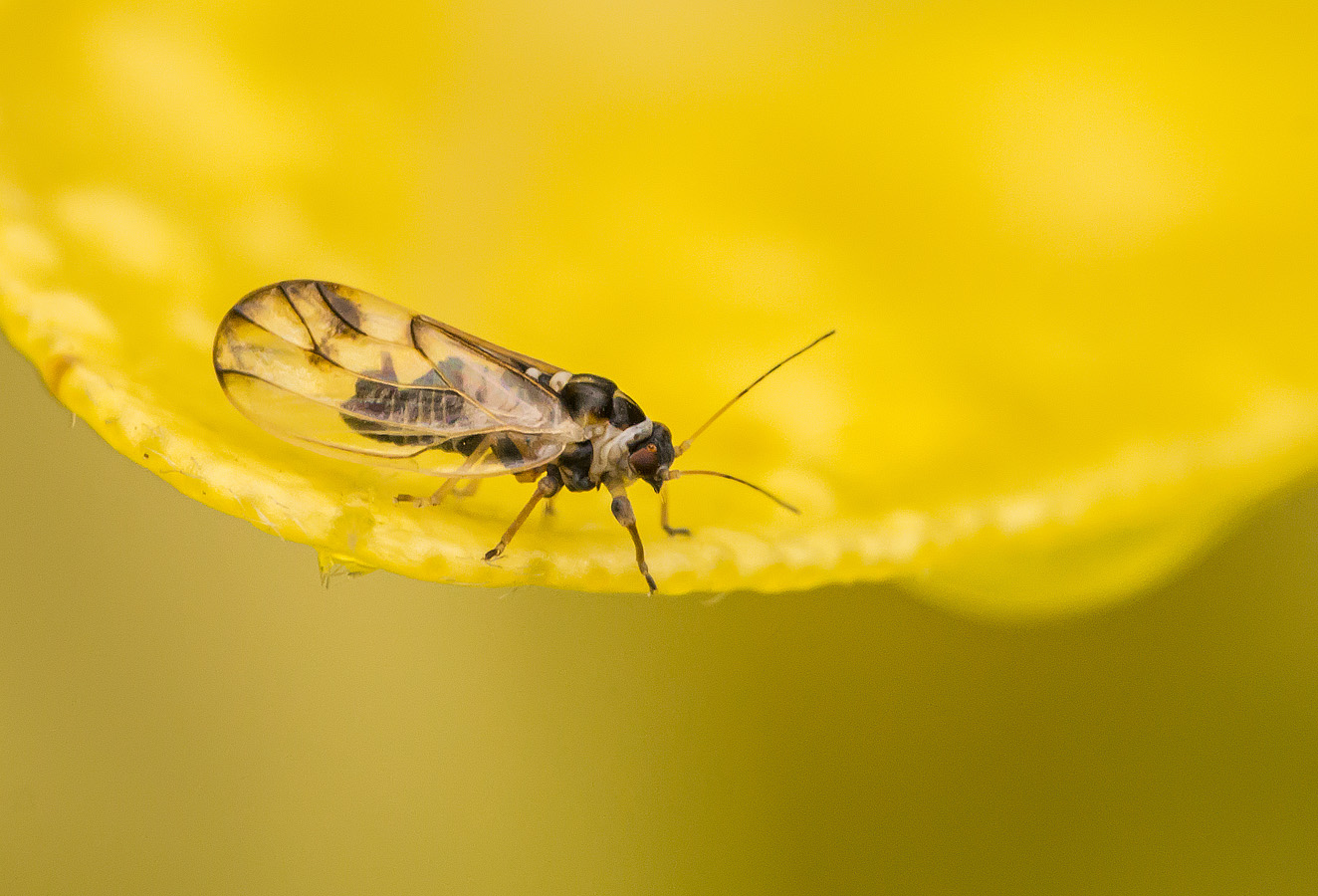
The next one is very small, a Barkfly (Psocoptera) [so I'm told by the good people at iSpot]. It is about 3mm long, body and head.

ISO 1600, f/20, 1/80 sec, 8 November


0457 03 2012_11_08 P1720253-Edit-4 NoLuSh70,6,6PSS2.200 by gardenersassistant, on Flickr

ISO 400, f/22, 1/4 sec, 8 November


0457 20 2012_11_08 P1720575-Edit NoLuSh34,3,3PSS2.50 by gardenersassistant, on Flickr

ISO 3200, f/22, 1/30 sec, late September


0453 10 2012_10_23 P1700897-Edit NRBack100,100Front60,5,5PSS2Sa by gardenersassistant, on Flickr
 
Settings are only relative to the conditions, and slower shutter speeds only good when the subject isn't moving, or it's not windy ... in both those instances you need flash, or your subjects will be blurred because of those slower shutter speeds. I chose a fast shutter speed because it was breezy on the day, yet the light allowed for it - You adjust to the light in the moment. It's not proving anything only that I do indeed shoot natural light macro now and then.

You get sharper images with flash, no matter the conditions. It's not a macro competition here :D Just stating a fact.
 
Settings are only relative to the conditions, and slower shutter speeds only good when the subject isn't moving, or it's not windy ... in both those instances you need flash, or your subjects will be blurred because of those slower shutter speeds. I chose a fast shutter speed because it was breezy on the day, yet the light allowed for it - You adjust to the light in the moment. It's not proving anything only that I do indeed shoot natural light macro now and then.

You get sharper images with flash, no matter the conditions. It's not a macro competition here :D Just stating a fact.

I think we can agree that you get sharper images when flash is used as the dominant light source (unless the available light is very bright perhaps, or the subject and scene are perfectly still). But I'm wondering what the implication of this is from your perspective for the OP, who is having trouble getting sharp images from his macro lens.

Is your advice to the OP that he must use flash if he wants to get acceptably sharp images unless he is photographing subjects which are either motionless or brightly illuminated? (EDIT: Or perhaps even if they are brightly illuminated or perfectly still?)

Is your advice that flash always produces a better, more appealing image than natural light, because the images it produces are sharper?
 
Last edited:
Using flash allows you to use smaller appertures and when you only have depth of fields of only millimetres when shooting close up, the small apertures really help. Unfortunately, you need a lot of natural light to get an aperture of f22 with say 1/200 second shutter speed. Often flash lighting close up can look natural, however, if there is no close background interest, the light falls off behind the subject making it look unnatural. Ideally we would all want natural light that gives us a small aperture / high shutter speed combination. It is my experience, in macro work, that flash renders better photographs than upping the ISO!
 
Last edited:
Using flash allows you to use smaller appertures and when you only have depth of fields of only millimetres when shooting close up, the small apertures really help. Unfortunately, you need a lot of natural light to get an aperture of f22 with say 1/200 second shutter speed. Often flash lighting close up can look natural, however, if there is no close background interest, the light falls off behind the subject making it look unnatural. Ideally we would all want natural light that gives us a small aperture / high shutter speed combination. It is my experience, in macro work, that flash renders better photographs than upping the ISO!

Nice summary. Very helpful.

My experience is that, depending on taste, post processing, opportunity, technique and perseverance, it is often possible to get very nice results using natural light at slower shutter speeds and with higher ISOs in worse conditions of light, breeze and subject movement than is I believe commonly realised. And that includes some circumstances (for my type of shots quite a lot I think) where for the reasons you give about the unnatural rendition of backgrounds a natural light shot can produce a more appealing (depending on taste) image than flash, even though the subject is not as sharp.

I suspect there are some differences too as between the rendition of colours with and without flash, even after white balance adjustments, with natural light appealing more to those who prefer more muted colour palettes.
 
I think we can agree that you get sharper images when flash is used as the dominant light source (unless the available light is very bright perhaps, or the subject and scene are perfectly still). But I'm wondering what the implication of this is from your perspective for the OP, who is having trouble getting sharp images from his macro lens.

Is your advice to the OP that he must use flash if he wants to get acceptably sharp images unless he is photographing subjects which are either motionless or brightly illuminated? (EDIT: Or perhaps even if they are brightly illuminated or perfectly still?)

Is your advice that flash always produces a better, more appealing image than natural light, because the images it produces are sharper?


My advice is that he will find life much easier with flash, if he isn't experienced with macro shooting. A lot of people new to it don't realise just how hard it can be, you know yourself, obviously. The DOF can be so unforgiving, using flash allows much smaller apertures in any light, and it is much easier get sharp images - which most of us want when shooting that close up, we want sharp details. I thought this was obvious from my initial posts.

Using apertures like f/16 - f/32 or even smaller, cuts out a lot of light. Flash is a must, preferably off camera. Even hand held, using CLS or wireless triggers.

You omitted the apertures I mentioned when first quoting me.

Most of the better macro shooters I've seen use flash almost always.
 
Last edited:
My advice is that he will find life much easier with flash, if he isn't experienced with macro shooting. A lot of people new to it don't realise just how hard it can be, you know yourself, obviously. The DOF can be so unforgiving, using flash allows much smaller apertures in any light, and it is much easier get sharp images - which most of us want when shooting that close up, we want sharp details. I thought this was obvious from my initial posts.


You omitted the apertures I mentioned when first quoting me.

Most of the better macro shooters I've seen use flash almost always.

Doesn't sound like a very contentious statement, fairly obvious really.

For the same reason, manufacturers produce ring-flashes, and there's a huge thread on here showing all kinds of DIY macro flash rigs.
 
Personally i think to get the most from a macro lens on a DSLR shooting at 1:1 you need be using a diffused flash, as you drop the magnification you can get away with natural light as you can open up the lens as DOF increases as you decrease the magnification.
 
My advice is that he will find life much easier with flash, if he isn't experienced with macro shooting. A lot of people new to it don't realise just how hard it can be, you know yourself, obviously. The DOF can be so unforgiving, using flash allows much smaller apertures in any light, and it is much easier get sharp images - which most of us want when shooting that close up, we want sharp details.

Seems reasonable to me.

I thought this was obvious from my initial posts.

"Flash is a must" struck me as rather less nuanced than what you've explained here. Seems I read it too literally. :)

Most of the better macro shooters I've seen use flash almost always.

That's my impression too.
 
ok, i've sat back and listened to everyone opinions and its really helped me, looking at the majority of the responses a flash is going to help me with the photos i wish to take, the enxt issue i have it will a £30 ring flas on ebay do the job or do i need to fork out for the Nikon R1?

Thanks Again.

Ben
 
ok, i've sat back and listened to everyone opinions and its really helped me, looking at the majority of the responses a flash is going to help me with the photos i wish to take, the enxt issue i have it will a £30 ring flas on ebay do the job or do i need to fork out for the Nikon R1?

Thanks Again.

Ben
Ultimately you can use your pop up flash giving you 1:1 1/200 second at f22 to give very successful macro results! That is your cheapest option. The downside is at 1:1 or 1:2 the flash to subject distance is small enough for the flash to cope. Beyond that it may struggle a little.

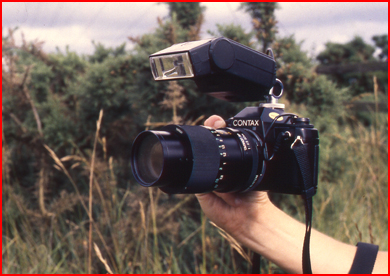
When I first started macro I made my own macro flash bracket with 2 small manual flashguns on tilt blocks. I got really good results. However it was inconsistent, kept getting caught in foliage and the wires got accidentally pulled!

Then I tried a manual flashgun tilted over a camera on a tilt block. Easy to use, did not get tangles but the lighting could not be controlled. Some good results though.

ManualMacroFlashSetup.jpg


I then tried a cheap ringflash. Should have saved my money. Not enough power to stop down!

Then the Metz Macro Ringflash. More expensive, much better, but still not the power I really needed.

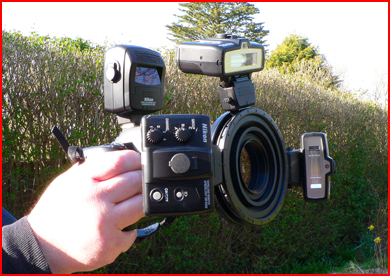
Then I bought the Nikon R1C1 kit (includes the SB800 control unit and 2 x SB 200 speedlights) and I added a 3rd speedlight to light the background.

NikonMacroFlashSetup1.jpg


Benefits: More consistent results and TTL is superb. I can control each speedlight separately both in power and exposure compensation. This means I can model the light more than ringflash, I tend to use a 2:1 ratio between the 2 main flashes. Also I use the SB800 control unit to control mt Nikon SB800s for studio work and the SB200 speedlights are great for still life work and for adding rim light to hair in the studio. I can put them on small stands behind the head without the camera seeing them.

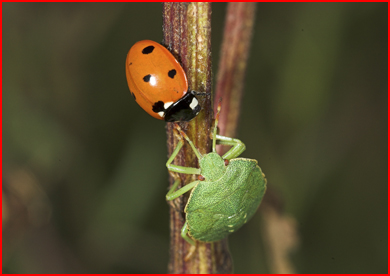
So in conclusion, is it worth the extra expense? In my opinion yes. Could I do without them? I suppose I could. Do I get better and more consistent results? Yes I do? Do I enjoy my macro photography more because of that? Yes I do!

Seven-spotLadybirdGreenShieldBug1.jpg
 
Last edited:
Back
Top