Night shots and street lights!

ThelVlenace

Suspended / Banned
Messages
101
Edit My Images
No
Hi guys,

Just after a bit of advice when shooting long exposure night shots...I know you can buy filters to get the star effects on the street lights, but my question is...what's the most effective way to shoot night photography without these star shapes/flares...

Appreciate the help :)
 
All you need for streetlit scenes is a tripod. There isn't a single "right answer" for night photography. Go out and experiment with different exposure times and see what results you get. If you want to take photos in exposures over 30 seconds (usually in very dark places), you'll need to set the camera to B/BULB mode and use a cable release to do the exposure.

If you really want that star effect, almost any lens will do it. Simply use a very small aperture (like f22). The number of points will vary depending on the design of the lens.
 
All you need for streetlit scenes is a tripod. There isn't a single "right answer" for night photography. Go out and experiment with different exposure times and see what results you get. If you want to take photos in exposures over 30 seconds (usually in very dark places), you'll need to set the camera to B/BULB mode and use a cable release to do the exposure.

If you really want that star effect, almost any lens will do it. Simply use a very small aperture (like f22). The number of points will vary depending on the design of the lens.

Original post.:rules::rules::rules::thumbs:
"but my question is...what's the most effective way to shoot night photography without these star shapes/flares..."

Come on gridlock.:bang:
 
kestral said:
Original post.:rules::rules::rules::thumbs:
"but my question is...what's the most effective way to shoot night photography without these star shapes/flares..."

Come on gridlock.:bang:

Haha yeah thanks for the advice...but yeah ^^ lol
 
Star effects with point light sources are greater when shooting at smaller apertures - the number of star points corresponds to the number of aperture blades and is a result of diffraction.

To reduce them, shoot with a wider aperture; stars will be eliminated entirely when the lens is fully open and the aperture is perfectly circular. There will likely still be some diffraction at this point, but it will be an Airy Disc, with a series of faint concentric rings around the light source.
 
Is this what you mean???


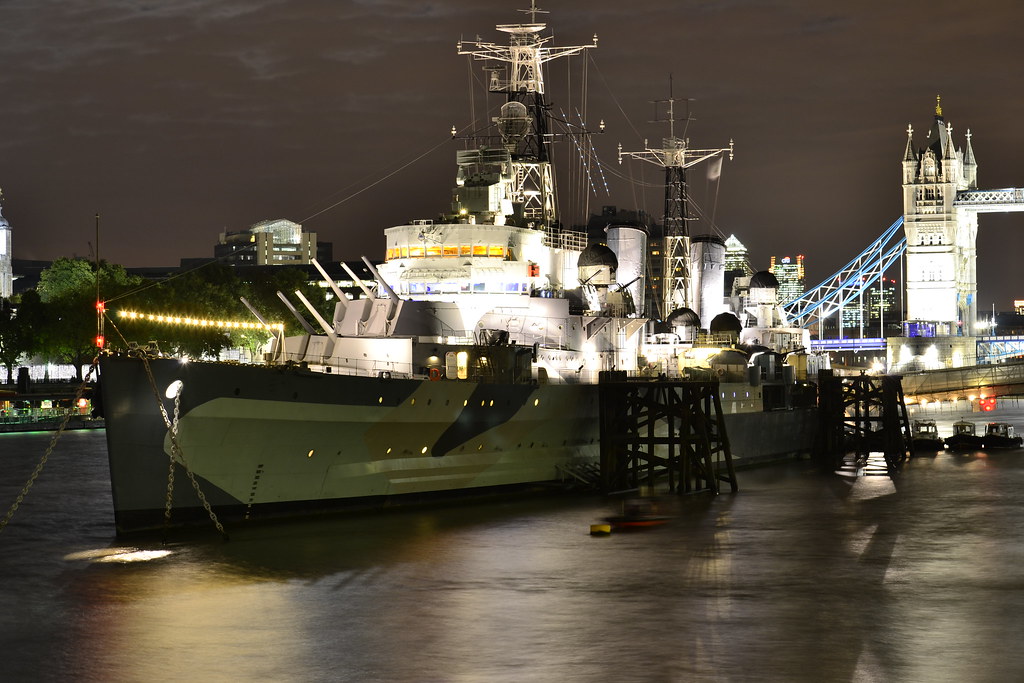
HMS Belfast by dale_tem, on Flickr


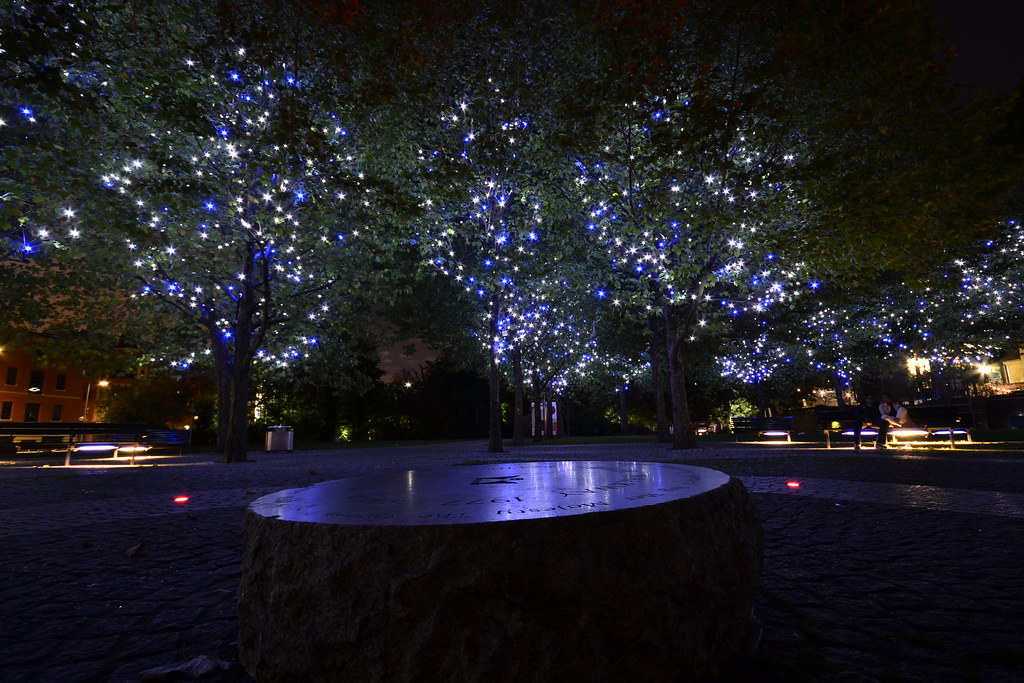
Dark Park by dale_tem, on Flickr

No filters, just a tripod and a long exposure, both were shot ISO 100, F/8 with whatever shutter speed was required.
 
Dale_d3100 said:
Is this what you mean???

http://www.flickr.com/photos/dale_tem/6243671129/
HMS Belfast by dale_tem, on Flickr

http://www.flickr.com/photos/dale_tem/6244203640/
Dark Park by dale_tem, on Flickr

No filters, just a tripod and a long exposure, both were shot ISO 100, F/8 with whatever shutter speed was required.

Yeah they're great. But do you see how to the left of the ship there is a row of lights and they still have that star shape to them. I just wondered if there was anyway to eliminate it at all. Guess ill have a play! :)
 
Reread, and finally realised you are trying to minimise them.

Try shooting wide open, the stars get their shape from the aperture blades I believe.
 
Dale_d3100 said:
Reread, and finally realised you are trying to minimise them.

Try shooting wide open, the stars get their shape from the aperture blades I believe.

Yeah cheers bud! Ill have a go...
 
Star effects with point light sources are greater when shooting at smaller apertures - the number of star points corresponds to the number of aperture blades and is a result of diffraction.

To reduce them, shoot with a wider aperture; stars will be eliminated entirely when the lens is fully open and the aperture is perfectly circular. There will likely still be some diffraction at this point, but it will be an Airy Disc, with a series of faint concentric rings around the light source.

This looks like your answer.I do night shots and have always liked the star effect.But this is nice to know I might try some wide open shots now.Thanks.:thumbs:
 
Star effects with point light sources are greater when shooting at smaller apertures - the number of star points corresponds to the number of aperture blades and is a result of diffraction.

To reduce them, shoot with a wider aperture; stars will be eliminated entirely when the lens is fully open and the aperture is perfectly circular. There will likely still be some diffraction at this point, but it will be an Airy Disc, with a series of faint concentric rings around the light source.

:clap::clap::clap: what he said is spot on
 
Back
Top