New to DSLR's - where to start

MugabesDeadCat

Suspended / Banned
Messages
36
Name
Mark
Edit My Images
Yes
Hi all, just received the Canon 400D I bought off Ebay this morning, and I'm fairly impressed already. The camera itself is in pristine condition and came with the 18-55mm kit lens, a 2Gb CF card and a Tamrac bag.

I've been toying with the idea of buying the Mrs a DSLR for a while, and have done much reading into the subject, and seem to have some sort of understanding as to the importance of aperture, shutter speed, ISO and depth of field, though I don't think I could manage using the camera in manual mode.

Just while using it this afternoon though with the kit lens, I quickly realised how limited the lens will be even for our usage. Was trying to capture a robin feeding on the bird feeders up the garden and just couldn't get close enough on full zoom, and that's only about 12 yards away. So, can someone suggest what kind of lens I should be looking at buying next? Doesn't have to be too fancy, maybe £150 or so.

Also, I've seen a lot of people mention shutter count. Is there any way of finding out what the count is on our camera?? And finally, if anyone has any little tips or tricks for using this camera then feel free to let me know about them!

Many thanks
Mark
 
A good inexpensive lens often recommended on these forums is the Canon 55-250mm. Serious bird photographers will probably use a minimum 300mm to get in close, but a good quality 300mm is going to be some way above your budget.
 
Hi, I no you want to get going, get out there, take some shots, but before you do IMO you should sit down and think what it is you want to do in photography, it is very easy to get carried away in the moment, do you want to do nature, landscape or people. You say you tried to catch a robin so if that is what you want to do in photography go to google type in bird or nature phography forums and see what comes up and lastly the old adage "YOU ONLY GET WHAT YOU PAY FOR" especially when it comes to lenses applies.
As I say JMO.
Merry Christmas
xmastree6.gif
 
To fill the frame with a robin from 12 yards you'll need a BEAST of a lens, probably something around 600mm+ and you could buy a nice car for the price of that lens.

The 55-250mm is probably your best bet given the budget but you'll need to get MUCH closer to the birdies.

To give you and idea, this is an uncropped photo taken @ 300mm and the Robin was no more than 3 yards away - at one point I thought he'd land on my head!

Snow20101of1.jpg
 
When I said I tried to photograph the robin, I didn't have aspirations of filling the frame with it ;-) I just wanted to see how the lens performed.

Once I get to grips with the camera, and with photography, I won't mind spending several hundred pound on a lens. I just thought that rather than spend that now, on something I can't use properly was a bit pointless and was looking at some kind of stepping stone.

The Mrs and I do a lot of walking and hiking, and want to start Fell walking next spring, so the bulk of the photos taken will be of wildlife and scenery whilst out and about. Full frame photographs of wildlife have never even crossed my mind, so when I say wildlife please understand that I'm used to far away images from my Cybershot compact!

Can someone tell me what the depth of field button does please? And what the small dot, on the focal length scale of the lens means? Also, the kit lens says it has an aperture size of 3.5-5.6 IIRC, what happens then whilst using Av mode, if I set the f stop to say 22?

And I apologise now for any spelling errors, I've just discovered the Droid app :-)
 
Fair enough :)

I find 2-300mm is enough for you to be able to ID most of the things you see on a country walk when back at home.

With respect to aperture, as long as you are over the maximum minimum value for the lens (if you get what I mean) then the aperture will stay where set when using Av mode. If you're at f/3.5 (when at 18mm) it will go up to f/5.6 when you zoom in to 55mm.
 
The numbers on your lens refer to the widest that it is able to go to. In your case that would be f/3.5 if you are at the 18mm end reducing down to f/5.6 when you zoom to 55mm. F/22 will be available whatever focal length you have the lens on, as will f/5.6 and above.

The depth of field button will stop the lens down to whatever aperture you have set to take the photograph with. The idea is that you can see through the viewfinder how much will be in focus at the aperture you have selected. For general photography and with an 18-55 mm lens, I doubt you will see much difference. Where it will be obvious is if you are doing close up shots.
 
Oh right, I get it now.

The lens has a UV filter on it, do people usually leave these on all of the time?

And what of that dot on the focal length scale? Just before 35mm.

I hear a lot about battery grips while reading, what are they and are they a worthy investment?
 
The lens has a UV filter on it, do people usually leave these on all of the time?

A lot of people use UV filters for "protection". I don't. Matter of personal choice really but I firmly believe that UV filters do nothing to protect the lens or improve image quality in any way. In fact, using a UV filter can only degrade the image quality and cause unwanted effects like flare. Some AF systems may be thrown off by that extra glass in front of the lens. I personally use lens hoods on all my lenses for protecting the front element.

And what of that dot on the focal length scale? Just before 35mm.

I may be mistaken but I think that is the position where the length of the lens is the shortest (the front element fully retracts into the body of the lens).

I hear a lot about battery grips while reading, what are they and are they a worthy investment?

People with large hands find them very useful, especially on entry level cameras like the 400D (I have the same body) which is small in size and does not have a sizeable grip. It also gives you a second shutter release button in the usual place while shooting in portrait mode. Also, you can get double the battery capacity as it can hold two batteries (with an additional tray to use AAs as well). YMMV.

Cheers
HighPriest
 
On our old compact camera we did quite a few macro shots around the garden of things like flowers and insects with some pretty decent results. What's the most cost effective way into that kind of photography with an slr? And other than a lens saying macro what do you look out for when gauging if its any good? Also, am I right in thinking that with an slr you don't get up close as you would with a point and shoot?
 
On our old compact camera we did quite a few macro shots around the garden of things like flowers and insects with some pretty decent results. What's the most cost effective way into that kind of photography with an slr? And other than a lens saying macro what do you look out for when gauging if its any good? Also, am I right in thinking that with an slr you don't get up close as you would with a point and shoot?

Actually, with an SLR you can get much closer than a P&S provided you have the right kit. The standard kit lens on its own will not focus as close as a P&S in macro mode though.

Your options are close up dioptres (Raynox), extension tubes (Kenko to maintain AF and metering, cheap Ebay for manual only) or reversing rings (also manual only). In all but sunlight you will need flash for sufficient light.

Specialised prime macro lenses capable of 1:1 magnification will be easiest to use.

Have a read here:
http://www.talkphotography.co.uk/forums/showthread.php?t=7761
http://www.talkphotography.co.uk/forums/showthread.php?t=132158
 
Last edited:
Actually, with an SLR you can get much closer than a P&S provided you have the right kit. The standard kit lens on its own will not focus as close as a P&S in macro mode though.

Your options are close up dioptres (Raynox), extension tubes (Kenko to maintain AF and metering, cheap Ebay for manual only) or reversing rings (also manual only). In all but sunlight you will need flash for sufficient light.

Specialised prime macro lenses capable of 1:1 magnification will be easiest to use.

Have a read here:
http://www.talkphotography.co.uk/forums/showthread.php?t=7761
http://www.talkphotography.co.uk/forums/showthread.php?t=132158

Thanks Mike!! :thumbs:

How easy are those Raynox dioptres to use and what kind of results can you achieve with them?

Another thing I'm not sure on with the 400D, or any camera for that matter, is what is metering and how do the different settings affect the outcome?
 
Thanks Mike!! :thumbs:

How easy are those Raynox dioptres to use and what kind of results can you achieve with them?

Another thing I'm not sure on with the 400D, or any camera for that matter, is what is metering and how do the different settings affect the outcome?

I have never used dioptres, but from what I have heard the Raynox is sharp in the middle but less so toward the edges. This would only be a problem if you shoot dead flat objects, flower and bug shots usually have the edges out of focus anyway. The sharpness of the lens you put the dioptre on will also obviously be a factor.

Metering is how any camera senses the amount of ambient light and then works out the exposure to get a well exposed shot. If you have no electrical contact between the camera body and lens, as happens with cheap extension tubes or reversing the lens, the camera cannot sense the light and you have to put it in manual mode and enter the settings for ISO, aperture, shutter speed and flash yourself to get a good exposure. This is especially fiddly with Canon bodies as the aperture is electrically controlled and you have to do a work around to get the lens to set the aperture manually. Also, on all bodies, the viewfinder will be dim once you have set the aperture manually to a typical macro value of f/8 or smaller.
 
Last edited:
I see. I take it I'd need a better lens than the kit lens I currently have for using the raynox with?

I think the more I look into it the more and more macro photography is something I really want to get into. Something else that's always appealed to me, though always been impossible with my p&s camera is long exposure photography. Especially light trails. Guessing I'll be needing a tripod for both, and some sort of remote release, in that case what fairly inexpensive pieces of kit should I be looking at to get me up and running?
 
I see. I take it I'd need a better lens than the kit lens I currently have for using the raynox with?

It will work with the kit lens, just not as sharp as on a better lens, but still acceptable more than likely. (assuming you have got the other variables spot on).

I think the more I look into it the more and more macro photography is something I really want to get into. Something else that's always appealed to me, though always been impossible with my p&s camera is long exposure photography. Especially light trails. Guessing I'll be needing a tripod for both, and some sort of remote release, in that case what fairly inexpensive pieces of kit should I be looking at to get me up and running?

Light trails will require a sturdy tripod, but using the shutter timer function and/or mirror lock up (if available on your model) should give you good results.
 
Is it preferable to have IS on a zoom lens? Especially for a beginner?

One other thing, the settings for the picture quality show sort of a step like logo and what looks like a quadrant logo. What's the difference between the two? I have it on L with the quadrant shape next to it :-S Should I be using RAW instead?
 
Hi Mark,

There are lots of suggestions there for new lenses, however my personal advice would be to hold off for a little while.
Get to know your way around the kit that you have, find out what its limitations are and take it from there. With some practice, I think that you'll find that the kit lens is adequate for most of the things that you want and when you find an area that you want to push further buy new kit to fill that gap.

Wildlife / scenery : You'll never get a robin filling the frame from any sort of distance with the kit lens, but for general scenery and some distant wildlife you won't have any issues.

Light Trails : The lens is perfectly sufficient, but as said you will need to get a tripod to help you with this. If you don't want to get a remote shutter release, Mike's suggestion of using the timer will work equally well.

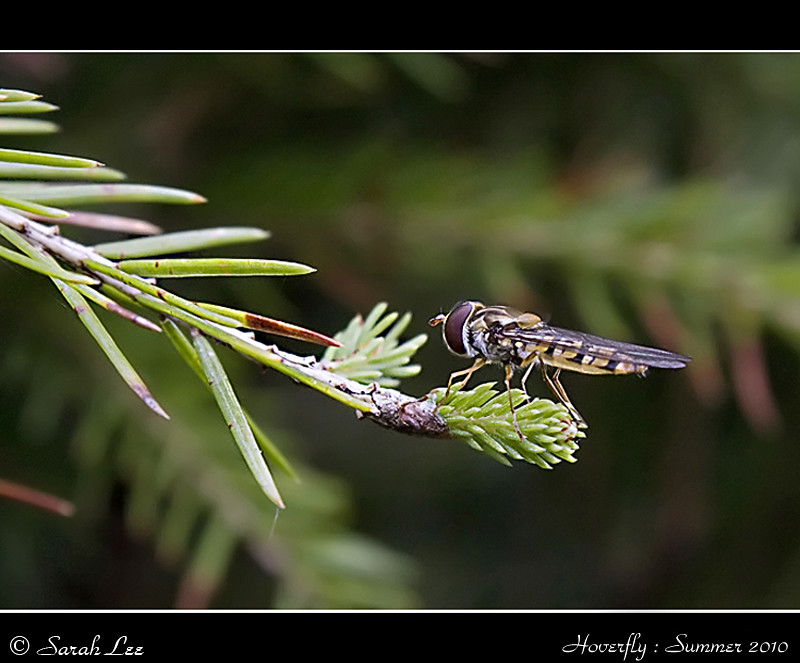
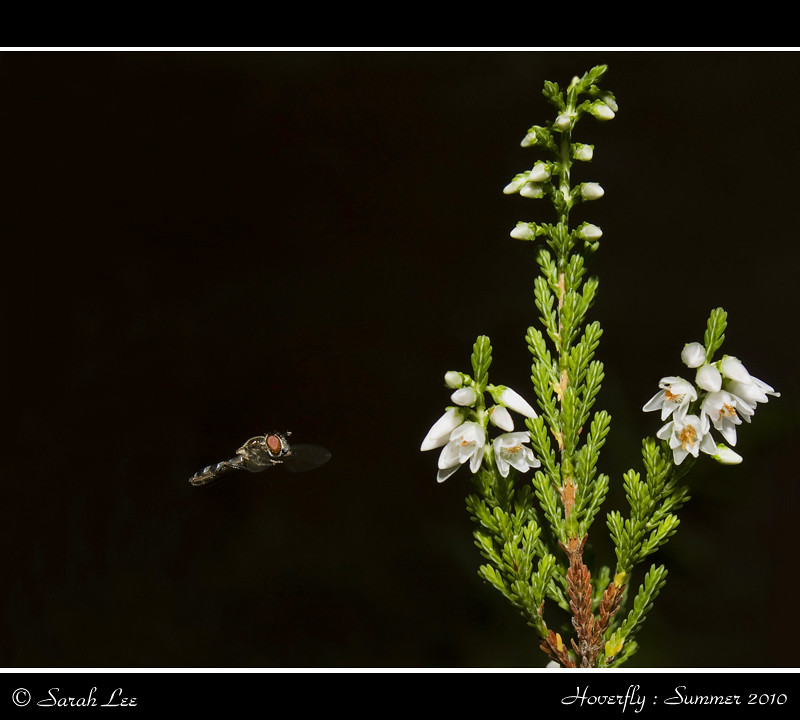
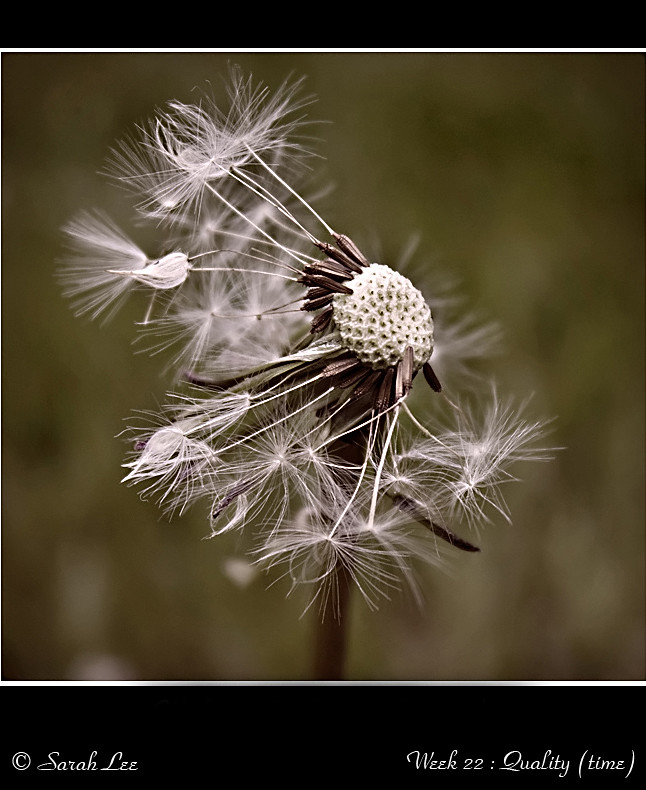
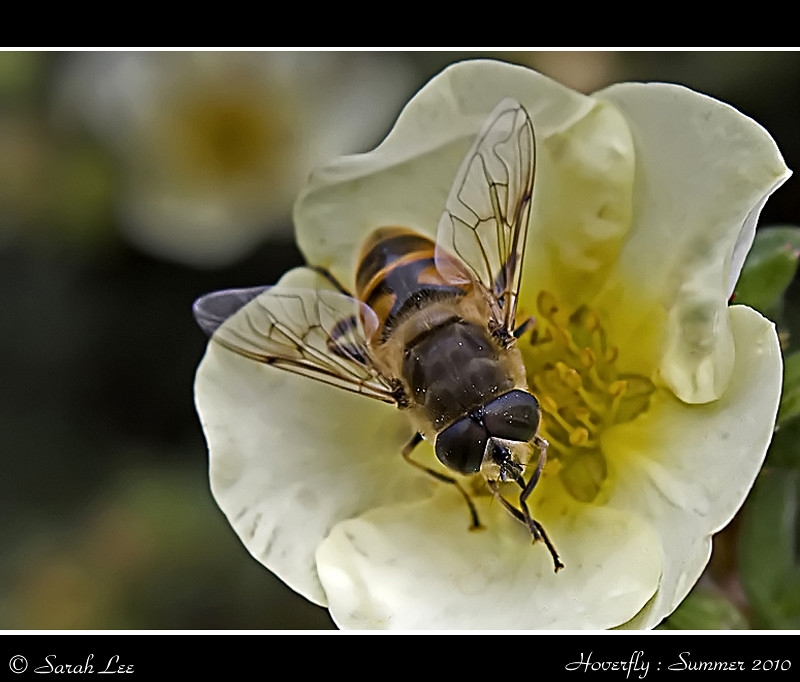
Macro flowers and insects : The Canon kit lens actually focuses surprisingly close, and contrary to what Mike says, I think that it will certainly match anything that you managed with your P&S on macro mode.
These were all shot with the Canon kit lens (no filters or tubes) and only minimal cropping for composition.


Hoverfly resting on last year's Christmas tree in the garden.


Hoverfly on Fir Tree by SarahLee1001, on Flickr

The plant here is a heather - each flower head is only about 2mm in length.


Hoverfly in flight with white Heather3 by SarahLee1001, on Flickr

Dandelion seed head


22 Quality by SarahLee1001, on Flickr

Another Hoverfly


Hoverfly on yellow Potentilla flower 2 by SarahLee1001, on Flickr
 
Last edited:
Is it preferable to have IS on a zoom lens? Especially for a beginner?

One other thing, the settings for the picture quality show sort of a step like logo and what looks like a quadrant logo. What's the difference between the two? I have it on L with the quadrant shape next to it :-S Should I be using RAW instead?

There's no right or wrong there.
Shooting in Jpeg will allow you to make selections about saturation, contrast etc in the camera. RAW allows you more space to make alterations in post processing - It opens up more creative possibilities, plus a greater opportunity to put things right if you don't get it quite right in camera. The files will take up more space on your card though.
 
I'm liking them Sarah!! :thumbs: I thought the 400D with kit lens wasn't going to be able to get anywhere near our CyberShot P&S camera for macro, guess it's the moron behind the camera who's not up to it! :shake:

This is about as good as we got with the P&S though, not very creative at all! :'( Though it's a start I suppose.


DSC02137 by rodofgod76, on Flickr


DSC02206 by rodofgod76, on Flickr


DSC02387 by rodofgod76, on Flickr

How far away were you for the last pic of the Hoverfly?
 
Not much wrong with those shots at all Mark, but once you get the hang of it you'll be able to get far more creative with your SLR. You just have so much more control over the settings.
And don't worry if you're not getting there straight away, all you need to do is keep practising and asking for advice if you're not sure.

That last shot of the hoverfly was taken with the end of the lens about 3-4 inches away from the fly. It takes some patience and very slow movements, but it's perfectly possible to get in that close to insects.

Officially the minimum focus distance for the kit lens is 25cm - that's the closest possible focusing distance from the sensor to the subject. In reality you can actually get a little closer, but that particular shot is starting to push its limits. To get much more magnification than that you would need to start looking at supplementing with macro kit.
 
When they talk about the magnification of macro lenses I often see 1:1 or 1:2 mentioned. Which is better for macro photography?

Also, I've been looking at the remote shutter releases too. Saw some for around £20. Are they all you need? And are they worth it?

With regards to light trails, is it best to avoid a brightly lit road? There's a spot near me which I think would make for a good pic early morning, but the motorway has new, and quite bright lights all the way up it. Will they ruin an attempted light trail pic?
 
i used my remote release fir my fireworks shots this year. wouldnt have got the same results without it
 
Back
Top