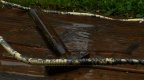
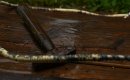
New/Old lens's. Sears 50mm cobbled to my Nikon F mount D7500 crop.

SLR-Roger

Suspended / Banned
Messages
14
Name
Roger
Edit My Images
Yes
I still have the same D7500 Nikon with 18-140mm kit lens. The other day I was at sale and the lady sold me a sears KS 500 with a 50mm and a f=135mm lens from sears, for $8 USD. I thought for the money the Profoto bag was worth it, but as a bonus I was able to file the lens mounts down to fit my camera. The f=135 lens does not let near as much light through as my bigger kit lens and it seems to be missing its aperture and does not seem to ever take a photo in focus (It looks in focus with the viewfinder but looks like a mess when I review it), so I will likely not be using it. Not sure if the focal lengths are right, they both seem to have a hard time focusing on things more then 15 feet away, but they are still
fun to play with. Both images are with the same aperture setting but with different shutter speeds, both at ISO 100, both cropped to have the same spot showing, and to get rid of some extra pixels without down sampling. One is my kit lens the other is the 50mm. I can not tell which is which without referencing the titles, can you? (Other then the DOF it greater on the one lens) Is it a lens worth keeping??? The 50mm seems like a quality lens to get for free, although it does not have auto focus and it freaks me out every time I mount it as I am paranoid it might scratch my lens mount, if I change it out for my Nikkor lens too much. (Although it seems like an easily replaced part?)

Also worth mentioning they both came with HOYA Japan 52mm UV filters! :)
Hammer with 50mm lens.JPG Hammer 18-140mm small.JPG
 
Last edited:
Firstly, no doubt a thrift store price for an old bit 35mm film era kit kit to have some fun with is "fun".

However, having looked it up I note that the Sears KS500 was made by Ricoh with a compatible Pentax K mount.

You have filed down(?) the Pentax K lens mount to make it fit your Nikon but then express concern that it might be damaging your Nikon body..............so for fun you are using a modified lens worth nothing on your Nikon body worth a tidy number of $$$'s. Personally I would not have done that ~ but hey your kit, your risk.

Having said that:-
A lens mount is not just about "making it fit", it is also about the distance from the rear lens element to the film/sensor focal plane. So your modification perhaps has not helped at all for more than one reason???

I know I state the obvious but this is a fully manual lens where "you" set the aperture and focus it.......but as the Nikon would not be able to move (ask recall it) the stop down lever on the lens, whatever you set the lens to it will remain wide open (assuming of course the diaphragm mechanism is functional). NB as part of your mod what did you do to/with the stopdown lever (again if I have recalled the mechanism right?) ???

HTH in some way.
 
^ what they said

Pentax K mount and Nikon F mount have different flange focal distances so you will never get infinity focus as your Pentax lens is sitting too far away from the sensor. Whilst it was a cheap way to play with a new lens, you may be better spending a little more and picking up an older Nikon mount 50/1.8 instead.
 
True I figured the distance from the focal plane/chip to the first focal lens was my issue, the 500 seems to be a way thinner then the D7500. I think you are right about not being a good idea, kind of got that impression myself. :-) I had to file down the 3 lips and the inner body, and file a spot for my latch to turn into, it is a tight fit, and it might 'file' my mount over time, so switching back and fourth is not an option for me, although I might take it out for one photo session before putting it on the shelf. Spending more money on a cheap lens is not in my buget right now, do you mean something like this https://www.bhphotovideo.com/c/product/247091-USA/Nikon_2137_Normal_AF_Nikkor_50mm.html $130? Maybe if I could get a F mount compatible ziess lens with the isotopes inside for less then 100. I would rather save and buy once. But I am kind of in a bind, because if I spend money now on a nice portrait lens such as a 1.4 28mm which would fit well on my crop it would not be as useful when I upgrade to 35mm chip body in like 5-10 years right? I hate to spend a bunch of money on lens's that will be of no use in 10 years. Auto-focus is no big deal for me on a 28/35/50mm lens , but more then a 1:1 I think I would use both a macro a lot more, and a wide angle would be my next update after macro. Can anyone recommend a super nice macro from days past and adapter combo that would work well with my F mount APC? In reality will I really see any optical benefits from upgrading my 18-140? I have never used a high end lens before, the only issue I have with my single lens is that distorts the image slightly. For example if I am taking a photo with straight lines such as a building you can see the lines have a slight curve, it only is noticeable if you look close and at the sides of the image. I have a friend who went to film school (a long time ago) that told me that you can never get rid of distortion completely even with $1000+ primes, is that true? Other then a smaller f number (mine is 3.5 minimum) will I notice any image quality improvements with a 50mm 1.8 budget lens on my 20mp crop, over my multipurpose 18-140 zoomed in slightly? How about a 28mm/35mm 1.2/1.4 at around a $850 price point? What I am trying to ask is: am I actually limited by my lens quality (other then low light and things closer then about 2 feet), or am I more likely limited by my crop body and 20.1MP? After upgrading my tripod and buying two nice SD cards (256GB and 512GB which I fill up faster then you would think on a trip if I end up taking 4k videos) and a few other accessories I am already in way over my head budget wise. (I should have went with a used body probably) So I am not wanting to spend a whole lot more on lens's if it will not help that much, although a nice macro for taking close up photos and photos of things right in front of the lens would be a nice upgrade. Would a second flash not make more of a difference then a nice 28/35/50mm prime?
 
True I figured the distance from the focal plane/chip to the first focal lens was my issue, the 500 seems to be a way thinner then the D7500. I think you are right about not being a good idea, kind of got that impression myself. :) I had to file down the 3 lips and the inner body, and file a spot for my latch to turn into, it is a tight fit, and it might 'file' my mount over time, so switching back and fourth is not an option for me, although I might take it out for one photo session before putting it on the shelf. Spending more money on a cheap lens is not in my buget right now, do you mean something like this https://www.bhphotovideo.com/c/product/247091-USA/Nikon_2137_Normal_AF_Nikkor_50mm.html $130? Maybe if I could get a F mount compatible ziess lens with the isotopes inside for less then 100. I would rather save and buy once. But I am kind of in a bind, because if I spend money now on a nice portrait lens such as a 1.4 28mm which would fit well on my crop it would not be as useful when I upgrade to 35mm chip body in like 5-10 years right? I hate to spend a bunch of money on lens's that will be of no use in 10 years. Auto-focus is no big deal for me on a 28/35/50mm lens , but more then a 1:1 I think I would use both a macro a lot more, and a wide angle would be my next update after macro. Can anyone recommend a super nice macro from days past and adapter combo that would work well with my F mount APC? In reality will I really see any optical benefits from upgrading my 18-140? I have never used a high end lens before, the only issue I have with my single lens is that distorts the image slightly. For example if I am taking a photo with straight lines such as a building you can see the lines have a slight curve, it only is noticeable if you look close and at the sides of the image. I have a friend who went to film school (a long time ago) that told me that you can never get rid of distortion completely even with $1000+ primes, is that true? Other then a smaller f number (mine is 3.5 minimum) will I notice any image quality improvements with a 50mm 1.8 budget lens on my 20mp crop, over my multipurpose 18-140 zoomed in slightly? How about a 28mm/35mm 1.2/1.4 at around a $850 price point? What I am trying to ask is: am I actually limited by my lens quality (other then low light and things closer then about 2 feet), or am I more likely limited by my crop body and 20.1MP? After upgrading my tripod and buying two nice SD cards (256GB and 512GB which I fill up faster then you would think on a trip if I end up taking 4k videos) and a few other accessories I am already in way over my head budget wise. (I should have went with a used body probably) So I am not wanting to spend a whole lot more on lens's if it will not help that much, although a nice macro for taking close up photos and photos of things right in front of the lens would be a nice upgrade. Would a second flash not make more of a difference then a nice 28/35/50mm prime?

I'm sure you can find a used Nikon 50/1.8 for less than $130.

With regards to macro, I can't really advise as the macro lenses I've used on my Sony kit won't fit your Nikon (Olympus OM Zuiko 50/3.5) but I'm sure other Nikon shooters can advise.

For your budget, I'm a bit confused as you've bought two very large capacity SD cards which must have set you back $3-400 but you're concerned about spending $100 on a lens that might 'only' last you 10 years? Personally, I'd have recommended more smaller cards (64gb) so you can spread your files across multiple cards for redundancy. As for distortion, most lenses will show it ot some extent but the higher end lenses generally have better optical correction built in but many modern digital cameras also apply correction in camera when you shoot JPG (not with RAW though). AS you get to wider angle lenses, the distortion will increase, that's just physics with having a fixed lens/sensor alignment.
 
"Very large capacity SD cards which must have set you back $3-400 but you're concerned about spending $100 on a lens that might 'only' last you 10 years?" I suppose you are right in for a pound in for penny. ;-) But will I get any big gains other then 1.7 smaller F value, with a low end 50/1.8 Nikkor? Any reason for the recommendation of a 50mm over a 28mm or 35mm? I was reading a article about the original 50mm lens becoming stranded and how for 35mm film 43mm was ideal for 1:1 but 50mm was cheaper to carve back in the day, I assume that is not the case now that we have 5D carbide CNC and improvements have been made in-lave tech. Although I have no idea how they are made, maybe they use a molten glass possess, not CNC/Polish. Is smaller lens's still more expensive to make? With less then a 35mm chip I would imagine I would need a smaller lens to reach the 'optimal' 'standard' prime? Unless maybe the 50mm is ideal as it will work as a ~70mm prime and then when I eventually get a second camera that is 35mm it will work as a near 1:1?

What I was trying to get at with saying it might useless within 10 years, is that I hate buying twice. If I buy a china tool for example it ends up braking/not working right, then I have to go back and buy the right US/German made tool that does not break and gets the job done. I assume the same goes for lens's, if I buy an 100 dollar portrait lens now, will I not be tempted to buy 'the right tool' two years down the line? That is what is so tempting about the old school lens's: In theory buy a $100-$200 used lens from the cold war that was thousands back in the day and can not be beat by $1000 plus lens's now. But I am not sure which one would be ideal for my camera, or what I would need to get it to work on F mount Crop? Is it truly the better option to get the low end Used Nikkor 50/1.8, over an old German/Swiss/Soviet high end radioactive prime?

P.S. The 512 per GB seemed like a great deal, as did the 250GB which was on a super impulse inducing sale. In retrospect not buying the 512 and getting a hand full of 64GB if ever they went on sale would have been more convenient, so I could have one for each setting. [Landscape, Wildlife, Long exposure sky, portrait, event... and use the 250 for videos] :-) Live and learn. I will share the advise about having more small cards rather then a second large one if anyone ever asks me about SD cards. I have 1 64GB(which came as part of the camera kit) I use for school, and two 32GB I primarily use in my audio recorder. BTW.
 
Last edited:
Oh-Kay.. legacy lenses on APS-C Nikon.... yeah, I dun dat. I bought an M42 adapter to use the collection of primes I had collected over the years for my M42 screw fit film camera, so I could 'play' whilst I saved up for electric lenses....

First up; on Nikon, most old film era lenses, will sit, on an adapter, too far from the lens flange to get infinity focus; they act like a very very short extension tube; so you can get a very close close focus, but never get infinity or even far focus settings! Consequently the more expensive mount adapters for Nikon often have an 'infinity correction element' in them.. which will have impact on the possible IQ they could deliver without it, before you start.

I got such an adapter, but the infinity correction adapter meant that the inner protrusion of my 12mm fish fouled and wouldn't mount. Other lenses may do likewise. You also need to be careful of the adapter potentially fouling or shorting the contacts for the AF mount lens on the camera.

Otherwise it can be a lot of fun, and you can get some great results.

On my D3200, though using an adapter, you loose all through the lens metering, so you have to meter by eye, hand-held meter or electric lens first. The camera will also not control the aperture from the camera buttons as it does on an electric lens, so you have to be sure to stop-down to the taking aperture you want to use on the lens before firing shutter, as well as manually focusing. Worth noting that my M42 lenses are mostly all 'automatic', in so much as the aperture ring does bog all to the aperture iris, there's just a pin, that tells the camera what aperture setting is, if its 'coupled' to the camera's TTL meter, so it can compensate as if the aperture was stopped down.. and will only stop-down to the set aperture when you fire the shutter. So you have to be sure you have the lens' switched to 'manual' on an adapter, because the camera wont 'stop-down' the iris, and you can end up shooting everything 'wide open' regardless of what f-no you set on the lens!

In your case, you don't have an adapter; you have a filed mount.... what coupling there may or may not be and what may or may not work, is any-ones guess! But this could account for a lot!

Maths is doing my head in (note the 's' on the end, I'm English ;-) Lol): 35mm film has a 24x36mm frame as 'standard'. Nikon APS-Crop is 18x24mm half the frame 'area'; the sensor 'crops' half the image projected on it by the lens. This means you don't get the edges that would be in the picture if it was used as intended on 35mm or a full frame digital camera, and consequently the sensor lops off where most if not all 'edge elaboration' like your wobbly door frames, it might show if used on its native camera. Taking just the 'sweet-spot' from the center of the lens' image circle, you then tend to get a bit of a bonus in IQ from legacy film era lenses, even of they aren't all that wonderful to start with.

You tend to get a lot more, though, as most legacy film era lenses, even 'budget' ones weren't as compromised as a modern Auto-Focus lens, having to have complicated and intricate auto-focus mechanisms in them, or, in the case of 'prime' lenses even a more intricate zoom mechanism. So, of what they cost, more emphasis was placed on making them 'good' rather than 'fancy'.

A few 'back-to-back' comparisons I did with my old M42 Primes, were: Pentacon 29mm vs Kit 18-55 and Nikon AF-S 35mm; Ziess 50 vs Kit 18-55; Hanimex 135mm and Prinz Galaxy 300mm vs Nikon 55-300. Absolutely NO doubt, that the old legacy lenses, even though they are not particularly well regarded ones... even the Ziess, is that they were far better optically than the Nikon 'kit' lenses. The AF-S 35mm, (and actually the AF-S 50mm, both bought for my daughter), are very very well regarded AF era 'primes', and 'meh' I can understand why.... but I don't really think that they have any 'edge' in IQ over the old legacy lenses; they are just a heck of a lot less 'faff' to use! Most marked comparison was trying moon-shots with the Prinx 300mm prime vs the 55-300... which is not a particularly wonderful AF lens, but still. The old 'budget; prime was visibly 'sharper' and resolved more detail.... BUT displayed full size, you would have to be peculiarly pedantic to notice, let alone explain any significant difference... the legacy lens shots will just look a bit 'nicer'... and I wouldn't know if I was looking at the Sea of Tranquility or the Irish Sea, to begin with! Paying attention to focus and exposure and composition, makes as much or more of a difference as the IQ the lens can resolve.

So, in conclusion..... as an experiment, properly set up, yes, I can see why so many rave about film-era legacy lenses on modern crop-sensor digital cameras; thanks to the crop-factor you can get a lot of cheap reach; you will also similarly thanks to the crop-factor get a bonus in IQ only taking pixels from the sweet-spot in the center of the lens, a-n-d lot of these lenses, even though they might have been 'cheap' lenses in their day, without so much techno-trickery packed in, were cheaper to make and the IQ was a much more of an important sales feature... while so many more film-era legacy lenses were pure primes, that are even simpler than a zoom, and so much more rigidly attached to the camera. They do have inherent advantages over modern 'consumer' grade electric lenses, not least second hand prices, that are often a joke! (So long as they lens isn't chipped or scratched of battered to heck, and or full of mold or starting to delaminate!)

But... most of the bonus is from using them on a smaller sensor and only taking pixels from the sweet-spot in the middle of the image circle..... which mention of suggested 'upgrade' to full-frame Digital, begs some thought.

There was some contention when I bought the D3200 with 24Mpix sensor resolution, whether the sensor was outstripping the potential resolution of the 'kit' lenses; which my own experience would tend to suggest isn't far off... and adds more to suggest why a full-frame legacy lens on a high pixel crop-sensor digital some-what flatters the performance, but probably DOESN'T have the benefits on a Full-Frame digital.

I chose the high MPix D3200 over the lower pixie D3100 (I later bought for daughter) because of my affliction for fish, alluded to with the disappointment I couldn't mount the 12mm fish for M42 on an adapter. So I soon bought the Sigma 4.5 'full-round' for APS-C to get the full-fish-dish. An expensive lens, especially for something not so likely to get much use! But still. Reasoning is fairly sound; most fish 'crop' the image circle, they only have perhaps 120Deg FoV on a full frame camera, on a crop, they may cover the entire sensor, but with a much more more restricted FoV defeating point of using one. Few fish-eye lenses can deliver a full 180 Deg FoV even on a Full-Frame camera, AFAIK the Siggy 4.5 if the only one that can do it and deliver a full-round image on an APS-C sensor. When used, then you are only putting image on perhaps 2/3 of the possible pixel receptors, and cropping that down to more usual fish-eye proportions you loose even more; a conventional 2x3 proportion rectangle cropped from the middle of a full-round fish shot, will only take about half of the pixels a sensor may have.. hence having more pixels to begin with, gives scope to chuck them away more readily in post..... BUT... this is the pertinent part; even though the 4.5mm fish for Crop was actually more expensive than the camera was, it was still 'cheaper' to buy that than 'upgrade' to a more expensive Full-Frame camera, and try buy a fish for that.

If you are contemplating upgrade to full-frame digital... I have to humph and err to begin with; fantastic cameras, a big leap from consumer grade kit to professional grade gear, but also an exponential leap in price! As well as 'bulk'! And if you are buying into 'full-frame', and can afford full frame kit, its rather bizarre to then start wanting to fit legacy film-era lenses to one, where most of the advantages often claimed for them, come mostly from being used on a small-format sensor, you will not get! Leaving the only 'real' advantage that they are so often so 'cheap'... which is a) because they are so often old and second hand to start with; b) consumer grade lenses, of the film era, for then consumer grade cameras. If you have the money, and the genuine reasons to go to a full-frame outfit, you likely have the money and reason to buy new or at least recent AF-Era lenses designed to work with them!!

Back to legacy lenses on APS-Crop.... have to say its a bit of 'fun'.. and having the lenses to start with for my film camera means it is very cheap fun; BUT, far and away those lenses work 'best' on the cameras they are native to; in my case a Sigma Mk1 Richoch copy and a Zenit, M42 film camera... neither of which beg an adapter, just buying and processing film... which can be a large part of the 'fun'. And slowed down and forced to use some old fashioned 'craft' to assess lighting by eye, check against hand held meter or swing-needle TTL meter, and manually make aperture and shutter speed settings, as well as focus manually, and not 'rush' the job leaving so much to elektrickery, I get that full film experience from the 'engagement' making the camera do what I want... taken home, more fun souping the film, and to get digi-pics wopping it through the scanner..... very very involving, lots and lots of fun to be had..... a-n-d.. even with an old scanner I have had since Y2K 'only' delivering 10Mpix from a full-frame... it's still far more than I 'need' for most purposes, and still 10 huger than I can upload to face-broke or anywhere! A-N-D if anything is going to let down my photo's.... well, it probably wont be how great a camera or lens I am using, it'll be the twit behind it!

Consequently, for the most part, I use those legacy lenses on the legacy cameras they were designed for. On the Electric-Picture-Maker, I use the electric lenses that were designed for them, and rarely do the two mix.

The whole point of the EPM is that its sooooo 'Automatic' it is even more point and press convenient to use than 'point and press' instamatics of the film era! And having shelled out FAR too much money over the last half a decade to get the same sort of lens range I had for film cameras... THAT is its biggest advantage; being so quick and easy to use, letting the automation do its thing! I don't want to turn all that 'off' to 'faff' for ideas of 'go manual - like dee prows'.. if I want to do that, I can get sooo much more manual faff-fun picking up the old Sigma or any of the other film cameras....

Which is to beg another notion to chuck into the melting pot; IF you enjoyed using an old film era manual prime lens... DON'T go risking either the lens or the camera with a ruddy file trying to make it fit and wondering why it don't work so well on an expensive Digital!

You can pick up an old 35mm film camera for relative pennies. An interchangeable lens SLR will likely command a bit of a premium, as that is what folk expect a 'posh' camera to look like and do; ironically, because there are some fantastic non SLR cameras out there that are consequently an enormous bargain just because they aren't an SLR and modern buyer's idea of what an old camera should be like... but still.

Mentioned that old Zenith... in my case it was given to me after being discovered clearing an attic twenty five years ago; then it was worth nothing, because it was a cheap all manual camera hardly any-one could use. Now they can command as much as $50!!!! almost as much as they might have cost new when they were! And they are one of the more favored film era SLR's, a lot on e-bay coming from the former USSR where they were originally made. A lot of the popularity is because they have a rather good 58mm lens marked the Helios 44, much loved by adapter fans, because it often has a pretty fast F2 max aperture, and for many years folk have been buying the cameras to nick the lens to use on an adapter and chuck the camera away! Olympus OM10's are similar, they had the well regarded Zuiko 50mm f1.8 as standard, many adapter fans have similar affliction for. But, that's another film SLR you can pick up for probably $100, with lens. The low end Nikons, are popular because you can put their Nikkor 50 straight on a modern Nikon digital, though you have to be a bit careful about the mounts and AI cpperture couplings...

B-U-T, for under $100 you have a miriad choice of old Film SLR's, no adapter required, just add film, and if you like manual focus-faff, get the full measure! More... you want to experience full-frame... that's what you get; the full 24x36mm sensor size, and the perspective lenses naturally deliver on that format.... and for relative pennies.... Chuck in a changing bag, and dev-tank, for a few more pennies, add a cheap scanner, and you are away, and have all that 'involvement' of doing stuff manually not letting electrickery do it for you.

OR, if you want to experience what you can get from even bigger 'sensor' sizes, and the relative perspective and amazing bokah effects, you can obtain where a 105mm lens has a 'normal' angle of view like a 35mm does on Digital.. go Medium-Format film! Bargains there can be even bigger if you get a bit savvy!

Just as an example, I have a fantastic 120 'folder' bequithed me by a reletive many decades ago, a Ziess Ikonta, that has a Ziess lens, and makes negatives post-card sized 6x9cm, they are enormous... hard to scan... have to use a flat-bed, but still, the resolution that you can lift of them is fantastic; Only gives 8 picture a roll, but the faff-fun is just as enormous! IF what it was about your manual lens experiment was what captured your imagination.

Otherwise; I wouldn't be in too much of a hurry top try mount legacy lenses on DSLR, and as I do, I would be a bit more inclined to use a proprietry adapter, as I did, and be a bit more discerning picking lenses to match.

And for close up? As hinted, an adapter for Nikon will probably need an infinity correction element, without it it will not focus on infinity, and act like a thin 'macro' extension tube... which for that genre is possibly something you could exploit, if you really had to mess in that muddle. Getting more serious, an adapter, or modified rail-bellows and good legacy lens would likely be a great and cheap set up to do more than you can with a 'macro' capable close-focus electric lens; but pretty much dedicated set-up for that genre.. and would likely work well on Full-Frame; but it's specialization, and still knowing whats what and why you are about is the likely key to success not the gear.

And given you can buy manual focus Nikkor lenses that will fit Nikon cameras, full-frame or APS-C without an adapter, and they aren't all that expensive, if you have to go buy legacy lenses, it is rather perverse to go get ones NOT designed to fit your camera!
 
Medium format/large format film, now that is a good idea! I was reading about a high end large format film setup on Ken Rockwell's site but his set up was kind of expensive. That will be a future project for sure! My 130 and my 50 sears still mount to the 500 just fine, if not a tiny bit loose if I rock it back and fourth hard it will move a tiny bit. Now I have a cool little film camera, other then disposable I have never shot film, my dad had a ~20mm built in lens camera that I never used and my mom had a 'NICE' 35mm she never let me touch, so maybe I will buy a roll of film. I have a flat bed scanner ~4000dpi if memory serves. Not going to be the best conversion, I may have to just pay Walmart or the like to digitize it. Is there a simple formula for using my D7500 to meter light to make manually setting the 35mm easy, despite the 1.5 size difference? (Less film size, less light, need lower shutter speed)

Well I just ordered the 50/1.8 AI non auto focus in the link above, there was a 1.4 for cheaper, but all the things I was reading said the 1.8 was sharper at 1.8 then the 1.4 was, and with my sears 50/2 I seem to get enough light to take decent 1/20 photos at 9PM. (Maybe more at higher ISO) I also read that 1.4 needs a update to the ring of some kind that makes it a 'AI', so I was afraid that the 1.4 being a few dollars less would not fit to the camera. Better safe, I just got the 1.8 that seems like it will fit just fine.

About Macro lens, It seems I have two cheap options:
1. Extension tubes with my 18-140.
2.Turn the 50/1.8 around and manually hold it to the body. (Will work indoors, but would be scared to dirty my camera)

Anyway today is my last day using the sears 50MM I will be switching back to the 18-140 tomorrow morning as to avoid changing the incompatible 50mm any more times. I should probably learn how to clean it out while I am at it, just to make sure there is no micro sized brass slivers or some such. Maybe not the smartest thing I have done all year! :-( Glad I can get an optically good manual for 66 with free shipping. It seems to have one small scratch to the side of the front optic, but it is a crop so it might not even effect the image, I will post sample images to a new thread sometime in the future using the nikkor manual 50/1.8

It seems that I have enough room in the studio to use a 50mm to take portraits, and 50 is going to do well on my APS-C for landscapes which is my favorite. I also like taking photos of the night sky, it seems it will work well for that as well. :-)
 
Medium format/large format film, now that is a good idea!
Check e-bay. My Ziess Ikonta commands a walloping $50!!! Its NOT an expensive place to have a play.

Some of the MF cameras are still silly money, but many many more, are an absolute steal, like the Ikonta.

For the tiny money the cost... why not give it a go?
I was reading about a high end large format film setup on Ken Rockwell's site but his set up was kind of expensive.
I think you have to be peculiarly masochistic to want to mess with cut-sheet large-format cameras... if you check out Film & Conventional, though, it needn't be 'so' expensive... (but is rather relative!)

There's a few people who make their own cameras, as pioneers of old did, and there used to be, and probably still are, some DIY 'Kit' cameras, to make from ply-wood, or even cheaper 'plans' if you get the wood from local hardware store, that are incredibly cheap... you just have to add a lens... which probably isn't!

But, those folk into that sort of thing HAVE found ways to keep costs some-what sensible, re-purposing reletively cheap and available lenses from 'junk-shop' cameras on e-bay; so it is do-able if you get a bit clued up on the topic.

But cut sheet film is never particularly cheap, and it's not something yo can drop into your local mini-lab like a roll of 35mm! So, it does beg a LOT of getting clued up.

Now I have a cool little film camera, other then disposable I have never shot film, my dad had a ~20mm built in lens camera that I never used and my mom had a 'NICE' 35mm she never let me touch, so maybe I will buy a roll of film.

That would be a good, and very cheap way to start!

I have a flat bed scanner ~4000dpi if memory serves. Not going to be the best conversion, I may have to just pay Walmart or the like to digitize it.
Depends on the scanner and the scanner software, and the film format.

My Daughter, when she was starting to do Photography at school, found my old Zenit on top of the wardrobe and nagged me to teach her how to use it.... I loaded up some out-of-date Kodak, and took her out to a 'quaint' little village nearby to snap away at the duck-pond and cricket club etc; and to give her some comparison shots, took the Electric-Picture-Maker...

Which is a little quirk... stopped at ASDA (Walmart!) on the way home to get some bits for dinner; dropped her film in at the kiosk, and she was looking at her snaps in the car before we got home, and I could get my digi-pics off the dang SD-Card!

Anyhow... ASDA did a 1hour develop, and print and scan, onto CD.. I think it cost about £10, which was mostly for the prints. I tend not to get either prints or scans, and DIY. Cost me only £1 for a straight develop only on a roll of 35mm. Dev plus scan, ISTR was something like £1 per film developed, plus £1 for the CD, and then £1 per film (as long as they developed it) for the three or five films they could fit on one CD.

Salient point was I was not overly impressed by the ASDA scans, but? For the cost and the effort, they were pretty acceptable.

Give or take, using a 'cheap' e-bay web-cam type scanner, I 'think' I got slightly better images, for the faff it took to make them, and with slightly better pixel count, but not much in it.

Neither compared to what I could achieve using dedicated 35mm Film scanner, even a 20year old one, and modern software, but both were a heck of a lot less faff and far FAR quicker, and either were more than adequate for web-display and hand-sized prints.

You say you have a scanner; how wonderful your results might be would be very very dependent, and it's quoted DPi means very little.

My Digital SLR claims 24Mpix sensor.... that is the number of pixels it will create in an image file; that is NOT the number of receptors on its sensor. It probably has close to 24million receptors, but they will be arranged in a honey-comb pattern not a grid, and 1/3 will be filtered green, 1/3 red, and 1/3 blue... computery stuff takes the brightness value from each receptor and then does some guess work to paint by numbers what it best guesses chould be in each of the 24million image pixels, from the values it gets from over-lapping RGB receptors... its known as 'interpolation', and almost all digital imaging devices use some, and cheaper ones an awful lot!

I think that my little Web-Cam scanner has an actual image 'eye' that has only something like 1.3 Mpix resolution (if that!), and like the Digi-SLR, takes 3 receptors to get the colour data for one image pixel; yet it boasts something like 14Mpix 'resolution' because that's how many pixels are in the image file it creates... using an awful lot more 'interpolation'... or in the vernacular, simple guess work! To sub-divide the squares!

There's also the small issue, that negatives are transparencies and expected to be 'projected'; so lit from behind where they are viewed. Most desk scanners are designed to scan paper-work, and its lit from the side its viewed by the scanner. This tends to make very bad scans of transparency media; and if a flat-bed scanner can scan transparency media, usually begs a transparency adapter to light them from behind and give a neural back-ground where they are 'transparent'.

So, a bit more to that suggestion, but your scanner may not even give you a scan, let alone a good one; but, it could deliver fantastic ones, depending.

Just as a point of note; that 20year old dedicated film scanner of mine, has a resolution of 2700 Dpi.. that comes out at just a noggin under 10Mpix for a 35mm frame.. which was better than most DSLR's for half its life! And still not to be sniffed at... as mentioned its still 10x bigger than I can upload to most web photo-hosts, and far more than I need for most practical purposes.

More pertinent thing is the colour depth and contrast. Using modern software with multi-pass over sampling, I can get fantastically well detailed scans, but it has little or nothing to do with the number of pixels in them!

Is there a simple formula for using my D7500 to meter light to make manually setting the 35mm easy, despite the 1.5 size difference? (Less film size, less light, need lower shutter speed)

An F-Stop is an F-Stop!

Depends how you try and meter with the Electric-Picture-Maker; but if it tells you 1/100s shutter, at f16 aperture at ISO 100... thems your settings, and you should be able to copy them across to any other camera you point at that same scene....

You dont actually NEED to meter to take a photo.

Once upon a time, cameras didn;'t have meters in them.. check whether the one you are trying to use does. And if it does, is it 'coupled' to the aperture and shutter settings?

In a meter-coupled-AE camera, it will take a meter reading and decide for you what aperture and shutter speeds to use. ISO is the film speed, and in some, later "DX-Coded" cameras, the camera uses electrical contacts to make a circuit or not, through the metal or paint on the film canister to tell it what the film speed is; if not; you need to tell it via a dial or similar on the camera.

On some cameras, there may be some more 'manual' control, where you can manually select the shutter speed or more likely the aperture, and then the AE will set the other, again to the ASA of the film its read of the can or you have set on its dial.

Then there are coupled NON Auto-Exposure cameras; like my Sigma, that still has a TTL or 'Through the Lens' meter; just has a hi/lo swing needle in the view-finder, and it will go up or down if you change the shutter speed or aperture, or ASA.. you pick the settings you want, and adjust them to get the needle centered..

And then there are meter-less cameras like my Zenit... there's no meter in it at all, you make the settings of aperture and shutter you think best... and that's it...

Like I said you dont actually HAVE to meter... used to be a little pictorial guide on the inside of film boxes to whats known as the f16-Sunny rule; basically says that on a good sunny day, the shutter speed should be 'about' one over the films ASA, at f16... if its a bit cloudy, open up a stop, if its very cloudy, open up two, if dark... use flash! NOT particularly scientific... but curiously, it works! More actually works rather well! even on digital... try it!

Its the simple version of metering by eye; which is basically looking at your scene and assessing how close or not it is to f16-Sunny and what range of contrast you have in the scene and how close to center you want your exposure... which is where a bit of experience and practice comes in.

Using a hand-held meter? Bit more convoluted way about, and introduces some different metering schemes... you can meter by 'incident' or 'refected' light. Incident is how much light is falling on your subject; reflected is how much light is bounced off your subject. Either way, the meter will give you an 'Exposure Value' that tells you how much or little light it senses; which if you have a very dark or very bright subject, could be very far off what you 'see'. And you would generally have to translate an Exposure Value off the meter scale into possible camera settings, by way of ISO/Shutter/Aperture.

I have a rather nice 'selenium cell' (No batteries required!) Russian Leningrad meter, to go with the old meterless Zenit. Like most meters of this type it will take either reflected meter readings taken from next to the camera, or 'incident' readings taken next to the subject, using an 'invercone' or diffuser over the sensor eye. Swing needle then points at scale marked in EV's, and there's a 'computer dial' underneath, I twist to line up the film-speed in a window, then turn the dial to the EV shown on the scale and the two perspex wheels rotate to give me aperture f-numbers next to shutter speeds, so for the EV I have metered and film speed I have set, I get a number of possible shutter speed and aperture combinations I can pick from to make my exposure.

More modern electronic and digital meters do much the same thing, but they can save some messing with the dial, and give you a direct read-out of the f-number or shutter speed it suggests you use, on an LED bar or LCD display, depending how you have programmed them.... Personally, I find this more of a faff than twisting the dial on an old fashioned meter, and a pain when the batteries are flat, but that's abother matter.

Either which way, metering is only for guidance; you dont HAVE to take the meter's word for anything, and the f16-Sunny rule does tend to be pretty reliable, and a good way to judge if your meter's telling porkies....

Using a meter-less camera like the Zenit or my Ziess Ikonta or my old Grandad's Kodak Retinette, then....

I will look at my subject... look at the sky; think about how close to f16 sunny the day is... and then... cos I am not all that confident.... get the meter out... and see how close my guess is to the meter... both by the camera using a reflected meter... then wandering over to my subject and taking an incident meter..... then I'll remember my old grandad NEVER taking any photo's.. but spending many many hours wandering around looking at his meter, and the sky and the subject, and tutting and muttering..... so walk back to my camera bag, chuck the meter in in disgust, determined to go with my gut... and then 'just' see what the Electric Picture Maker suggests.....

After that though? I will tend to grow a pair... and having made my settings for the first shot, based on the information overload of meter and other camera, and f-16 sunny rule.... and do it all by eye.... tweeking the settings maybe a stop or two either way, depending on whether I am looking at the shadows under trees or a bright sandpit or something, or whether the clouds have come out....

And with film... I probably needn't have fretted very much ANYWAY!

A digital sensor, can distinguish between perhaps eight stops difference in light; get the metering too fat off center and high-lights will easily 'blow' or shaddows 'merge'.

Film? USUALLY has a far larger 'exposure lattitude'; so much so that many many older, usually cheaper cameras didn't have any meter, and often a fixed shutter and aperture; they relied on the exposure lattitude of the film to not blow high-lights or merge shaddows if it was a bit of a bright day or a cloudy one. The film probably had something in the order of twelve stops diffeence between discernable shades.

So you probably need to be within one or two stops of 'best' exposure value, with digital, on film? You can probably be off by three or four, or more, and still get a pretty reasonable exposure....Which all makes the topic some-what academic, really... but you with film, you REALLY don't need to be 'so' critical or demanding.... there's no such thing as a 'perfect' exposure anyway... see.. Exposure - Exposed!

Back on topic; an F-Stop is an F-Stop... the whole system of f-numbers and shutter speeds, is concieved to keep things constant, and be convenient to cameras and the same between them.

Actual SI unit of light intensity is the LUX... and neither cameras nor photo-light meters are calibrated in them, so you dont have to try and work out the maths to translate to shutter-speeds and f-numbers; that entire system is conceived around f-numbers so that one stop of aperture is the equivilent of one stop of shutter, is equivalent to one stop of ISO, regardless of whether the camera is digital or uses film, or whether it uses big film or small, or whether its got a wide angle lens or a telephoto...So, if your digi-cam says ISO100, and 1/100th at F16.. thems the settings and they would work on any other camera for the same scene, regardless of how big or small it is or whether it was digital or film.

Bigger fish here is that your DSLR will be taking a through-the-lens reflected light meter reading... and trying to force the settings it thinks best on you... they may not be... use your eyes and assess scene for yourself, and remember a reflected reading will likely suggest settings to make dim a photo of a white rabbit on a ski slope, or settings to make grey, a black-cat on a coal hole. There's no such thing as a perfect scientifically calculated exposure, you ALWAYS need to assess your scene by eye, to decide if what the meter, whether coupled or not, whether hand held or in camera, what ever method of metering it is, is REASONABLE to get what you want.... and film has a LOT of tolerance or 'latitude' on exposure.

About Macro lens, It seems I have two cheap options:
1. Extension tubes with my 18-140.
2.Turn the 50/1.8 around and manually hold it to the body. (Will work indoors, but would be scared to dirty my camera)

Not really my genre; BUT...

3/ extension tubes with your 50
4/ a reversing ring for either!

A reversing ring to mount the lens back to front on the camera WOULD seem a slightly more practical and safer way than trying to hold the lens the wrong way round infront of the camera!

And extension rings in Nikon F-Mount aught work whatever Nikon F-Mount lens you choose to hang on them.

Your call... but I wouldn't be too keen on the idea of trying to hand hold lens infront of camera, or have particularlt high epectations I could hold it steady or central during exposure!

Extension tubes would probably be my preffered solution!

Have fun!

 
Back
Top