ND Grad soft filters - How do you place them on a non straight horizon?

swag72

Suspended / Banned
Messages
7,969
Name
Sara
Edit My Images
Yes
Just supposing I want to use the ND grad filter for a landscape, but the horiszon isn't straight, say there's a building running into the sky - If I want the building to be the focal point of the shot, how do I do this with the filter?

Sorry for the dumb questions - More to come!!! Should I buy a book?!!
 
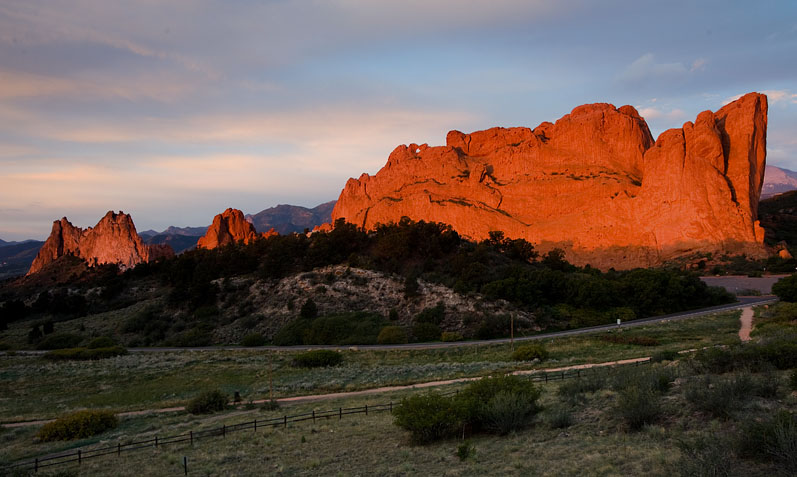
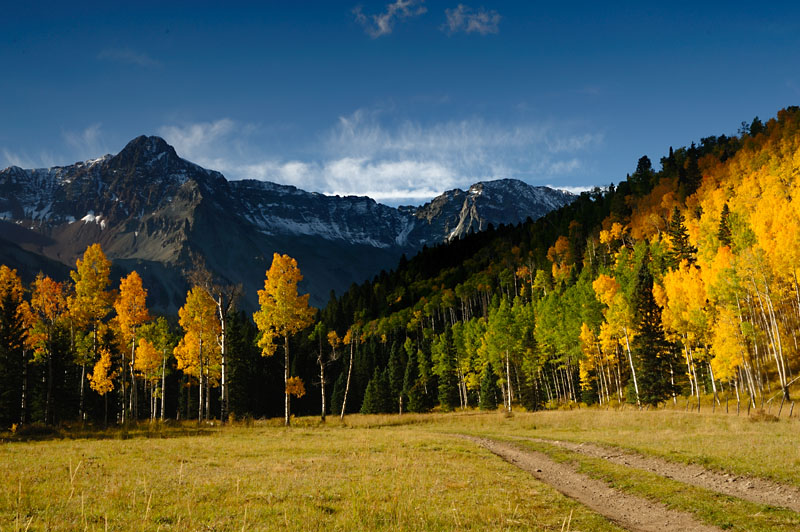
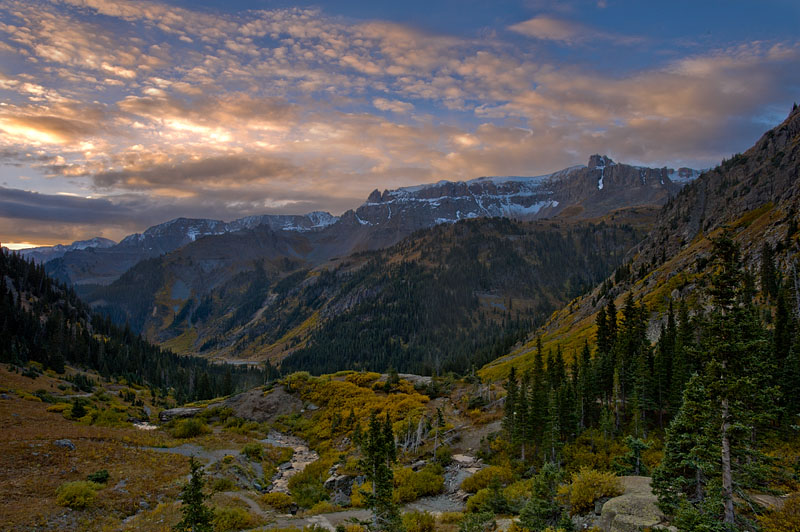
You can tilt them, here is an some examples where I've tited:


2919528998_81b1bcd8ed_o.jpg


If you closely you can see the grad line on this...

2925029984_f23003c50e_o.jpg


2924079671_f65eae140c_o.jpg


both titled anti-clockwise to darken the skies and mountains, leaving the trees on the left nice and bright on the first image.


TBH if you have a very promintent feature that protrudes past the horizon its probably not a thing you should use a filter for. But I tilt my Grads all the time.
 
say there's a building running into the sky - If I want the building to be the focal point of the shot, how do I do this with the filter?

It usually doesn't notice too much. If it does, using a brighter f/number reduces the overall effect. If it's still a problem, tough :(

Richard.
 
How do you place them on a non straight horizon?

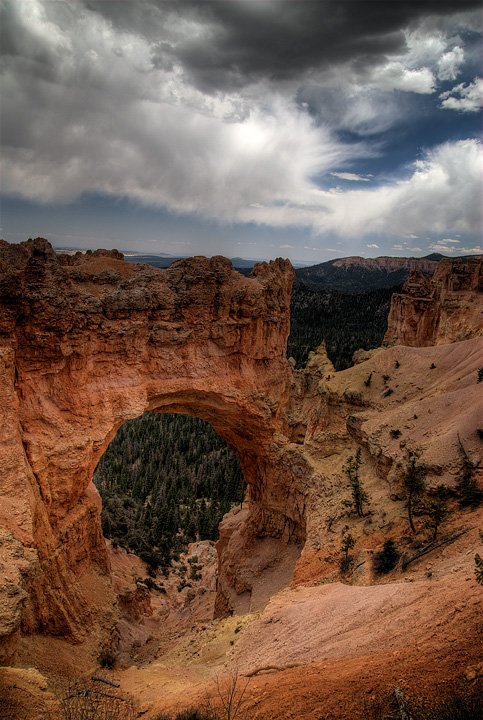
I would say, very carefully! What I sometimes do is give up on the filter and bracket multiple exposures for HDR.

e.g. this very non-straight horizon.

 
I don't believe that a multiple exposure to that extreme looks better than using a grad.
 
I appreciate it's not to everyone's taste, but it could be an option for some.
 
I appreciate it's not to everyone's taste, but it could be an option for some.

And it's a good option :) Takes some skill like most things, but can look superb.

Biggest problem is that many subjects move between exposures, and it's often best to use a tripod. Apart from that, HDR produces the best results by far.

Richard.
 
I beg to differ, but that's not for this thread :)

Oh go on! The OP's question has been thoroughly answered ;)

What's not to like about HDR?

Richard.
 
There's a reason why the filter holder moves. It's for such thing like this! As previously stated, with different subjects, different angles of filter is needed, and the filter holder rotates on the lens :D

As for say, a building in the frame, i'd put a soft .6 grad, or even .3 grad, with the grad starting on the flat horizon, then then PP the image afterwords, to correct of needed.
 
As chewy mentioned, a soft grad will overcome any small incursions into the sky part.

I sometimes use stepped grads, i.e. one on top of another but higher up in the filter to get the right light balance.

If the building (you wanted to include) pushed well into the sky, I'd consider using a polariser rather than a grad, or work the shot around until the light is more balanced between sky and buildings.
 
HDR is just awful almost all of the time. The problem is it just looks cartoony and unnatural, and screams "Look at ME! Look.. HDR!"

Grads any day!

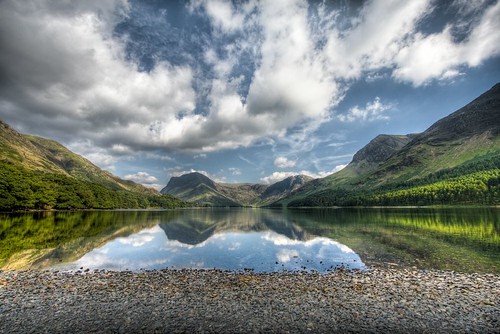
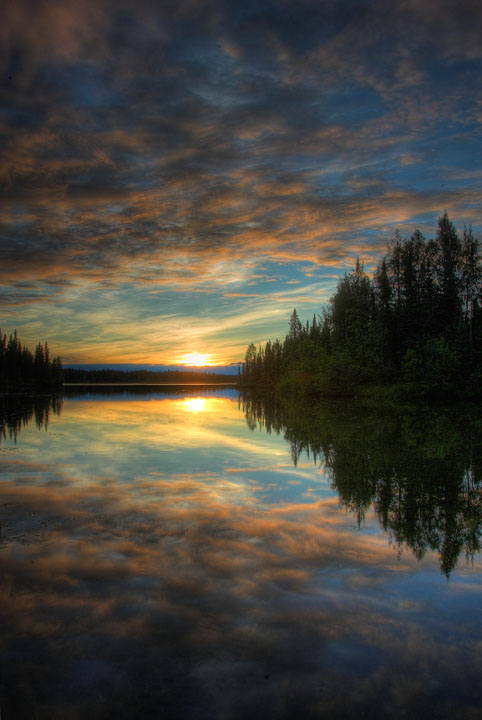
However here is an HDR or two did that worked quite well I think.


522093017_cc7647f4fc_o.jpg


459798722_35cf742332_o.jpg


In a nutshell, if you want to be a photographer, do it in camera with Grads.
If you want to be a CGI cartoon artist, use HDR by all means ;)
 
People are too easily dismissive of HDR.

HDR is wonderful, when used correctly.

HDR is a solution to a problem that shouldn't exist.

Folks whine on about megapixels and high ISO noise - a better solution would be for manufacturers to focus on dynamic range improvements IMHO, and focus less on the high megapixel / high ISO madness.

But thats probably something for another thread :)
 
Having a few issues attaching a grad to my 14-24. Think I'll have to use cartoons.
 
HDR is a solution to a problem that shouldn't exist.

Folks whine on about megapixels and high ISO noise - a better solution would be for manufacturers to focus on dynamic range improvements IMHO, and focus less on the high megapixel / high ISO madness.

But thats probably something for another thread :)

So it's okay to belittle the technique of HDR, but praise ND Filters, despite both being solutions to the same problem?

Seems a little pot kettle black to me.
 
So it's okay to belittle the technique of HDR, but praise ND Filters, despite both being solutions to the same problem?

Seems a little pot kettle black to me.

Don't forget that he's used HDR and liked the results ;) Where's the stirring the pot smiley?
 
So it's okay to belittle the technique of HDR, but praise ND Filters, despite both being solutions to the same problem?

Seems a little pot kettle black to me.

I've never needed to use either with my Fuji S5 Pro ;)
 
Don't forget that he's used HDR and liked the results ;) Where's the stirring the pot smiley?

Yes. I'm all for amicable discussions, that weigh the pro's and con's of different techniques, but to push a holier-than-thou attitude is just yawn. Keep up the good cartoons, Pete.
 
nvm. Not playing games.

No, I genuinely would prefer a sensor with decent DR.

You can call me a whatever you asterisked out, but give me a sensor with native high dynamc, HDR and a Grad solution, and I'll take the native high DR solution anytime.
 
No, I genuinely would prefer a sensor with decent DR.

You can call me a whatever you asterisked out, but give me a sensor with native high dynamc, HDR and a Grad solution, and I'll take the native high DR solution anytime.

So would anyone. I do not see your point. Unfortunately some of us aren't on six figure incomes, and most of us don't have the disposable income to spend on a S5 or Hassy to get results that ND filters or HDR would achieve similarly. You seem to just be stirring the pot to either stroke your own ego, or argue with everyone because it's 9am on a freezing tuesday.
 
So, just clarify your point for me? Because you have me completely lost.

Don't use HDR, because it's cartoony

Don't use ND filters, because a £14k camera will be better
 
So, just clarify your point for me? Because you have me completely lost.

Don't use HDR, because it's cartoony

Don't use ND filters, because a £14k camera will be better

I don't recall mentioning a £14k camera?

I can see I've lost you, so I would urge reading what I wrote, not what you wish I'd written.
 
I don't recall mentioning a £14k camera?

I can see I've lost you, so I would urge reading what I wrote, not what you wish I'd written.

I know what I read. An S5 Pro, in your experience (I have none, so can't comment) has better Dynamic Range than that of Canon or Nikon.

I mentioned the 14k Camera.
 
I know what I read. An S5 Pro, in your experience (I have none, so can't comment) has better Dynamic Range than that of Canon or Nikon.

I mentioned the 14k Camera.

The S5 Pro does indeed have better dynamic range - the sensor was designed for it. Apparently the new Sony A900 comes very close, and the D700 isn't too far behind.

Being able to do in one shot what will require a 3 shot bracketed burst for HDR from other cameras is very useful.

I've used all 3 solutions, and while for some reason you think I'm on a windup, I'd prefer a sensor solution that delivers more DR out-of-the-box.
 
The S5 Pro does indeed have better dynamic range - the sensor was designed for it. Apparently the new Sony A900 comes very close, and the D700 isn't too far behind.

Being able to do in one shot what will require a 3 shot bracketed burst for HDR from other cameras is very useful.

I've used all 3 solutions, and while for some reason you think I'm on a windup, I'd prefer a sensor solution that delivers more DR out-of-the-box.

That wasn't the argument. Everyone would like their camera to have more Dynamic Range. The fact remains, that's not always the case. And with people having invested thousands into their preferred manufacturer (Canon/Nikon/Whatever it may be) - a discussion of solutions to help counter the problem is perfectly fine.

But you chose to argue with that and dismiss both solutions as weak, because if you throw x amount of money in on a new camera and glass, you can get better results. So as I've said, what's your point?
 
yeh, another thread ruined by the HDR debate!

Leaving all that asside, the OP's question is a tricky one and if it is just a single building sticking up well past the horizon then the filter solution will never really be able to cope. Personally in that situation I'd take a couple of exposures of the same shot and then use graduated blends and masks in post processing to get the balance bettween the different elements. I'd probabaly also try a HDR to see which reult I prefered.

I'd always like to get things right in camera but sadly sometimes it isn't an option and thats where post processing comes into it's own and HDR is just another tool in the locker.
 
do stop arguing!
 
Back
Top