

Good morning. Lindsay [mod] suggested that I post here for those of you interested in distinctions. I began after seeing assessments at the NEC which took place during the Photoshow in 2011 and 2012. I took a small set of images to a meeting of an area group and was told they were all record shots so I checked the website and set to work. I attended as a spectator both and advisory day and an assessment day. I then attended a couple of advisory days on my way to assessment in 2013. At this time, I had no Lightroom or Photoshop and did my best with Aperture. I did not print my own photographs at that stage so the process was a bit slow. I found that I was not getting the results I wanted from labs and used a lab in the west country - not cheap but enough to get me to my first advisory day. At that event, one of the assessors was very positive about my work and offered to help me print. I was also told to add a bit more variety to the panel so I added a studio shot - my ski boots - and the remembrance shot. I went to assessment in 2013 and was successful.
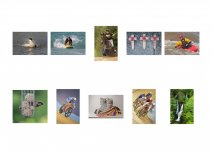
In 2014, I began working on my ARPS, having taken early retirement. My first projects were a fairly lengthy rabbit hole and, after two applications that were not successful, I stepped away and went off and did my camera club competitions for a acouple of years. Those panels were based at Slimbridge and, looking back, my 2nd iteration would have ended up being improved, had I known about the contemporary genre. I was helped enormously at an advisory day to let it go by another assessor who spoke to me privately after the work was put up. He was very positive and suggested I found a different outlet for it - but didn't think the assessors would get it. His honesty was really helpful.
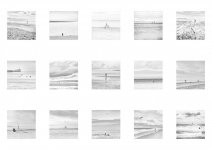
We then went into a period of frequent travelling to the north east as my wife's parents' health declined. I was told my next project would find me and it did. We would escape to the coast both in the north east and elsewhere, mostly around Britain. I realised I was getting a set together and took it to advisory in Salisbury in the autumn of 2017. Again the assessors were very helpful; it was suggested I try matt paper. I duly acquired a test set of papers from Fotospeed and, when I was close to a final choice, asked another well known UK maker, if I could have a sample of their equivalent without buying an entire box of samples; they wouldn't do that so I stuck with NST Bright White. What a fab paper that is. It was also suggested that a "get rid of a few dogs"! So, I did that and went to a second advisory. Sue Brown FRPS was really helpful; she pondered and then switched two out and there it was, good to go. So, I did my final print and delivered them to RPS [we lived about an hour away plus M4 traffic] to prevent me from tinkering further. Here it is:
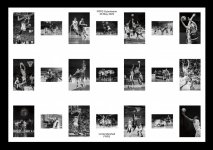
Back in 2014, I had started to take photographs for the Worcester Wolves, a team in the BBL - the UK's highest level of basketball. It was a steep learning curve and one which I pursued as a Fellowship possibility from 2018. I first went to advisory as documentary but both assessors immediately suggested I switched to Applied as they appreciated the action. I worked away at this and also worked on my own printing from the autumn of 2018. I jumped in at the deep end and bought a Canon Pro Graf 1000 from Fotospeed and probably drove Tim Jones [tech support] up the wall with my questions and stresses about what felt like a dark art. He was and still is very helpful with printing enquiries. I chose FS Platinum Baryta for the set, only printing on it when I was as sure as I could be that it wouldn't be a complete waste of paper. Editing from the prints was a key part of the process. I had a one-to-one and then, having done everything we both thought would work, I went to assessment last November. And down it went! Fortunately, I was watching that one on line so could have a rant, sulk and then wait for the feedback and a very welcome offer of a resubmission which did not come on the day. I switched out the images that were not considered to be F standard. In doing that, I had to then rebalance the set. I went to a 1:1 with the chair of the Applied panel in February and resubmitted. He suggested a tweak to the statement and the removal of one part of an image. I took them down to Bristol as soon as possible to prevent further tinkering again.
We decided to go to Bristol which was really stressy but fortunately my set was the second portfolio to be assessed. The review took about 25 minutes and seemed like a very long time indeed. I imagined I would jump out of my seat as I had done before but this time I almost slipped off my seat in relief. Here it is in case you had not seen it before.
So, 10 years and my photography has improved immensely, my printing skills too. I am now switching back to a more fine art / contemporary approach with hand made books... isn't this thing we do brilliant?
In 2014, I began working on my ARPS, having taken early retirement. My first projects were a fairly lengthy rabbit hole and, after two applications that were not successful, I stepped away and went off and did my camera club competitions for a acouple of years. Those panels were based at Slimbridge and, looking back, my 2nd iteration would have ended up being improved, had I known about the contemporary genre. I was helped enormously at an advisory day to let it go by another assessor who spoke to me privately after the work was put up. He was very positive and suggested I found a different outlet for it - but didn't think the assessors would get it. His honesty was really helpful.
We then went into a period of frequent travelling to the north east as my wife's parents' health declined. I was told my next project would find me and it did. We would escape to the coast both in the north east and elsewhere, mostly around Britain. I realised I was getting a set together and took it to advisory in Salisbury in the autumn of 2017. Again the assessors were very helpful; it was suggested I try matt paper. I duly acquired a test set of papers from Fotospeed and, when I was close to a final choice, asked another well known UK maker, if I could have a sample of their equivalent without buying an entire box of samples; they wouldn't do that so I stuck with NST Bright White. What a fab paper that is. It was also suggested that a "get rid of a few dogs"! So, I did that and went to a second advisory. Sue Brown FRPS was really helpful; she pondered and then switched two out and there it was, good to go. So, I did my final print and delivered them to RPS [we lived about an hour away plus M4 traffic] to prevent me from tinkering further. Here it is:
Back in 2014, I had started to take photographs for the Worcester Wolves, a team in the BBL - the UK's highest level of basketball. It was a steep learning curve and one which I pursued as a Fellowship possibility from 2018. I first went to advisory as documentary but both assessors immediately suggested I switched to Applied as they appreciated the action. I worked away at this and also worked on my own printing from the autumn of 2018. I jumped in at the deep end and bought a Canon Pro Graf 1000 from Fotospeed and probably drove Tim Jones [tech support] up the wall with my questions and stresses about what felt like a dark art. He was and still is very helpful with printing enquiries. I chose FS Platinum Baryta for the set, only printing on it when I was as sure as I could be that it wouldn't be a complete waste of paper. Editing from the prints was a key part of the process. I had a one-to-one and then, having done everything we both thought would work, I went to assessment last November. And down it went! Fortunately, I was watching that one on line so could have a rant, sulk and then wait for the feedback and a very welcome offer of a resubmission which did not come on the day. I switched out the images that were not considered to be F standard. In doing that, I had to then rebalance the set. I went to a 1:1 with the chair of the Applied panel in February and resubmitted. He suggested a tweak to the statement and the removal of one part of an image. I took them down to Bristol as soon as possible to prevent further tinkering again.
We decided to go to Bristol which was really stressy but fortunately my set was the second portfolio to be assessed. The review took about 25 minutes and seemed like a very long time indeed. I imagined I would jump out of my seat as I had done before but this time I almost slipped off my seat in relief. Here it is in case you had not seen it before.
So, 10 years and my photography has improved immensely, my printing skills too. I am now switching back to a more fine art / contemporary approach with hand made books... isn't this thing we do brilliant?


