More Failure...

Harlequin565

Suspended / Banned
Messages
8,684
Name
Ian
Edit My Images
No
I'm a bit peeved about this...

2020-05-11-trix800-insta500.jpg

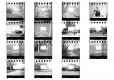
This is the contact sheet from my Instamatic 500 which is a 126 camera. The first roll through this was fine, but used with a camerahack 3d printed film cartridge. This second roll was using a recycled cart. For those of you that remember 126, there is a film counter window on the back, about the size of that rectangle. The Camerehack cart doesn't have it.

I taped up the back of the camera, so I thought I wouldn't have to tape over the hole on the cart itself. Looks like I'm wrong. What I don't understand is
- If light is somehow leaking through the film counter window why has it only exposed the small area and not the whole image?
- If the leak is only happening at the point of exposure, surely the shutter speed would prevent over exposure?
- (I cut the film and scanned it backwards, so frame 1 is bottom right) How is it frame 12 doesn't show it?
 
- If light is somehow leaking through the film counter window why has it only exposed the small area and not the whole image?
- If the leak is only happening at the point of exposure, surely the shutter speed would prevent over exposure?
- (I cut the film and scanned it backwards, so frame 1 is bottom right) How is it frame 12 doesn't show it?

If the film is close to the back of the cartridge, then the film that's outside the window will be shaded by the back of the cardtidge.

The leak is unlikely to have anything to do with the point of exposure, and certainly has nothing to do with shutter speed. It might be related to the point of exposure if that means the camera is held in such a way that light is encouraged to leak in through the back, but seems unlikely given that the user's face will be there and providing some shade.

Frame 12 might be clear if the film was wound on to that frame, exposed, and wound on again in a short space of time. Or the camera back was kept in the dark either before or after exposure depending on when the film was wound on to that frame. Note that this would mean that the rest of the frames would have had time for the back to get exposed to light between shots. Are the remaining 3 frames 13 to 15 from the same roll? If so, then 14 & 15 may have had something similar to frame 12 in terms of how long each bit of film was in the frame and/or whether the camera was shaded while they were there.

What tape did you use? Materials that look opaque in visible light might be quite transparent in UV or IR.

Edit to add: Just had a closer look at 14 and 15, and they do have some leakage, but it's much less than the other frames. They must have had less light getting at them. Also, note that, in general, there is no smearing outside of the window area, which indicates that the fogging isn't happening quickly, but takes some time to build up.
 
Last edited:
I feel for you with this Ian, I guess we live and learn with old cameras and hacks. I think @Nomad Z has summed it up well, I agree that it looks like light getting through the tape over time. One thing I do with the pin hole cameras I make is to shut myself in a very dark room and hold a very bright torch against any part that might leak and look to see if I can see anything on the other side.
 
What tape did you use?

Gorilla Cloth Duct Tape. I have a roll on my desk because I use it to tape my hand rolled films on because sellotape doesn't freeze well.

I've got some electricians tape in the garage. I'll add that to it. Reading your analysis seems to make a lot of sense and would explain what I'm seeing.

Thanks for taking the time to read & reply. Most helpful.
 
Cut a bit of aluminium foil that's bigger than the window, and tape that down. Cover all of the foil with the tape for protection from damage. Metal foil is opaque to any light that film is sensitive to.
 
Back
Top