

You are using an out of date browser. It may not display this or other websites correctly.
You should upgrade or use an alternative browser.
You should upgrade or use an alternative browser.
Moon
- Thread starter ben_notts
- Start date


AndyB1976
Suspended / Banned
- Messages
- 2,377
- Name
- Andy
- Edit My Images
- Yes
Hi
Here is an Exposure Calculator http://www.adidap.com/2006/12/06/moon-exposure-calculator/
Obviously on tripod, manual exposure, remote or timer shutter release, mirror lock-up, use liveview (x10) to check focus, remove any lens filters, lens hood on.
Andy
Here is an Exposure Calculator http://www.adidap.com/2006/12/06/moon-exposure-calculator/
Obviously on tripod, manual exposure, remote or timer shutter release, mirror lock-up, use liveview (x10) to check focus, remove any lens filters, lens hood on.
Andy


gad-westy
Suspended / Banned
- Messages
- 6,527
- Name
- Graham
- Edit My Images
- No
If you're struggling with exposure, try spot metering the moon itself (you'll need to be in manual or use exposure lock once you've metered). You'll probably have to dial a little positive exposure compensation in as well. Remember that the earth moves fairly fast in relation to the moon, so don't use too long an exposure or you'll introduce small amounts of motion blur that will soften your image. Use a wider aperture or higher iso if necessary.


- Messages
- 6,254
- Edit My Images
- Yes
it is possible to shoot without a tripod - i took this handheld after far too many vodkas on holiday last week ( to be honest, i was pleased to not fall over )
fl - 300mm, ISO 400, 1/200s, f5.6

kefalos moon by damianmkv, on Flickr
fl - 300mm, ISO 400, 1/200s, f5.6
kefalos moon by damianmkv, on Flickr
Last edited:

mickeyboyt
Suspended / Banned
- Messages
- 6
- Name
- Mike
- Edit My Images
- No
I'm an astronomer too and just waiting for my t-ring to arrive to get some shots through my scope! Always great to take shots of a half moon and the terminator line brings out the craters so much. Will try some shots hand held too and see how they go.

scotty 123
Suspended / Banned
- Messages
- 40
- Name
- scott
- Edit My Images
- Yes


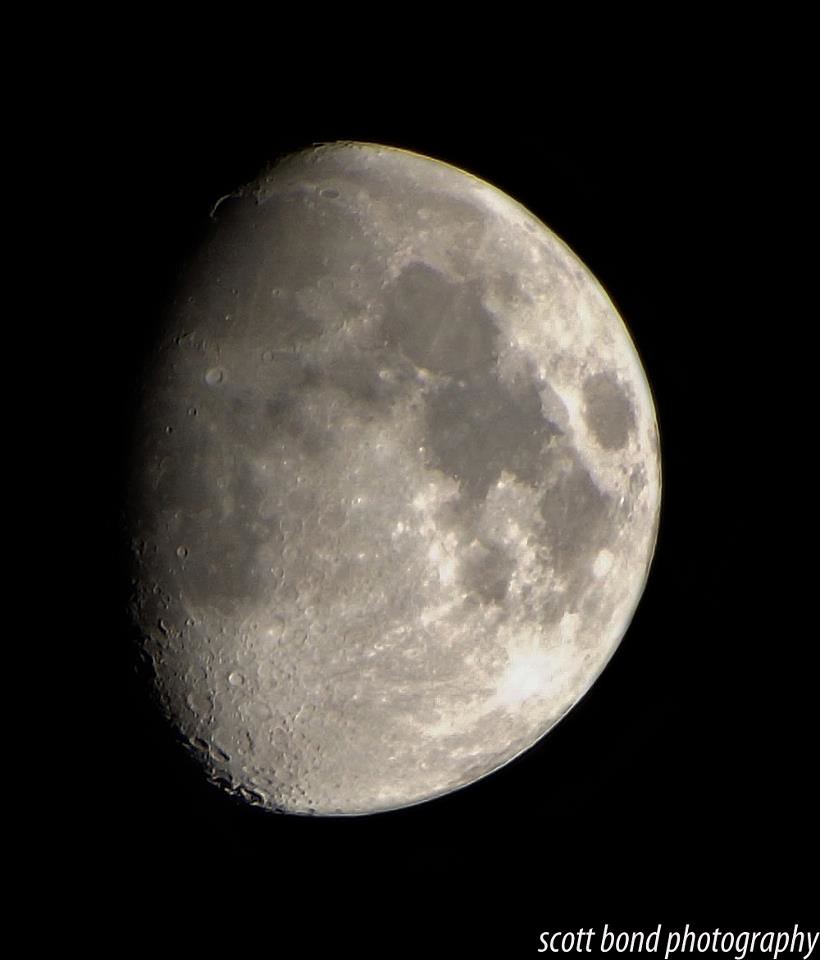

Scarecrow
Suspended / Banned
- Messages
- 1,662
- Name
- Derek
- Edit My Images
- Yes
Agree with the others that full moon will not give the most interesting shot. Anything other than full moon, when the sun is at a more oblique angle along the terminator, the details thrown up by the shadows will give a much more interesting shot.

iwols
Suspended / Banned
- Messages
- 915
- Edit My Images
- Yes
just thought i would throw my first moon pick in too,also hand held
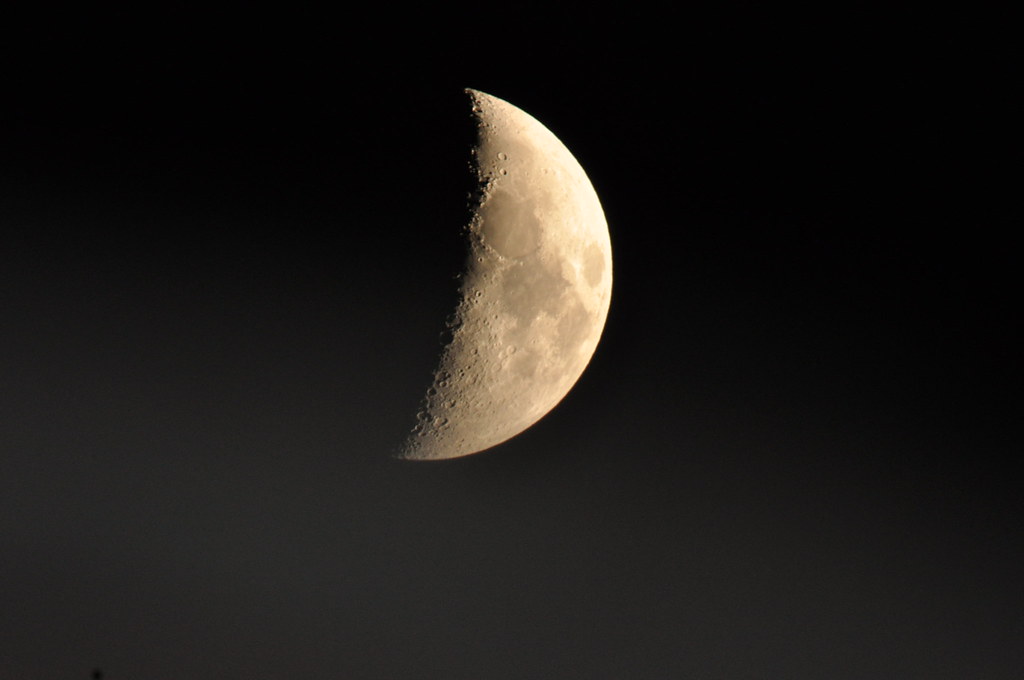
first moon pic by iwols, on Flickr
first moon pic by iwols, on Flickr


hollis_f
Suspended / Banned
- Messages
- 3,696
- Name
- Frank
- Edit My Images
- Yes
could you do a hdr style photo and set the exposure for the stars then for the moon and merge the photos together?
Not really, not without a tracking mount - and probably no even then.
To get a reasonable shot of the Moon you really need to shoot at 300mm or better (1500mm will give a frame-filling shot on an APS-C camera). At that sort of focal length stars will start forming noticeable trails in just a few seconds. But you'll need an exposure of tens of seconds to pick up the dim light from the stars. The other problem is that the Moon will heavily over-expose the image with such a long exposure.
You could take an image of the Moon and photoshop it onto a totally unrelated starfield image.