Metering for MF with an F100

Craigus

Suspended / Banned
Messages
1,562
Name
Craig
Edit My Images
Yes
After talking about it for probably 2 years I'm on the verge of purchasing an RB67. I'm mostly going to be shooting landscapes and using the RB on 'planned photo outings' rather than for general shooting. I can't afford a spot meter as well as the camera and other few bits I'll need currently, though I will eventually get hold of one. I do however have an F100 with a reliable meter which has spot metering.

Has anyone any experience operating in this way, using another camera with a built-in meter to meter for MF? I'll be trying to use something along the lines of the zone system, so will be using the spot meter and won't need to match focal lengths etc. I realise there will be some math involved in transposing the EV readings from the F100 but I'm okay with that.

Aside from the inconvenience of having to carry another camera in the bag, is there anything I'm overlooking as I've never shot MF before?
 
There shouldn't be any technical reason against using the F100, as long as the iso rating is the same. Longer term, it would be worth getting a separate meter with an incident light attachment to take incident (rather than reflective) light readings, since they can be very useful if you're a good distance away from the subject, but in the same light. They won't give the same range of values as a spotmeter, but would be fine for b&w and colour print. Slide film needs more accurate readings though, so that might be an issue for you?
 
I don't know what happened to the price of lightmeters!! :eek::oops: :$ but, I have a Sekonic L208 that if I can find it, you can have it.
 
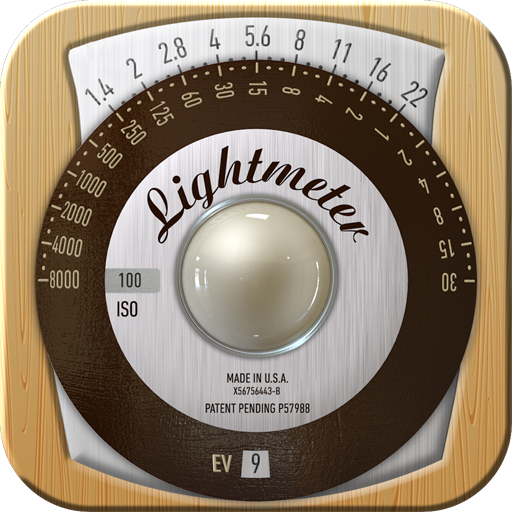
I use the Lightmeter app on my phone when I can't be bothered with/forgot to pack the spot meter.

Film is quite forgiving (or are you shooting slide film?) so a stop either way won't be the end of the earth. Also think about the weather. Flat grey days, or shooting in shade will also be more forgiving with errors in metering. High dynamic stuff with bright highlights and deep shadows will suit having a spot meter more.

In short, I'd avoid taking *any* other camera out with an RB67 as it's a big heavy beast. However if you're determined, and don't have anything smaller (cheap digi compact?), the F100 will have to do.
 
Thanks all. I don't intend on shooting any slide film for the time being, I'm planning to shoot portra 400 mostly as I really like the colour pallette and its really forgiving.

@Solo man Thanks for your kind offer, I can probably do incident readings with an app as Ian suggested, so I will greatfully decline. Thank you though. As with everything photography related, the prices only seem to be going one way don't they!?

What spot metering app do you use Ian?

I'm going to need a beefier tripod head first I think, then a flatbed scanner, then perhaps a spot meter. Now I remember why I kept putting this off :banana:
 
What spot metering app do you use Ian?

It's not very spot-metery...

This is the icon in the (IOS) app store...

htrwrthtrwrth.JPG

It's reserved for "pointing at the sky" then "pointing at the shadows" then "pointing at the grass" with a bit of umming and aaahing after comparing it to "pointing at the scene".

It's convenient and quick, and pretty accurate, but not the same as my Spotmeter M.
 
A couple of apps I have used:


I think smartphone apps usually work best in reflected mode. To do proper incident readings, you really need a diffusion dome. The 'incident' mode is probably just using the sensor that the phone has to adjust the screen brightness depending on light levels, whereas reflected mode is using the main camera, which can give pretty accurate readings (depending on your phone).
 
The light meter in the F100 is as advanced as anyone would ever need. Was pretty much the best in-cam light meter in it's day, along with the F5. So you won't go wrong in terms of getting correct exposure evaluation. A small, dedicated spot meter would be easier to carry about, but how much are they now??!! :eek:
 
The light meter in the F100 is as advanced as anyone would ever need. Was pretty much the best in-cam light meter in it's day, along with the F5. So you won't go wrong in terms of getting correct exposure evaluation. A small, dedicated spot meter would be easier to carry about, but how much are they now??!! :eek:

Yes indeed! A new one is out of the question, I'm looking at older versions on ebay but still would have to spend £200 at least which seems rather crazy to me.
 
You could use a hot/cold-shoe mounted spot meter, like the V-201x which are available on eBay for around £50.

See this article that discusses them (including alternatives such as the recently announced Reveni Labs 3D printed meter):

 
Yes indeed! A new one is out of the question, I'm looking at older versions on ebay but still would have to spend £200 at least which seems rather crazy to me.

What is everyone else seeing that I’m not? Completed prices on eBay for light meters look normal to me.

I would argue a light meter will ultimately pay for itself, because you’ll waste less film with questionable exposures, so I view it as essential kit.

5668B59B-0B6E-4616-8CBE-B90BAFC21C49.png
 
I think Craig was looking for a spotmeter. Not sure if they are...?
 
I think Craig was looking for a spotmeter. Not sure if they are...?

You can use them for reflective reading by sliding the omnisphere (or whatever it's called) to one side, but they're designed more for studio-type situations where you can get up close to take the reading. The angle for reflective readings is quite wide I think, maybe 30 or 40 degrees, so not very accurate for anything you can't get close to. It's pretty similar in functionality to the L-208, but with digital rather than analog controls.
 
Yes those seem to be intended for studio situations and are not spot meters. The spot meters like Pentax or Sekonic go for £300+ regularly.
 
Yes those seem to be intended for studio situations and are not spot meters. The spot meters like Pentax or Sekonic go for £300+ regularly.

Keep an eye on eBay, Gumtree, Preloved, etc. as there are deals to be had. I bought my Sekonic L508 with zoom spot-metering capability for about £120 a few years ago locally off Gumtree.

I arguably get better use out of my L308 though as easier to carry in my pocket. I rarely spot meter though.

edit: Also, keep in mind that Sekonic produces spot meter attachments for some non-spot meter models. I think one of these is the Sekonic L328. Ffordes have the L328 VF attachment for spot metering for £35.
 
Last edited:
Has anyone any experience operating in this way, using another camera with a built-in meter to meter for MF?

Aside from the inconvenience of having to carry another camera in the bag, is there anything I'm overlooking as I've never shot MF before?

This is how I started when I first got a MF film camera. I was metering with my DSLR then setting up for the film shot. It got really tedious, really quickly.

I now use a Sekonic which does have a spot meter (I don't use the spot meter much at all) and that too is rather large as @skysh4rk says and I wish I had something small like a L308 which is properly pocket sized.
 
When I started photography cameras didn't have meters, and many (most?) amateurs didn't have meters either. My first adjustable camera has the exposure set by my using exposure tables (use your latitude, time of year, time of day, light conditions to get a value). By the time cameras with built in meters came along, I was accustomed to using a hand held meter. So, on the question, I can't help.

What does intrigue me though is why you want a spot meter? I have a Sekonic spot meter, but prefer using a Lunasix. I've never had to worry about the subject brightness range exceeding the capabilities of my film with my subjects, and I'm too lazy to faff around adjusting development times to alter contrast. Are you intending togo full on Zone System withdifferent film backs earmarked for different development times?
 
What does intrigue me though is why you want a spot meter?
Very accurate (if you know how to use it properly). Often has like 2% or so of whole scene, that is metered. Tiny spot in the centre of the viewfinder/scope. Find that mid-tone, and bosh! Perfect exposure, every time.
 
I did try metering with my quite small compact camera (fuji X10) and it was just a pain. I first got a Sekonic L-208, which was absolutely fine for general use. I only moved to a Sekonic L-308 because I wanted to do some night photography, metering lower than LV 4 (which is the L-208's limit). The L-208 is also a bit hard to read in low light for my ancient eyes... but OTOH it is MUCH simpler to use and a better size than its big brother.

I have a viewfinder app on my iPhone, which seems to have some kind of metering capability. But I do find that getting the phone out of my pocket, turning it round (it's ALWAYS either upside down or back to front), unlocking it and finding the appropriate app is a MUCH greater hassle than the old L-208. OTOH once you've got the phone the app is much cheaper... there's a thread somewhere here about that topic...
 
I'm planning to shoot portra 400 mostly as I really like the colour pallette and its really forgiving.

Phone app, no need to take the F100. Metered C41 and B&W 35mm and 120 films without issue with a phone app.

I bought a Gossen Sixtomat Digital incident/reflected light meter recently... and to be honest I still trust the phone app more.
 
Phone app, no need to take the F100. Metered C41 and B&W 35mm and 120 films without issue with a phone app.

I bought a Gossen Sixtomat Digital incident/reflected light meter recently... and to be honest I still trust the phone app more.
I have a very nice Gossen Luna Six (with silver oxide battery adaptor) but I've stopped taking it with me as I soon found that the vintage-looking LightMeter app for Android phones (shown in post #7) does the same job and I'm going to be taking my phone with me anyway. I went for the 'paid for' advertisement-free and fully 'tweakable' version, and I reckon it's got to be the best £3 or so I've ever spent!

As with any light meter, it's learning where to point it that matters, and at least the this app gives you a pretty accurate clue as to where it's pointing via a translucent image in the display.
 
Last edited:
I have not had much luck with phone meter apps. All of the ones I tried gave dodgy readings. I wonder if the accuracy of these tools depends on the underlying hardware and the brand/model variability in phone sensors. In my case, I use Android phones at the cheaper end of the range (Motorola Moto G mostly). Perhaps people who get great results with these apps use better hardware - iPhones for instance?

Anyhow, about a year ago I purchased a Sekonic L-398 incident meter and this has been great. No batteries and light enough for me to carry it anywhere. It's mostly an incident light meter but does reflective reading with an adapter. I haven't looked back.
 
What does intrigue me though is why you want a spot meter?

Well I did spot metering of the moon using the T90 with a 300mm lens plus two 2Xs multipliers as I couldn't be bothered to work the exposure out, but did adjust slightly for the whiteness of the moon.....all a waste of time as the shots were rubbish as the exposure was right but nothing sharp to see as the moon moves and with the multipliers I had to use a slow shutter speed for ISO 200.
R1-02369-0003-600px.JPG
 
Last edited:
Thanks for all the info everyone, it's useful to hear peoples opinions. As for the reason for a spot meter, it's mostly so that I am prepared if I do want to shoot any slide film to deal with higher contrast scenese correctly, and also I think I'd prefer to get a spot meter first rather than feel the need to upgrade to one at a later date.

I'm not always fully confident with my exposures when there is high contrast, so on 35mm I will occasionally bracket a scene that I really want to come out well, and would like to learn how to meter properly and avoid feeling the need to do that on MF.
 
I was tempted to go into metering specifics and give the pros and cons of spot meters (even with slide film) but I'll just give one practical limitation. I have a Sekonic, I think the 558 or similar name. It's spot and incident. The spot meter has limited sensitivity, and in one church the pews were too dark to get a reading at all. For negative film, where you expose for the shadows, this isn't good. My much older Lunasix (bought new in 1965, still going) had no problems. No modern meter has ever equalled its low light capabilities.
 
Last edited:
Back
Top