meringue and silver

Simon photo

Suspended / Banned
Messages
1,220
Edit My Images
No
ok so im totally smitten with "printing out" and want to move away from the anthotypes i have been doing the last few weeks, they are fun but require stupidly contrasty transparency's and don't provide much tonal range. i want to try.....i am going to try, albumen printing soon, ive ordered my silver nitrate, the eggs are, well not whipped yet but wont be long, im just wondering if anyone's tried this before or are doing it right now, i love experimenting and working out what's what but if there are any heads up that would be great.
thanks.
 
Albumen printing?! I can honestly say I've never heard of that before *heads to google*
 
Good luck Simon, will be very interested to see the results! I often fancy concoting some sort of LF camera and working with glass plate negs for a laugh ... albeit a very expensive laugh!
 
I wish i had the resources for glass plate and such processes. I don't have a darkroom and the access to one i did have expired this week (end of part time course)
So i have turned my attention to printing out. As i said i have explored the Hershell anthotype process and its not for me, the cyanotype also by him looks interesting but im not too fussy on the Persian blue so i have wandered down the avenue of salt prints.
I plan on logging my process here in fact, call it a flog (forum blog) as you don't see this kind of thing around these parts.
My only compromise will be the use of digital negatives, inkjet transparency film. I've been using them for my anthotypes.
All my sundry items are in the post and when i finish my visual file for college albumen printing will be my next project.
Should i start a new thread for my flog or continue here?
 
You can tone cyanotype prints using tea and you get an incredibly rich brown/black tone instead of the prussian blue. It gives beautiful results and is apparently just as archival (as in it will last as long as the paper)

I've made a few, but not having access to my own printer and limited to 5x7 negs left me wanting more. If I ever get a printer though I'll be making more, they are amazing
 
You can tone cyanotype prints using tea and you get an incredibly rich brown/black tone instead of the prussian blue. It gives beautiful results and is apparently just as archival (as in it will last as long as the paper)

I've made a few, but not having access to my own printer and limited to 5x7 negs left me wanting more. If I ever get a printer though I'll be making more, they are amazing

well well, ive never heard of that!!! does the print get toned before or after the wash? looks like there will be some cyanotype sensitizer in the post before long for me lol im raring to go on the albumen prints though, postie came today, got a bit exited but it was only new inkjet carts :shake: should have some stuff by the end of the week i reckon. managed to find 500g of sodium thiosulphate (hypo) for a tenner on the bay, rapid fix is too strong apparently
 
i must hasten to add that im not diving in head first, i have been doing some research on the subject....i have safety wear, gloves, apron... LAB GOGGLES!!!! all from a mortuary actually so my neighbours will think im doctor death, back forth with my printing frame.
 
You process the print as normal until you've developed it, then you have to bleach it back for a couple of minutes. you then tone it in tea (brownish hues) or coffee (more black hues). Apparently there are other things you can tone it with to get other hues, but the active ingredient is the tannin

They are amazing when done right
 
Well. My shopping is nearly over, just paper, muslin, eggs and a couple of pyrex trays to get and im away. My sodium thiosulfate came today along with 6! 60ml brown glass bottles to store the silver nitrate solution (i was surprised as the price seemed great for one)
My list so far
10g silver nitrate
500g sodium thiosulphate
Glass mixing rod (doubles as coating rod)
Brown glass bottles
Salt (store cupboard)
Distilled water

I have seen some more advanced recipes for the albumen online but i want to be starting simply and work from there, i think the postman suspects im building a meth lab as it is so will ease off buying more chems for now lol
Also, i have built a card mock up of a large format camera i may build soon, even has a lens made from plastic educational optics i bought way back. Its set up as a test at the moment with grease proof paper for a focusing screen and even viewing on that it seems sharp!
My wife thinks im turning into Beaker from the muppets, i dread to think what my neighbours think of me in the garden with my head under a black sheet taped to a cardboard box.
 
Ok so update!
Finally got around to finishing my college work and get on with the business of albumen printing.
All my chems are here including my isopropyl alcohol for double coating the paper, it hardens the first coat of albumen to take the second coat.

So today i focused on making the albumen i got a recipe from alternative photography website but omitted a couple of things, decided to use ammonium chloride instead of salt as its easier to dilute.
12 egg whites absolutely no shell or yolk (being a chef is handy, mad skillz lol)
15ml distilled water
15grams ammonium clhoride
Whipped to a meringue for 30 min then covered and left in the fridge to settle out.
While it was resting i prepared my silver nitrate solution, near enough a 15% solution
10 grams silver nitrate
60ml distilled water
Shake it up put into a brown bottle.
I then had plenty of time and itchy feet for a contact print so decided to try a bit of salt paper printing, so i mixed up a solution of 100ml distilled water to 20grams of ammonium chloride and rod coated a piece of water colour paper. Damm that stuffs expensive! (edit...i then coated the dry salted paper with the silver nitrate solution)
While that was drying i made my transparency, but as i have been making anthotype prints that bleach out under a positive i went ahead and printed a positive lol
Its a negative required for salt prints! ho hum good practice. Made a negative transparency and a print from that i might post but be gentle.
So tonight the albumen was finally settled and ready for straining, all done and tipped into a tray, decided to float coat the paper as opposed to rod coating as it provides a more even coat, the papers are drying as i type and they do look the bomb right now, its a kind of pearl finish with a light texture of the paper showing although i think that will disappear with the second coat.

 
Last edited:
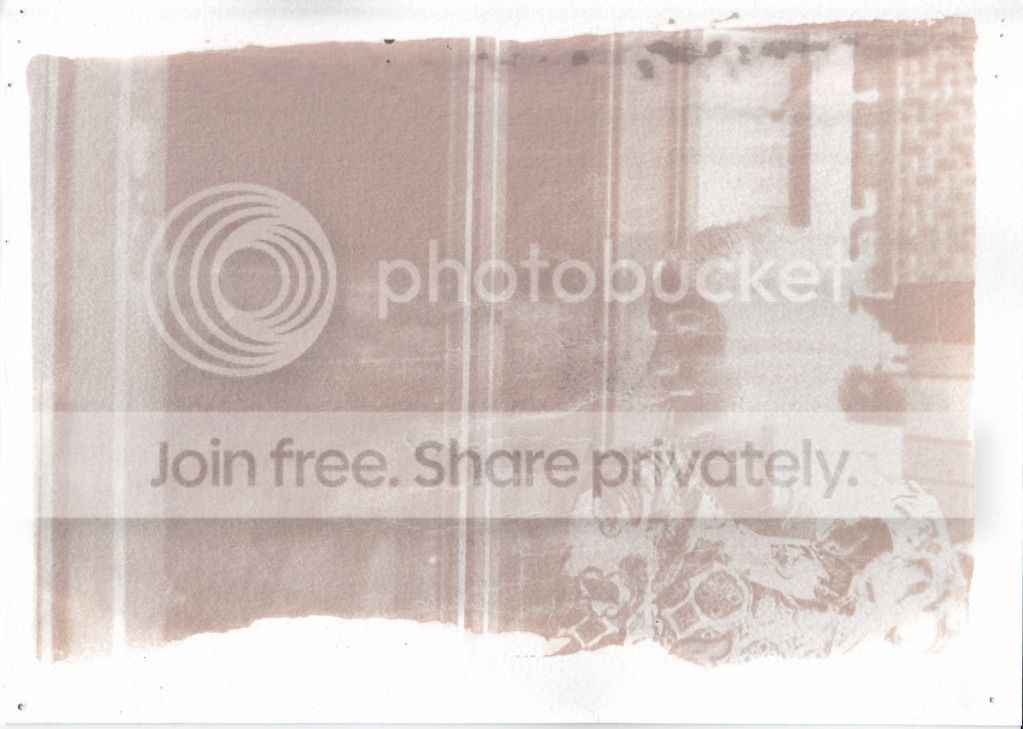
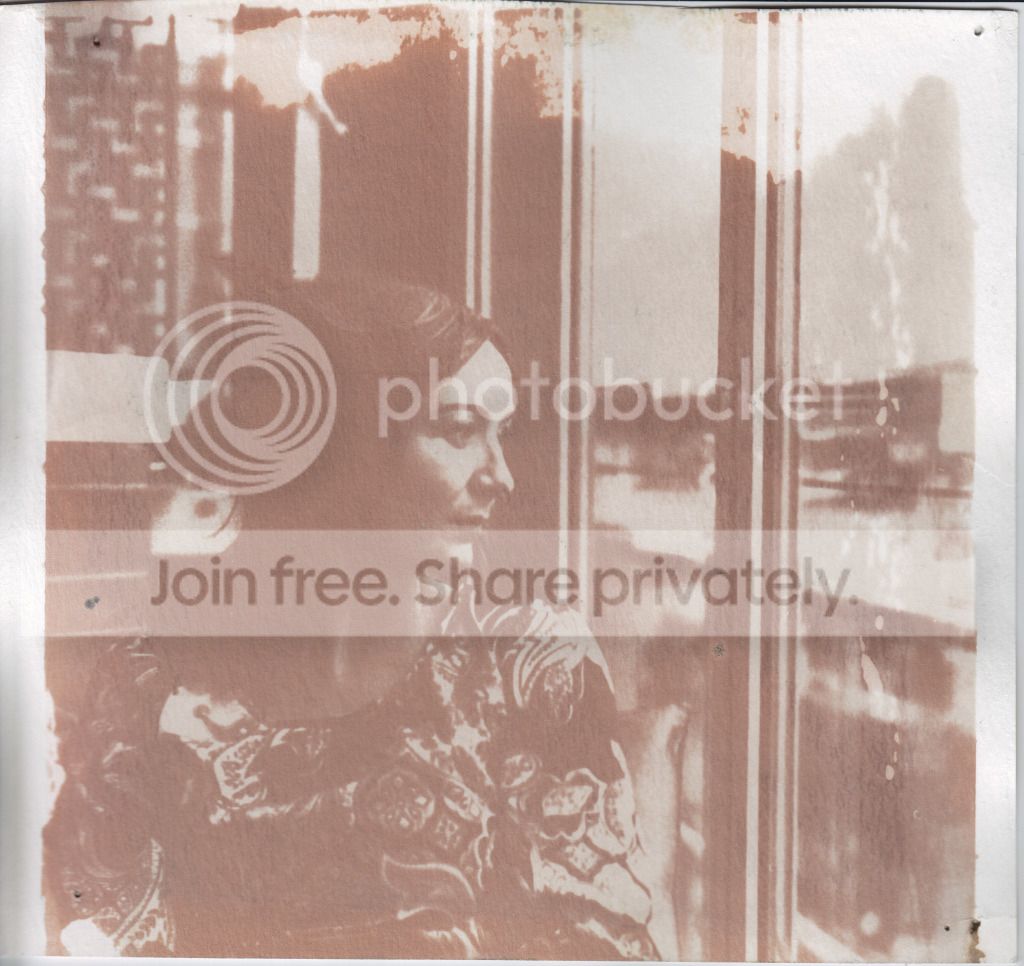
ok so here are the salt prints i made. obvious issues with coating and incorrect negative orientation.
the first, realised the positive should have been a negative during the print lol, bit of a mess but a start
IMG-3.jpg


the second attempt, using a negative image this time but with the wrong orientation :shake:
firstsalt.jpg


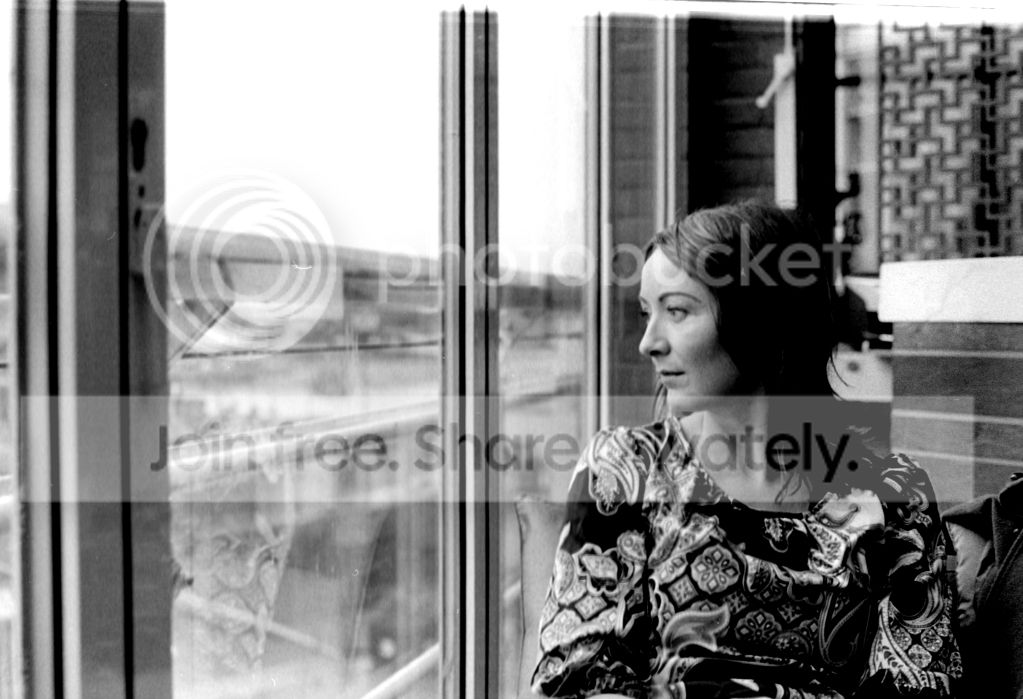
and this is the image they came from, it was shot on tri x 400 pushed to 800 in an olympus om10
IMG_0015.jpg

i hasten to add that the beautiful woman is my wife :love:
 
Last edited:
So i don't know if anyone is following this thread but an update.
With the semi successful salt print i produced i continued onto the albumen prints.
Seems i need to get a technique down for the silver coating of that. 10sheets later and not one decent print on the albumen, partly due to thin negatives and partly due to my coating method.
Im using a glass rod to drag a bead of silver nitrate solution across the paper, this seems easy enough with the salted paper as you can easily see any dry spots but with the albumen it already has a semi gloss coating that makes it tricky to see where the solution has coated. To compound things further i discovered the rod has a slight kink that either drags or misses the paper unless held on its flat side.
Suffice to say i am getting the hang of it and did produce a fine salt print as a belated fathers day gift, it was framed before i could scan sorry.
I did however cheat and lay a coat of albumen over the top to give it a semi gloss and more lustre.
When i get time im sure to be making more effort to create and scan some work to share.
 
good work so far ... keep at it :)

I've found recipes for home made emulsions (gelatin) easy enough, but I am having trouble finding out how far a certain amount of emulsion will cover ?

at about £1 per gram of silver nitrate, it would be nice to know how much I need to get started, and roughly how much paper / glass plate it will cover ?

Have you learned enough yet, to be able to shed some light ?

Rich
 
Well i found 10 grams of silver nitrate on the bay for just over a Tenner, and to make nearly a 15% solution, in 60ml of water.
I am using de ionised water and not distilled. Its readily available and has all trace metal elements removed which is essential.
So far I've used about 30ml of solution on 12 8x10 sheets (or there abouts, im using a4 trimmed as it doesn't fit in my tray lol) i must admit though i think I've been a bit heavy handed with the coating.
I plan on buying some more nitrate and making a solution of around 300ml to allow float coating as i feel this will yield better results than rod for both plain salt prints and albumen but how much more silver this uses i don't know.
But its looking like 30ml for around 12 sheets.
Im using dealer and rowney water colour paper by the way
 
so about a 25 sheet box of 10 x 8 for £10 of silver.

Not too bad at all !

Thanks for the usefull info :thumbs:
 
Well its been quiet on the albumen front to be honest i haven't been getting many good results, mainly with the coating of the silver nitrate, im using the glass rod method but it just seems to be lifting the albumen coating off the paper.
I have been getting better results with plain salt paper however, and have found my favourite paper for this method too.
I gave in on the cyanotype front too and have started making prints with the single solution stuff from fotospeed. Turns out paper choice is paramount for this process to work also.
My 4x5 camera is taking shape however lol and has been eating up most of my spare time
 
Back
Top