Megapixels.

Dale.

Bo Derek
Suspended / Banned
Messages
13,716
Name
Dale.
Edit My Images
Yes
I just watched a video on YT, something about how it won't be long before camera upgrades become irrelevant. I didn't get too deep into that but one comment got me thinking and to quote " they're cramming more and more megapixels onto the same size sensors."

That's true but physics doesn't change either and the comment got me thinking, there must be an ideal number of megapixels per any given sensor size.

So now I'm thinking what is the ideal number of megapixels on a crop sensor for instance, or full frame/ medium format?

I can relate a little, I had a Canon 7D, lovely camera but the sensor was awful. I remember reading one time that it was because there were too many pixels on the sensor, ie 18mp. How factual that is, I'm not sure and here's a but too......... I have an M5, 24 mp on the same size sensor as the 7D. Try as I might with the 7D, even when nailing the exposure, it still gave grainy files but the M5, is much more forgiving and that's 24MP (versus 7D at 18) with much nicer files.

My 5Div, stunning files from that at 31mp.

My R7, 33mp, lovely files even if you do have to be mindful of the exposure a bit more on its crop sensor.

Canon in particular now don't seem to be biting in the megapixel race, most of their new cameras, even the full frame ones are 24mp, save for the R5 at 45mp.

Anyway, as I said, it just got me thinking. :thinking:
 
Last edited:
I don't know the answer to that, I'm afraid. But it does seem to me that there is a practical limit to the number of megapixels beyond which any increase yields only a tiny and disproportionate improvement. Sort of like diminishing returns. Having a Fuji XT3 myself I was interested to see how the XT5 compared. But from what I can make out there is hardly any difference in image quality, despite the higher pixel count.
 
As long as there are enough pixies for an A3+ print at 200dpi, that's enough for me! (On a 1.5x crop sensor.) On FF, I'd like a few more to allow for some cropping.
 
I think most if not all companys selling procucts to people are more interested in how to convince people their getting more in some way. Thinking the camera industry actually sell's pixels, not cameras. My first DSLR had only I think it was 6 pics. Yet they made 8x10 easily. My present D7000 I think has 20pics and goes far more than 8x10 but how much more I don't know. Seem's my Canon point and shoot is somewhere around 20 pics and I think my son's phone is also. They both take nice photo's but I've never tried blowing tem up. Gonna have to try blowing up a point and shoot one of these days to see what happens. I agree with the OP on this, it would seem to me that a ssome point a sensor would get over crowded with them!
 
Another thought is that you need a faster shutter speed as well, If a particular point is moving across a large pixel just that pixel registers, smaller pixel and the movement bleeds into the next pixel if you get my drift.
 
Fuji just released their 40megapixel cameras. I guess the megapixels are dependant on the technology behind them.
 
I also think 20-30MP is the sweet spot, certainly for a cropped sensor. 24MP works out to a nice round number of 6000px x 4000px files, so I'd pick that.
 
20-30MP is fine for 99% of photographic needs. Unfortunately as a species we're hardwired to think bigger number = better so most of it is marketing to sell cameras. See smartphones now coming with 200MP sensors. I think we still have a way to go before there's no reason to ever upgrade again, but we are at the point of diminishing returns. Any digital camera from the last 10-12 years will give you images indistinguishable from something released in 2023. I think the next major upgrade is global sensor readout so manufacturers can get rid of the mechanical shutter entirely. Although then there are no moving parts to wear out so even less reason for people to ever upgrade.
 
I think tech will move on and we’ll see higher and higher mp cameras, it wouldn’t surprise me if they somehow figure out how to have smaller photosites but still maintain dynamic range and low noise levels. 5 years or so ago who’d have thought we’d have 61mp FF sensors with 15 stops DR and great noise handling?

Whether we want those extra mp is a different matter.
 
Maybe so, but I'm not sure what people are going to view these images on, picture frames the size of a house?
 
It's all well and good thinking MP's just might be a marketing tool and we made A3 prints from 3mp cameras and they looked great but look at what's possible from modern high mp count cameras and there's just no comparison between what's possible now and what was possible in the days of 3/6mp DSLR's.

These differences may not matter to many of us if we're happy with a whole frame or slight crop viewed normally but to other people taking different pictures they do matter (bird photography springs to mind) and for them high mp count cameras are a definite and real step forward.
 
It's felt as though the big manufacturers have moved away from MP battles in favour of mirrorless advantages. They all have a mid and high megapixel body but focus mainly on new lighting fast autofocus and FPS these days or stacked sensors

Canon released a global shutter sensor last year for industrial purposes and Nikon seem to think no one currently needs 45mp or their 60mp body simply wasnt ready.

The future is computational photography, not MP i feel, and by computational photography I mean making it easier and easier to get the best shot you can
 
Chip manufacturer's ability to produce pack more into the available space is an ongoing process and is likely to carry on up to the limits of quantum physics. I think you are right that we have probably hit some sort of optimum at the moment but I wouldn't be surprised if we see more processing power used in different ways, for example dual ISO sensors one for the darks and one for the lights which would give vastly improved dynamic range.
 
I think we could skip this MP & photography lark if AI was to step up and give better images ... ;) :exit:
 
What you have to remember is that camera companies ran into the issue of poor high ISO performance ( and im sure other issues ) and had to strike a balance.

They have found new ways to get better ISO performance and so the MP count creeped up in general now i feel. There are 60+ mp full frames and 40mp aps-c now, something that would have sounder very extreme and shocking in the past.
 
So now I'm thinking what is the ideal number of megapixels on a crop sensor for instance, or full frame/ medium format?
To which, in my opinion, the answer is: "whatever you think you need".

Some people will be satisfied with an A0 print from a 3MP sensor and others will be dissatisfied with an A4 print from a 36MP sensor. Any proscriptive reply to this question has to be wrong, because the question is an excellent example of circumstances altering cases. It seems to me that the only sensible question in this respect has to be along the lines of:

"for this subject, to be displayed in this format, to be viewed by this audience, what is the least bad sensor for the job?"​

Sometimes, even 2 pixels per centimetre might be the right answer...
Pixel.JPG
 
I loved my 50mp 645z.

I love my 45mp D850 and was pretty pleased with the 36mp D800 series.

I felt the jump from 24-36mp was quite noticible in detail at 100% - the jump from 36-45mp not so much in Nikon land. The 50mp 645z was better. I really wouldn't want a 24mp camera, and nothing really less than 36.

What I find is the higher pixel density cameras are very unforgiving of amateur plastic fantastic crap lens. Even the so called "pro zooms" don't really stack up and you need high end primes, to get really nice crisp results on the D850. Even the 70-200 2,8 FL I sometimes think might need chopped for some exotic long primes. Then you have the worry of diffraction. I could shoot that D610 at F16 and it looked ok, the D800 was a mushy mess at F16, the D850 a mushy mess at F13, so what, the A7R4 is a mushy mess at F11.

At F11 or wider, on 35mm you are getting into the world of DoF challenges and may have to wind up stacking images if you have proximate foreground you want in focus as well as back ground.

The 645z could be stopped right down and it didn't get mushy.
 
Last edited:
It wasn’t that long ago that Nikons adverts stated 12 mp was enough . And they were sticking with that .. I’m lucky enough to have had a myriad of cameras in the last 20 years and pick my favourites out based on results .
Of canons I never got on with there 1.6 crop sensors ,but got stunning results from the 10mp 1Dmkiii , having owned 4 in total over the years plus one mkiv .
Of Nikons had lots Of crop bodies and a D3s but my alltime favs were the D300s and the D7200 the latter still holding good used prices even in 2023 .
Coming to the last few years had to change to Olympus for health reasons ,and had a 10mkii , couple of 1mk1 , a 1-mkii ,a 1mkiii, and now a E.M1X the last 3 all having allegedly the same sensor but different processors the latest giving the best results to date

Any camera also has to have appropriate glass no good having 60mp if the lens wont resolve it

likewise you also need a Good computer or Mac and good PP programs on it plus knowing how to use it

so it’s not a case of simply. More MP equals better photos theres far far more to it than that
 
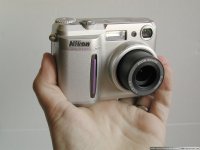
My first digital camera was a Coolpix, I can't remember what model but it had, approx, a 3.2MP sensor. I took this with it in 2005, it is a picture of a dragonfly laying eggs, handheld at arms length. I have printed this to A4 without issue. I believe I have used this picture to illustrate something in another, old, thread relating to resolution. The file size is 1,453KB JPG.

Pixel count is not everything:

Dragonfly1.JPG
 
That's a great picture Martin.

I recently printed and framed two 2mp pictures taken with a 3.1mp camera and they look good to me but on the whole I do prefer my Sony A7 :D
 
I was thinking about the pixel count today, before I saw this thread, and was wondering about taking the pixel count to extremes. I imagined a sensor that had 100MP then 1000MP then perhaps 100million MP, and on up until perhaps pixels were indistinguishable even under microscope. Would we not then run into the problem in that the sensor now exceeds the resolving power of the lens? Now, every flaw, however slight, in the glass could show up on the photograph. Perhaps we shouldn't go into the file size that an almost infinitely dense sensor might create!
 
Last edited by a moderator:
Well, it's currently limited by chip manufacturing processes. There are varying grades of chips and each is priced accordingly.

Manufacturers have to strike the balance between megapixels (their marketing trump card), ISO performance (marketing trump card number 2), and price.

As megapixels go up, the size of the photosites goes down, and they're physically crammed closer together on the chip. The closer they are, the more they interfere with each other, which is what we see as noise. So yeah, there is an ideal number of megapixels for each sensor size, but it's constantly being improved upon.

There's a balance to be made by getting as many megapixels as possible onto the sensor, but still maintaining clean images at least up until ISO 1600, possibly higher, since that's what people have come to expect.

As chip manufacture improves, photosites will interfere less, which means you can place them closer together - either by adding more (megapixels) or by making them larger (better ISO performance).

We're at the stage now where people feel like we generally have more than enough resolution for large prints, and so as the tech improves, we're seeing less of a bump in megapixels and some decent jumps in ISO performance. Some modern cameras are perfectly usable at ISO 12800 now, which to me seems much more useful than being able to print at billboard sizes.
 
My first digital camera was a Coolpix, I can't remember what model but it had, approx, a 3.2MP sensor.
It sounds like a 990.

The accessory lenses included an affordable fisheye, which I still have and occasionally use...

Nikon Coolpix 990 1603.jpg
 
For me, the sweet spot has been 20Mp for cropped DSLR, and 20Mp for a compact camera with a 1" sensor. There is enough pixels to crop, or blow up to a certain amount if needed. 45Mp seemed a good spot for full frame DSLR's, as cropped was about 20Mp too, so the pixel density was similar.

Technology improves all the time though, and in the future more pixels may give the same or better noise/high ISO/sharpness performance as time goes on, but gaining more cropping/blow up options.
 
I was thinking about the pixel count today, before I saw this thread, and was wondering about taking the pixel count to extremes. I imagined a sensor that had 100MP then 1000MP then perhaps 100million MP, and on up until perhaps pixels were indistinguishable even under microscope. Would we not then run into the problem in that the sensor now exceeds the resolving power of the lens? Now, every flaw, however slight, in the glass could show up on the photograph. Perhaps we shouldn't go into the file size that an almost infinitely dense sensor might create!


High MP DSLRs like the D8** Nikons already need the best lenses to make the most of their pixels.
 
High MP DSLRs like the D8** Nikons already need the best lenses to make the most of their pixels.
Yep, although lenses are getting better all the time. For example some of the Sony FE lenses can resolve a crazy amount of detail, and I'd imagine some of the RF and Z mount glass can too. Not everyone likes the new level of sharpness though, it can be unflattering in portraiture for example.
 
While mega pixels have increased so has the technology behind them,
.we are now getting cleaner images than ever before. However many of the lenses on the market have reached their limit in terms of resolving more mega pixels. Manufacturer's seem to be slowly revisiting some lens designs. But new generation lenses also seem to have reached the point of diminishing returns in terms of both price and increased resolving power.
It would seem to me that the direction of progress would be better directed at increasing tonal range capture and speed of capture and readout, especially regarding focus and global shutter.

There seem to now three common MP ranges the first around 25 then 50 and 100 these would seem to satisfy most photographic needs with the minimum of compromises, around quality, speed, file size and price.
 
im just hoping once the mirrorless wave goes by they start concentrating on medium format digital and get the prices down somewhat!
 
Yep, although lenses are getting better all the time. For example some of the Sony FE lenses can resolve a crazy amount of detail, and I'd imagine some of the RF and Z mount glass can too. Not everyone likes the new level of sharpness though, it can be unflattering in portraiture for example.


Much easier to drop quality than to try to improve it!
 
The Canon 750d 24mp has a miles better sensor than the 7d 18mp, the 750 blows it away in low light and resolution. That said how much different does the processor make? And I'd be guessing and say all pixles are not created equal either as tech moves on.
 
More pixels are nice to have but make bigger files which need more storage which is fine because storage is relatively cheap these days. My bottle neck is sending large files to online storage, until I upgrade my FTC to FTTP I will not be going over the 32 MP (?) of my EOS M6 mk2, the .CR3 and jpg files are bearable but a Photo Shop file with layers especially a panoramic image is just too slow.
 
My second digital camera was an Olympus C5050, at just 5MP. My previous camera had been it's earlier sibling, the C-2020 but I managed to leave that on a train while on a trip into London. Some of the images from the 5050 are still very satisfying. Shot to JPG straight out of camera.

val05 by Steve Jelly, on Flickr

However, I do fancy something with more MP than my T3, mainly because I shoot a lot of birds and I end up cropping them, so having a bigger image to start with would, I feel, be beneficial.
 
Reading back over this reminded me that I still have my first digital camera, bought in 2003. That's a compact, Powershot A40 and 2.1 mp. 2.1, crikey, we've come some way.

I wasn't really into photography then and I was a lot more relaxed about it all, I just took pictures and I wasn't worried about technicals. I took some decent pictures with that camera though and it would print nicely too. I had one of those Canon printers, it was tiny, biggest print it would do was 6x4 but it served me well. I was more into fishkeeping back then than photography and I took some decent pics of my fish and corals with that little camera. I printed a few too, it's biggest file size was 1600 x1200 pixels but it was enough back then. I was printing the odd A4 from it, with a less critical eye than I have now but those prints were fine.

I took some pics with that camera last week, they were fine, although I've not printed them. The camera is still like new, 20 years old now, very basic but I love that. I actually have a print from it and the printer in 2003, of a dog I had at the time at 6x4. I really can't tell much of a difference between it and newer cameras that I've owned. The image maybe has a slightly soft feel but that could be age of the print or more likely, it was acceptably sharp for me at the time I took it.

I'm enjoying the replies to this question, thanks for replying.

As far as modern MP values go for me, I'm in the 24 to 30 odd bracket, those sensors seem to work well, are forgiving and I just happen to own cameras in that range.

I've often wondered though about more MP than I have, although it's not quite time yet to sell my 5Div and get a Fuji GFX, although I've always loved Fuji, so it might happen one day, when I eventually get back into landscapes.
 
So now I'm thinking what is the ideal number of megapixels on a crop sensor for instance, or full frame/ medium format?
That depends on which aspect you want to optimize as "ideal."

In terms of recorded detail, pixels of < 4.5um (40MP FF) are already smaller than what most lenses can achieve; and situations allow for (ISO/Ap/SS). And a human can only see 12-14MP maximum in any image when viewed normally (as a whole). In fact, the standard for sharpness requires less than 2MP sensor resolution.

But in terms of color accuracy and color moire you are better off with ~ 4x the sensor resolution and 4 pixels/detail (bayer filtered). And smaller photosites are also more sensitive to light (all else being equal).
 
smaller photosites are also more sensitive to light

Are they? I was under the impression that larger photosites collected more photons, as in being buckets rather than test tubes left out in the rain.
 
I loved my 50mp 645z.

I love my 45mp D850 and was pretty pleased with the 36mp D800 series.

I felt the jump from 24-36mp was quite noticible in detail at 100% - the jump from 36-45mp not so much in Nikon land. The 50mp 645z was better. I really wouldn't want a 24mp camera, and nothing really less than 36.

What I find is the higher pixel density cameras are very unforgiving of amateur plastic fantastic crap lens. Even the so called "pro zooms" don't really stack up and you need high end primes, to get really nice crisp results on the D850. Even the 70-200 2,8 FL I sometimes think might need chopped for some exotic long primes. Then you have the worry of diffraction. I could shoot that D610 at F16 and it looked ok, the D800 was a mushy mess at F16, the D850 a mushy mess at F13, so what, the A7R4 is a mushy mess at F11.

At F11 or wider, on 35mm you are getting into the world of DoF challenges and may have to wind up stacking images if you have proximate foreground you want in focus as well as back ground.

The 645z could be stopped right down and it didn't get mushy.

I started reading through this thread and was wondering why nobody was mentioning lenses and I knew you'd be first on the case! lol

The weekend there was my first real run with the D810's 36MP sensor and I'm already finding myself taking advantage being able to crop in, especially at a nice clean ISO64. So pixel quantity is advantageous to me. However, as you suggest I can already see the Nikon 70-200mm f/2.8 v2 struggling at 100% pixel peep with some images, specifically a busy scene at 200mm. I'll post it up later to see what people think.

It makes me wonder how hard a lens has to work to resolve the Sony A7R iv's 61MP. But, this has got me thinking; is it just the pixels count that matters when it comes a lens having to resolve the detail, or does the size of the photosites matter as well? For example, would the A7R iv's 61MP on a full frame sensor need as good a lens as says the Fuji GFX100 with the higher 102MP but on a larger medium format sensor?
 
I started reading through this thread and was wondering why nobody was mentioning lenses and I knew you'd be first on the case! lol

The weekend there was my first real run with the D810's 36MP sensor and I'm already finding myself taking advantage being able to crop in, especially at a nice clean ISO64. So pixel quantity is advantageous to me. However, as you suggest I can already see the Nikon 70-200mm f/2.8 v2 struggling at 100% pixel peep with some images, specifically a busy scene at 200mm. I'll post it up later to see what people think.
I did try nudge you in the FL ED direction. That lens is great on a D810. The lack of an AA filter makes it a much crisper file than a D800s
It makes me wonder how hard a lens has to work to resolve the Sony A7R iv's 61MP. But, this has got me thinking; is it just the pixels count that matters when it comes a lens having to resolve the detail, or does the size of the photosites matter as well? For example, would the A7R iv's 61MP on a full frame sensor need as good a lens as says the Fuji GFX100 with the higher 102MP but on a larger medium format sensor?
Same pixel density on a GFX100S to A7R4. So equally as hard. The GFX primes I imagine will get there or close at wide apertures. The zooms I'm not so sure. I'd trust the GFX zooms on the 50mp, not so sure on the 100mp - but they do say they were designed with 100mp in mind.

I'm not sure what in Sonys line up gets there - given a lot of the lenses were designed and released when 36mp was the highest res they did
 
Back
Top