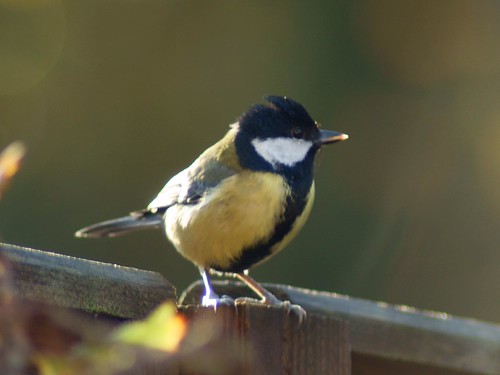
May I ask some advise

steve001

Suspended / Banned
Messages
244
Name
Steve
Edit My Images
Yes
Hi all,
Can you give me any advise? I have only just really started photography as a serious hobbie, but am totally addicted to it. I have a Tamron 70-300 macro lens on Alpha 200 body, whist yesterday morning i shot approx 80 pics of the birds in my garden also using a tripod and cable release but 99% were oof:bang:, all shots were taken at 300 mil so knowing this is a budget lens would I be better of reducing the zoom and cropping aterwards.

Thanks for taking the time to read this, any advise or tips will greatly appreciated,
Steve

Added these images so that you can see,
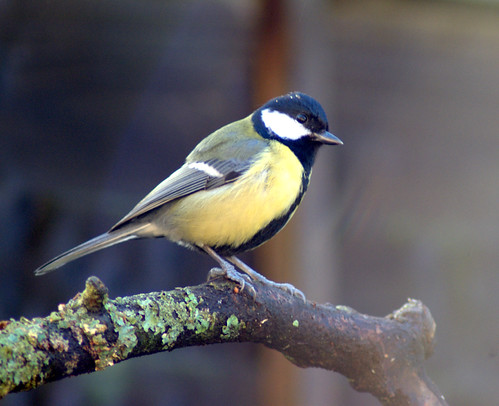
4109324323_c767012503.jpg


4109323715_861a0018a9.jpg
 
Steve, we really need to see some images before we can really help or advise....:thumbs:
 
Steve, we really need to see some images before we can really help or advise....:thumbs:

Yes Steve ............. pretty sure you are doing something wrong. Your kit is well capable of producing sharp pics.
 
It sounds like your shutter speed was too slow and not compensating for the movement of the birds despite the tripod etc.

It can be very awkward at this time of year with the dull light.
 
Did you switch the anti-shake off when you put the camera on the tripod?
 
As mentioned Steve, some images to view would be good, again as mentioned shutter speed is vital as such, especially if you have just started to take bird photographs. Ideally the shutter speed needs to be equivalent or greater than that of the focal length you are using. Just a reminder that if you post up an image to leave the exif intact ;)
 
Hi, I am using the same lens and an alpha 330, could you explain this a little more, sorry if I sound stupid, thanks.


Also I'm sure there is a rational explanation. Why do turn the anti-shake off when using a tripod?

Anti shake systems (in body or in lens types) compensate for camera movement by moving the sensor or adjusting the lens. If there is no camera movement the anti shake system is at risk of introducing an unsharp image which is why it is best turned off when the camera is tripod mounted.

I believe Canon have some lenses that have an anti shake setting for use with tripods.

Note that anti shake systems will not compensate for subject movement.
 
I can't see the exif information so I don't know what your shutter speed was

You've taken great care to make sure your camera is perfectly steady - however you are shooting small birds that simply don't sit still for long. If you shutter speed is too low you will get blur.

What was your shutter speed?
 
I can't see the exif information so I don't know what your shutter speed was

You've taken great care to make sure your camera is perfectly steady - however you are shooting small birds that simply don't sit still for long. If you shutter speed is too low you will get blur.

What was your shutter speed?

Hello Richard,
I will try and find out the shutter speed from the Sony editing software and let you no, as per one of the above replies if my focal length was 300mm then my shutter speed needs to be equal or above that.

Thanks
 
There is quite a lot of lens flare in both of those pictures. Very noticeable in the top left of the second picture and also the rainbow effect just in front of the bird. This will defiantly not help, always use a lens hood if you have one.

As others suggest shutter speed may be a key factor, so would be interested to see that data.

As you suggest your lens is also a factor. I think the Tamron 70-300 macro, as are many other consumer zooms, is know for producing soft results at full zoom. It may be a balancing act to try and find the optimum zoom which give you the best results.

Matt
 
Remember that 300mm on a crop body is the old-35mm equivalent of 450mm. For these shots, you're better off shooting at 1/500. In these dull days, that's quite a challenge. Might I suggest something? Try this...

Set your camera to only use the centre point of focus. This is likely to be the quickest to lock focus on the subject.

Then, set your lens aperture to f/8. This will improve the depth of the in-focus section and also get your lens into its 'sweet zone'.

Now, set your ISO film speed to the highest it'll go. This may be buried in a menu, if the main dial only lets you go to 1600ISO, see if you can get 3200ISO. This is likely to be the sort of 'film speed' that you need to shoot 1/500 at f/8.

Sounds like overkill, but this time of year what you're trying to achieve is 'available light action photography' and that's possibly the most expensive and demanding niche of them all.... short of being a Leica fanatic...

Anyway, with a camera and lens set to f/8, >1/500-or better<, ISO3200 and centre-point focus, you're giving yourself the best chance of snagging an in-focus, non-blurry bird shot. It's only one recipe - but all the others are variations on this theme. There are only three things you can adjust when dealing with exposure, really.

If your percentage of keepers goes up, now try experimenting to see which of those you can tweak to your advantage.
 
There is quite a lot of lens flare in both of those pictures. Very noticeable in the top left of the second picture and also the rainbow effect just in front of the bird. This will defiantly not help, always use a lens hood if you have one.

As others suggest shutter speed may be a key factor, so would be interested to see that data.

As you suggest your lens is also a factor. I think the Tamron 70-300 macro, as are many other consumer zooms, is know for producing soft results at full zoom. It may be a balancing act to try and find the optimum zoom which give you the best results.

Matt

Thanks Matt, could the flare be due to the sun
 
You're not shooting through glass are you?

Get your shutter speed up, as suggested, that is the first thing. To avoid camera shake, but also to freeze subject movement. Birds move incredibly quickly and I think that's maybe the problem with the first image. The branch looks sharper, but I think sharp focus is not quite on the bird anyway.

Second image is definitely out of focus.

Birding is difficult!
 
Be sure to use lens hood to avoid the flare (if you do not already have one fitted).

I would be tempted to switch off autofocus and prefocus instead. Shutter release may cause focusing somewhere else.
 
Hi steve, just back online and thanks for the pm.

I firmly believe that you need to get closer to your subject or get them closer to you.We can`t see your shutter speed in the exif,so are struggling with that.


Also, most consumer zooms like yours (no offence intended),degrade at the extremities.Try winding it back to 270 or 250.

Put some feeders out and gradually,over a week or so, move them nearer to your shooting position..............:thumbs:
 
A tripod is pretty well essential for consistently sharp bird shots, so you got that bit right. Dump the cable release though - you really don't need it, as you'll have both hands on the camera and be pressing the shutter button in the normal fashion.

You need the single centre AF point only on your camera and continuous servo focus. Concentrate on getting that AF rectangle on the birds eye if you can, or on the head at least.

Youi need to keep the shutter speed fast enough to freeze the movement of the birds, even static perched birds are moving more than you think, so try for at least 1/200th and go faster if you can. Unfortunately in our climate it means working with a large aperture , but getting a fast enouigh shutter speed is all important. Even if you don't get all the bird in focus as long as you nail focus on the eye the results are usually good.

You've probably worked out that shooting in this way with both hands on the camera, you'll have your tripod head completely slacked off to allow you to tilt and pan in any direction and shoot very quickly. Think of the tripod as a bren gun mount and you have the rough idea. A dedicated gimbal head will make bird photography much easier as it allows very smooth panning and tilting of the camera.

You're on the right track, but neither of your two shots is critically sharp, so concentrate on the technique outlined above and make sure you get that AF spot on the bird's head.
 
Back
Top