

You are using an out of date browser. It may not display this or other websites correctly.
You should upgrade or use an alternative browser.
You should upgrade or use an alternative browser.
Long exposure portrait.
- Thread starter Phil Young
- Start date
D
Deleted member 49549
Guest
That'll only need 64 flashes.
Thats a lot less power needed than the original plan!
OP

Phil Young
Suspended / Banned
- Messages
- 6,584
- Name
- Phil
- Edit My Images
- Yes
Thats a lot less power needed than the original plan!
Lol!!!

markmullen
Suspended / Banned
- Messages
- 3,726
- Name
- Mark
- Edit My Images
- No
Thats a lot less power needed than the original plan!
It's still a world of flash, the subject isn't likely to stand still enough for it not to look like some crazy stroboscopic effect.
To the OP, if you built up a crazy amount of studio flashes you might be able to manage it, 10 sets of Elinchrom Ranger RX or something. It wouldn't be terribly portable though.
OP
Phil Young
Suspended / Banned
- Messages
- 6,584
- Name
- Phil
- Edit My Images
- Yes
It's still a world of flash, the subject isn't likely to stand still enough for it not to look like some crazy stroboscopic effect.
To the OP, if you built up a crazy amount of studio flashes you might be able to manage it, 10 sets of Elinchrom Ranger RX or something. It wouldn't be terribly portable though.
I have 3 jessops flashes!

ding76uk
Suspended / Banned
- Messages
- 4,096
- Name
- Carl
- Edit My Images
- Yes
I have 3 jessops flashes!
Then do yourself a favour and don't bother with this. Spend the time learning the basics of exposures.
OP
Phil Young
Suspended / Banned
- Messages
- 6,584
- Name
- Phil
- Edit My Images
- Yes
Then do yourself a favour and don't bother with this. Spend the time learning the basics of exposures.
Lol I knew somebody would knock them.
I have had 2x SB900's and an SB700 and the ones that have stayed and bought more of is the 360 jessops flash units. Little gems they are.
I tend not to tell somebody not to do something just because I think I can't... I'll have a try, like I said I would, and update the thread.
ding76uk
Suspended / Banned
- Messages
- 4,096
- Name
- Carl
- Edit My Images
- Yes
Lol I knew somebody would knock them.
I have had 2x SB900's and an SB700 and the ones that have stayed and bought more of is the 360 jessops flash units. Little gems they are.
I tend not to tell somebody not to do something just because I think I can't... I'll have a try, like I said I would, and update the thread.
I am not knocking your equipment at all! It is the fact that you are going to be way off in terms of the power you will need! If you said you had 2 studio strobes, I would still be saying you would be way off.
The reason I said to spend the time learning how exposure works is that it will be more beneficial to your ideas in the longer term. You will understand why those of us who are saying you cannot do this are correct.
Nobody is saying this to put you down, it is purely a point of basic physics.
Aperture and ISO controls flash exposure. Shutter speed will have no impact on this, so the 45 seconds will have no impact on the power of your flash.
So you are left at f11 plus 10 stops at iso100 that your flash power is trying to overcome. Remember that doubling your flash only increases the power of your light by one stop.
A simple test to illustrate woud be to put your filter on. Mount both flashes on full power and try to take an image of anything at f11, ISO 100. You will get a black screen.
But hey, I only have a grasp of the way exposure works. I am therefore wrong as I didn't tell you you could do it. Those flashes may be powered by nuclear. How else would you get the 1.21 gigawatts:nuts:
Last edited:

- Messages
- 49,339
- Name
- Nod (UK)
- Edit My Images
- Yes
Phil, you can test it very easily - ignore the long exposure for the background but leave the 10 stopper on the lens then try a flashed exposure of anything (the subject is irrelevant for the purpose of this test). Use as many flashguns as you can muster. Please post the results...


Krisstiffer
Suspended / Banned
- Messages
- 722
- Name
- Chris
- Edit My Images
- No
Ye cannae change the laws of physics captain!!
In effect you need to over expose the model by a factor of about 1000 times for the filter to pull it back down to the right exposure on the sensor. The rest will be done by long exposure of ambient - the model will only be lit for a short length of time - 3 flash guns ain't gonna cut it by a long way. Just ain't happening.
Also hurling that amount of light at the model - wouldn't want it to be my retinas!!
In effect you need to over expose the model by a factor of about 1000 times for the filter to pull it back down to the right exposure on the sensor. The rest will be done by long exposure of ambient - the model will only be lit for a short length of time - 3 flash guns ain't gonna cut it by a long way. Just ain't happening.
Also hurling that amount of light at the model - wouldn't want it to be my retinas!!

Byker28i
Suspended / Banned
- Messages
- 21,339
- Edit My Images
- Yes
It's the filter that will kill you.
I've shot 20sec exposure to get the clouds then triggered two flashes to light a car for a project. I've also shot cars at long exposures then used multiple flashes, manually triggered moving along the vehicle, but I had an external power source to allow me a fast recharge time.
Or you could go for multiple flashguns on light stands
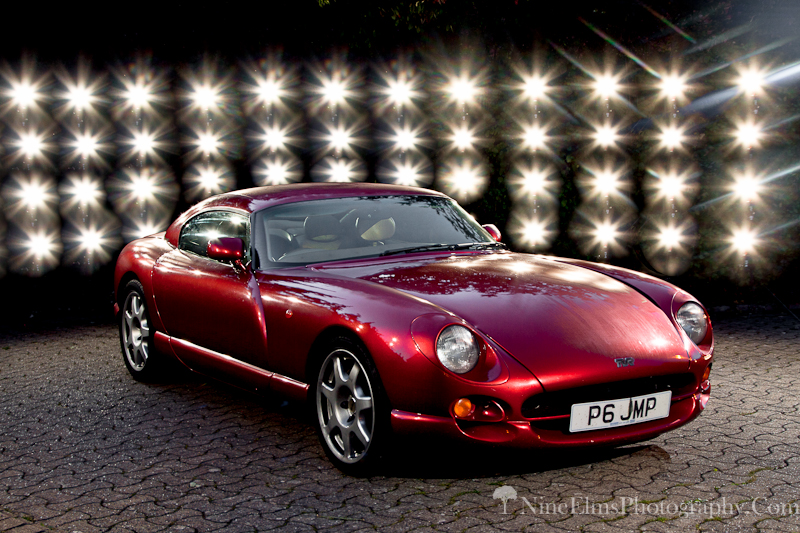
I've shot 20sec exposure to get the clouds then triggered two flashes to light a car for a project. I've also shot cars at long exposures then used multiple flashes, manually triggered moving along the vehicle, but I had an external power source to allow me a fast recharge time.
Or you could go for multiple flashguns on light stands
Last edited:
D
Deleted member 49549
Guest
Ye cannae change the laws of physics captain!!
In effect you need to over expose the model by a factor of about 1000 times for the filter to pull it back down to the right exposure on the sensor. The rest will be done by long exposure of ambient - the model will only be lit for a short length of time - 3 flash guns ain't gonna cut it by a long way. Just ain't happening.
Also hurling that amount of light at the model - wouldn't want it to be my retinas!!
Thats only going from iso 100 to , uhm , iso 51200....
OP
Phil Young
Suspended / Banned
- Messages
- 6,584
- Name
- Phil
- Edit My Images
- Yes
Just did a little test at home, I don't think I'm going to achieve the look I want without a lot more thought.
Unmodified lights shot straight into my face from 50cm wasn't even enough to avoid a ghostly look.
I will try a long exposure portrait, but probably not tomorrow.
Thanks for the input everyone.
Unmodified lights shot straight into my face from 50cm wasn't even enough to avoid a ghostly look.
I will try a long exposure portrait, but probably not tomorrow.
Thanks for the input everyone.

Cagey75
Suspended / Banned
- Messages
- 17,146
- Name
- Keith
- Edit My Images
- No
It's the filter that will kill you.
I've shot 20sec exposure to get the clouds then triggered two flashes to light a car for a project. I've also shot cars at long exposures then used multiple flashes, manually triggered moving along the vehicle, but I had an external power source to allow me a fast recharge time.
Or you could go for multiple flashguns on light stands
Cars are a little easier, as they won't move during exposures. Unless you want them to, of course.

redddraggon
Suspended / Banned
- Messages
- 1,818
- Name
- James
- Edit My Images
- Yes
Try doing it towards sunset where you can get longer shutter speeds without a 10 Stopper perhaps?
maybe you could try
2 nd filters, your 10stopper or a big one, something you could use as a dark slide (in the film sense, then another weak nd filter behind that.
so bulb mode, start exposure >long time > dark slide back in, remove heavy nd filter > person gets into frame > lift dark slide quickly, and fire flashes. and then hope.
if you could shoot person against a black background, and just lift darkslide up partly so you block the sky with it still...
or just do a do a double exposure with a film camera.
2 nd filters, your 10stopper or a big one, something you could use as a dark slide (in the film sense, then another weak nd filter behind that.
so bulb mode, start exposure >long time > dark slide back in, remove heavy nd filter > person gets into frame > lift dark slide quickly, and fire flashes. and then hope.
if you could shoot person against a black background, and just lift darkslide up partly so you block the sky with it still...
or just do a do a double exposure with a film camera.

Pookeyhead
Suspended / Banned
- Messages
- 11,746
- Name
- David
- Edit My Images
- No
It will work if you can get enough flash in there, but the model will be transparent, as most of the ambient exposure will already be there. You'd have to place here in a part of the frame that was intentionally very dark indeed, so you'd have to choose your location very carefully.
As others have said, you'd need a flash capable of being at least 10 stops brighter than you would normally need. That's 10 stops, not ten times brighter.... that's a LOT of flash. Frankly, I can't see how you would get enough flash to expose the model correctly with a 10stop ND in place.
It will actually be easier to comp her in.
[edit]
If the flash is very close to the subject, you may get away with it... just done some calculations... it will look crap with the flash so close though. If this is a full length portrait, then obviously, you'll never get th flash close enough though. Model will still be transparent though.
As others have said, you'd need a flash capable of being at least 10 stops brighter than you would normally need. That's 10 stops, not ten times brighter.... that's a LOT of flash. Frankly, I can't see how you would get enough flash to expose the model correctly with a 10stop ND in place.
It will actually be easier to comp her in.
[edit]
If the flash is very close to the subject, you may get away with it... just done some calculations... it will look crap with the flash so close though. If this is a full length portrait, then obviously, you'll never get th flash close enough though. Model will still be transparent though.
Last edited:
OP
Phil Young
Suspended / Banned
- Messages
- 6,584
- Name
- Phil
- Edit My Images
- Yes
It will work if you can get enough flash in there, but the model will be transparent, as most of the ambient exposure will already be there. You'd have to place here in a part of the frame that was intentionally very dark indeed, so you'd have to choose your location very carefully.
As others have said, you'd need a flash capable of being at least 10 stops brighter than you would normally need. That's 10 stops, not ten times brighter.... that's a LOT of flash. Frankly, I can't see how you would get enough flash to expose the model correctly with a 10stop ND in place.
It will actually be easier to comp her in.
[edit]
If the flash is very close to the subject, you may get away with it... just done some calculations... it will look crap with the flash so close though. If this is a full length portrait, then obviously, you'll never get th flash close enough though. Model will still be transparent though.
Yeah I found this David - I went all ghost like I'm my test and that's when I realised "oh".
Pookeyhead
Suspended / Banned
- Messages
- 11,746
- Name
- David
- Edit My Images
- No
If you choose a scene carefully... place the model in a deep shadow under a tree perhaps... that will mitigate against that.... you've still got the problem of pumping enough light in there without the need for a skin graft afterwards though 
- Messages
- 49,339
- Name
- Nod (UK)
- Edit My Images
- Yes
Maybe a night shoot with enough moon to provide cloud lighting but not so much to necessitate a heavy ND filter? Maybe have the subject sitting to block the background (shaded to stop the ambient light lighting them!) before flashing them?
http://www.shariblog.com/2013/06/long-exposure-shots-under-the-night-sky/
(found following the Monster camera link in IanDJ's thread)
http://www.shariblog.com/2013/06/long-exposure-shots-under-the-night-sky/
(found following the Monster camera link in IanDJ's thread)
Pookeyhead
Suspended / Banned
- Messages
- 11,746
- Name
- David
- Edit My Images
- No
Maybe a night shoot with enough moon to provide cloud lighting but not so much to necessitate a heavy ND filter? Maybe have the subject sitting to block the background (shaded to stop the ambient light lighting them!) before flashing them?
http://www.shariblog.com/2013/06/long-exposure-shots-under-the-night-sky/
(found following the Monster camera link in IanDJ's thread)
In terms of lighting, it would work, yes... but there's no way the model will sit perfectly still for the length of the ambient exposure, so when you flash the model in there will be a soft black halo around the edges where he or she has moved. It's retouchable of course... but requires just as much work as compositing. The results will be the same too, so go with the easiest method.
Been there... done that.
I tried this with my Going Home series I did a few months ago. Like Phil, I wanted to avoid compositing... but it was just too problematic, and would have required just as much retouching to remove the dark vestiges of ambient exposure anyway. Also... some of my locations didn't lend themselves to models in dresses
[edit]
If there are soft billowing fabrics involved, that will just cause mayhem too. The models in that link above are sitting.. or leaning, this of course makes it MUCH easier to remain still. Would a sitting model work in your idea Phil? If so, while tricky, and requires discipline in your models... it may be an answer. They'll almost certainly require retouching though.
It also depends if you want the results to look flash lit or not. If you want the model to appear to be naturally there, and naturally lit, then that becomes so problematic on location that it would definitely be easier to comp.
If the model was there in the shot below, and flash lit, A) the flash would actually be in shot, and need retouching out, and B) would not look as natural as recreating the lighting in the studio. In short, would it actually look as natural if she was flashed on location? I think not.

If you don't mind the models obviously being flash lit like the link Nod posted, then I'd say get them to lean or sit, remain still, and then flash at the last minute. If you want natural looking lighting... shoot in the studio and comp. It's all about the image at the end of the day. Shooting for comp is as much of a skill as solving it as one exposure, as you still have to be very good with lighting to achieve either convincingly.
Last edited:
OP
Phil Young
Suspended / Banned
- Messages
- 6,584
- Name
- Phil
- Edit My Images
- Yes
David, thanks for the lengthy reply.
I honestly think after trying for myself that the best way will be a composite. Like you said, there's just too many problems and and I don't want any soft areas so a seated subject wouldn't work.
Anyway, the day is rubbish in London anyway, there's just one, big, rainy cloud so actually nothing interesting anyway.
Another time I will practice on myself and post. I'll probably do a night self portrait this weekend.
I honestly think after trying for myself that the best way will be a composite. Like you said, there's just too many problems and and I don't want any soft areas so a seated subject wouldn't work.
Anyway, the day is rubbish in London anyway, there's just one, big, rainy cloud so actually nothing interesting anyway.
Another time I will practice on myself and post. I'll probably do a night self portrait this weekend.
Pookeyhead
Suspended / Banned
- Messages
- 11,746
- Name
- David
- Edit My Images
- No
Hang on, really early days with photography had 30 secs plus exposures. Didn't they used to use a frame to keep the model still?
They did. That's why in the links Nod posted, they are leaning, or sitting. It's easier to remain still. In the very early days of portraits, they had devices that clamped heads into places etc.
All very well... but does anyone have such a device they can let Phil borrow?
OP
Phil Young
Suspended / Banned
- Messages
- 6,584
- Name
- Phil
- Edit My Images
- Yes
They did. That's why in the links Nod posted, they are leaning, or sitting. It's easier to remain still. In the very early days of portraits, they had devices that clamped heads into places etc.
All very well... but does anyone have such a device they can let Phil borrow?
Errr... I will not use such devices! I will embrace the newer technology of composite and Photoshop


buzzlightweight
Suspended / Banned
- Messages
- 361
- Name
- robert
- Edit My Images
- No
They did. That's why in the links Nod posted, they are leaning, or sitting. It's easier to remain still. In the very early days of portraits, they had devices that clamped heads into places etc.
All very well... but does anyone have such a device they can let Phil borrow?
sounds kinky lol
good luck phil, i just finished reading speed lighters handbook, i found it very helpful, may be you would?
OP
Phil Young
Suspended / Banned
- Messages
- 6,584
- Name
- Phil
- Edit My Images
- Yes
sounds kinky lol
good luck phil, i just finished reading speed lighters handbook, i found it very helpful, may be you would?
I read a good one from Joe McNally on speedlights and OCF so I'm quite happy with doing what seems to be a pretty standard couple of shots with some photoshop involved.
Thanks for the suggestion though
Byker28i
Suspended / Banned
- Messages
- 21,339
- Edit My Images
- Yes
They did. That's why in the links Nod posted, they are leaning, or sitting. It's easier to remain still. In the very early days of portraits, they had devices that clamped heads into places etc.
All very well... but does anyone have such a device they can let Phil borrow?
Could you imagine the models looks when he turns up with what looks like a torture device
- Messages
- 49,339
- Name
- Nod (UK)
- Edit My Images
- Yes
In the early days, even frames weren't enough to keep subjects still. Many of the cowboy portraits, especially outlaws, were shot post mortem, usually after the mortician had cleaned the blood off. Similarly (but far sadder), babies who died in infancy were sometimes photographed as a keepsake.