Garry Edwards

Moderator
Messages
13,475
Name
Garry Edwards
Edit My Images
No
First things first – my apologies for not being able to post a challenge in August – harvest time at the farm has to take priority – and my delay in posting this month – don’t ask:(

The challenge for this month is darkfield lighting, which is basically the opposite of our first challenge, brightfield lighting, see https://www.talkphotography.co.uk/threads/lighting-challenge-1-coffee-cup.759315/

So, I’ve used a softbox as my light source, which is fine. But if you don’t have one then you can bounce light from a white wall instead, which will work just as well, or you could use a window, or as with the brightfield lighting challenge, a white computer screen - pretty much anything will do the job, so nobody is excluded:).

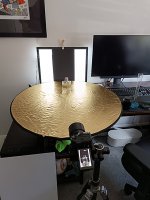
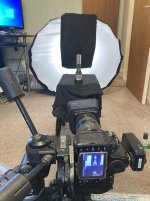
Here’s the first setup shot, taken from just behind the camera.
setup_01.jpg


The softbox (OK, folding beauty dish/softbox) has a pair of my suit trousers draped over it to stop the light where it needs to be stopped. Cinefoil/blackwrap would be a better choice, but trousers work too


Then there’s a small stool. That should really have been covered by blackwrap too, but I used a black tee-shirt instead. To completely avoid showing the uneven texture, the camera height was almost exactly in line with the base of the subject, not ideal but OK for the purpose (I hope)


Darkfield lighting is a very useful technique, normally used for transparent or translucent subjects as shown here, but also useful with opaque subjects too, if additional lights can be used as well. Basically, all of the light comes from each side, above and sometimes below, and the effect is dependent on the size of the masked (black) area, the size of the white area, the distance from the light source to the subject and the shape of the subject, so it can get a bit complicated, but can be very finely controlled. I could explain the physics but I won’t - just experiment until you’re happy!


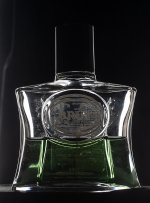
So, here’s my actual bottle of aftershave, which of course I should have cleaned thoroughly but didn’t:(

short.jpg

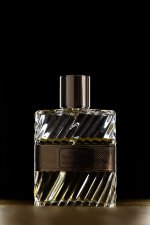
It has a strange mixture of both concave and convex surfaces, each of which create strange and often unwanted refraction, one of the disadvantages of the darkfield process. So, someone who was clearly hinting gave me this one at Xmas, different shape, different refraction.
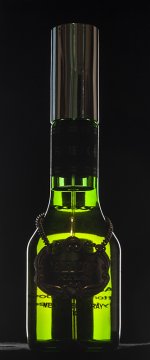
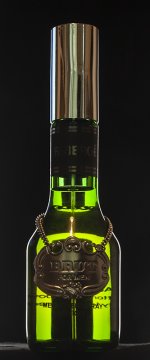
tall_darkfield.jpg

Each bottle has some annoying writing that shows through
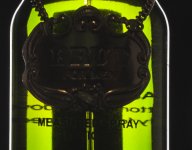
engraving.jpg

This is common, but is usually printed on to a label that needs to be removed before the photography, but in this case nothing could be done because the writing is engraved on to the reverse of the bottle.

Back to the setup, and I’ve included this one basically to emphasise the need for a decent lens hood, with the light coming straight at the camera lens
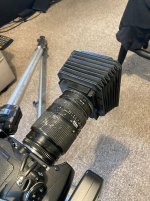
hood.jpg


So, I think that this is a useful tool for us all to have in our toolkit, and following the “rules” that I set for these challenges, there’s just a single light, no editing except cropping and with minimal space and equipment needed.


But we CAN do more, for example we cant take great care with distance, masking, maybe even adding a matt box to the lens for greater control, and we can also add extra lighting, as below:
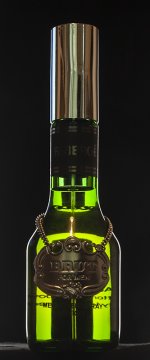
tall_extra lighting.jpg

To stay within both the rules and the spirit, the shot above doesn't actually have any extra lighting, but you may have noticed that my camera was on a small tripod, this allowed me to introduce ambient light simply by using a much longer shutter speed.


Over to you, I know that you can do much better . . .
 

Attachments
  • tall_extra lighting.jpg
    tall_extra lighting.jpg
    182 KB · Views: 8
Last edited:
Not a easy as it looks, mainly because small adjustments to distance from subject to flag and the effective size of the light source make so much difference - but all part of the fun and the different effects that an easily be obtained make this technique very versatile.

I wouldn't have thought of using that gold reflective surface - but I think it's worked really well, introducing colour in the way that it has. Very good effort.
 
Not a easy as it looks, mainly because small adjustments to distance from subject to flag and the effective size of the light source make so much difference - but all part of the fun and the different effects that an easily be obtained make this technique very versatile.

I wouldn't have thought of using that gold reflective surface - but I think it's worked really well, introducing colour in the way that it has. Very good effort.
Thanks, Garry. I had fun doing it.
I couldn't believe that such tiny adjustments, make such a difference (lots of shuffling).
I've only got that A3 lightbox thing, so struggled to find anything to really fit that I liked. I pegged A4 black card to the top (wife's, so couldn't chop it up). Regarding the reflector, my first go on black/grey board looked kinda meh. So wondered what shiny might be like.
 
Certainly this is not easy, getting the illumination and the light spill correct is fiddly to say the least.
First attempt bouncing light of a white reflector was not successful so I abandoned that in favour or the set up shown

p1063374606-4.jpg


The mask on the PC screen is a piece of black velvet and the stand is a piece of glossy black acrylic sheet.

I tried 3 different subjects
p950631925-4.jpg


I think the line down the middle is from a gap in a curtain that I cannot close fully


p663535184-4.jpg


This I am not sure about, it seems a bit flat

p840309927-4.jpg


This seems to be heading in the right direction but some more work is needed
 
Interesting!
(So far) 2 people have bitten the bullet and have posted excellent results. despite both saying that it's difficult:)

It is in fact more difficult when using flash with a normal flash sync speed. Using continuous lighting, as you have, requires a much longer shutter speed, which results in what is, in effect, light pollution from the inevitable ambient light. This produces pleasing results more easily than with flash, but flash can produce more drama with more room for error, and flash with a long shutter speed produces more control and can emulate the effect of continuous light.

This seems to be a fairly obscure technique, but I used to use it a lot with shiny subjects, to produce rim lighting without the need for a lot of quite specialised additional lighting.

As for being fiddly, or difficult - yes it is. But the reality IMO is that all of these odd techniques that have been posted in this series so far, and which can create such dramatic results, do need a degree of care and a basic understanding of the laws of physics - the only techniques that are really easy are the broad and soft lighting techniques that just involve bounced light or similar, and which tend to produce bland results.

I don't know how everyone else feels about this, but I'm really pleased at the results that the people who are contributing to these threads are getting. Keep the posts coming!
 
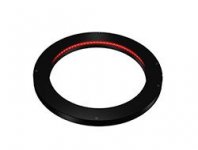
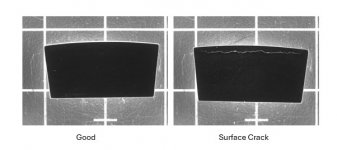
I quite often use darkfield lighting (in fact I was using it this morning). I work in machine vision and use it to highlight surface (and edge) defects on objects, so I can write software to detect the said defects. These defects are not easily visible when looking straight on. I do have the advantage of being able to buy specific darkfield lights. This morning I was using one of these darkfield ring lights - https://www.ccs-grp.com/products/model/2500

Image2.jpg

Example:-
Image1.jpg

Although not taking part in the @Garry Edwards challenge, it shows that darkfield has other uses!
 
I quite often use darkfield lighting (in fact I was using it this morning). I work in machine vision and use it to highlight surface (and edge) defects on objects, so I can write software to detect the said defects. These defects are not easily visible when looking straight on. I do have the advantage of being able to buy specific darkfield lights. This morning I was using one of these darkfield ring lights - https://www.ccs-grp.com/products/model/2500

View attachment 433295

Example:-
View attachment 433294

Although not taking part in the @Garry Edwards challenge, it shows that darkfield has other uses!
Interesting, and thanks for posting.
Your post reminds me of something that I more or less accidentally learned many years ago, when I was photographing a rather strange shaped/bent perspex product that had almost impossible and conflicting reflections.

I tackled this by using multiple linear polarising screens - one on the lens, with linear polarising gels over each light, tricky but very effective and the only real solution. This had to be shot on a 5"x4" monorail camera (full movements were also needed) and I had to use modelling lamps, pre-digital, to visualise the effects, although of course I also shot polaroids, just to make sure. The modelling lamps were used at low power, because heat would destroy the polarising gels. I noticed that, at certain angles, the gels produced a very clear view of all of the various stresses created in the formation of the bent perspex. From memory, it showed a very clear rainbow effect where the material was stressed. But, it was all about angle of incidence, and required constantly changing position to achieve the optimum angle. What this meant was that none of the rainbow effects were actually visible from the camera position, and of course even if they were there, the camera polariser would cancel them out.

I sort of knew and understood the physics of this before then, but actually seeing it was a bit of a revelation:)
 
Interesting, and thanks for posting.
Your post reminds me of something that I more or less accidentally learned many years ago, when I was photographing a rather strange shaped/bent perspex product that had almost impossible and conflicting reflections.

I tackled this by using multiple linear polarising screens - one on the lens, with linear polarising gels over each light, tricky but very effective and the only real solution. This had to be shot on a 5"x4" monorail camera (full movements were also needed) and I had to use modelling lamps, pre-digital, to visualise the effects, although of course I also shot polaroids, just to make sure. The modelling lamps were used at low power, because heat would destroy the polarising gels. I noticed that, at certain angles, the gels produced a very clear view of all of the various stresses created in the formation of the bent perspex. From memory, it showed a very clear rainbow effect where the material was stressed. But, it was all about angle of incidence, and required constantly changing position to achieve the optimum angle. What this meant was that none of the rainbow effects were actually visible from the camera position, and of course even if they were there, the camera polariser would cancel them out.

I sort of knew and understood the physics of this before then, but actually seeing it was a bit of a revelation:)

Yes I sometimes have to polarise the light source and then add a polariser to the lens, then you can tune what you see with the lens polariser. In my industry its all about being able to reliably highlight the defect that the customer wants to pass/fail the part on, and I often use multiple light sources, taking several images and mathematically combining some of the images to bring out the defect.

Then once I have it working on the bench, I have to transfer it to a production environment, another challenge in itself!

My life's slighly easier in that I have ranges of lighting like this available:-

 
Last edited:
Ok, so I had only 15 mins spare but having seen this challenge (and worked with darkfield in computer vision also) it made me think it'd be the perfect way to try capture one of my son's Lego characters. Plus the macro lens was on the camera already, I could grab a flash and quickly set something up on my desk.

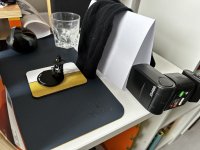
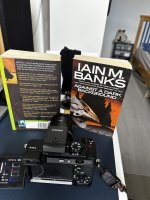
So here's the setup - less than ideal. A folded sheet of A4 for a diffuser, a sock for the black backdrop to diffuse the light (you use what you've got right?) and a couple of books off the bookshelf to block the glare into the lens...and yes, the perfect book did just leap out at me from the shelf ;)

IMG_1636.jpegIMG_1635.jpeg

And the final pic after a bit of experimenting with distances and light:
I think it turned out ok, it nearly matches the image in my head. I think if I had more time, a better diffuser setup and some black card would be easier to manipulate than a sock... I think also I would make the character hold a translucent lantern as it might catch the light and glow nicely. It would've been better to stand the character on a larger dark surface but I only had the lens cap handy and needed it the right height for the camera ... I'd use a tripod next time too for more freedom. I was messing about with the angles of the books a little to try get the glint in both eyes, but I could only get one. Maybe some white paper on the back of them would've sorted that, but it could be the angle of the hat.
 
Last edited:
I think it turned out OK too.

Using what we have is always a good approach, and the more knowledge we have, the easier it gets to overcome any lack of ideal tools. Forget about the "perfect" studios, full of expensive gear, that we often see in some of the slicker YouTube videos, the reality is that in most pro studios (for non-people photography) we rely on gaffer tape, blu-tack, magnifying glasses, mirrors, cooking foil and hardback books :)

Your result is a bit more dramatic than the previous ones because you used flash (not a complaint) and so didn't have a long exposure that filled in some of the shadow area, but as with my own example, this could be modified by using a longer shutter speed.

A sheet of paper is, in theory, a terrible choice because it eats up light as well as being a less than ideal shape, but it doesn't matter because there's more than enough power and the density of the paper really helps to even out any hotspots.

These challenges are really about learning how to manipulate light and using this knowledge to add to our toolkit, and your approach has worked perfectly well.
 
Your result is a bit more dramatic than the previous ones because you used flash (not a complaint) and so didn't have a long exposure that filled in some of the shadow area, but as with my own example, this could be modified by using a longer shutter speed.

Yes, I tried letting ambient in as there's a window behind the camera so the colour of light was close enough not to need to go find the flash gels, but I preferred the drama of the darker image, suiting the subject matter better.

A sheet of paper is, in theory, a terrible choice because it eats up light

Yes, it really was - I was surprised how bright I needed to run the flash given the small working distances. I have a shoot through umbrella I'll use if I come back to revisit this. And it's just occurred that instead of a sock I could've used black tape on the paper :) I feel I should also mention it was a clean sock.
 
Ok, so here's my attempt at darkfield lighting.

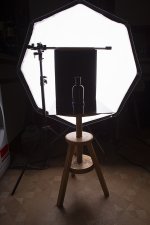
My setup was a studio strobe with an octagonal softbox, a piece of black mount board hanging from a backdrop stand and a piece of black acrylic for a base.
5P8A0157.jpg

I played with different distances both from camera to subject and subject from back ground. I found keeping the subject further from the back ground and the camera as close to the subject as possible gave the best illumination ( was happy with) whilst reducing the light pollution. Definitely see why a hood is a must have for this.

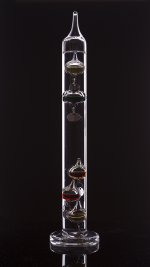
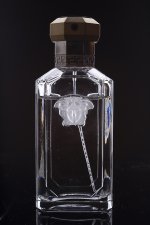
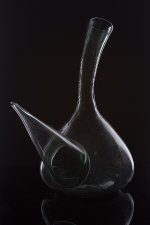
Here are a few of my attempted subjects.
5P8A0139v1024.jpg

5P8A0066.jpg

5P8A0095.jpg

5P8A0146v900.jpg

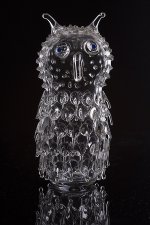
Overall I am quite happy the results, the owl and thermometer being my favourites.
Still plenty of ways to experiment though so I think I will keep the light setup for now... :)
 
Ok, so here's my attempt at darkfield lighting.

My setup was a studio strobe with an octagonal softbox, a piece of black mount board hanging from a backdrop stand and a piece of black acrylic for a base.


I played with different distances both from camera to subject and subject from back ground. I found keeping the subject further from the back ground and the camera as close to the subject as possible gave the best illumination ( was happy with) whilst reducing the light pollution. Definitely see why a hood is a must have for this.


Overall I am quite happy the results, the owl and thermometer being my favourites.
Still plenty of ways to experiment though so I think I will keep the light setup for now... :)
Yes, experimenting with distances is crucial and (especially) at very short distances, minor changes create massive differences.

Some very good results here, and some interesting subjects, it just goes to show how useful this technique can be with very different subjects, and it can also be used with people, in effect creating double rim lighting.

And there was I, thinking that because this technique is more difficult than the previous challenges, it wouldn't create much interest - I'm very happy to be proved wrong:)
 
Yes, experimenting with distances is crucial and (especially) at very short distances, minor changes create massive differences.

Some very good results here, and some interesting subjects, it just goes to show how useful this technique can be with very different subjects, and it can also be used with people, in effect creating double rim lighting.

And there was I, thinking that because this technique is more difficult than the previous challenges, it wouldn't create much interest - I'm very happy to be proved wrong:)
Thanks Gary, I have to say that this challenge has been my favourite so far as it was completely new to me whereas I had dabbled/ experimented with the others before (without knowing what they were ). Before the challenges all my experimentation also relied heavily on post processing so with the aim of these to get it all right in camera I feel they are really upping my admittedly amateur skill level.
I for one say, Keep'em coming! and thanks for running them too! :D
 
This is late but any feedback would be great

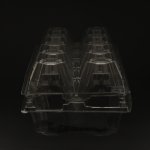
I tried a complicated shape that turned out to be really difficult. An eggbox. I covered up the label inside with black paper (you can see it inside). The length made it hard because the light kept coming around the sides too much. Changing the flash zoom so it spread out less got that right. It was a bit underexposed and I should have focussed nearer the front.

2024 Darklight 1.JPG
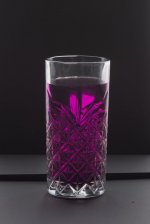
I tried some Bristol Blue glass and it was all too dark. The reflections on the outside were nice but the middle was just off black.

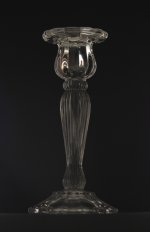
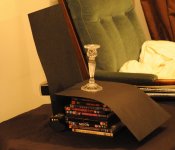
Last I tried a simple glass candlestick. This was much easier to get about right as it was all about the same distance from the sheet of card that was blocking off the light.


2024 Darklight 2.JPG
Setup was a flash bounced off a wall with the camera about a meter from the subject2024 Darklight 3.JPG


Thanks for looking.

Andrew
 
The focus/depth of field just doesn't matter in this context, it's all about the lighting effect, but it's certainly a complex shape that makes things difficult - but well done for jumping in the deep end:)

The exposure does seem to be a bit off, but again it doesn't matter for this purpose.

A smaller glass object is just so much easier, as long as we accept that refraction will always rear its ugly head with darkfield lighting and complex angles, not actually a real-world problem outside of these challenges, because a few minutes in PS would soon cure that.

The distance from camera to subject is pretty much irrelevant (unless perspective distortion is a factor, which it isn't with the glass but can be with the egg box), but distance from subject to light makes a huge difference, and it's very worthwhile to experiment with different distances as well as with different sizes of black flag.

Each of these challenges will be permanently open, and new contributions will always be welcome. Thanks for posting. More people need to post, for these challenges to be worth continuing.
 
Thanks Gary. The eggbox would have looked a lot better if I lightened it in post +1EV. I do like the going out of focus and into the darkness effect at the back of it.
 
@Garry Edwards

Hello Garry hope you don't mind me resurrecting this.

What would you say would be the best way to light the rim of a wine glass to compliment this darkfield lighting method, I do not mind how many lights, modifiers etc. are needed.
 
@Garry Edwards

Hello Garry hope you don't mind me resurrecting this.

What would you say would be the best way to light the rim of a wine glass to compliment this darkfield lighting method, I do not mind how many lights, modifiers etc. are needed.
You only need the one light source as per the OP, it will all come down to the distances bg<>subject<>camera and the power of the flash/ light source. Trial and error to see what gives you the results you are looking for.
 
The rim doesn't need separate lighting, all of the light that you could possibly want comes from the existing light source - usually a softbox, silk or lit wall.

The effect (or brightness/width) is entirely controlled by the size of the black flag, size of the light source, difference in distances, just try it and see

EDIT: Crossed with Ryan's post
 
Thank you gents,

tomorrows project planned.
 
i will try varying the height of the flag slightly as well
 
Had a try at this challenge lit with soft box. Incredible process and very versatile and flexible.

DSC_0521_01.jpg
 
Good result Wayne, don't forget part of the challenge includes pics of your setup as well.
Flipping heck, Just taken it all down as Mrs came home from shopping and could not get through the front room due to black and decker workbench for table.

I will be having another bash on Monday or Tuesday with a more serious effort so will show then afterwards. The two methods have given me several ideas.
 
Flipping heck, Just taken it all down as Mrs came home from shopping and could not get through the front room due to black and decker workbench for table.

I will be having another bash on Monday or Tuesday with a more serious effort so will show then afterwards. The two methods have given me several ideas.
Ha, I have the same problem. At one point I took up the kitchen table for close to 2 weeks before I was threatened with divorce.( I don't think she was serious... Maybe)
 
It's all about the process and creating another tool for our toolbox, not about the result, but when you re-do it . . .
1. You may want to experiment with having a narrower black flag and/or having it a bit further from your light source, to create more dramatic edge lighting on the glass.
2, You may want to have the camera a lot lower, so that the entire glass is against the black background. If you really want a looking down shot that shows the surface of the liquid and the top of the glass then you need to either extend the flag so that it's under the glass as well, or you need to extend it in PP (we don't do PP in these challenges but of course we do in real life.
Ha, I have the same problem. At one point I took up the kitchen table for close to 2 weeks before I was threatened with divorce.( I don't think she was serious... Maybe)
I'm a very lucky man. I'm single:)
 
@Garry Edwards

Thanks for the tips there, appreciated.

My tripod it too tall for the bottom of the light so there was an annoying sliver of light kept popping through. the flag was leaned against the softbox and didn't think of a mobile one, even though I have cut several bits of wood for flag stands. I cut a small hole in the card under the glass and shot a flash through it but didn't give the result I expected so more experiments/practice needed.
 
I’ve now made a video on this technique


The video quality is appalling, but I’m doing my best to learn video shooting and editing and hopefully will improve over time.

Any comments on my approach and possible improvements in the Lighting Challenges discussion thread please, https://www.talkphotography.co.uk/threads/lighting-challenges-discussion-thread.759256/page-3

My thanks to the members who kindly gave me permission to include their own photos in the video.

Hopefully the video approach will help people to understand the lighting principles more easily, so please take some darkfield lighting shots and post them here.
 
When I do these I usually set up on a 34" square table and use a 3' square Godox soft box behind the table. I use either a black felt for a table cloth or one of about 24 assorted 54" square table cloths of one of many different colors that I have to cover the table. The black background is usually a small 12 X 16" piece of the black felt suspended in front of the soft box using a stand and pole, plus a couple of small A-clamps. The subject (if I want it floating) is usually held by a chemistry stand. I use an aperture mask, made from a piece of black foam core with a rectangular hole in it's center in front of the camera (to block lens flare) and I support it by attaching a block of wood and an A-clamp that sits on the table surface. To add some light to the face of the subject I use smaller pieces of white foam core, also supported using blocks of wood and A-clamps place to either or both sides of the camera view between the subject and aperture mask and angled to add light to the face of the subject. So, one light source to provide light to both front and back of the subject with an aperture mask to block lens flare.

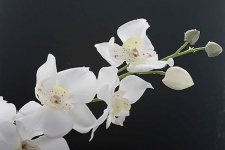
Flowers that are illuminated both front and back this way can be quite impressive when a black background is used. This photo of Cherry Blossoms was illuminated this way. Bottles and colored glass require more careful positioning of the small foam core reflectors, but the results are great, if you can get the reflections just right. I have sometimes added linear polarized light and a linear polarized filter to the camera to add front light, but not the harsh reflections of non polarized light. I won't post photos that were taken for clients, so no product photos are available for posting.

Charley
 

Attachments

  • IMG_0299LoRes.jpg
    IMG_0299LoRes.jpg
    44.1 KB · Views: 14
Yes, an aperture mask or matte box is a great addition, better even than the adjustable lens hood that I normally use for backlit subjects (and everything else.
 
Yes, an aperture mask or matte box is a great addition, better even than the adjustable lens hood that I normally use for backlit subjects (and everything else.
Re Aperture mask,

As described by @CharleyL am I correct in thinking its a piece of card placed in front of, but not touching, the lens?

How far in front and what approx diameter of the hole? could the hole be shaped etc?
 
I'm not sure what you're asking here. . .
A Matte box is basically just a very efficient lens hood that is also fitted with french flags and that can also hold one or more filters if required, more of a movie/video tool, essential because, with movie shots we can only adjust aperture and iso (little or no adjustment of shutter speed).

Most lens hood are inefficient, a one-size-does-everything solution that works badly for most situations, a matte box is just a more professional tool. See this article on lens hoods https://www.talkphotography.co.uk/tutorials/what-is-a-lens-hood-and-should-you-use-one.163/

I've found some useful info on matte boxes, haven't read it in detail but it may be helpful View: https://www.reddit.com/r/photography/comments/k9kez/why_do_photographers_only_need_a_lense_hood_but/


CharleyL tells us that he uses a matte box for precise studio lighting of flowers etc., perfect for that. I can't speak for him, but he wouldn't use one for photos of his grandkids playing outdoors, too slow, cumbersome and unecessary, but a movie maker would . . .
 
I'm not sure what you're asking here. . .
A Matte box is basically just a very efficient lens hood that is also fitted with french flags and that can also hold one or more filters if required, more of a movie/video tool, essential because, with movie shots we can only adjust aperture and iso (little or no adjustment of shutter speed).

Most lens hood are inefficient, a one-size-does-everything solution that works badly for most situations, a matte box is just a more professional tool. See this article on lens hoods https://www.talkphotography.co.uk/tutorials/what-is-a-lens-hood-and-should-you-use-one.163/

I've found some useful info on matte boxes, haven't read it in detail but it may be helpful View: https://www.reddit.com/r/photography/comments/k9kez/why_do_photographers_only_need_a_lense_hood_but/


CharleyL tells us that he uses a matte box for precise studio lighting of flowers etc., perfect for that. I can't speak for him, but he wouldn't use one for photos of his grandkids playing outdoors, too slow, cumbersome and unecessary, but a movie maker would . . .
Hello Garry,

I was thinking more of a piece black card with a hole cut into it say four inches diameter and then placed a few inches in front of the lens so that the lens only gets light from the darkfield and not the extraneous light from the un-flagged light of the softbox.

If that makes sense
 
@Barney

Cut a mask window using card or foamboard that's the same ratio as the sensor/film your using 3:2 5:4 etc, and place in front of the lens, you adjust the ditance so the mask doesn't block the sight of the lens but does block frontal light that will create the flare.
 
I'm a bit late on returning to this conversation, but I wouldn't use matte board as an aperture mask for most other shoots. I use them mostly for table shoots when I'm using a soft box behind a table that's pointed directly at the camera and a black or other color piece of foam core or matte board as the background for what I am shooting. Being smaller than the soft box, this background piece allows soft light to come around it to light the back of my subject and provide good rim light. Two pieces of white matte board or foam core then get used, one to each side of the camera lens view, to reflect the soft box light back to light the front side of the subject. The black aperture mask has a hole in it's center and is placed just between these angled reflectors and the camera and positioned so as the edges of the hole in it's center do not show in the shot, but the hole is small enough to only see the subject and center area of the background. It needs to keep the lens from seeing the soft box completely and so there is no lens flare from the soft box on the camera lens. Several hole size adjustments, background sizing adjustments, reflector sizing adjustments and careful positioning of everything is needed to get this working, but I have managed it often, and now getting quite good at it. Learning how to work with the light that you have, and making the most of it for the shot that you want to take is key to a successful shoot. of any kind, not just when doing this.

I depend on the lens extension (sorry proper name escapes me at the moment-I'm getting old) and sometimes a small 5 way reflector held off , but close to the lens to prevent lens flare when needed, especially when shooting outdoors and the Sun is from behind the subject, or there is a harsh reflection of it coming from a car windshield, etc. Another large 5-way reflector is then usually used, held high, to reflect Sunlight back toward the subject to properly light them, but that's my choice when working outdoors. I rarely use flashes outdoors. Trying to Over Power the Sun is crazy, and very expensive. I make use of it with reflectors whenever I can. This small lens flare reflector is usually my folding 12" gray balance reflector that I always have in my camera bag. I usually have the camera set on "Auto white balance" so this little folding reflector sees more use as a lens flare blocker, than used for it's original purpose. These are cheap and fold so as to fit in even the most stuffed camera bag easily.

Charley
 
Last edited:
Why is everyone using the term "Matte Box? I never said that I used such a thing, did I? Matte Board, like you surround photos in oversize picture frames yes, but where did the term "Matte Box" come from ? I guess I'm on the wrong side of the pond for this one.

Charley
 
Why is everyone using the term "Matte Box? I never said that I used such a thing, did I? Matte Board, like you surround photos in oversize picture frames yes, but where did the term "Matte Box" come from ? I guess I'm on the wrong side of the pond for this one.

Charley
You're right:)
The two terms are pretty interchangeable, but I think that Matte Box is the English version :exit:

I wonder whether aperture mask may come from the Aperture Foundation in NY NY - just a guess.
 
Back
Top