Light modifiers user friendly in the wind

Messages
4,692
Name
Neil Williams
Edit My Images
No
Yesterday I did a photoshoot with a 3 foot octabox on an exposed bridge that was a nightmare as the wind kept blowing the octabox all over the place. What can I use on my Profoto B1 head to shoot outdoors portraits and be wind friendly with soft light?
Thanks in advance.
Neil
 
I think there will be many interested in the solution to this conundrum, me included.

The best solution I have read is a voice activated assistant.

"Hold that there and don't let the wind blow it over"
 
Theres a Youtube channel called Markus Pics He shows a lot of lighting gear and modifiers, he gets good results with a bowl type relector and a "sock" that fits over the end as a diffuser.
This has a lower profile wind wise than a larger softbox.
That said it's hard to beat what the other Wayne says above. That has the advantage of making the light easier to move as well.
 
A very common challenge, easily dealt with:)

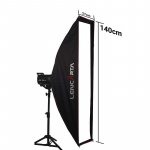
When I worked with Lencarta I designed a range of pro softboxes, they had a D-ring sewn into each corner, like this one
softbox.jpg
Sadly, most people now go for the cheapest softboxes and I think that this pro range was discontinued, but we can sew on D-rings ourselves. Just use them to secure the softbox to a tree, a vehicle, to tent pegs hammered into the ground, whatever's there, using nylon paracord, very thin and lightweight, but very strong. And of course, we can secure the flash head and the stand in the same way, we can also hang weights from the stand, but the D-rings work best of all.

And remember, the bigger the sail, the more dramatic the fail:)

The old video below was made well before we added the D-rings, the shoot took place in good weather without a wind problem, even so I tied gear down, more out of habit than actual need, and you can see this at 1 minute 44, with just the stand tied down - there may be other examples in that video, I haven't checked.

Incidentally, the bunch of reprobates incredible photographers in the background were all forum members, I used to invite people along to shoots sometimes.

 
Last edited:
I think there will be many interested in the solution to this conundrum, me included.

The best solution I have read is a voice activated assistant.

"Hold that there and don't let the wind blow it over"
That’s exactly what Fon told me “why don’t we just use one of the Caddys that normally caddy for us” give her a tenner and she can hold the light…… sorted.
I’m still up for other suggestions plus a recommendation for a light weight light stand.
 
That’s exactly what Fon told me “why don’t we just use one of the Caddys that normally caddy for us” give her a tenner and she can hold the light…… sorted.
I’m still up for other suggestions plus a recommendation for a light weight light stand.
Yes, that works really well, you'll get a mumbled sorry while you grub around on the floor picking up what's left of your expensive flash
 
What can I use on my Profoto B1 head to shoot outdoors portraits and be wind friendly with soft light?
Personally, I would think less about creating soft light and more about just using flash as fill when necessary. I think the emphasis on "soft light" is overstated and not well understood/implemented in general.

I.e. find the soft light naturally (shade/backlight/etc) and add flash as necessary.
 
Last edited:
Personally, I would think less about creating soft light and more about just using flash as fill when necessary. I think the emphasis on "soft light" is overstated and not well understood/implemented in general.

I.e. find the soft light naturally (shade/backlight/etc) and add flash as necessary.
When you say just use flash as fill light do you mean on camera flash or still go for off camera flash but without a modifier?
 
A very common challenge, easily dealt with:)

When I worked with Lencarta I designed a range of pro softboxes, they had a D-ring sewn into each corner, like this one
View attachment 475070
Sadly, most people now go for the cheapest softboxes and I think that this pro range was discontinued, but we can sew on D-rings ourselves. Just use them to secure the softbox to a tree, a vehicle, to tent pegs hammered into the ground, whatever's there, using nylon paracord, very thin and lightweight, but very strong. And of course, we can secure the flash head and the stand in the same way, we can also hang weights from the stand, but the D-rings work best of all.

And remember, the bigger the sail, the more dramatic the fail:)

The old video below was made well before we added the D-rings, the shoot took place in good weather without a wind problem, even so I tied gear down, more out of habit than actual need, and you can see this at 1 minute 44, with just the stand tied down - there may be other examples in that video, I haven't checked.

Incidentally, the bunch of reprobates incredible photographers in the background were all forum members, I used to invite people along to shoots sometimes.

Really enjoyed the video............thanks for that
 
If you have a tree or pole in the right spot you could always zip tie the stand to it. You can buy a bag of hundreds. Just a little extra peace of mind

Ideally have one of those steel riser stands. They weigh over 10kg, and thats the good news as long as someone else is carrying it
 
I have tended to use the studio strobes with 7" reflectors and the fabric diffusers that are held in place with the elastic bands when I needed powerful lights outdoors, but I prefer to make use of the Sunlight whenever I can. Hauling heavy lighting to a shoot when it has to be carried any distance is not at all enjoyable.

I have several of the spring wire edge 5 way reflectors of different sizes that get used most of the time for outdoor photo shoots. Why "Over Power the Sun with big heavy gear", when a few reflectors and a little training of some willing bystanders in how to hold them, can redirect the Sun light to get the light that you want where you need it so easily with very little weight to carry. If the subject is a pretty girl and you are in a more public place, there will be plenty of bystanders who will be ready and willing to help, but if not taught in how to use the reflectors, they will hold them low and reflect the Sunlight up at your subject. That does not produce good light. You will need to train them to hold the reflectors high or at least at their head level, so the reflected light comes from above when it reaches the subject, just as your lights would be aimed for the same shot.

If there is any wind and your willing help has any problems holding the reflectors to keep the light where you need it, you will just need to take a few extra shots between the worst wind gusts, to get what you are looking for. It can be a bit of a challenge, but it sure beats hauling heavy lighting to and from a shoot any day. Keep in mind that white clouds and overcast days that aren't threatening rain, can work as the largest soft boxes that you have ever used. Some of my best shoots were taken when the sky was overcast, but light and well lit by the Sun. A speedlite and small soft box to add light to the subject's face will produce amazing results for a shoot that was lit mostly by the Sun through a slightly overcast day..

If out away from the public areas you will likely need to bring assistants to hold the reflectors for you, but if they haven't done it before, a little training session will be needed. I do my best to travel to photo shoots carrying as little as possible. Making use of Sunlight, instead of trying to over power it is a far lighter way to carry gear to a photoshoot and back. For any outdoor photo shoots, I always carry a few hanks of parachute cord, some long boot shoelaces, and at least one roll of Gaffer Tape. This all gets used when there is a need to tie things down. If you find that weights will be necessary to keep your camera tripod and light stands in place, some empty milk jugs, filled with sand or water at the shoot location will make good weights for the shoot and then dumped out where the material came from, to make them easy to carry back when the shoot ends. The handles make easy attachment points too, and are FREE and easy to collect ahead of a planned shoot. There are special long water bags available to hold down pop-up shelters that work well too, but cost more. Again, fill them at the shoot location, and then return the material back to where it came from so the trip home is as light as when you went there. Local rocks tied with paracord also work. So does anything that you can wrap paracord or boot laces around to hold your gear in position. Be creative here, but replace everything used before leaving. Even empty photography sand bags can be used, if you are dead set on only using something that says photography on it somewhere. But I try to make use of what is there when I can and not spend a lot of money on things that I will seldom use, when there is so much readily available that will work just fine (even a railing or car door handle works well as an anchor point, and you can leave it there when the shoot is complete. Be creative when tying your gear down. Make use of whatever is already there when you can, but always return anything moved to it's original place when the shoot ends.

I generally take one of my SLIK 212 Pro tripods on outdoor shoots. It's not a light weight tripod, but the most stable of the ones that I have, and it is easy to weight or tie down when I need to, and very adjustable when the spot requires leg length and angle adjustments. An eye nut on the bottom 1/4-20 tip of the center column and a D-Ring attached, let me hang my camera bag there for weight or to tie it down with the paracord or boot lace to something solid that will hold it in place. I like to buy the bright orange paracord from my local Walmart and always keep 3-4 hanks of it handy, two in the field kit and the rest in the gear closet of my studio. I wrap this cord around big rocks or other objects to tie my gear down when I need to. The bright orange color keeps me or anyone else from tripping over it. Keeping your gear light when on remote shoots by leaving the big heavy gear and lights in the studio will make your shoot a much more pleasant experience, and your body will thank you and me for this.

Charley
 
Last edited:
Really enjoyed the video............thanks for that
Basically it was just a puff piece for the portable lighting, but it was a good shoot, with two very distinct and different approaches. The first approach was to make the lighting look soft, natural and fairly bland, using large softboxes etc., that's much more of a challenge in terms of thought, care and gear than the second set of shots using obviously artificial lighting.

This was a fairly complex shoot, my 7-seat off-roader, seen occasionally in the backgound, was in van mode and was crammed full of gear, including a heavy-duty boom arm that we simply couldn't have managed without, and 7 of those 600Ws flash units, 5 of which were needed, and we had the advantage that the forum members were very helpful, carrying all that heavy gear around, sometimes over quite long distances. In fact they were great, with the notable exception of 1 guy who didn't think that the rules about closing farm gates applied to him, he wasn't invited again . . .

The presenter, Michael Sewell, is very good at talking to camera and voiceover, I think it's fair to say that he's much more at home wearing a smart suit in a city than on a farm (I'm the opposite), and I still cringe and smile when I hear his comment about the "run-down tractor and the state of decay it was in" - that little International tractor, 17 years or so on, is still in constant use and in fact is still in very good working condition, he should see some of the farm machinery . . .
Personally, I would think less about creating soft light and more about just using flash as fill when necessary. I think the emphasis on "soft light" is overstated and not well understood/implemented in general.

I.e. find the soft light naturally (shade/backlight/etc) and add flash as necessary.
This is one of my personal favourites, it's easy, natural-looking and produces very attractive results in bright sunlight. Digressing, I'm really hoping that someone will set a lighting challenge on this.

Basically, bright sunlight lights the model from behind, we then need a fill flash to balance the effect, to whatever extent we want. The fill can be almost anything, from a camera-mounted flashgun (if it has enough power) for subtle results, to a very powerful flash if needed, and the modifier can be anything too, softboxes are useful for subtle results but so are standard reflectors, which are easier, don't blow over in the wind and which don't eat power, unlike large softboxes.
I have tended to use the studio strobes with 7" reflectors and the fabric diffusers that are held in place with the elastic bands when I needed powerful lights outdoors, but I prefer to make use of the Sunlight whenever I can. Hauling heavy lighting to a shoot when it has to be carried any distance is not at all enjoyable.
I see no point in using a diffuser over the light outdoors, the only real effect they have is to sap the power.
 
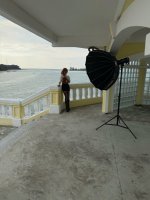
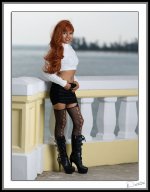
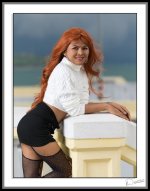
I’ve got around to editing some of the images that raised my initial question.
I had the soft box jammed into the roof space that worked somewhat but on a few occasions it nearly turned into a disaster.


IMG_0166.jpegIMG_0145.jpegIMG_0146.jpegIMG_0158.jpeg
 
Personally, I would think less about creating soft light and more about just using flash as fill when necessary. I think the emphasis on "soft light" is overstated and not well understood/implemented in general.

I.e. find the soft light naturally (shade/backlight/etc) and add flash as necessary.
I almost never use a softbox on location - the bare AD200, often with a warming gel and a tube for control is much more effective. Usually more directional than fill for me, but I find a hard light looks much nicer (often emulating sunset light).

This is one of my personal favourites, it's easy, natural-looking and produces very attractive results in bright sunlight. Digressing, I'm really hoping that someone will set a lighting challenge on this.
In the works. I decided to write the tutorial first
 
I find a hard light looks much nicer (often emulating sunset light).
A lot of fashion/model photography is done with hard light (bare/BD/Para/etc), as is most street/documentary (if used). Soft light is mostly overhyped and misunderstood.

It seems to me that a lot of people are really mistakenly talking more about how deep/prominent shadows are when they talk about soft light, rather than the actual character/sculpting. I've seen more than a few "tutorials"/videos that get it wrong (and endless marketing BS).
 
Last edited:
I agree with everyone who says that the ideal light for most situations is a small hard light.

There are circumstances, for example the video that I posted earlier, when we used a lot of gear, but basically we were going to produce the same type of shots, hazy sunshine, regardless of the actual weather, so we needed to have the right gear
 
Depends, really. If you're working fast & moving then tying stuff down isn't practical.

I sometimes bungee a light stand to my heavy wheely bag but that's not gustproof for anything more than a small softbox.

In your BTS it looks as though you could have bounced a bare light off the wall behind you.

The ringflash adapter *with silver dish* for the AD200Pro is fairly windproof, fairly robust if it falls and a bit larger than a pure bare bulb - and it works well off camera. It's not super efficient but it works for me. Do Profoto have an equivalent?

- and sometimes I actually use the ringflash on camera on location, either as key or fill, and sometimes without the dish.
 
I’ve got around to editing some of the images that raised my initial question.
I had the soft box jammed into the roof space that worked somewhat but on a few occasions it nearly turned into a disaster.


View attachment 475140
And you didn't ask this, but... I'd love to see what you could have made firing a bare light through the glass bricks, that can look awesome :)
 
Back
Top