

Light meters are they worth it? find out

Or perhaps you should have read the thread - as usual.
Oh and its no faff, takes less time than figuring out which strength filter to use.
Like I said?

What strength filter? We really do have a polar opposite subject...


Could you just hold that expression for a minute as the lights changed and I need to think about a filter and get out my grey card... It'll not take long it's just 3 meter readings...


Oh... She's gone! I wonder why?
 
I didn't say you didn't know how to use a camera, or that spot metering couldn't give very good results. What I said is that a hand meter adds nothing to the capability of a modern DSLR that not only has an excellent meter (can take incident readings if you like) but a couple of other exposure aids in the histogram and blinkies that show what is actually recorded on the sensor. You can't get better than that.

To add though, I often use a meter for setting up multiple flash heads in the studio. It's just so much quicker/easier to get the ratios right, but even then I use blinkies to set the final exposure.

The only thing i would say is that the 1 degree spot is more accurate at defining the highlight value than the cameras spot meter, which as I said on a WA lens is all over the place.
 
Like I said?

What strength filter? We really do have a polar opposite subject...


Could you just hold that expression for a minute as the lights changed and I need to think about a filter and get out my grey card... It'll not take long it's just 3 meter readings...


Oh... She's gone! I wonder why?

lol

I was going to post about me not using filters either, but I'll not bother now

I guess that however we all do it, and however odd some of us think others do it, all that really matters is the result - so each to their own I saw :)

Dave
 
The only thing i would say is that the 1 degree spot is more accurate at defining the highlight value than the cameras spot meter, which as I said on a WA lens is all over the place.

Can't disagree with that (y)

But I wouldn't bother to do it with either kind of spot meter - I'm not one for over complicating matters, simple simply works :)

Dave
 
Last edited:
Like I said?

What strength filter? We really do have a polar opposite subject...

Could you just hold that expression for a minute as the lights changed and I need to think about a filter and get out my grey card... It'll not take long it's just 3 meter readings...

Oh... She's gone! I wonder why?

LOL :)

But there are a lot of aspects to this art and craft, and I can understand the pleasure of simply taking time and effort and skill in getting the best result. A lot of us come from a film background and I can remember shooting large format (black cloth, Scheimpflug etc) and taking enormous care over exposure with both incident and multiple spot meter readings. Large format film was bluddy expensive. The whole process was very enjoyable and after processing* I got a buzz out of simply getting the exposure right :D But digital has rendered a lot of those skills redundant, a shame in some ways, but I wouldn't want to turn the clock back.

*I certainly don't miss that! If I could have my time in a darkroom back, I'd live to be 120.
 
But how far out of 18% reflectance is the shadow side of a fake tanned face 6ft from the window in a holiday inn hotel room?

The point about a spot meter isn't how accurate it is but how accurate the operators understanding of what the spot is measuring. And that's the reason I never use a spot meter. I can spot an average 'scene' to lock an exposure on, but there's not often an average 'spot' and I've no idea how far from 'average' a small spot would be.

It's not always possible but I know that if I take a spot reading off my own pasty-skinned palm - in the same light - and aim for the camera's meter to read +1.3 then I'll be pretty much where I want to be.
 
A lot of us come from a film background

Me too - I just wish I'd started being interested in photography NOW (and yes, at 13 again too lol)

I found a 1904 Kodak once and put a 120 roll of B&W through it testing all its stops - as I recall it had 2 shutter speeds, 1/25 and 1/50 and 4 apertures - 1, 2, 3 & 4 !!!

When the film came back from the developers pretty much every photo looked exactly the same - which just proved to my mind how big a latitude film had; I didn't fret so much over exposures after that :)

Dave
 
Many may not be aware of this fact, but there is really no "calibration standard" for a handheld incident meter... the standard is essentially the same as REI (recommended exposure index) ISO for a DSLR. It's whatever the manufacturer feels generates the best results.

Basically, different cameras and different meters may all generate somewhat different results. If you are using them then you need to figure out what the handheld meter thinks is right, what the camera thinks is right, and adjust them to what you think is right.
In practice, the "errors" may fall w/in the 1/3 stop accuracy of the camera, or they may sum to an unacceptable level. But in all cases it's just a dumb meter, it doesn't know what you want.
 
Every camera has that, it's exposure compensation? You can just spot meter for the highlights and dial in compensation for the rest.
I implied automatically in my comment I hope? Turns out nikon does it.

Otherwise to me this whole thread is irrelevant if you shoot raw on a modern isoless sensor.
 
..this whole thread is irrelevant if you shoot raw on a modern isoless sensor..

Boosting ISO or exposure in post still generates a heap more noise than shooting at the lowest ISO you can and adjusting aperture, shutter speed and lighting to get the exposure right.
 
Boosting ISO or exposure in post still generates a heap more noise than shooting at the lowest ISO you can and adjusting aperture, shutter speed and lighting to get the exposure right.

Very true. DPReview has done some excellent work on 'ISO-less' or 'ISO invariant' sensors that are appearing in a lot of new cameras now, and it is a fantastic feature, but it doesn't mean ISO no longer matters - though it's possible to get that impression from some of the articles. What it means is, there is no difference (or very little) between raising ISO at the time of shooting and simply lifting brightness in post-processing to the same level. But the underlying fact still applies, that the more light the sensor receives at exposure, the less noise you'll get, with greater dynamic range.

The big benefit of ISO-less is you don't have to worry so much about under-exposure, so long as you're prepared to take the risk on noise levels being acceptable - and with the latest full-frame sensors noise is incredibly low now. It also means there's less need for HDR technique and graduated filters - just under-expose a bit to ensure highlights are retained (ie check the blinkies ;)), lift the shadows in post and add the grad effect. ETTR gives way to ETTL (Expose To The Left [of the histogram]) LOL

Edit: With ISO-less sensors, there is no difference between increasing signal brightness at the pre Analogue-to-Digital conversion stage (which is what increasing ISO does) and doing it in post-processing. Previously, there has always been a big noise advantage to the former.
 
Last edited:
Boosting ISO or exposure in post still generates a heap more noise than shooting at the lowest ISO you can and adjusting aperture, shutter speed and lighting to get the exposure right.
But it's hardly difficult to get close enough that a light meter is going to make any difference whatsoever.
 
I think some people took my reference to the camera being "your sekonic" a little to seriously. i was merely suggesting he already had a meter in his camera and did not need it. ;)
 
Takes me one shot usually and from the camera position too, so I don't have to walk about with my meter :D

I bet I'm quicker without it than you are with lol

Dave
lol - depends on what you're trying to achieve. Anyone can use a single flash at a known distance (knowing what output is needed at a given distance) but when you have three flashes to add colour and then secondary and primary light sources as well as balancing ambient - it's a different story.
 
Last edited:
lol - depends on what you're trying to achieve. Anyone can use a single flash at a known distance (knowing what output is needed at a given distance) but when you have three flashes to add colour and then secondary and primary light sources as well as balancing ambient - it's a different story.

In that case it'd take me one shot per additional flash :D

Dave
 
Mike yes I could use manual mode and the camera readings but again you don't understand what I am trying to point out. having been taking photos for the last 55 years or more I think I do have some idea how to use a camera. How did you get on with a brownie 127 box camera? that was my first back in the 1950,s.
My first camera in 1962..... yep my Grandmother's Box Brownie! Light meter.... luxury. 308 user now!
 
lol - depends on what you're trying to achieve. Anyone can use a single flash at a known distance (knowing what output is needed at a given distance) but when you have three flashes to add colour and then secondary and primary light sources as well as balancing ambient - it's a different story.
:agree:

In that case it'd take me one shot per additional flash :D

Dave
Takes me a heap more than one per flash, even tethered :p. A meter gets me in the ball park much more quickly than if I were left to my own devices.

But it's hardly difficult to get close enough that a light meter is going to make any difference whatsoever.
As above - it depends on how many light sources I'm using.
 
  • Like
Reactions: dkh
Takes me a heap more than one per flash, even tethered :p. A meter gets me in the ball park much more quickly than if I were left to my own devices.

Well, as a starter I know that at 5 paces my flash in the BD gives me f8 at full power, so if its 5 paces away that one's pretty much dead on without adjustment

Rim/hair I set bare at the same distance on 1/4 power and that's usually right too

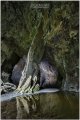
The only faffing about is the one that is used to light the background sometimes, like in this one of the cavern. This flash is about 30 metres away and pointing up to the wall about 15ft high, quite how you'd meter that I can't imagine lol

Cathedral Caverns - David Goodier photography 1 - WEB.jpg

Dave
 
Back
Top