Beginner Lenses

Chris606

Suspended / Banned
Messages
38
Name
Chris
Edit My Images
Yes
Hi all looking for a bit of advice on a starter lens for landscape nothing too flashy just yet still learning.
At the minute I am using a cannon 400d with an 18-55 lens at the moment looking at some of the lenses is a little confusing so any help would be much appreciated
 
Hi all looking for a bit of advice on a starter lens for landscape nothing too flashy just yet still learning.
At the minute I am using a cannon 400d with an 18-55 lens at the moment looking at some of the lenses is a little confusing so any help would be much appreciated

18-55 is probably a good lens to start with. In full frame terms that 29-88mm equivalent.

As a landscape photographer my mosts used lens is the 24-105mm followed by my 70-200mm and then my 14-35mm

If you are looking to step up from the 18-55mm kit lens and improve the quality of your images then I highly recommend the EF-S 17-55mm f2.8 Is USM
 
Last edited:
My go-to full-frame lens for landscapes is (for Nikon) the Sigma 24-35 along with a Tamron 35-150. So I agree with Elliott, you are probably fine with what you have initially. Other Canon types will hopefully suggest next steps though.
 
Thank you.
The one I have is the canon EF-S 18-55mm f3.5-5.6 which I got both camera and lens of MPB both like new condition in original packaging for less than £100
 
Obviously budget and what you like to photograph are big considerations.
My main photography is still life, flowers, dogs (action shots) and a bit of landscape. I use a crop sensor camera (apsc) like you're using. I used to use a Canon EF 24-105mm f/4, a great lens that will serve you well for most situations. But I wanted a faster aperture so I sold it and bought the canon ef-s 17-55mm f/2.8, also a very good lens, probably one of canons best apsc lenses. So I've lost a bit of focal length and sometimes that's a bit inconvenient, but it has made me look at things a bit differently. I've started to embrace the wider angle shots I get now that I'm restricted to a max of 55mm, I used to try and zoom in on everything, but you can sometimes lose the context of what you were trying to capture. I have another lens if I do need more telephoto length (70-200mm). It just means changing lenses.
I would say the lens you are using will be fine for now and you'll get some decent photos from it.
I hope all of that makes a bit of sense.
 
You have got a good lens to start with - when you start using it you may find it is holding you back, but you should be able to tell why, e.g it isn't long enough/wide enough/fast enough etc
 
Thank you everyone definitely going to have a look at the 17-55 so that I have a couple of lenses to play with as soon as I get out with it I will put some samples up and then help point out we're I am going wrong or if it's not too bad
 
Rather than rush out and buy lenses get yourself a decent Tripod ( not a cheap one) and a circular polarising filter.
The tripod will slow you down and make you concentrate more on the shot and the CPL is the only one you can't replicate in software
 
Rather than rush out and buy lenses get yourself a decent Tripod ( not a cheap one) and a circular polarising filter.
The tripod will slow you down and make you concentrate more on the shot and the CPL is the only one you can't replicate in software
I found a decent tripod the other day in a charity shop full aluminium one very sturdy as well have had camera on and supported quite well with no movement £5
 
I found a decent tripod the other day in a charity shop full aluminium one very sturdy as well have had camera on and supported quite well with no movement £5
Good find.

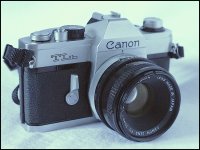
If you live in an area where charity shops get those sorts of things, you can do very well indeed. This Canon FTB, with a 50mm/f1.8, cost me less than £20 a few years ago. I shouldn't boast but when I sold it on, I certainly didn't make a loss!

Camera Canon FTB G2 1020526.JPG
 
Last edited:
I found a decent tripod the other day in a charity shop full aluminium one very sturdy as well have had camera on and supported quite well with no movement £5

Well done a good buy
 
18-55 is probably a good lens to start with. In full frame terms that 29-88mm equivalent.

As a landscape photographer my mosts used lens is the 24-105mm followed by my 70-200mm and then my 14-35mm

If you are looking to step up from the 18-55mm kit lens and improve the quality of your images then I highly recommend the EF-S 17-55mm f2.8 Is USM
I think this is the problem with confusing lens stuff. Relating the lens on your camera to full frame has to get confusing. besides having an 18-55 less than full frame is still 18-55 on the camera your working with! You can call a rabbit anything you want but at the end of the day it's still a rabbit! Keep in mind if your relating to full frame, you'd don't have a full frame!
 
Last edited:
I think this is the problem with confusing lens stuff. Relating the lens on your camera to full frame has to get confusing. besides having an 18-55 less than full frame is still 18-55 on the camera your working with! You can call a rabbit anything you want but at the end of the day it's still a rabbit! Keep in mind if your relating to full frame, you'd don't have a full frame!

It's quite common to refer to the 35mm equivalent for smaller sensors because while 18mm is 18mm is 18mm, the field of view is different depending on the sensor size. Field of view is quite important when it comes to photography.

I shoot with a 14-35mm UWA lens. If you saw one of my photos and said hey, I really like that wide angle effect, what lens did you use and I told you to buy a 14-35mm lens for your crop sensor body, you'd be rather disappointed when you weren't able to get same wide FOV.

Had I said to the OP that my most used lens as a landscape photographer was a 24-105mm, the OP may have gone out and purchased a 24-105mm lens not realising that the 18-55mm lens he has already covers the same field of view (more of less)
 
Last edited:
The lens you have is a good start range wise. Some people like a wider lens (10-20mm ish) and a lot use a longer telephoto lens to isolate features in a landscape (70-300mm) butmost use a lens with a similarish range to the 18-55mm.
Dont get hung up in buying loads of gear until you find what you need. Most of us have gear we couldnt live without... and used it twice... :)
 
Thanks everyone am going to stick with what I got and learn to use the gear properly before spending more money. Am already playing on manual mode with different settings getting used to aperture shutter iso. Have printed of exposure triangle sheet to help, fingers crossed get some decent pictures at the weekend. Still maybe the 17-55 a little later once I have grasped everything seen a few on MPB in excellent and nearly new condition for £299 thought wow till I saw how much a new one was ha ha
 
Thanks everyone am going to stick with what I got and learn to use the gear properly before spending more money. Am already playing on manual mode with different settings getting used to aperture shutter iso. Have printed of exposure triangle sheet to help, fingers crossed get some decent pictures at the weekend. Still maybe the 17-55 a little later once I have grasped everything seen a few on MPB in excellent and nearly new condition for £299 thought wow till I saw how much a new one was ha ha
Honestly; I wish more noobs would get off the idea that Manual mode is somehow the answer to learning photography.

If you watch any professional photographer, unless they’re all studio workers, you won’t find a consensus for using Manual mode. It just slows you down and makes getting it ‘right’ harder.

Great photography is about great pictures, and getting great pictures is about learning enough about your subjects to get yourself in the right place at the right time.

If you can automate the cameras settings enough so that it’s second nature to use, that’s a whole lot of thinking power you now have available for ‘photography’ rather than ‘camera settings’.

More people give up photography because the simple things get made complicated, than any other reason.
 
Honestly; I wish more noobs would get off the idea that Manual mode is somehow the answer to learning photography.

If you watch any professional photographer, unless they’re all studio workers, you won’t find a consensus for using Manual mode. It just slows you down and makes getting it ‘right’ harder.

Great photography is about great pictures, and getting great pictures is about learning enough about your subjects to get yourself in the right place at the right time.

If you can automate the cameras settings enough so that it’s second nature to use, that’s a whole lot of thinking power you now have available for ‘photography’ rather than ‘camera settings’.

More people give up photography because the simple things get made complicated, than any other reason.

Whilst using semi-automatic modes are useful, would you not agree that it's worth learning how things work manually before automating part of it. That way when the camera picks an aperture or shutter speed you know why it's done it.

Can I call myself an accountant because I know how to input data into accounts software?
 
Honestly; I wish more noobs would get off the idea that Manual mode is somehow the answer to learning photography.

If you watch any professional photographer, unless they’re all studio workers, you won’t find a consensus for using Manual mode. It just slows you down and makes getting it ‘right’ harder.

Great photography is about great pictures, and getting great pictures is about learning enough about your subjects to get yourself in the right place at the right time.

If you can automate the cameras settings enough so that it’s second nature to use, that’s a whole lot of thinking power you now have available for ‘photography’ rather than ‘camera settings’.

More people give up photography because the simple things get made complicated, than any other reason.
Hi I am playing with manual mode to get a grasp of how everything works on the camera I have watched a couple of videos on the priority settings. Before I was always a point and shoot everything until I decided to delve a little deeper into photography and started enjoying the things that you can do with the settings and different images that can be produced every bit of input that you all give is much appreciated as I am still learning and have a long way to go
 
Hi I am playing with manual mode to get a grasp of how everything works on the camera I have watched a couple of videos on the priority settings. Before I was always a point and shoot everything until I decided to delve a little deeper into photography and started enjoying the things that you can do with the settings and different images that can be produced every bit of input that you all give is much appreciated as I am still learning and have a long way to go

There is nothing wrong with learning in manual mode but as Phil has said, don't think you must shoot in manual mode to be a "photographer". The semi auto modes like Av and Tv are great tools provided you understand what each does and use the right tool at the right time.

If you haven't come across him already, I found Mike Browne to be an excellent photography teacher.

Have a look at some of his earlier stuff.
 
Last edited:
There is nothing wrong with learning in manual mode but as Phil has said, don't think you must shoot in manual mode to be a "photographer". The semi auto modes like Av and Tv are great tools provided you understand what each does and use the right tool at the right time.

If you haven't come across him already, I found Mike Browne to be an excellent photography teacher.

Have a look at some of his earlier stuff.
Thank you will check him out I have been using av and tv a few times especially with water shots I like how you can get the smoothness but I'm not quite there yet they still come out a little under exposed now and again.
 
Whilst using semi-automatic modes are useful, would you not agree that it's worth learning how things work manually before automating part of it. That way when the camera picks an aperture or shutter speed you know why it's done it.

Can I call myself an accountant because I know how to input data into accounts software?
I think people make unforced errors that lead them to believe it’s ‘difficult’, which leads them to give up.

Everyone says ‘use what you have till you learn it’s limitations’ regarding gear. All I’m doing is suggesting the same approach to camera functions. ;)
Use P mode till it doesn’t do what you want, then you’ll know whether you need to concentrate on SS or aperture, then you’ll realise where the camera meter gets fooled. And all those logical steps work much better than using M and chasing the meter. Which effectively teach you nothing.

I’m not saying there’s never a use for M mode, just that it shouldn’t be blindly seen as an answer before people have formed a relevant question.

I also think the hard bit is the bit no one ever talks about, leaving newbies to concentrate on the the wrong aspects. A Google search for exposure triangle will give millions of hits, but articles on composition, and learning your subject are much rarer.

 
I think people make unforced errors that lead them to believe it’s ‘difficult’, which leads them to give up.

Everyone says ‘use what you have till you learn it’s limitations’ regarding gear. All I’m doing is suggesting the same approach to camera functions. ;)
Use P mode till it doesn’t do what you want, then you’ll know whether you need to concentrate on SS or aperture, then you’ll realise where the camera meter gets fooled. And all those logical steps work much better than using M and chasing the meter. Which effectively teach you nothing.

I’m not saying there’s never a use for M mode, just that it shouldn’t be blindly seen as an answer before people have formed a relevant question.

I also think the hard bit is the bit no one ever talks about, leaving newbies to concentrate on the the wrong aspects. A Google search for exposure triangle will give millions of hits, but articles on composition, and learning your subject are much rarer.
Thanks Phil will give that a go, thank you for the advice much appreciated
 
Thanks Phil will give that a go, thank you for the advice much appreciated
I don’t know how much you’ve learned so far, but my advice for people picking a camera up is to concentrate on picture making. To do that the only thing you need to absolutely control is what you’re focussing on.

If you concentrate on the exposure triangle it’ll lead you to believe that shutter speed and ISO have equal importance to aperture. And that’s simply not true! Aperture (combined with subject distance) control your depth of field, which has a very direct relationship with how your picture looks.

OTOH for most photography, any SS between 1/100 and 1/8000 will give exactly the same image (assuming correct exposure). Therefore the only time shutter speed is important is if you want to freeze movement or slow down the shutter for artistic effect.

Then you need to understand that slow shutter speeds may require a tripod, and that very long shutter speeds may need an ND filter to limit the light entering the lens too.

ISO is what it is. It’s a nonsense to try to control it. Relative to your other settings, bright daylight generally equals low ISO and lower light equals higher ISO, with subsequent noise. When light levels are low you might really want to take control of SS and aperture to wring the best out of the light you have, but you’re pushing your luck, and that’s what you need to understand.

The exposure triangle people just push at you the fact that the 3 settings are interdependent without a thought to which you actually need to control to make the picture you want to make.

Apologies if that’s ranting lots of stuff you already knew.

I don’t think the 400d has a particularly good auto ISO function which is a shame, and means you have to keep an eye on your SS, but if we think in film terms, bright day 200 ISO, dull day 400, winter 800 or 1600.
 
Last edited:
Would also love to learn how to do night sky photography as well.
That’s where your lens might be a fly in the ointment.

I’m not an expert, but the general rule is a wide fast lens, so your next lens might be a fast 16mm rather than a better zoom.
 
That’s where your lens might be a fly in the ointment.

I’m not an expert, but the general rule is a wide fast lens, so your next lens might be a fast 16mm rather than a better zoom.
Thank you every bit of of info or tips is greatly appreciated and try to put tips into practice to see what works for me. I am enjoying the journey feels like being back at school wanting to know everything. The iso on the 400d is a bit shallow it goes from 100-1600 I have seen some of the newer models they're range has a lot more, I have tried some long exposure shots only at around 2-3 seconds but not coming out as I would have liked but that's part of learning getting out and trying new things. Will definitely look at other lenses when I eventually start thinking about night sky shots.
 
OTOH for most photography, any SS between 1/100 and 1/8000 will give exactly the same image (assuming correct exposure). Therefore the only time shutter speed is important is if you want to freeze movement or slow down the shutter for artistic effect.
I find it's also worth bearing in mind that shutter speed can also compensate for camera shake induced blur and the longer the focal length of a lens the faster the shutter speed needs to be. It shouldn't be a big problem with an 18-55mm lens unless light is dim, but the biggest fault I see in photos taken by my non-photographer friends is camera shake induced blur, including photos taken with their phones.
 
I think that's were my problem lied with longer exposure shots and I can be a little shaky sometimes like trying to hold steady on a rock or a tree branch now I have a tripod going back out this weekend for another go
 
I find it's also worth bearing in mind that shutter speed can also compensate for camera shake induced blur and the longer the focal length of a lens the faster the shutter speed needs to be. It shouldn't be a big problem with an 18-55mm lens unless light is dim, but the biggest fault I see in photos taken by my non-photographer friends is camera shake induced blur, including photos taken with their phones.
Which is where the newer cameras come into their own.
Auto ISO with a fixed minimum SS means I can use AV mode and never have to think about SS or ISO.

Unfortunately the OP will have to watch his shutter speeds in low light.
 
I think that's were my problem lied with longer exposure shots and I can be a little shaky sometimes like trying to hold steady on a rock or a tree branch now I have a tripod going back out this weekend for another go
Along with the tripod you should use the self timer or a remote shutter release. At 2-3 secs the camera movement on a tripod from you pressing the shutter will still be noticeable
 
The iso on the 400d is a bit shallow it goes from 100-1600 I have seen some of the newer models they're range has a lot more,
I got my first camera in 1984 and the first time I went over ISO 1600 was 2004.

We’re spoiled nowadays, don’t get me wrong I love being able to shoot in natural light where it used to be impossible, but it’s not a necessity
 
I got my first camera in 1984 and the first time I went over ISO 1600 was 2004.

We’re spoiled nowadays, don’t get me wrong I love being able to shoot in natural light where it used to be impossible, but it’s not a necessity
I have heard from a few people that the 400d is a good starter and capable camera I am going to learn everything I can about it before thinking about upgrading but if it does everything I need and more happy days. Was looking at one of the remote shutters the other day and never thought to get one but think I will can be picked up for less than £10
 
I have heard from a few people that the 400d is a good starter and capable camera I am going to learn everything I can about it before thinking about upgrading but if it does everything I need and more happy days. Was looking at one of the remote shutters the other day and never thought to get one but think I will can be picked up for less than £10
Is it the jack plug?
 
It does have a jack plug in the camera for remote but also supports wireless remote as well can get either one for less than £10 they have them on MPB.
Just bear in mind the IR remote requires triggering from in front of the camera.
 
It does have a jack plug in the camera for remote but also supports wireless remote as well can get either one for less than £10 they have them on MPB.
If you PM me your address I’ll send you a wired remote FoC
 
Good advice and help from Phil as usual. I can beat him though I got my very first camera in 1958 and my first digital in 1999, I used an ISO over 1600 for the first time this year! ( I did use highish ISO/ASA film for indoor shots sometimes when flash was forbidden)
I do love the flexibilty it gives.

Not sure if it will help or hinder but I did a quick post on my version of the exposure "triangle" a while back.
 
Back
Top