
that using bayer sensors is going to reduce image quality worse than a uv filter...Sorry, what is the relevance of this article to the debate?
but nearly everyone is using bayer.

that using bayer sensors is going to reduce image quality worse than a uv filter...Sorry, what is the relevance of this article to the debate?

This is irrelevant in this day and age. Digital cameras do not need UV filters to filter the UV as film cameras did - the sensors have strong UV filtration built into them so UV light cannot degrade a shot from a modern digital camera.So everyone thinks the UV filter is just to protect the lens ?
Pollution, heat, dust contribute to make 'haze' which reduces clarity and visibility and create a blue cast, normally more prominent in longer focal length lenses. Multi coatings don't eliminate this completely hence the need for a UV filter which is particularly beneficial for landscape photography for reducing atmospheric haze and improving the image quality. UV (and skylights) do not degrade the light because they are clear.
Try taking a picture in the snow without one. Snow reflects UV light and creates a blue cast. Go anywhere really blistering hot and you'll see the benefits. However, they won't be of any use whatsoever on a damp or foggy day other than to protect your lens !

that using bayer sensors is going to reduce image quality worse than a uv filter...
but nearly everyone is using bayer.


Having spent a small fortune on a lens (well it is to me) I want to get the full benefit, I have to weigh this up against the likely hood of damage in any given circumstance. Therefore I will only ever use a clear or UV filter when I am on a beach or on a boat (on the sea). I think this is wise purely to protect the front element from sand/wind which can be destructive.
Generally though I rely on the lens hood for protection, and my obsessive desire to look after my kit.
I agree UV filters will degrade IQ but this degradation is not always visible on moderate size prints or computer screens.


Most L lenses are weather proofed without the need for filters.are Canon's L glass weatherproof specs based on a UV filter being used?
anyhoo I use them pretty much all of the time when I am out, cannot say I am aware of any degradation and I am a lot happier in a shower of rain if I have a UV on aswell as a camera rain cover attached to the hood.
Most L lenses are weather proofed without the need for filters.


Good summary here: http://www.gdanmitchell.com/2007/12/27/uv-filter-or-not
Plus some links from the comments section of the article above:
http://www.kenandchristine.com/gallery/1054387
http://www.vanwalree.com/optics/filterflare.html
http://www.vanwalree.com/optics/flare.html#filter)

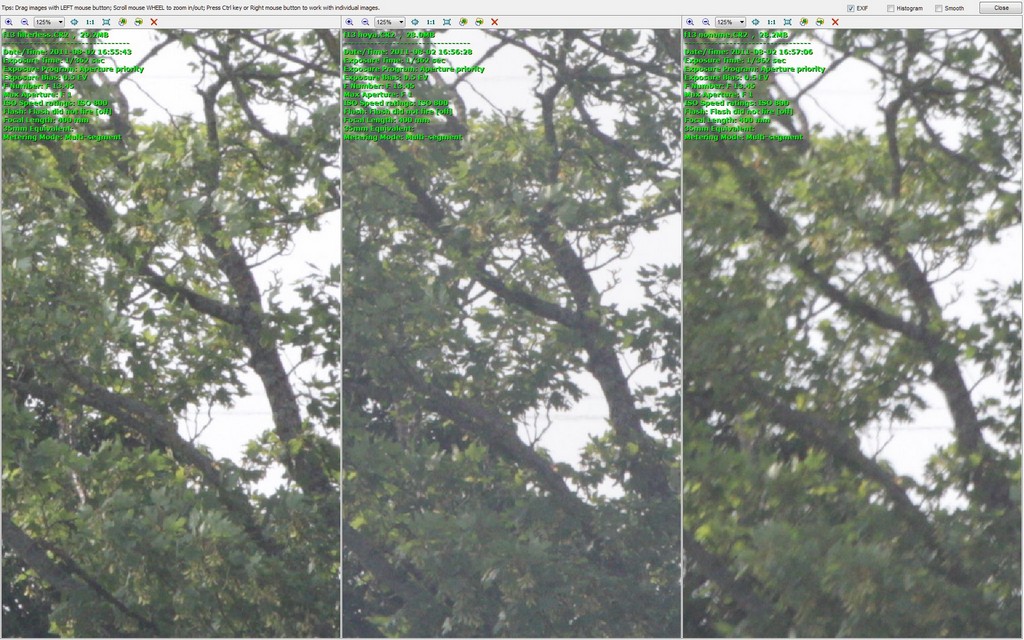
The only filter problem not shown there is actually the one that is the subject of this thread - loss of sharpness and bokeh issues with very long lenses.

Is that why Scott Kelby has changes over to Canon thenof course Nikon is best but don't tell Canon users as they can easily get upset
