

Lens Magnifiers

Sohal1989

Suspended / Banned
Messages
113
Name
Raj
Edit My Images
Yes
Happy new year all! Hope everyone had a good Christmas and New Year!

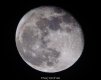
Okay so, I have a Nikon 55-300mm Lens which I used to photograph the moon, as seen below. Shot at 300mm, f11, ISO 250, 1/125th.
View media item 13008


However, I wanted to get closer to the surface of the moon, so I purchased these from Amazon
View media item 13007

I used the smallest zoom of +1 and even then I could not focus on the moon regardless of the focal length on the telephoto or where the focus ring was set. I understand it is a cheap attachment, but was wondering why I am unable to get up close to the moon with them?

Thanks in advance.
Raj
 

Attachments

  • moon.jpg
    moon.jpg
    101.3 KB · Views: 16
  • lens.jpg
    lens.jpg
    119.6 KB · Views: 9
The term "Close up" applies to their ability to allow your lens to focus on a subject which is closer than your lens would normally allow......think table top type subjects rather than distant ones.

Bob
 
I think that the clue is in the description on the side of each 'lens', they all are marked "Close-up" ... to me this indicates they are designed to be used, not for photographing things far away but for enabling the photographer to get in closer than his lens would other wise be able to do for 'macro' photography, e.g. photographing insects, etc.
So in fact these are designed to do the opposite of what you want them to do.
 
I'm not an expert on this but they look like macro filters. They move focus distance closer to the sensor for any given focus setting on the lens allowing you to focus on things closer to the camera than you normally would. What they'll also do is prevent the lens from being able to focus to infinity which is what you need to focus on the moon or anything else a long way away.

I'm afraid there is probably no short cut here though there may be third party tele-converters that will fit your lens and effectively increase the focal length. Down side of those is that they'll decrease image quality and you'll lose some light gathering ability so will need longer exposure times or higher ISO.
 
Those aren't for increasing focal length, which is what you appear to have wanted, they're for reducing the minimum focusing distance of your lens, allowing you to shoot subjects close up. I wouldn't recommend them for their intended purpose either, as the optical degradation is usually quite severe. For close-up photography the best solution is a lens designed to focus very close (loosely referred to as "macro" lenses) or for a cheaper option, extension tubes.

What you were looking for is a teleconverter, which increases focal length, although at the cost of some optical degradation and a reduction in light transmission.
 
Last edited:
I'm afraid there is probably no short cut here though there may be third party tele-converters that will fit your lens and effectively increase the focal length. Down side of those is that they'll decrease image quality and you'll lose some light gathering ability so will need longer exposure times or higher ISO.
What you were looking for is a teleconverter, which increases focal length, although at the cost of some optical degradation and a reduction in light transmission.
This is correct. However the Nikon 55-300mm is not designed to work with teleconverters, and Nikon teleconverters will not physically fit it. This is because Nikon judge that the image will suffer too much degradation for teleconverters to be useful. You might be able to get a third-party (non-Nikon) teleconverter to fit your lens. But even if you can, you will still suffer the image degradation and the result may not be any better than simply enlarging the image you have. Plus you will lose the ability to autofocus.
 
The term "Close up" applies to their ability to allow your lens to focus on a subject which is closer than your lens would normally allow......think table top type subjects rather than distant ones.

Bob

I think that the clue is in the description on the side of each 'lens', they all are marked "Close-up" ... to me this indicates they are designed to be used, not for photographing things far away but for enabling the photographer to get in closer than his lens would other wise be able to do for 'macro' photography, e.g. photographing insects, etc.
So in fact these are designed to do the opposite of what you want them to do.

I'm not an expert on this but they look like macro filters. They move focus distance closer to the sensor for any given focus setting on the lens allowing you to focus on things closer to the camera than you normally would. What they'll also do is prevent the lens from being able to focus to infinity which is what you need to focus on the moon or anything else a long way away.

I'm afraid there is probably no short cut here though there may be third party tele-converters that will fit your lens and effectively increase the focal length. Down side of those is that they'll decrease image quality and you'll lose some light gathering ability so will need longer exposure times or higher ISO.

Those aren't for increasing focal length, which is what you appear to have wanted, they're for reducing the minimum focusing distance of your lens, allowing you to shoot subjects close up. I wouldn't recommend them for their intended purpose either, as the optical degradation is usually quite severe. For close-up photography the best solution is a lens designed to focus very close (loosely referred to as "macro" lenses) or for a cheaper option, extension tubes.

What you were looking for is a teleconverter, which increases focal length, although at the cost of some optical degradation and a reduction in light transmission.

WOW, duh! Now I feel silly HA!! Thanks for the replies guys!!

This is correct. However the Nikon 55-300mm is not designed to work with teleconverters, and Nikon teleconverters will not physically fit it. This is because Nikon judge that the image will suffer too much degradation for teleconverters to be useful. You might be able to get a third-party (non-Nikon) teleconverter to fit your lens. But even if you can, you will still suffer the image degradation and the result may not be any better than simply enlarging the image you have. Plus you will lose the ability to autofocus.

I think I'll forget about the tele-converter and just go for a bigger lens at some point. Thanks!

You need a longer lens - I took this with a tamron 150-600 g2 from @StewartR Its handheld with a crop, 1/400s at 600mm


long lens = shoot the moon
by damianmkv, on Flickr

I think I need a bigger lens now... have you shot any planets with yours?
 
No, I just hired it over Xmas and didn’t think about using it for that..or if it’s possible
 
WOW, duh! Now I feel silly HA!! Thanks for the replies guys!!

Don'y feel silly, we all make mistakes it's all part of the learning curve ... but asking here before buying can make that curve a little less steep. :)
 
I think I need a bigger lens now... have you shot any planets with yours?
Planets are MUCH harder than the moon. In very round numbers, the apparent diameters of the moon is about 50x the apparent diameter of Venus and Jupiter.

I took this using a 600mm lens and a 2x teleconverter, on a crop sensor Canon DSLR, so my actual focal length was 1200mm and my 35mm-full-frame-equivalent focal length was 1920mm. That's about as extreme as you can go with conventional phot equipment, without using a telescope. Even so, the disk of Jupiter was less than 200 pixels across.

upload_2017-5-26_8-8-54-png.102937
 
Is that a composite, Stewart? I've managed the moons and the colours of Jupiter but never the two different subjects in a single frame.
 
Is that a composite, Stewart? I've managed the moons and the colours of Jupiter but never the two different subjects in a single frame.
Yes, for exactly the reasons you'd expect.
 
Back
Top