Lens Hoods ... Enlighten Me please

InaGlo

TPer Emerita
Suspended / Banned
Messages
8,683
Name
Glo
Edit My Images
Yes
Ok, so I hear they are supposed to reduce lens flare, & I know peeps say they protect the front element but how many of you actually use them!

Do they really make any difference to your shots & are they really worth the effort involved in squishing your camera into the bag when in situ?
 
I only ever use a lens hood when I use the 10-20mm lens as I've never really noticed any difference with my other lenses.
 
Always use the one with my 70-200, and usually with the 24-70 as well. The one on the 12-24 is a permanent fixture anyway so don't have a choice about that! having said that I also use a filter on the 70-200 - no way can I afford to risk any damage to it and with what it gets used for most it's frequently showered with small stones so...!
 
always put it on the 70-300 out of habit
 
They also have the added bonus of protecting the front of the lens as i just found out on a trip to Montreal, dropped it from about 4 feet it landed on the hood.

If the hood was not attached i would probably have had to buy a new 24-105
 
And the most important things is they make it look like you must know what you're doing.
 
I always use a lens hood on all my lenses. The light you want to enter your lens is the light bouncing straight back from your subject and into the lens, but unfortunately you've got diffracted and bounced light all around you travelling in all directions and potentially spoiling the clarity and colour saturation of your shots. Using a lens hood helps to eliminate those stray rays.

Think of how you cup your hands over your eyes on sunny days - same principle entirely. ;)

They also protect against the sun's rays hitting the lens directly and causing flare. Using a lens hood will allow you to shoot at much closer angles to the sun (or other light source) than without one when shooting into the light.

If you use any sort of a filter then you have a large flat piece of glass right on the front of your lens which is far more likely to catch flare and reflections, so a lens hood becomes even more vital.

I rarely use any filters so I rely on a lens hood entirely for protection of the front element.
 
I nearly always use a hood, the only exception is the very few times when it is impractical.

Michael.
 
I use one on my Sigma 70-300, as it came with one.

I don't use one on my nifty fifty or my kit lens. The question begs, should I?
 
I use one on my Sigma 70-300, as it came with one.

I don't use one on my nifty fifty or my kit lens. The question begs, should I?

YES!
 
Ok, so I hear they are supposed to reduce lens flare, & I know peeps say they protect the front element but how many of you actually use them!

Do they really make any difference to your shots & are they really worth the effort involved in squishing your camera into the bag when in situ?


They will make a difference to your shots when you don't even consider their presence because it is then when they will cut out direct sunlight on your front element which would otherwise have ruined your shot.

They can mount back to front so they take minimal extra space if any.

I do not have a hood for the 10-22 or 60mm macro as I do not work with them a lot but with my 70-200 and 17-85 I always use the hoods.
 
I have them on all my lenses all the time, except when using CP filters or the Cokin holder.
 
And some of them can double up as a handy cup holder :thumbs:
 
Thanks for all the feedback peeps.
The light you want to enter your lens is the light bouncing straight back from your subject and into the lens, but unfortunately you've got diffracted and bounced light all around you travelling in all directions and potentially spoiling the clarity and colour saturation of your shots. Using a lens hood helps to eliminate those stray rays.

Think of how you cup your hands over your eyes on sunny days - same principle entirely. ;)
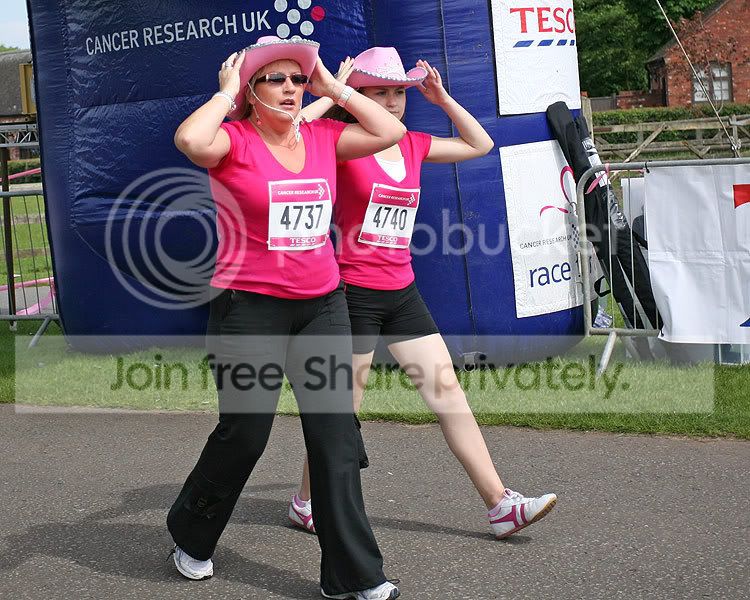
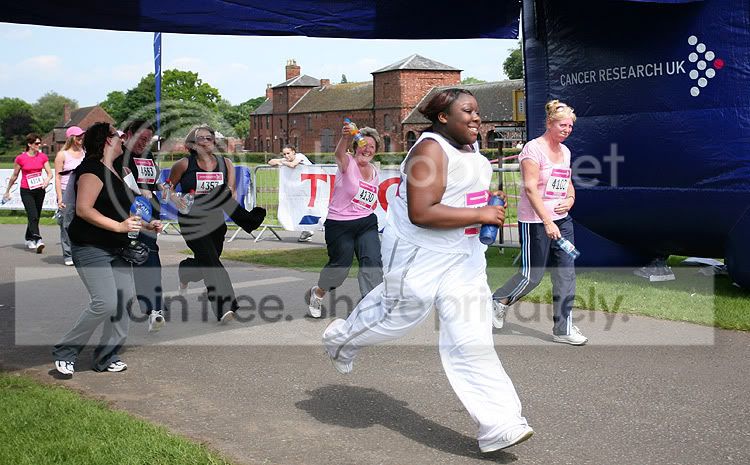
CT, I went to a local park yesterday to capture some shots of the womens 'Race For Life'.
Decided to try the 17-40mm (without hood) in the hope of getting some decent wide shots at the starting line ... but I got stuck in traffic and totally missed it. :embarrassed:
My only shots were of stragglers ... so that was the wide lens idea scuppered!!!

The shots I got were in full sun mostly but, I wasnt particularly pleased with the way the bright pink & white t.shirts came out (kind of blown & lurid), some fringeing.
Would the lens hood have made any difference to this sort of issue, or do I just have to accept that kind of thing as the perils of shooting bright colours on very sunny day?

Examples of colours below...

pics-081-1.jpg


Race-For-Life.jpg
 
I think that's more of an exposure issue Glo. I've just been taking some bird shots in full sun and I've found I needed around 1.5 stops exposure compensation to stop the white and lighter bits blowing out. I would think if you'd set your camera histogram to flash the blown highlights it would have been telling you something about these shots. ;) The light appears to be becoming from almost behind you anyway judging by the shadows, so a lens hood wouldn't have been necessary for any potential flare issues, but as I said earlier, they still eliminate a lot of scattered light so I'd have used one anyway which I do by default. It wouldn't have helped your problems with the blown whites and garish pinks though which was really down to over-exposure.

I know you ended up not using the 17-40L but you picked a bad example really to ask about as the OEM lens hood for the 17-40L is about as much use as an ashtray on a motorbike - not anywhere near tight enough on the field of view. There is another Canon hood which folks buy which does do a better job.
 
These are far from bad images anyway Glo - and in that much sunlight with whites in the scene, you just can't expect any camera exposure system to get it right. If you shot these in RAW, then I'd think there's a lot you could do with them in processing, as RAW processing gives you such good separate control over the highlights and shadows. :)
 
Thanks CT ... I kind of had a feeling it might be down to my exposure. :bang:

Ive never used RAW mainly because my old pc wouldnt be able to cope with the huge files ... but I now have a shiney new one ... might be time to dip my toe.

Also, might not be a bad idea to aquaint myself with Mr Patterson ;)
 
Here you go Glo...

I just took this first pic as a setup shot with evaluative metering and no exposure adjustment. You wouldn't think there's anything there to cause any problems - just a brown branch against a green background, and it isn't even sunny - just bright but overcast.

light2.jpg


Looking at that branch you can see how any whites in the shot would have been completely blown out! Any direct sunlight would have made things much, much worse.

And the same shot with 1.3 stops exposure compensation.

darker.jpg


The first shot isn't actually too bad and would be sortable in RAW processing but any birds with white bits (ooer) would have been a problem.

You just can't beat checking that histogram and taking a couple of test shots before you start. :)
 
Thanks CT ... I kind of had a feeling it might be down to my exposure. :bang:

Ive never used RAW mainly because my old pc wouldnt be able to cope with the huge files ... but I now have a shiney new one ... might be time to dip my toe.

Also, might not be a bad idea to aquaint myself with Mr Patterson ;)

:eek: :eek: :eek:

Never used RAW before?


:lol:


Good luck with a not-so-steep but very worthwhile learning curve!!:thumbs:
 
These are far from bad images anyway Glo - and in that much sunlight with whites in the scene, you just can't expect any camera exposure system to get it right. If you shot these in RAW, then I'd think there's a lot you could do with them in processing, as RAW processing gives you such good separate control over the highlights and shadows. :)

CT

I have read an article somewhere some time back where the author was of the opinion that one should always expose "to the right" - histogram-wise.

There was also mention made of sticking at the border of or even slightly burning out jpegs when recording RAW simultaneously.

Would you generally agree with this?
 
Thanks CT.
I did find metering difficult. The runners were deep shade then bright sun within seconds.
I tended to find that if I stopped their clothing blowing out, I lost their faces to the shadowman ;)

Yesterday was my first 'hayfever day' of the season and boy did it come with a vengeance. I felt quite 'flued-up' (still do) and just a tad agitated to say the least... probably not the best of circumstances to try this sort of thing.

I was even more agitated to find the guy on the opposite side of the finish line kept taking pictures in my direction & smiling lots .... well how was I to know my stoopid bag straps had tugged undone the top 3 buttons on my shirt.
Talk about doing a Judy Finnigan! :bonk: :naughty: :lol:
 
I dunno if I'd agree because haven't really tried it Anton. :D I know lots of people advocate that approach. Personally I'd rather slightly under-expose as it's always easier to recover slight loss of detail in the shadows than the highlights - once the highlights are blown it's game over. :gag:

I'm open to be persuaded but I tend to stick with what I know works. :shrug:

As for jpegs I never use 'em these days and I quote Arkady - "Shoot jpegs if someone holds a gun to your head."
 
.... well how was I to know my stoopid bag straps had tugged undone the top 3 buttons on my shirt.
Talk about doing a Judy Finnigan! :bonk: :naughty: :lol:

[S2]Pics!!!!![/S2]

Some scenes are just outside the tolerance of film or sensor to deal with anyway. RAW processing gives you more control than has been possible up to now. :thumbs:
 
I dunno if I'd agree because haven't really tried it Anton. :D I know lots of people advocate that approach. Personally I'd rather slightly under-expose as it's always easier to recover slight loss of detail in the shadows than the highlights - once the highlights are blown it's game over. :gag:

I'm open to be persuaded but I tend to stick with what I know works. :shrug:

As for jpegs I never use 'em these days and I quote Arkady - "Shoot jpegs if someone holds a gun to your head."

:lol: :lol: :lol: at very valid Arkady-ism!!

If I understand this thing correctly (about the blown highlights) I think this guy was all about "blown highlights" in jpeg = good raw exposure.

Now I havn't quite tried to prove his philosophy to the limit but I have found some practical substance to it in a limited kind of way....

I'm confusing myself now but you know what I'm trying to say...
 
[S2]Pics!!!!![/S2]
Some scenes are just outside the tolerance of film or sensor to deal with anyway.

:eek: He! he!
... I think that line goes rather well with your banner CT.
Pic will probably end up as a caption thing somewhere on the net ... as long as its not here :bat:

I have a feature to write for a mag over the next few days but once Ive got my tired brain through that, Ill start looking into RAW ... so expect questions :D


CT

I have read an article somewhere some time back where the author was of the opinion that one should always expose "to the right" - histogram-wise.

There was also mention made of sticking at the border of or even slightly burning out jpegs when recording RAW simultaneously.

Anton .... do stop trying to confuddle me further!!! ;)
 
Is part of the argument for over-exposing with raw due to the fact that you run into noise problems when you push the exposure too far up in PP, whereas this isn't an issue when reducing exposure? Assuming the blown detail is still recoverable of course.

Well, thats what I'd assumed when I heard that some people deliberately over-exposed when shooting raw, I could be totally wrong!
 
:lol: :lol: :lol: at very valid Arkady-ism!!

If I understand this thing correctly (about the blown highlights) I think this guy was all about "blown highlights" in jpeg = good raw exposure.

Now I havn't quite tried to prove his philosophy to the limit but I have found some practical substance to it in a limited kind of way....

I'm confusing myself now but you know what I'm trying to say...

I hear you, but I'm getting mild bleeding from the ears just thinking about it. :lol:
 
Anton .... do stop trying to confuddle me further!!! ;)
:embarrassed:

Sorry...Does this mean I should not hunt for and send you the complete article!?

:D

Good luck with RAW - to me it was like a new world opening up!!

Cheers
 
Is part of the argument for over-exposing with raw due to the fact that you run into noise problems when you push the exposure too far up in PP, whereas this isn't an issue when reducing exposure? Assuming the blown detail is still recoverable of course.

Well, thats what I'd assumed when I heard that some people deliberately over-exposed when shooting raw, I could be totally wrong!

With what little bit of it I do understand I can only say: it seems to me that it is far more difficult really to blow out highlights in raw than in similar jpeg.

I can see how noise can play a roll when pushing exposure in levels but the printed effect should be negligible unless you print really large.

:shrug:
 
Erm... nope!!!
Please feel free to go hunting :D

PM me your email address then I can send them as attachments - they are quite big - 6-7 Mb some of them.
 
As far as Canon is concerned, at least, the thing to remember with the histogram is that it is created from the 8-bit JPG file used for the preview screen, not the 12-bit raw file. So even though the JPG may be showing over exposure there is more detail in the raw file that is not being taken account of.

I cannot remember all the technical stuff about the way the sensor works but half of its range is used to represents the right most stop, the next stop uses a quarter of its range, the next an eighth and so on. This is then normalized when converting to JPG (or whatever else you use) so that the levels of brightness are shared out evenly.

Because of this if you shoot to the right and correct the exposure in raw processing you theoretically capture more detail.

Though except for high ISO situations where you have a lot of noise (where the effect of over-exposing then correcting is impressive), every example shot I have seen has shown getting it right in camera gives the best results.

Michael.
 
Just to show I don't shoot empty branches all day here's a young sparrer just taken out of curiosity with a straight incident light reading from the branch, pointing back at the camera position and used without any adjustment. Tis an old analogue meter.

young-sparrow.jpg
 
As far as Canon is concerned, at least, the thing to remember with the histogram is that it is created from the 8-bit JPG file used for the preview screen, not the 12-bit raw file. So even though the JPG may be showing over exposure there is more detail in the raw file that is not being taken account of.

I cannot remember all the technical stuff about the way the sensor works but half of its range is used to represents the right most stop, the next stop uses a quarter of its range, the next an eighth and so on. This is then normalized when converting to JPG (or whatever else you use) so that the levels of brightness are shared out evenly.

Because of this if you shoot to the right and correct the exposure in raw processing you theoretically capture more detail.

Though except for high ISO situations where you have a lot of noise (where the effect of over-exposing then correcting is impressive), every example shot I have seen has shown getting it right in camera gives the best results.

Michael.

Sounds about right as far as is concerned the little bit I thought I understood quite some time ago!:thinking:

:D

Thanks Michael!
 
I always put the lens hood on, its somewhere to keep it, if not you will loose it.
 
Lens hoods, yup always. As has been said, they can't really do any harm, fit on lens backwards so don't really use alot of space and can make a huge difference in colour and contrast.

As for the expose to the right thing, mij is spot on. It's not to do with noise or hightlight detail so much as the way a sensor captures information.

if you look the histogram display on most digi SLR's there are five bars going across the display. These are the five stops that is the range of our chips. Half of the total data collected is in the far right bar. Half of what's left is in the next bar over, half of what's left after that in the next one and so on.

I cant remember the figures but I think it works out as something like 3200 possible values of grey for each colour channel in the right hand bar and 125 possible values per channel for the left bar.

The thinking then goes that IF the whole range of tones in your shot fits in the 5 stop range of the camera, the further over to the right you expose, the more detial you will have to work with.
 
Back
Top