Learn with MD Lesson No 1 "Thoughts please"

Here are mine, took a couple of different ones today using Nikon D50


The last one was out of focus, I am assuming this was more me than the settings.

Might be getting ahead a little ;), but looks like camera shake from too slow a shutter speed for the lens length, rather than out of focus (possibly with motion from a breeze thrown in for good measure)
 
4758103279_bd03cf46f8.jpg

f22 1/10 iso 400

4758103275_97aee24ee4.jpg

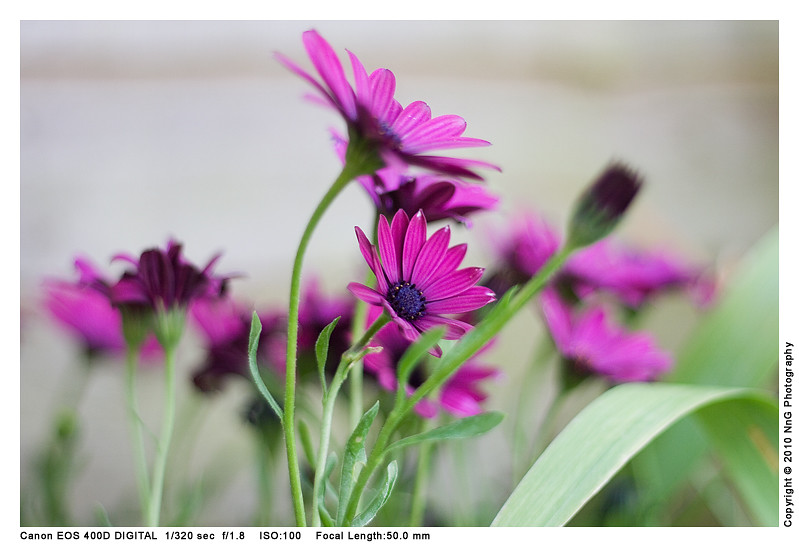
F1.8 1/320 iso100
 
Heres my attempt before all the petals blow off in the wind

Shutter 1/1600 sec at f2.8 EV-0.3


Shutter 1/20 sec at f22 EV0.0
 
Some interesting discussions already, and I for one have already learnt some things I wasn't aware of. Thanks all:thumbs:
 
What a great idea for a thread. Thank you MD, ive learned something today.

:)

#1
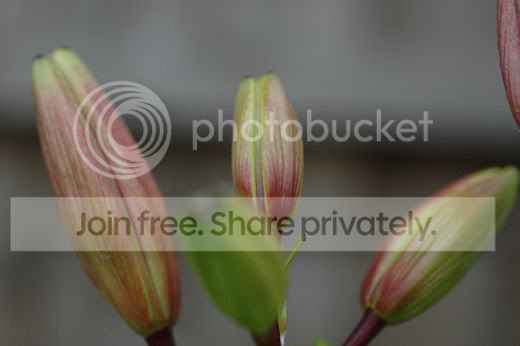
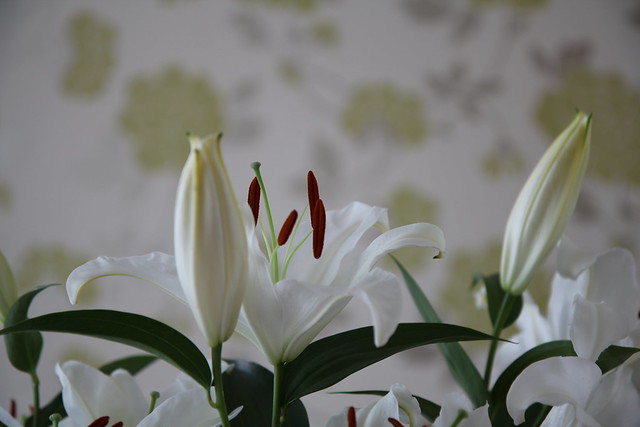
Nikon D70, Sigma 50mm, 1/250th at f3, ISO 400, tripod


lilybudsatf3.jpg


#2

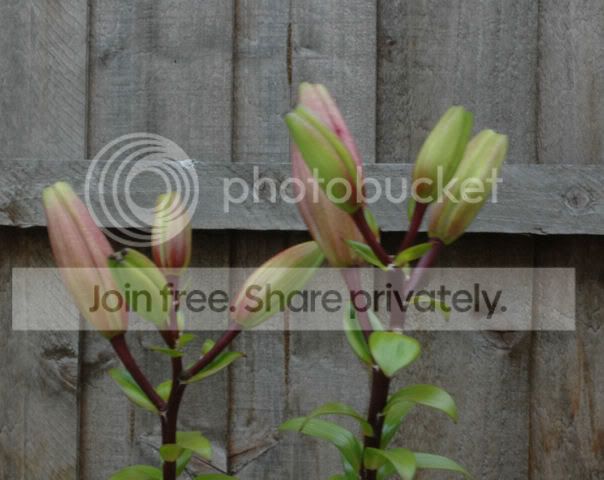
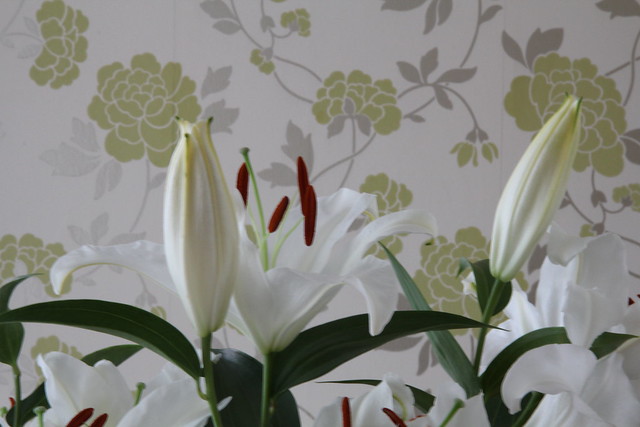
1/3 at f36, tripod definitely needed!

lilybudsatf36.jpg
 
Sorry I'm a bit slow in posting my pics. Should post in the next couple of days.

Will each lesson perhaps on conclusion have a summary of things learned?
 
Sorry I'm a bit slow in posting my pics. Should post in the next couple of days.

Will each lesson perhaps on conclusion have a summary of things learned?


I am sure we could try and have something at the end of the threads..

MD
 
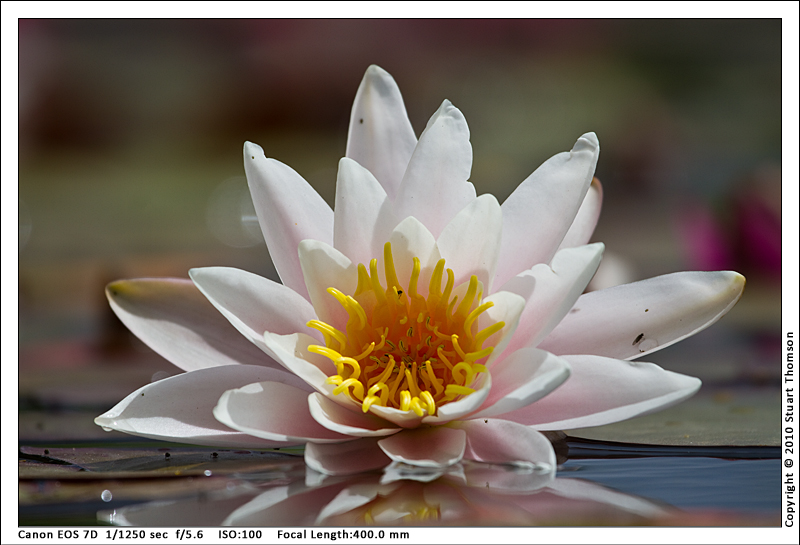
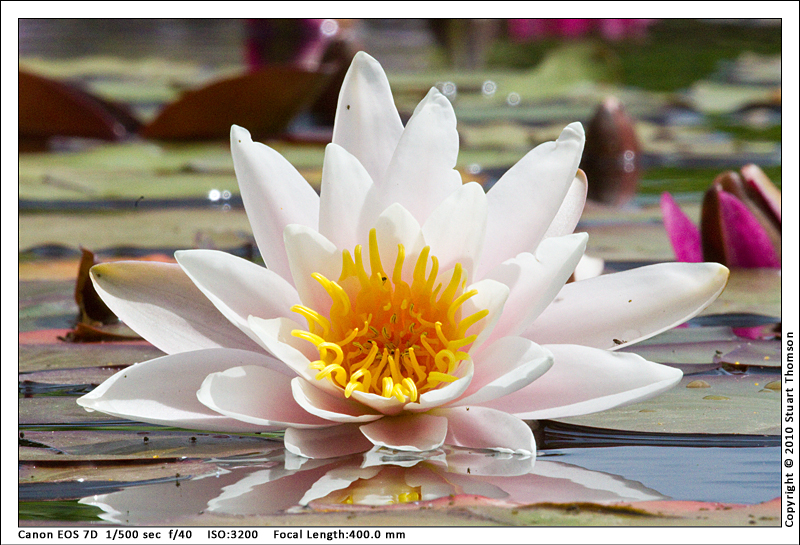
Well had chance to do mine today, taken with the 100-400L, ISO needed to raise a fair bit between shots as the smallest aperture is F40 on this one, so first shot at F5.6, second F40, Exif in border.

IMG_7290.jpg


IMG_7289.jpg
 
Here's mine - Taken with my 100mm macro, on a tripod, remote and flash.

Shows the narrow dof at f2.8 and of course so much more in focus at f32. What is interesting to consider here, is that it has been mentioned about the longer shutter speeds and / or higher ISO needed when you get to f/32 etc. Flash negates this and the shutter speed and ISO are the same in both shots.

Sorry, not earth shattering I know, but I thought I'd make the point :)

Identical processing through ACR on both and same % sharpening applied.

f/2.8

4759995573_6840a3873a_b.jpg


f/32

4760630554_1d95b775c6_b.jpg
 
I'm going to be following these threads as so much to learn, here's my attempts, exif in frame. Taken with a 70-200 f2.8 Mk1


lilly1_f28.jpg


lilly1_f232.jpg
 
Hi,
Here's mine from today.
The camera was on single spot AF, in Apeture Priority mode.
There is considerable blurring in the second image which, I understand from reading this thread to be due to a lack of tripod.

f/4.2 1/250
DSC_4115.jpg


f/25 1/6
DSC_4116.jpg
 
had a go with my Nikkor 50mm.
f1.4 and f16, reminds me of days in the camera club.:)

4760858820_a97d732f0e.jpg
 
So say I'm in a situation where I have no tripod, the camera is in Apeture Priority mode with a high f number, as the camera controls the shutter speed (in AP mode) the image ends up blurred.
Does this mean to use a high f number I would need to go full manual, set the apeture and then adjust the shutter speed to a faster number than the camera selected? I assume a faster shutter would then result in less light, making the image under-exposed. In this case a higher ISO would be required yes? Or am I way off track?
 
So say I'm in a situation where I have no tripod, the camera is in Apeture Priority mode with a high f number, as the camera controls the shutter speed (in AP mode) the image ends up blurred.
Does this mean to use a high f number I would need to go full manual, set the apeture and then adjust the shutter speed to a faster number than the camera selected? I assume a faster shutter would then result in less light, making the image under-exposed. In this case a higher ISO would be required yes? Or am I way off track?

No, you are bang on track.

You cannot always get the result you want if there is too much or too little light.

Too much light you can use a ND filter, too little you can add light (not always possible).
 
Here's mine - Bouganvilla


f/1.8 ISO 100 1/400 AWB 50mm


f/22 ISO 1600 1/50 50mm

Both were taken hand held - boosted the ISO at f/22 and check out the noise!!! Will have to try it again with a tripod and a longer exposure
 
OK, here's my 2. Not the greatest shots in the world I know...

MF / Manual exposure Tamron SP90.

Had to use a tad of flash on the second one as the shutter speed was getting a touch low.


f/2.8 at 1/800 and f/22 at 1/10, both at 200 ISO with natural light....

20100706_093835_0270_LR.jpg
20100706_093900_0272_LR.jpg


f/2.8 at 1/160 and f/22 at 1/3, both at 200 ISO with natural light....

20100706_102941_0274_LR.jpg


20100706_103202_0277_LR.jpg
 
f/2.8 at 1/800 and f/22 at 1/10, both at 200 ISO with natural light....

<snip>

Excellent examples Tim. On the first one particularly, I like the way you've focused a little way in from the tip of the flower, showing how depth of field extends both in front of the focus point as well as behind it, and pulling the whole bloom into sharp focus, maximising the available depth of field.

There's another example here on a similar thread (for the benefit of others, I know you've seen it) http://www.talkphotography.co.uk/forums/showthread.php?t=241179 The interesting point there is that, while using similar settings to you, by moving back from the subject and making it smaller, the depth of field has got dramatically larger, increasing from a few inches to a few feet.
 
So say I'm in a situation where I have no tripod, the camera is in Apeture Priority mode with a high f number, as the camera controls the shutter speed (in AP mode) the image ends up blurred.
Does this mean to use a high f number I would need to go full manual, set the apeture and then adjust the shutter speed to a faster number than the camera selected? I assume a faster shutter would then result in less light, making the image under-exposed. In this case a higher ISO would be required yes? Or am I way off track?

I have learnt just that, I couldn't have put it better myself. Off into the garden I go...

Great thread!
 
Nice to see so many getting the idea of DoF and seeing it in their images, many of which show lots of 'crap' in the background which disappears when shot wide open - this is the beauty of selective DoF

It's also showing up the problem of using larger apertures meaning there are slow, sometimes too slow, shutter speeds causing another problem in 'camera shake' which can blur the image (though sometimes it's subject movement too for those taking flowers on windy days)

Good to see so many getting something from this thread :)

I wonder what the next one will be on???

DD
 
Exposure, he mentioned it somewhere back < there.

That is a gigantic topic, and a huge leap forward from aperture alone. After all, it took Bryan Peterson 157 pages to scratch the surface, and there is plenty he neglected to cover. He then saw fit to release another book just on shutter speeds.

If this thread went off the rails a little, with only "Aperture" as the subject, and only extremes of aperture at that, I dread to think what might happen with "Exposure" as a topic. For starters you have the exposure triangle, but then you have metering, metering patterns, exposure modes, zones, dynamic range, ETTR, HDR, raw vs JPEG, histograms, exposure compensation, reflected vs incident metering, hand held meters vs camera meters, balancing flash with ambient, saturation/clipping, noise, pushing and pulling, controlling contrast, grey cards, substitute metering, Sunny 16 etc etc..

How long is that thread going to stay at "noob" level? "Exposure" is a great topic, but keeping it simple in a thread which is essentially a free for all - good luck with that. :D

I'm not trying to put anyone off, but keeping control of such a vast topic will not be easy, I think, and will probably benefit from some pretty clear guidelines in the opening post.

 
That is a gigantic topic, and a huge leap forward from aperture alone. After all, it took Bryan Peterson 157 pages to scratch the surface, and there is plenty he neglected to cover. He then saw fit to release another book just on shutter speeds.

If this thread went off the rails a little, with only "Aperture" as the subject, and only extremes of aperture at that, I dread to think what might happen with "Exposure" as a topic. For starters you have the exposure triangle, but then you have metering, metering patterns, exposure modes, zones, dynamic range, ETTR, HDR, raw vs JPEG, histograms, exposure compensation, reflected vs incident metering, hand held meters vs camera meters, balancing flash with ambient, saturation/clipping, noise, pushing and pulling, controlling contrast, grey cards, substitute metering, Sunny 16 etc etc..

How long is that thread going to stay at "noob" level? "Exposure" is a great topic, but keeping it simple in a thread which is essentially a free for all - good luck with that. :D

I'm not trying to put anyone off, but keeping control of such a vast topic will not be easy, I think, and will probably benefit from some pretty clear guidelines in the opening post.


Next topic will be SHUTTER SPEEDS

I already have the two shots that I would like people to get..

ALL will be revealed....


MD
 
Hopefully not too late! Just saw this at work today and didn't want to miss out, so off into the garden I went just 30 mins ago, so light not the best :bonk:

35mm AF-S, ISO 200, 1/40s f/1.8

4769062696_96481a6646_b.jpg


35mm AF-S, ISO 200, 6s, f/22

4769063124_7dcd172705_b.jpg


Excuse the very shakey 2nd pic, unfortunately aperture doesn't fix a breeze and boring grey sky!! :D:D

Joe
 
Hi Peeps,

My first shots... (total noob) but love MDs idea and would love to tag along for the ride... so here goes:

F2.8
4769418222_31415209c4_z.jpg


F22
4768783345_f0d3c91b0b_z.jpg
 
How do you get your EXIF info on the border of your images like that?


There is a thread on here about it .. Check out "cowasaki" he started it


MD
 
There is a thread on here about it .. Check out "cowasaki" he started it
MD

I was wondering this too so I've just had a good search but couldn't find anything about it... :suspect::shrug:
 
Thanks, Didn't realise it would be called that - I was looking for "exif" and/or "border". :thumbs:
 
Back
Top