

You are using an out of date browser. It may not display this or other websites correctly.
You should upgrade or use an alternative browser.
You should upgrade or use an alternative browser.
Learn with MD Lesson No 1 "Thoughts please"
- Thread starter ..MD..
- Start date


tdodd
Suspended / Banned
- Messages
- 6,481
- Name
- Tim
- Edit My Images
- No
Oh yes, I'm not saying you should go to f/16 to increase sharpness, but sometimes you might *need* to shoot f/16 in order to be able to adequately expose.
But that is my point. If the only reason to go to f/16 is to achieve a particular exposure, rather than because you need the DOF that f/16 offers, then you might be better off to use an ND filter rather than stopping down. It's not a hard and fast rule/recommendation, just something to consider. f/16 I might be prepared to live with, as I mentioned, but f/22.....? Of course, adding filters do bring about their own issues.

DiddyDave
Suspended / Banned
- Messages
- 9,521
- Edit My Images
- Yes
Sorry guys - but I think we're in danger of getting ahead of the newbies here 
This exercise was to discuss DoF and get people to see the effect it can have on a shot - ISO, lens performance, diffraction etc. are way beyond this first exercise IMO - unless of course I'm totally wrong
Can we keep it simpler for now and introduce these & other ideas/issues later perhaps? :shrug:
It seems to me like MD is trying to get a newbie to engage first gear and understand what a clutch is for, but then we're discussing how to kill understeer with power while hitting the apex !!!
DD
This exercise was to discuss DoF and get people to see the effect it can have on a shot - ISO, lens performance, diffraction etc. are way beyond this first exercise IMO - unless of course I'm totally wrong
Can we keep it simpler for now and introduce these & other ideas/issues later perhaps? :shrug:
It seems to me like MD is trying to get a newbie to engage first gear and understand what a clutch is for, but then we're discussing how to kill understeer with power while hitting the apex !!!
DD
OP

- Messages
- 10,257
- Name
- MonkeyDave
- Edit My Images
- Yes
Sorry guys - but I think we're in danger of getting ahead of the newbies here
This exercise was to discuss DoF and get people to see the effect it can have on a shot - ISO, lens performance, diffraction etc. are way beyond this first exercise IMO - unless of course I'm totally wrong
Can we keep it simpler for now and introduce these & other ideas/issues later perhaps? :shrug:
It seems to me like MD is trying to get a newbie to engage first gear and understand what a clutch is for, but then we're discussing how to kill understeer with power while hitting the apex !!!
DD

Spot on there Dave my good man...
Dave

 But thanks for everyone who is helping in this thread...
-halli-
Suspended / Banned
- Messages
- 446
- Edit My Images
- No
Sorry guys - but I think we're in danger of getting ahead of the newbies here
 Way over my head.
- Messages
- 25,725
- Name
- Yvonne, pronounced Eve...
- Edit My Images
- Yes
Sorry guys - but I think we're in danger of getting ahead of the newbies here
This exercise was to discuss DoF and get people to see the effect it can have on a shot - ISO, lens performance, diffraction etc. are way beyond this first exercise IMO - unless of course I'm totally wrong
Can we keep it simpler for now and introduce these & other ideas/issues later perhaps? :shrug:
It seems to me like MD is trying to get a newbie to engage first gear and understand what a clutch is for, but then we're discussing how to kill understeer with power while hitting the apex !!!
DD
Totally agree, I have run through this thread from the beginning and was just thinking how excellent it is that newer users can actually see real life effect of apertures and dof on an image, when it all got suddenly very techinical.
Dave's idea is brilliant, so lets keep it that way perhaps. Though if you more advanced guys would like to discuss this lot in separate 'spin off' thread, please do!
DiddyDave
Suspended / Banned
- Messages
- 9,521
- Edit My Images
- Yes
Totally agree, I have run through this thread from the beginning and was just thinking how excellent it is that newer users can actually see real life effect of apertures and dof on an image, when it all got suddenly very techinical.
Dave's idea is brilliant, so lets keep it that way perhaps. Though if you more advanced guys would like to discuss this lot in separate 'spin off' thread, please do!
I don't think it needs to be a 'spin off' as such - just a few more weeks down the line from MD's original idea as further considerations to a shot
But I'm glad I'm not the only one who doesn't want to jump from GCSE to PHD in 10 posts
DD
- Messages
- 25,725
- Name
- Yvonne, pronounced Eve...
- Edit My Images
- Yes
I don't think it needs to be a 'spin off' as such - just a few more weeks down the line from MD's original idea as further considerations to a shot
But I'm glad I'm not the only one who doesn't want to jump from GCSE to PHD in 10 posts
DD
I meant as an immediate solution Dave [and you realise this could get very confusing with my 2 fav daves in here
 ], not that it shouldn't be discussed here at all anytime. I am just thinking that the sight of those graphs and things might have people 'channel hopping' a bit quick....
 now then, I need some flowers.... back in a bit
DiddyDave
Suspended / Banned
- Messages
- 9,521
- Edit My Images
- Yes
now then, I need some flowers.... back in a bit
I hope you have better luck than I did
DD

HoppyUK
Suspended / Banned
- Messages
- 23,200
- Name
- Richard
- Edit My Images
- No
A practical summary of the above posts re diffraction -
Don't use f/22 (on a crop format camera). It's horrible.
Use f/16 if you want maximum depth of field, but be aware that sharpness of fine details will be noticeably less than it could be.
F/11 is a good compromise. You usually get plenty of DoF for most subjects, and sharpness will not be far off optimum.
Don't use f/22 (on a crop format camera). It's horrible.
Use f/16 if you want maximum depth of field, but be aware that sharpness of fine details will be noticeably less than it could be.
F/11 is a good compromise. You usually get plenty of DoF for most subjects, and sharpness will not be far off optimum.

Barrysprout
Suspended / Banned
- Messages
- 6,773
- Name
- Colin
- Edit My Images
- No
Found a flower!!
Tried to use an angle which would show when I would use the narrower depth of field at F1.8. In other words the messy background. And yes I should have pulled the petal off at the top right but they are not my roses so left as is.
Both shots with nifty fifty
So first shot at F1.8 which even with the ISO at 100 gave me a shutter speed of 1/2500 in aperture priority. This was using spot metering on the rose so the background is under exposed.

Next up is the F22 which when keeping the ISO at 100 slowed my shutter speed right down to 1/30

Tried to use an angle which would show when I would use the narrower depth of field at F1.8. In other words the messy background. And yes I should have pulled the petal off at the top right but they are not my roses so left as is.
Both shots with nifty fifty
So first shot at F1.8 which even with the ISO at 100 gave me a shutter speed of 1/2500 in aperture priority. This was using spot metering on the rose so the background is under exposed.
Next up is the F22 which when keeping the ISO at 100 slowed my shutter speed right down to 1/30


Mike.P
Suspended / Banned
- Messages
- 6,141
- Edit My Images
- No
OK, heres mine, both hand held.
Camera: PENTAX K-7
Lens: smc Pentax DA* 55mm f1.4
Exposure: 1/3200 sec
Aperture: f/1.4
Focal Length: 55 mm
ISO Speed: 100
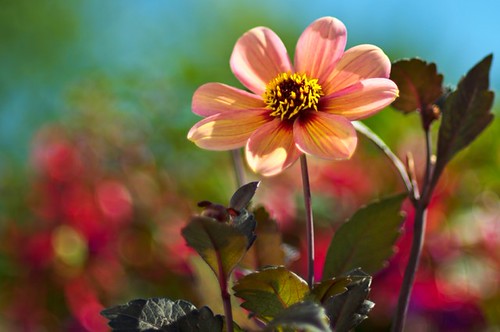
Camera: PENTAX K-7
Lens: smc Pentax DA* 55mm f1.4
Exposure: 0.01 sec (1/100)
Aperture: f/22.0
Focal Length: 55 mm
ISO Speed: 800
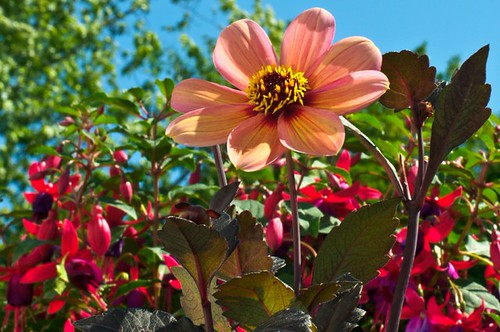
Camera: PENTAX K-7
Lens: smc Pentax DA* 55mm f1.4
Exposure: 1/3200 sec
Aperture: f/1.4
Focal Length: 55 mm
ISO Speed: 100
Camera: PENTAX K-7
Lens: smc Pentax DA* 55mm f1.4
Exposure: 0.01 sec (1/100)
Aperture: f/22.0
Focal Length: 55 mm
ISO Speed: 800
DiddyDave
Suspended / Banned
- Messages
- 9,521
- Edit My Images
- Yes
Found a flower!!
Tried to use an angle which would show when I would use the narrower depth of field at F1.8. In other words the messy background. And yes I should have pulled the petal off at the top right but they are not my roses so left as is.
Both shots with nifty fifty
So first shot at F1.8 which even with the ISO at 100 gave me a shutter speed of 1/2500 in aperture priority. This was using spot metering on the rose so the background is under exposed.
Next up is the F22 which when keeping the ISO at 100 slowed my shutter speed right down to 1/30
Nice examples - and doesn't it seem amazing how much difference there is in the shutter speed

DD
Barrysprout
Suspended / Banned
- Messages
- 6,773
- Name
- Colin
- Edit My Images
- No
Nice examples - and doesn't it seem amazing how much difference there is in the shutter speed
DD
It is Dave, I would love to get to a point where I immediately know how many stops difference there is between f1.8 and f22 and could translate this to adjust the shutter speed quickly. In other words do what everyone used to do.
However with a camera that does everything for me and half and third stops to contend with I fear I will never get there.:bang:
OP
- Messages
- 10,257
- Name
- MonkeyDave
- Edit My Images
- Yes
Well its not raining today so I have redone my shots " The way they should have been done.."
1st
F4
ISO 100
1/640sec

2nd
F22
ISO 100
1/20sec

Both taken on a tripod @ 60mm
Also these have had nothing done to them not even a sharpen after resizing...!!!!
MD
1st
F4
ISO 100
1/640sec
2nd
F22
ISO 100
1/20sec
Both taken on a tripod @ 60mm
Also these have had nothing done to them not even a sharpen after resizing...!!!!
MD
- Messages
- 25,725
- Name
- Yvonne, pronounced Eve...
- Edit My Images
- Yes
Hmmm, our garden is a bit flowerless atm, everything having either flowered already, or not yet done so, but I did managed to find a rose hanging around in one bit so, here we go.
To show that the absolute dof, these images are straight off the camera with no adjustments at all other then resize and temp [I left it on tungsten from the other night, doh]. Both taken on full framed D700 with a sigma 24-70 lens.
1 - f2.8 - 70mm, ISO200 1/125sec, on a tripod and using aperture priority in this instance.
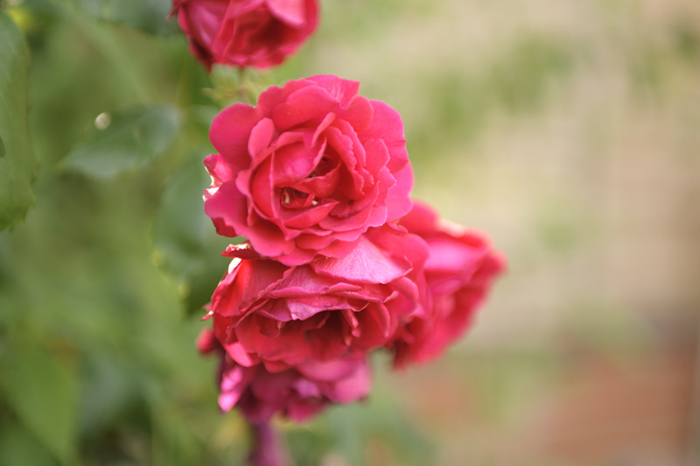
2 - f22 - 70mm, ISO200 1/2sec, on a tripod and using aperture priority in this instance.

I have very deliberately donr nothing to them, to demonstrate how the wide aperture can blur the background enough to really tidy things up and provide good separation. Both these shutter speeds are probably a bit slow for the breezy conditions, so I did a couple more using my tomatoes and upping the ISO to 800 and an aperture of F16 so allow the camera to speed things up a bit.
3 - F2.8, 70mm, iso800, 1/320

4 - f16, 70mm, io800, 1/13

so, the bigger f number, giving the smaller aperture and therefore greater depth of field, still produces a shutterspeed that is a bit slow, albeit the toms moved less in the breeze, so I think it shows that its a case of deciding what you want from the image, then adjusting your settings to achieve that, not only within the cameras abilities, but also taking the external conditions into account too.
To show that the absolute dof, these images are straight off the camera with no adjustments at all other then resize and temp [I left it on tungsten from the other night, doh]. Both taken on full framed D700 with a sigma 24-70 lens.
1 - f2.8 - 70mm, ISO200 1/125sec, on a tripod and using aperture priority in this instance.
2 - f22 - 70mm, ISO200 1/2sec, on a tripod and using aperture priority in this instance.
I have very deliberately donr nothing to them, to demonstrate how the wide aperture can blur the background enough to really tidy things up and provide good separation. Both these shutter speeds are probably a bit slow for the breezy conditions, so I did a couple more using my tomatoes and upping the ISO to 800 and an aperture of F16 so allow the camera to speed things up a bit.
3 - F2.8, 70mm, iso800, 1/320
4 - f16, 70mm, io800, 1/13
so, the bigger f number, giving the smaller aperture and therefore greater depth of field, still produces a shutterspeed that is a bit slow, albeit the toms moved less in the breeze, so I think it shows that its a case of deciding what you want from the image, then adjusting your settings to achieve that, not only within the cameras abilities, but also taking the external conditions into account too.
tdodd
Suspended / Banned
- Messages
- 6,481
- Name
- Tim
- Edit My Images
- No
I do apologise for taking things off track and will try to rein in my enthusiasm. It is very easy to get carried away.
That said, I do think it is important not to lead newbies (or anyone else) up the wrong track before then turning round and telling them to forget what they just learned. e.g. Since f/22 really does suck for photography with cropped sensors why lead them there in the first place when they really ought not to be using such apertures at all?
Personally, having a thirst for understanding, I always like to know why something is so and while it is useful advice to say "don't use f/22" it is surely better advice to explain the reasons why as well.
That said, I do think it is important not to lead newbies (or anyone else) up the wrong track before then turning round and telling them to forget what they just learned. e.g. Since f/22 really does suck for photography with cropped sensors why lead them there in the first place when they really ought not to be using such apertures at all?
Personally, having a thirst for understanding, I always like to know why something is so and while it is useful advice to say "don't use f/22" it is surely better advice to explain the reasons why as well.
OP
- Messages
- 10,257
- Name
- MonkeyDave
- Edit My Images
- Yes
I do apologise for taking things off track and will try to rein in my enthusiasm. It is very easy to get carried away.
That said, I do think it is important not to lead newbies (or anyone else) up the wrong track before then turning round and telling them to forget what they just learned. e.g. Since f/22 really does suck for photography with cropped sensors why lead them there in the first place when they really ought not to be using such apertures at all?
Personally, having a thirst for understanding, I always like to know why something is so and while it is useful advice to say "don't use f/22" it is surely better advice to explain the reasons why as well.
Your help is fantastic and i only hope you continue to do so..
Regards
MD
DiddyDave
Suspended / Banned
- Messages
- 9,521
- Edit My Images
- Yes
It is Dave, I would love to get to a point where I immediately know how many stops difference there is between f1.8 and f22 and could translate this to adjust the shutter speed quickly. In other words do what everyone used to do.
However with a camera that does everything for me and half and third stops to contend with I fear I will never get there.:bang:
I know what you mean - I grew up on 1/125th, 1/250th, f8, f11 etc. so coming across 1/640 and f9 was a bit of a shock
But you do get used to itI do apologise for taking things off track and will try to rein in my enthusiasm. It is very easy to get carried away.
That said, I do think it is important not to lead newbies (or anyone else) up the wrong track before then turning round and telling them to forget what they just learned. e.g. Since f/22 really does suck for photography with cropped sensors why lead them there in the first place when they really ought not to be using such apertures at all?
Personally, having a thirst for understanding, I always like to know why something is so and while it is useful advice to say "don't use f/22" it is surely better advice to explain the reasons why as well.
I think the point of MD's first thread was merely to show the differences f-stops make, not to discuss their relative merits for sharpness and lens manufacturing contraints. So yes - f1.8 is a lot less in focus than f22 - is the point of this exercise, and to then think why & when you might use wide/small apertures for the effect & DoF you need
I also agree with you that there are problems with tiny or extreme wide apertures, but that doesn't mean we shouldn't use them or most shots would be taken at f5.6-f11 - and how boring would that be
My 85mm is not brill wide open, but the effect is and in the real world of prints & happy clients the lack of ultimate quality at such apertures is way secondary to the art of the imageSo please - keep inputting to such threads, but bear in mind where the intended user is and moderate accordingly
We'll get to resolution considerations in time, but not yet DD
tdodd
Suspended / Banned
- Messages
- 6,481
- Name
- Tim
- Edit My Images
- No
Your help is fantastic and i only hope you continue to do so..
Regards
MD
No problem.
- Messages
- 25,725
- Name
- Yvonne, pronounced Eve...
- Edit My Images
- Yes
OK, heres mine, both hand held.
Camera: PENTAX K-7
Lens: smc Pentax DA* 55mm f1.4
Exposure: 1/3200 sec
Aperture: f/1.4
Focal Length: 55 mm
ISO Speed: 100
Camera: PENTAX K-7
Lens: smc Pentax DA* 55mm f1.4
Exposure: 0.01 sec (1/100)
Aperture: f/22.0
Focal Length: 55 mm
ISO Speed: 800
A fine example of clearing the clutter and beautiful background blurring that enhances the picture imo.
Mike.P
Suspended / Banned
- Messages
- 6,141
- Edit My Images
- No
A fine example of clearing the clutter and beautiful background blurring that enhances the picture imo.
Thanks .. was set up for just that purpose although the wife had a bit of a moan because I had plants balancing on the decking rails and the BBQ
DiddyDave
Suspended / Banned
- Messages
- 9,521
- Edit My Images
- Yes
Thanks .. was set up for just that purpose although the wife had a bit of a moan because I had plants balancing on the decking rails and the BBQ
Well if we are to suffer for our art it's only fair we let others suffer too
But it's a good shot to show the effect, and moreso as your plane of focus (the few inches that are sharp) on the flower is (or is close to) parallel to your sensor - hence the main subject is sharp throughout even though we've nicely lost the background
DD
HoppyUK
Suspended / Banned
- Messages
- 23,200
- Name
- Richard
- Edit My Images
- No
I'm thinking that a lot of people are focusing on the flower for the low f/number pic, and leaving it there for the next one at high f/number.
Bearing in mind that depth of field is increased in front of the focused point, as well as behind it, you can use this extra DoF by focusing just behind the flower. The higher f/number will still pull it into sharp focus, yet extend further into the backrgound, so you'll be using all of the available DoF, therefore more effective DoF at the higher f/number.
It's a variation on the hyperfocal distance principle. Ooops! Let's not go there!
Bearing in mind that depth of field is increased in front of the focused point, as well as behind it, you can use this extra DoF by focusing just behind the flower. The higher f/number will still pull it into sharp focus, yet extend further into the backrgound, so you'll be using all of the available DoF, therefore more effective DoF at the higher f/number.
It's a variation on the hyperfocal distance principle. Ooops! Let's not go there!
DiddyDave
Suspended / Banned
- Messages
- 9,521
- Edit My Images
- Yes
It's a variation on the hyperfocal distance principle. Ooops! Let's not go there!
While I love your techie knowledge and your ease of explanation - I agree we should not be going there YET :nono:
MD's idea is surely to learn the basics and build on it - soz for the car analogy again - but you don't learn to hold the car on the handbrake on an incline and that it's also useful for rapid turns going forwards or reverse spins in a front wheel drive car in the SAME lesson
DD
Barrysprout
Suspended / Banned
- Messages
- 6,773
- Name
- Colin
- Edit My Images
- No
While I love your techie knowledge and your ease of explanation - I agree we should not be going there YET :nono:
MD's idea is surely to learn the basics and build on it - soz for the car analogy again - but you don't learn to hold the car on the handbrake on an incline and that it's also useful for rapid turns going forwards or reverse spins in a front wheel drive car in the SAME lesson
DD
Regardless of which lesson it was that sounds like a fantastic instructor
DiddyDave
Suspended / Banned
- Messages
- 9,521
- Edit My Images
- Yes
Regardless of which lesson it was that sounds like a fantastic instructor
Forget the photography mate
- I was an authorised Advanced Driving instructor at just 22 (one of the UK's then youngest) and one of my nicknames was 'Handbo' (a play on Rambo who was a hit of the time) for my proficiency with handbrake turns Now I still teach a few how to drive economically but FAST DD
tdodd
Suspended / Banned
- Messages
- 6,481
- Name
- Tim
- Edit My Images
- No
Given the valid remarks about the discussion becoming a bit technical, if I can make an observation about this thread, I don't think the opening post actually made it terribly clear quite what the scope of the topic was and, just what the learning experience was intended to be. That's not a criticism, but I think it is easy enough to understand that a simple question can lead to a complex answer, and from that point things just escalate quite quickly.
I assume the aim of the thread was to introduce DOF, but in so doing it has raised several things and they in turn have lead to other discussions. While that is all good, I can see how quickly the thread can lose the plot and become unwieldy and confusing. For eaxmple, the instructions were to shoot at two apertures and note the other alterations required to the camera settings and also the outcome in the image. Well, let's look at the results so far....
Changing aperture has an impact on DOF. It also has an impact on one or more of shutter speed, ISO, lighting. In addition it can raise questions about lens IQ and also diffraction. Since most of that is wrapped up in the topic of exposure, this could easily lead on to other things like exposure accuracy, metering, optimising exposure, exposing for raw vs JPEG. Ouch!
Shutter speed has consequences for shake and blur and raises questions about tripods, image stabilisation and acceptable shutter speeds related to focal length.
Changing ISO has an impact on noise, but it is not a straightforward impact, since ISO alone is not the reason for noise.
There are probably further consequences too - at one point we got side tracked into talking about filters, and then there was the comment about choosing/adjusting focal point depending on DOF.
Of course, while there are some broad brush rules about DOF, like stopping down increases it, there is much more to it than that, influenced by camera format, focal length, subject distance, aperture, final viewing size and final viewing distance.
All in all it's quite a massive subject, with all manner of inter-related consequences when you make just one small change to something. Going forward, I'm not sure what the best way might be to constrain each thread to the learning point that was intended, but perhaps a little more clarity on the goals and scope of each thread, set out at the beginning might help.
I assume the aim of the thread was to introduce DOF, but in so doing it has raised several things and they in turn have lead to other discussions. While that is all good, I can see how quickly the thread can lose the plot and become unwieldy and confusing. For eaxmple, the instructions were to shoot at two apertures and note the other alterations required to the camera settings and also the outcome in the image. Well, let's look at the results so far....
Changing aperture has an impact on DOF. It also has an impact on one or more of shutter speed, ISO, lighting. In addition it can raise questions about lens IQ and also diffraction. Since most of that is wrapped up in the topic of exposure, this could easily lead on to other things like exposure accuracy, metering, optimising exposure, exposing for raw vs JPEG. Ouch!
Shutter speed has consequences for shake and blur and raises questions about tripods, image stabilisation and acceptable shutter speeds related to focal length.
Changing ISO has an impact on noise, but it is not a straightforward impact, since ISO alone is not the reason for noise.
There are probably further consequences too - at one point we got side tracked into talking about filters, and then there was the comment about choosing/adjusting focal point depending on DOF.
Of course, while there are some broad brush rules about DOF, like stopping down increases it, there is much more to it than that, influenced by camera format, focal length, subject distance, aperture, final viewing size and final viewing distance.
All in all it's quite a massive subject, with all manner of inter-related consequences when you make just one small change to something. Going forward, I'm not sure what the best way might be to constrain each thread to the learning point that was intended, but perhaps a little more clarity on the goals and scope of each thread, set out at the beginning might help.
OP
- Messages
- 10,257
- Name
- MonkeyDave
- Edit My Images
- Yes
Fair point Tim . I did not explain the thread properly..!
I am not good at expaining what I want but I Will try harder on the next one .
Basically I wanted folks to use there camera and see the difference in the shots and make them have to change settings to get what was required...
I will make more mistake for sure but if members can learn a few bits from the threads then i will be happy....
MD
I am not good at expaining what I want but I Will try harder on the next one .
Basically I wanted folks to use there camera and see the difference in the shots and make them have to change settings to get what was required...
I will make more mistake for sure but if members can learn a few bits from the threads then i will be happy....
MD


OP
- Messages
- 10,257
- Name
- MonkeyDave
- Edit My Images
- Yes

WideEyedFox
Suspended / Banned
- Messages
- 44
- Name
- Horness
- Edit My Images
- Yes
Nikon D90 with Nikon 50mm lens in aperture shooting mode.

F1.8, ISO 200, 1/800 (large version)

F22, ISO 200, 1/5 (large version)
There was a every-so-slight breeze, which at F22 really showed up. I did not re-take it just to show the difference in shutter speed etc.
Thanks MD - in 10 minutes I actually learnt something new about my camera and lens
F1.8, ISO 200, 1/800 (large version)
F22, ISO 200, 1/5 (large version)
There was a every-so-slight breeze, which at F22 really showed up. I did not re-take it just to show the difference in shutter speed etc.
Thanks MD - in 10 minutes I actually learnt something new about my camera and lens
For my examples of different DoF I used my 50mm at F1.8 and F16. As my favourite subject is people rather than flowers, I used my daughter to pose with a flower that I stole from the girlfriends bunch she bought yesterday.
What these photos demonstrate is that when taking a portrait like this you need to use the right aperture to get the right part of the subject in focus. If I was shooting this shot normally I would probably have used somewhere in between the min and max apertures of the lens, maybe around F5.6 to get some DoF but still blur out part of the wall. I'd also focus on the eyes but for these photos the focus was set for the centre of the flower. Neither of these are great photos and not perfectly exposed but they'll do for now.
D300 + 50mm @ f1.8 & 1/8000sec

D300 + 50mm @ f16 & 1/125sec
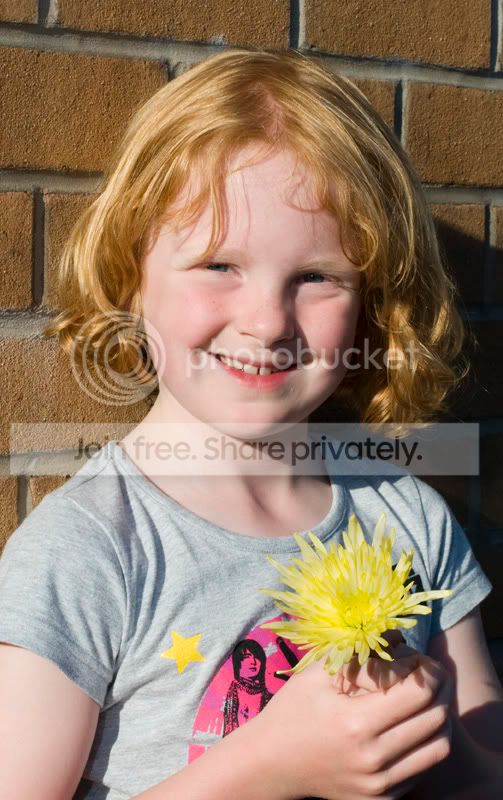
What these photos demonstrate is that when taking a portrait like this you need to use the right aperture to get the right part of the subject in focus. If I was shooting this shot normally I would probably have used somewhere in between the min and max apertures of the lens, maybe around F5.6 to get some DoF but still blur out part of the wall. I'd also focus on the eyes but for these photos the focus was set for the centre of the flower. Neither of these are great photos and not perfectly exposed but they'll do for now.
D300 + 50mm @ f1.8 & 1/8000sec
D300 + 50mm @ f16 & 1/125sec
trencheel303
Suspended / Banned
- Messages
- 4,888
- Edit My Images
- No
I would be shocked if any lens required to go to f/16 in order to deliver its best results.
I can't remember which one it was (typical) but Ken Rockwell reviewed a lens that did exactly that, a fisheye I think.

PaulF
Suspended / Banned
- Messages
- 1,863
- Name
- Paul
- Edit My Images
- Yes
I said I'd jump in to this one, here are my 2 from this morning.
Taken with a Nikon D5000, 50mm f1.4 prime using a tripod so the same distance angle etc.
1 f1.4

2 f16
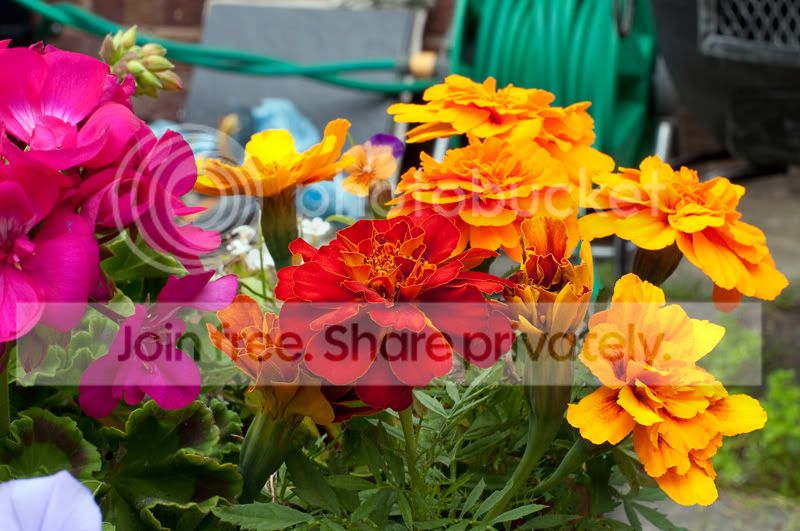
Neither images are particularly brilliant, f1.4 at this distance has too little dof but f16 shows way too much of our cluttered garden!
Somewhere around f3 would probably produced a better image.
I like this thread, it's forcing me to think about this stuff and understand it more.
Taken with a Nikon D5000, 50mm f1.4 prime using a tripod so the same distance angle etc.
1 f1.4
2 f16
Neither images are particularly brilliant, f1.4 at this distance has too little dof but f16 shows way too much of our cluttered garden!
Somewhere around f3 would probably produced a better image.
I like this thread, it's forcing me to think about this stuff and understand it more.

p3ryg
Suspended / Banned
- Messages
- 826
- Name
- Perry
- Edit My Images
- Yes
Here are mine, took a couple of different ones today using Nikon D50

AP mode, F5.6, Ex 1/800, 105mm

AP mode, F36, Ex 1/20, 105mm

AP mode, F5.6, Ex 1/800, 105mm

AP mode, F36, Ex 1/15, 105mm
The last one was out of focus, I am assuming this was more me than the settings.
Have really enjoyed this thread and learning from it, also seeing other peoples pictures as well.
Thanks for keeping it simple so far
AP mode, F5.6, Ex 1/800, 105mm
AP mode, F36, Ex 1/20, 105mm
AP mode, F5.6, Ex 1/800, 105mm
AP mode, F36, Ex 1/15, 105mm
The last one was out of focus, I am assuming this was more me than the settings.
Have really enjoyed this thread and learning from it, also seeing other peoples pictures as well.
Thanks for keeping it simple so far
OP
- Messages
- 10,257
- Name
- MonkeyDave
- Edit My Images
- Yes
Have really enjoyed this thread and learning from it, also seeing other peoples pictures as well.
Thanks for keeping it simple so far
Glad some people are enjoying the thread.
The Next one is going to be fun also ..!!!!
MD