

You are using an out of date browser. It may not display this or other websites correctly.
You should upgrade or use an alternative browser.
You should upgrade or use an alternative browser.
Learn with MD Lesson No 1 "Thoughts please"
- Thread starter ..MD..
- Start date

Barrysprout
Suspended / Banned
- Messages
- 6,773
- Name
- Colin
- Edit My Images
- No
Ok here is my efforts for what I call "Lets Learn with Basil Brush".
(I know he was a fox but MD's pic of a squirrel reminded me of it).
Exif should be intact. Ignore the date though as I discovered in doing this that my date was set a year out. No idea how I missed that before :bonk:. See learned something already
Just noticed where you are Tony, I may nip round to your garden since you have flowers. Was waiting for the wind to calm down a bit this afternoon and was going to head to Plean country park. Maybe tomorrow.:shrug:

Paul870
Suspended / Banned
- Messages
- 139
- Edit My Images
- Yes
If controlling the sense of motion is your goal then your priority is to set the shutter speed you desire in order to capture the motion as you would like. If you also care about the DOF then you would adjust the aperture to suit as well. If that then leaves you with an overexposed image, even at 100 ISO, then you will need to reduce the light intensity from the scene. An easy way to do that is to add a neutral density filter. An alternative is to shoot at a different time of day or in different weather conditions, when one way or another the light is reduced.
Using ND filters is a very valid and common technique for achieving long shutter speeds in bright (or even not so bright) conditions. I have a 9 stop ND filter to achieve really long exposures, and I use my CPL filter as an improvised ND filter to lose me almost two stops of light.
Given the softening effects of diffraction when stopping down a long way, using filters is often a better solution to such shooting than simply stopping down as far as you can go.
I know this is a little off topic, but since the thread is about learning, here is an example shot with a shutter speed of 25 seconds in daylight. The only way to achieve that speed was to use my 9 stop filter and to shoot at 100 ISO and f/16.

An 8 stop filter would have let me shoot at around 12 seconds, 7 stops would have given me 6 seconds, 6 stops would have given me 3 seconds and so on, until without any filter I would have needed to shoot at 1/20 for an equivalent exposure.
I replied back before you edited your post, that picture is amazing
What 'are' stop filters? i'm asumeing theyre readily avaliable? are they bought one peice at a time? is it worth using them on a 18-55 which I use?
Just been faffing with these settings in the garden and as you said I need to use a shorter shutter speed to ensure the overall picture isnt blown out or over exposed.

Kaouthia
Suspended / Banned
- Messages
- 3,308
- Name
- John
- Edit My Images
- No
What 'are' stop filters? i'm asumeing theyre readily avaliable?
They're filters that block X stops of light.
1 Stop filter == 1 stop of light (1/2 as much light)
2 Stop filter == 2 stops of light (1/4 as much light)
3 Stop filter == 3 stops of light (1/8 as much light)
6 Stop filter == 6 stops of light (1/64 as much light)
10 Stop filter == 10 stops of light 1/4096 as much light)
Those are the typical densities of "stop filters" (also known as Neutral Density filters).
Sometimes you can stack them, sometimes you can't (such as on ultra wide angle lenses).
You may notice a pattern here, essentially counting in stops is similar to counting in binary. (8 bit == 256 possible combinations, like in an 8 bit B&W digital image. 8 stops == 1/256th the amount of light).

tdodd
Suspended / Banned
- Messages
- 6,481
- Name
- Tim
- Edit My Images
- No
What 'are' stop filters? i'm asumeing theyre readily avaliable? are they bought one peice at a time? is it worth using them on a 18-55 which I use?
Just been faffing with these settings in the garden and as you said I need to use a shorter shutter speed to ensure the overall picture isnt blown out or over exposed.
The filters are called Neutral Density Filters, or ND Filters for short. The "stops" refers to the filter strength. The term "stops" is also used when discussing exposures in general, and apertures, shutter speeds and ISO settings. Quite simply, 1 stop is a halving or doubling of the exposure. 2 stops is 4X or 1/4 the light. 3 stops is 8X or 1/8 the light and so on.
Common values for ND filters are usually 1 stop, 2 stops, 3 stops, 6 stops, 9 or 10 stops. Other values can be obtained by combining filters, although ideally you should use as few filters as possible for better image quality.

Big Tony
Suspended / Banned
- Messages
- 278
- Name
- Tony
- Edit My Images
- Yes
Just noticed where you are Tony, I may nip round to your garden since you have flowers. Was waiting for the wind to calm down a bit this afternoon and was going to head to Plean country park. Maybe tomorrow.:shrug:
No flowers at this house, all that monobloc stuff. I nipped down to the bottom of the road and "borrowed" a neighbours flowers. You are welcome to borrow them too if you like

Are you local to me?
Tony
p.s (this might make no sense to you) Are you a time travelling sprout? If so, how is Elvis?

Dogfish_magnet
Suspended / Banned
- Messages
- 4,613
- Name
- Paul
- Edit My Images
- Yes
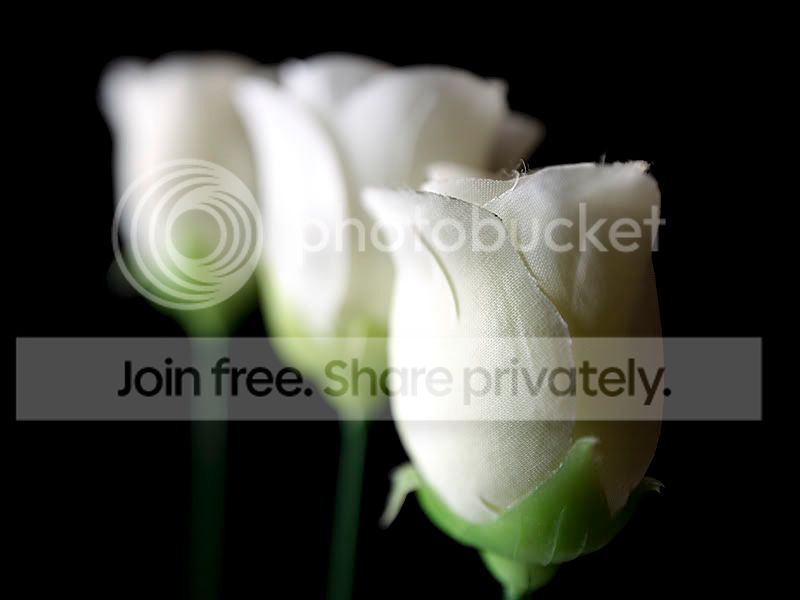
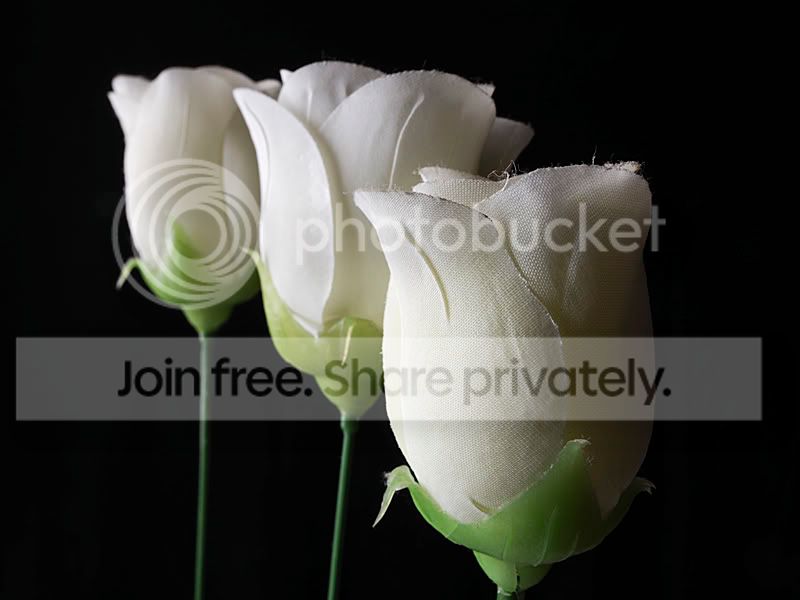
Here's 2 macro's , shot using manual and ISO 200 from a tripod and only altered the aperture, relying on the flash to provide the correct exposure for each image - you can see how the DOF in virtually non-existent at f2.8. (focus was on the petal tips on the L/H side).


DEANSUPREME
Suspended / Banned
- Messages
- 1,245
- Name
- Dean
- Edit My Images
- Yes
iso200 30mm f/2.8 1/4000 sec

iso200 30mm f/22 1/80 sec

Probably not the best test subject but thats all my garden is full of atm.
iso200 30mm f/22 1/80 sec
Probably not the best test subject but thats all my garden is full of atm.
OP

- Messages
- 10,257
- Name
- MonkeyDave
- Edit My Images
- Yes
Some great examples here guys and some super helpfull info being given out also...
DD I will redo mine in the morning .." Your right I should have taken them both the same...."
Regards
and thanks to everyone for taking part so far..
MD
DD I will redo mine in the morning .." Your right I should have taken them both the same...."
Regards
and thanks to everyone for taking part so far..
MD

-halli-
Suspended / Banned
- Messages
- 446
- Edit My Images
- No
I like this game
I'm going to practise a bit more this week as I've learnt so much already!
I tried both lenses and for the first try I used the widest zoom and the longest zoom for both wide open and narrow apertures. For the wide open I used 100 ISO and for the narrow I used 1600 (bar two as I just realised I made a mistake!) I'm going to try a range of ISO settings and focal lengths when I get the time.
I'll show two and link to the others to save people's bandwidth.
Canon 18-55mm kit lens
55mm, 1/50, 22, 1600ISO

55mm, 1/50, 5.6, 100ISO

18mm, 1/25, 22, 1600ISO - 18mm, 1/20, 6.3, 100ISO
55mm, 1/250, 22, 1600ISO - 55mm, 1/250, 5.6, 100ISO
Tamron 28-300mm lens
300mm, 1/30, 22, 1600ISO

300mm, 1/500, 6.3, 1600ISO (DOH! - should have been 100ISO)

30mm, 1/13, 22, 400ISO (DOH! - should have been 1600ISO) - 30mm, 1/60, 3.5, 100ISO
300mm, 1/400, 22, 1600ISO - 300mm, 1/320, 6.3, 100ISO
I'm going to practise a bit more this week as I've learnt so much already!
I tried both lenses and for the first try I used the widest zoom and the longest zoom for both wide open and narrow apertures. For the wide open I used 100 ISO and for the narrow I used 1600 (bar two as I just realised I made a mistake!) I'm going to try a range of ISO settings and focal lengths when I get the time.
I'll show two and link to the others to save people's bandwidth.
Canon 18-55mm kit lens
55mm, 1/50, 22, 1600ISO
55mm, 1/50, 5.6, 100ISO
18mm, 1/25, 22, 1600ISO - 18mm, 1/20, 6.3, 100ISO
55mm, 1/250, 22, 1600ISO - 55mm, 1/250, 5.6, 100ISO
Tamron 28-300mm lens
300mm, 1/30, 22, 1600ISO
300mm, 1/500, 6.3, 1600ISO (DOH! - should have been 100ISO)
30mm, 1/13, 22, 400ISO (DOH! - should have been 1600ISO) - 30mm, 1/60, 3.5, 100ISO
300mm, 1/400, 22, 1600ISO - 300mm, 1/320, 6.3, 100ISO
-halli-
Suspended / Banned
- Messages
- 446
- Edit My Images
- No
Halli
Did you try amd keep the iso down and make the shutter longer to get the correct exposure.
Might be worth a try on the next go....
Yes, I did - but I can't find my tripod and the exposure times were getting into the seconds, not good for hand held.
I wanted to test both ends of the lens and not worry about the ISO bit so just selected top and bottom of each for now - the proper experimenting will ensue later in the week when I've finished writing my reports for school :bang:
I'll try same aperture with all the ISO settings for each shot when on the tripod and using the remote shutter release.
I'm enjoying this one and looking forward to the next one already!
OP
- Messages
- 10,257
- Name
- MonkeyDave
- Edit My Images
- Yes
Yes, I did - but I can't find my tripod and the exposure times were getting into the seconds, not good for hand held.
I wanted to test both ends of the lens and not worry about the ISO bit so just selected top and bottom of each for now - the proper experimenting will ensue later in the week when I've finished writing my reports for school :bang:
I'll try same aperture with all the ISO settings for each shot when on the tripod and using the remote shutter release.
I'm enjoying this one and looking forward to the next one already!
Good to hear buddy.....
MD
-halli-
Suspended / Banned
- Messages
- 446
- Edit My Images
- No
correct exposure.
Are any of my shots over/under exposed? I'm still quite a novice so I've not got the eye for it yet. I'll have to read up about how the histograms work.
OP
- Messages
- 10,257
- Name
- MonkeyDave
- Edit My Images
- Yes
Are any of my shots over/under exposed? I'm still quite a novice so I've not got the eye for it yet. I'll have to read up about how the histograms work.
Just looking at them yes buddy they are under exposed....
BUT
Dont worry too much at the moment ? guess what the 2nd lesson will be about.... LOL
MD
OP
- Messages
- 10,257
- Name
- MonkeyDave
- Edit My Images
- Yes
Okay, I'll play.
f3.5
f22
Nice edbray " did you try the same but focus on the middle flower would have looked great.."
MD
-halli-
Suspended / Banned
- Messages
- 446
- Edit My Images
- No
guess what the 2nd lesson will be about.... LOL

Shoudn't the camera be exposing correctly though if set to Av mode?

EdBray
Suspended / Banned
- Messages
- 7,179
- Name
- Edward Bray
- Edit My Images
- Yes
Nice edbray " did you try the same but focus on the middle flower would have looked great.."
MD
Nope, changed nothing but the aperture and the power of the studio flash!
Personally I much prefer the first, I should have done it with the 85L @ f1.2
EdBray
Suspended / Banned
- Messages
- 7,179
- Name
- Edward Bray
- Edit My Images
- Yes
Shoudn't the camera be exposing correctly though if set to Av mode?
Not if the meter is pointing at something very dark or very light.
-halli-
Suspended / Banned
- Messages
- 446
- Edit My Images
- No
Not if the meter is pointing at something very dark or very light.
I NEED next weeks lesson then

Cheers
trencheel303
Suspended / Banned
- Messages
- 4,888
- Edit My Images
- No
what you need is this http://www.talkphotography.co.uk/forums/showthread.php?t=158332
-halli-
Suspended / Banned
- Messages
- 446
- Edit My Images
- No
what you need is this http://www.talkphotography.co.uk/forums/showthread.php?t=158332
Cheers, I think I can only take in one thing at a time though! I'll faff on with the aperture first and then I'll faff with the exposure settings.I've soooo much to learn, and I'm loving it

maddog.mark
Suspended / Banned
- Messages
- 3,467
- Name
- Mark
- Edit My Images
- Yes
Ok so here are my shots
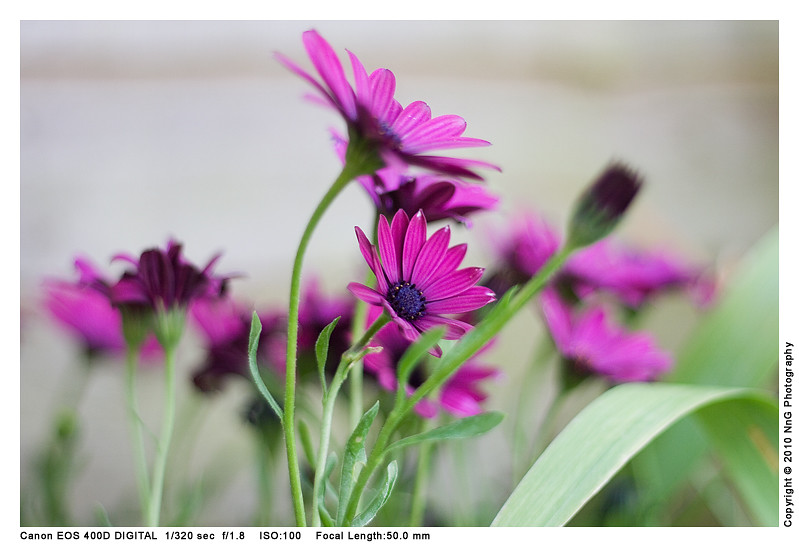
and
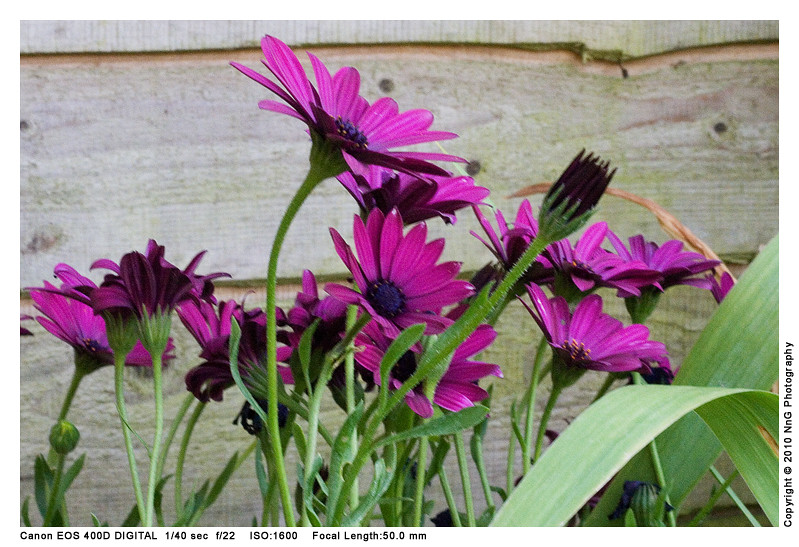
Both were shot with the available light and hand held. As you can see this has caused significant issues with noise with the f22 shot. (the 400d) doesn't do ISO1600 very well.
To be honest I'm not sure I've ever used f22 before now, mainly because of the noise it introduces. I'd be interested in some practical examples of when it might be needed. I spend so much of my photography time using ISO to isolate subjects that I've not really got to grips with the other end of the scale.
thanks
Mark
and
Both were shot with the available light and hand held. As you can see this has caused significant issues with noise with the f22 shot. (the 400d) doesn't do ISO1600 very well.
To be honest I'm not sure I've ever used f22 before now, mainly because of the noise it introduces. I'd be interested in some practical examples of when it might be needed. I spend so much of my photography time using ISO to isolate subjects that I've not really got to grips with the other end of the scale.
thanks
Mark

TheBigYin
Moderator
- Messages
- 16,982
- Name
- Mark
- Edit My Images
- No
To be honest I'm not sure I've ever used f22 before now, mainly because of the noise it introduces. I'd be interested in some practical examples of when it might be needed.
1) when you specifically want to take a shot with a slow shutter speed - blurred water in a stream - that kind of thing.
2) when you want as much of the image in focus as possible, say in a landscape on a UWA lens, where you want the rock in the foreground 40cm from the lens to be in focus - AND the mountain 10 miles away.
Both of these can be worked around - ND filters for slowing shutter speed, and (in digital) focus stacking of images for "total depth of field"

HoppyUK
Suspended / Banned
- Messages
- 23,200
- Name
- Richard
- Edit My Images
- No
Ok so here are my shots
<snip>
Both were shot with the available light and hand held. As you can see this has caused significant issues with noise with the f22 shot. (the 400d) doesn't do ISO1600 very well.
To be honest I'm not sure I've ever used f22 before now, mainly because of the noise it introduces. I'd be interested in some practical examples of when it might be needed. I spend so much of my photography time using ISO to isolate subjects that I've not really got to grips with the other end of the scale.
thanks
Mark
This is a good excercise because it throws up a lot of related issues when it comes to actually doing stuff.
The f/22 shot is softened because of noise (use lower ISO and tripod) and because of diffraction. It also looks like there is some camera shake in there. The 'rule' suggests 1/80sec minimum for hand holding a 50mm lens on a crop camera, and if you're holding the camera at a difficult angle that needs to be higher still. That's where IS comes in, when a tripod isn't an option.
Diffraction is a problem with all lenses. It's a function of the size of the aperture, unrelated to the quality of the lens. As a rough guide, basically with a crop format camera, f/22 is death to sharpness. F/16 is better but I try not to go higher than f/11 if critical sharpness is important. With a full frame camera, the diffraction limit is higher by about a stop but since DoF shallower on full frame, the difference evens out.
tdodd
Suspended / Banned
- Messages
- 6,481
- Name
- Tim
- Edit My Images
- No
On its own, using f/22 does not increase noise at all. What causes noise is capturing insufficient light at the sensor. In the examples people have submitted in this thread there have been three ways to address the exposure challenge when stopping down to f/22....To be honest I'm not sure I've ever used f22 before now, mainly because of the noise it introduces. I'd be interested in some practical examples of when it might be needed. I spend so much of my photography time using ISO to isolate subjects that I've not really got to grips with the other end of the scale.
thanks
Mark
1. Increase the exposure time (that's what I chose to do);
2. Add more light, with a flash;
3. Increase ISO (a lot).
The first two options, if executed correctly, should not lead to any increase in noise whatsoever.
The problem with using ISO to make up the shortfall in light is that it does not get any more light onto the sensor. It only amplifies the little light you have managed to capture, but while it is amplifying the light it is also amplifying the noise. This is very similar to turning up the volume during a quiet passage of music, where you may hear some hiss (noise) and from records you will get crackles and pops too,
It's not that using high ISO is a problem in itself either. The problem is in capturing insufficient photons. You should use as high an ISO as you need in order to get a correct (or ETTR) exposure. Your results should be better if you expose correctly at 1600 ISO than if you shoot at 800 ISO and underexpose by 1 stop, or 400 ISO and underexpose by 2 stops.
What a great idea MD!
I just nipped into my folks garden and did a couple of quick shots. They are both hand held and shot in Aperture Priority, the focus point was the top of the middle stem thing. I had to really up the ISO to get anywhere near a good shutter speed to stop camera shake.....
1) D90, Sigma 24-70, F/2.8, ISO 200, 1/800 (selected by camera).

2) D90, Sigma 24-70, F/32, ISO 2000, 1/80 (selected by camera).

Have a feeling I'll be learning a lot from this thread, some excellent tips on here already and I've already just learnt about reducing file sizes in Elements in order to upload them to my gallery
I just nipped into my folks garden and did a couple of quick shots. They are both hand held and shot in Aperture Priority, the focus point was the top of the middle stem thing. I had to really up the ISO to get anywhere near a good shutter speed to stop camera shake.....
1) D90, Sigma 24-70, F/2.8, ISO 200, 1/800 (selected by camera).
2) D90, Sigma 24-70, F/32, ISO 2000, 1/80 (selected by camera).
Have a feeling I'll be learning a lot from this thread, some excellent tips on here already and I've already just learnt about reducing file sizes in Elements in order to upload them to my gallery
Here is my first attempt at this, so here goes
Both images were shot indoors with a north facing window to the left of the flowers so I used off camera flash to the right to balance the available light.

1/40 sec - f2.8 - ISO 100 - 57mm

1.6 sec - f22 - ISO 100 - 57mm
The f2.8 image allowed me to isolate the rose from the rest of the flowers and draws the eye to the chosen subject hopefully.
The f22 image captures all of the flowers details throughout the frame and feels cluttered at the eye has no real point to focus on.
Hope I have understood the depth of field subject and if not will go and bury my head in the sand
Both images were shot indoors with a north facing window to the left of the flowers so I used off camera flash to the right to balance the available light.
1/40 sec - f2.8 - ISO 100 - 57mm
1.6 sec - f22 - ISO 100 - 57mm
The f2.8 image allowed me to isolate the rose from the rest of the flowers and draws the eye to the chosen subject hopefully.
The f22 image captures all of the flowers details throughout the frame and feels cluttered at the eye has no real point to focus on.
Hope I have understood the depth of field subject and if not will go and bury my head in the sand
trencheel303
Suspended / Banned
- Messages
- 4,888
- Edit My Images
- No
the image don't show
EdBray
Suspended / Banned
- Messages
- 7,179
- Name
- Edward Bray
- Edit My Images
- Yes
Here is my first attempt at this, so here goes
Both images were shot indoors with a north facing window to the left of the flowers so I used off camera flash to the right to balance the available light.

1/40 sec - f2.8 - ISO 100 - 57mm

1.6 sec - f22 - ISO 100 - 57mm
The f2.8 image allowed me to isolate the rose from the rest of the flowers and draws the eye to the chosen subject hopefully.
The f22 image captures all of the flowers details throughout the frame and feels cluttered at the eye has no real point to focus on.
Hope I have understood the depth of field subject and if not will go and burry my head in the sand
Who can say? No pictures showing!
HoppyUK
Suspended / Banned
- Messages
- 23,200
- Name
- Richard
- Edit My Images
- No
This is a good excercise because it throws up a lot of related issues when it comes to actually doing stuff.
The f/22 shot is softened because of noise (use lower ISO and tripod) and because of diffraction. It also looks like there is some camera shake in there. The 'rule' suggests 1/80sec minimum for hand holding a 50mm lens on a crop camera, and if you're holding the camera at a difficult angle that needs to be higher still. That's where IS comes in, when a tripod isn't an option.
Diffraction is a problem with all lenses. It's a function of the size of the aperture, unrelated to the quality of the lens. As a rough guide, basically with a crop format camera, f/22 is death to sharpness. F/16 is better but I try not to go higher than f/11 if critical sharpness is important. With a full frame camera, the diffraction limit is higher by about a stop but since DoF shallower on full frame, the difference evens out.
To add to this, an example of diffraction.
50 1.8 lens, at f/5.6 where it is sharpest and then at f/16 where the image is softened by diffraction. Toggle on the arrow in the middle http://www.the-digital-picture.com/...meraComp=453&SampleComp=0&FLIComp=0&APIComp=7
This example is on a full frame camera. On a crop format DSLR, it would be worse, and at f/22 much worse still.
trencheel303
Suspended / Banned
- Messages
- 4,888
- Edit My Images
- No
I never used to appreciate how bad diffraction can be at the highest f/ stop, but I was just doing some long exposure tests on my camera and at f/22 the 50mm performs almost as bad as wide open it seems.
Kaouthia
Suspended / Banned
- Messages
- 3,308
- Name
- John
- Edit My Images
- No
I did some test on my 50mm f/1.8 stopped all the way down, and af f/22, there's actually a bright circle in the middle. Stopping all the way down seems to have various problems on different lenses.
It's kinda like having a car that does 130mph when the legal speed limit is 70mph. You may stick to 70(ish) on the motorway, but it's handy knowing you have the extra there if you want it, and are willing to accept the associated risks.
It's kinda like having a car that does 130mph when the legal speed limit is 70mph. You may stick to 70(ish) on the motorway, but it's handy knowing you have the extra there if you want it, and are willing to accept the associated risks.
tdodd
Suspended / Banned
- Messages
- 6,481
- Name
- Tim
- Edit My Images
- No
If you look at the resolution charts for any number of lenses you will usually find that sharpness increases as you stop them down a little, but there will come a point where they become softer and softer the further you shrink the aperture. As an example, take a look at the MTF graph for Canon's 100mm f/2.8L IS Macro lens when fitted to a Canon 50D. I've chosen this lens because it is a prime, L grade and of a brand new design, and thus ought to be a stellar performer...
http://www.dpreview.com/lensreviews/canon_100_2p8_is_usm_c16/page3.asp
You will see that as you slowly stop down from f/2.8 to f/4 the sharpness (resolving power) improves a little. f/4 and f/4.5 are pretty close, but from f/5.0 and beyond the resolving power shrinks further and further. By f/22 the lens has only half the resolving performance that it did at f/4.0. In fact, at f/7.1 the lens is no sharper in the centre than it is wide open. From f/8 and beyond the lens is softer.
That's a pretty alarming discovery for anyone who likes to stop down a long way (say to f/16) in order to "improve sharpness" from their lens. Sure, your DOF will increase, but overall your image will be soft. So, if you are shooting a portrait, for example, and f/5.6 will give you sufficient DOF, there is no earthly point in stopping down beyond that in order to improve IQ. In all honesty it will probably achieve the opposite effect.
Now, what becomes really interesting is that when fitted to a full frame camera rather than a crop, the peak resolving performance moves further along the aperture range. Here is the interactive graph when coupled with a 5D2....
http://www.dpreview.com/lensreviews/canon_100_2p8_is_usm_c16/page4.asp
Now we see that centre sharpness peaks at f/4.5, which is pretty much the same as before, but it takes until f/11 before the overall sharpness is back down to the levels seen when the lens was wide open.
http://www.dpreview.com/lensreviews/canon_100_2p8_is_usm_c16/page3.asp
You will see that as you slowly stop down from f/2.8 to f/4 the sharpness (resolving power) improves a little. f/4 and f/4.5 are pretty close, but from f/5.0 and beyond the resolving power shrinks further and further. By f/22 the lens has only half the resolving performance that it did at f/4.0. In fact, at f/7.1 the lens is no sharper in the centre than it is wide open. From f/8 and beyond the lens is softer.
That's a pretty alarming discovery for anyone who likes to stop down a long way (say to f/16) in order to "improve sharpness" from their lens. Sure, your DOF will increase, but overall your image will be soft. So, if you are shooting a portrait, for example, and f/5.6 will give you sufficient DOF, there is no earthly point in stopping down beyond that in order to improve IQ. In all honesty it will probably achieve the opposite effect.
Now, what becomes really interesting is that when fitted to a full frame camera rather than a crop, the peak resolving performance moves further along the aperture range. Here is the interactive graph when coupled with a 5D2....
http://www.dpreview.com/lensreviews/canon_100_2p8_is_usm_c16/page4.asp
Now we see that centre sharpness peaks at f/4.5, which is pretty much the same as before, but it takes until f/11 before the overall sharpness is back down to the levels seen when the lens was wide open.
Kaouthia
Suspended / Banned
- Messages
- 3,308
- Name
- John
- Edit My Images
- No
That's a pretty alarming discovery for anyone who likes to stop down a long way (say to f/16) in order to "improve sharpness" from their lens. Sure, your DOF will increase, but overall your image will be soft.
I believe that would depend on the max aperture of the lens.
If your lens is f/1.8 wide open, and the lens goes to f/22, I completely agree. If your lens is f/5.6 wide open, and the lens goes all the way to f/32, then f16 is really no worse than f/8 on the fast glass - and, of course, it depends on the glass in question. Higher end fast lenses (say, the 70-200mm f/2.8 VR) are going to tolerate f/16 a lot better than cheap glass with the same max aperture.
At least, that's the observation I've seen.
tdodd
Suspended / Banned
- Messages
- 6,481
- Name
- Tim
- Edit My Images
- No
I understand what you are saying, John, but f/16 is always going to take a hit from diffraction, no matter how good the glass. That's physics, not quality of glass. At f/22 the effect will unquestionably be worse. While I do accept that an f/5.6 consumer zoom might well improve in results as you stop down to f/8 or so, I would be shocked if any lens required to go to f/16 in order to deliver its best results. In my opinion that would be disgraceful performance.
If we take a look at the MTF figures for Canon's 70-300 consumer zoom, here are the simplified stats from Photozone.de....
(Source : http://www.photozone.de/canon-eos/200-canon-ef-70-300mm-f4-56-usm-is-test-report--review?start=1)
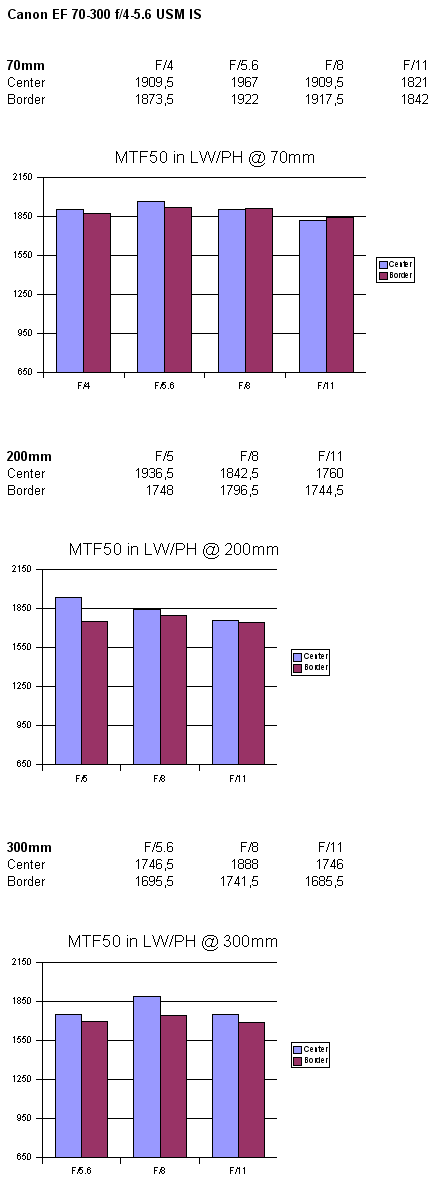
To my eyes it looks like around f/5.6-f/8 is the sweet spot, with f/11 looking worse at all focal lengths. I don't think anyone would argue that at f/16 the results would be worse, and at f/22, worse still.
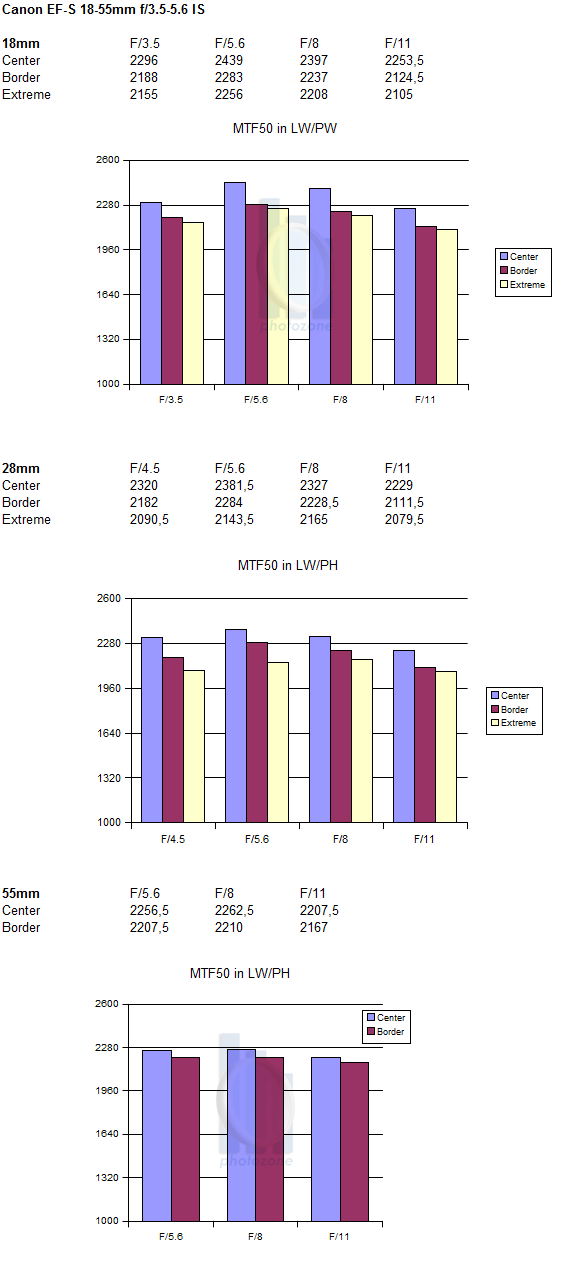
It's pretty much the same story with the 18-55 kit lens. Stopping down to f/11 is worse at all reported focal lengths than shooting wide open.
(Source : http://www.photozone.de/canon-eos/404-canon_1855_3556is_50d?start=1)
If we take a look at the MTF figures for Canon's 70-300 consumer zoom, here are the simplified stats from Photozone.de....
(Source : http://www.photozone.de/canon-eos/200-canon-ef-70-300mm-f4-56-usm-is-test-report--review?start=1)
To my eyes it looks like around f/5.6-f/8 is the sweet spot, with f/11 looking worse at all focal lengths. I don't think anyone would argue that at f/16 the results would be worse, and at f/22, worse still.
It's pretty much the same story with the 18-55 kit lens. Stopping down to f/11 is worse at all reported focal lengths than shooting wide open.
(Source : http://www.photozone.de/canon-eos/404-canon_1855_3556is_50d?start=1)