Large Format photography group - From "zero to hero!"

My first LF camera was a monorail that weighed 4.2 kilos (according to the scales at our local obliging post office), didn't fold anywhere (all you could do was move the standards together), wouldn't fit in any camera bag I ever saw (except perhaps a large Billingham bag with nothing else in it). I used the carrying handle on the top to carry it, and either took my tripod in my other hand or attached to a back pack and used it outdoor for landscapes. I actually never used it indoors - and I used it for some years.
 
Good move Dean, I was holding out for a Shen Hao or the like but in the meantime I'm going to use the extremely capable MPP to learn the ropes. It's not that massively heavy that I can't take it anywhere so for the next 12 months or so I'm going to practice and save until I can get what I really want.
 
I had romantic notions of hiking into the wilderness to capture the perfect image of the British countryside so I probably needed a kick in the realisms as I've got plenty of smaller and lighter cameras for that. Maybe I'll do that with LF one day but for now it's probably best that I focus on sorting my crap out :)
 
I had romantic notions of hiking into the wilderness to capture the perfect image of the British countryside so I probably needed a kick in the realisms as I've got plenty of smaller and lighter cameras for that. Maybe I'll do that with LF one day but for now it's probably best that I focus on sorting my crap out :)

Same boat mate. I really need to get rid of all the bits and bobs that don't get used.. I feel a clearout coming on.
 
I had romantic notions of hiking into the wilderness to capture the perfect image of the British countryside so I probably needed a kick in the realisms as I've got plenty of smaller and lighter cameras for that. Maybe I'll do that with LF one day but for now it's probably best that I focus on sorting my crap out :)

tbh sorting out your crap focus is the first problem with LF and you can do that with any LF camera.

I've been quite happy with my monorail. Would I swap it for a field camera? Probably. but am I desperate to do so? Not really. I keep on with this but camera weight is practically irreverent if you've got a good carrying system, doubly so LF cameras since the camera probably represents less than half the all up weight of the gear. Your a big lad Dean you can manage to drag that Sinar out into the hills.

For me the biggest problem with the monorail is bulk and assembly time. You need to disassemble it to fit in a normal sized bag and even then they take up quite a lot of space and since their in bits you need to spend ten minutes to build it up when you get to the scene.
 
/snip/ 4.2 kilos /snip/ didn't fold anywhere /snip/ wouldn't fit in any camera bag I ever saw /snip/ I used the carrying handle on the top to carry it /snip/ took my tripod in my other hand

Personally, that would drive me stone cold insane in about 5 - 10 seconds. By that description along, I'd be put off a rail camera permanently. I appreciate that rail cameras probably have rigidity on their side, and possibly cost in some cases, but if that's all I'll be sticking with a folder! :D

Anyways... @robhooley167, what're your LF plans (if they still exist)?
 
Personally, that would drive me stone cold insane in about 5 - 10 seconds. By that description along, I'd be put off a rail camera permanently.

That's the trouble with you youngsters - no stamina, no real dedication to the art :D

I swapped to a field camera once I was absolutely certain that I wanted to continue with LF (and could afford one). Here's a photo of me with THE BEAST in 2005.
View attachment 44808
 
Cheers Simon, bought a packet for practice.:D
 
Ok, I'm thinking out loud but as a Large Format newbie I'm hoping to use everyone else's knowledge! I realise that shooting LF is a more methodical process so you're never going to shoot huge numbers of shots per day but unless you have a large supply of DDS, where do you hold your exposed negatives? I've only got a couple of DDS on the way but I'm thinking ahead for the Lakes meet and don't want to be restricted to leaving the exposed negs in my DDS so I can only shoot 4 images in total.

I realise I could buy more DDS and just accept that once shot, the neg will just be left in place or get hold of a spare film box to hold them in but I've been thinking about an alternative (always dangerous!) but can't find anything similar available.

If I had a small acrylic light-tight box with 8 sections and a sealed lid that's just a bit larger than the negs, I reckon it would be relatively practical to remove the exposed 4x5 sheet from the DDS and slot it into the acrylic box inside a changing bag. That way, I can continue to use the DDS by re-loading it with fresh sheets and then send the sealed acrylic box to Peak etc when I'm ready to get them developed. I've just drawn up the basic pieces that I'd need to make the box/dividers and sent them over to the shop I use for laser cutting to get an idea of price but I'd imagine it will be less than £10-15 in acrylic/time once the plans are imported.

https://www.dropbox.com/s/z8bu7uf4awbrvpr/Box Design.pptx?dl=0

Has anyone ever seen anything like this before or have any suggestions as to why it doesn't already exist before I make it? Alternatively, I'm looking at using a Graflex Bag Mag on my 110A to hold 12 sheets internally so there's no need to swap DDS. This adds quite a bit of weight/depth though so I'm not 100% sure yet.

Cheers
Steve

 
Ok, I'm thinking out loud but as a Large Format newbie I'm hoping to use everyone else's knowledge! I realise that shooting LF is a more methodical process so you're never going to shoot huge numbers of shots per day but unless you have a large supply of DDS, where do you hold your exposed negatives? I've only got a couple of DDS on the way but I'm thinking ahead for the Lakes meet and don't want to be restricted to leaving the exposed negs in my DDS so I can only shoot 4 images in total.

I realise I could buy more DDS and just accept that once shot, the neg will just be left in place or get hold of a spare film box to hold them in but I've been thinking about an alternative (always dangerous!) but can't find anything similar available.

If I had a small acrylic light-tight box with 8 sections and a sealed lid that's just a bit larger than the negs, I reckon it would be relatively practical to remove the exposed 4x5 sheet from the DDS and slot it into the acrylic box inside a changing bag. That way, I can continue to use the DDS by re-loading it with fresh sheets and then send the sealed acrylic box to Peak etc when I'm ready to get them developed. I've just drawn up the basic pieces that I'd need to make the box/dividers and sent them over to the shop I use for laser cutting to get an idea of price but I'd imagine it will be less than £10-15 in acrylic/time once the plans are imported.

https://www.dropbox.com/s/z8bu7uf4awbrvpr/Box Design.pptx?dl=0

Has anyone ever seen anything like this before or have any suggestions as to why it doesn't already exist before I make it? Alternatively, I'm looking at using a Graflex Bag Mag on my 110A to hold 12 sheets internally so there's no need to swap DDS. This adds quite a bit of weight/depth though so I'm not 100% sure yet.

Cheers
Steve

I leave film in the DDS till I'm ready to process, this usually gets me of my arse to develop the films and limit my backlog. If you want I can bring an empty Ilford box down with me in October they're definitely light tight and much easier to post if you need to.
 
Thanks Steve, I'd apprecaite that. When you send off your sheets to Peak in the box, do they return it with your developed negatives or just send them back in an envelope?
 
I leave film in the DDS till I'm ready to process, this usually gets me of my arse to develop the films and limit my backlog. If you want I can bring an empty Ilford box down with me in October they're definitely light tight and much easier to post if you need to.

Silly question alert!

If I've got a box of, say, 25 sheets of film but I only use 10 sheets when I'm out and about, where do I put the exposed sheets? Do I need another light-tight bag and box for exposed film? I can't always go straight from DDS to developing tank.

Also, @stevelmx5, does your design need to hold the sheets individually? They're not stored like that before exposure and while there's a risk of scratching the emulsion, wouldn't that risk exist when loading the film into DDSs too?
 
I tend to do the same. I have about 6-7 DDS's, so I leave them in there. This is ok for short trips. For longer trips I do as above and remove them into light tight film boxes, one for each film chemistry type. I too then send the boxes (sealed with tape) to peak / who ever.

I personally ask them to return the boxes as well, and they (peak) always oblige.

EDIT @Strappy, invariably the unexposed sheets come in some sort of bag inside the box. It's perfectly acceptable to put the exposed sheets behind this bag inside the box. If the film comes with paper between each unexposed film sheet (as adox CHS used to), it's a good idea to use one of these at the front and back of the exposed pile so as to protect them from possible scuffing on the cardboard. That being said, that's probably just me being paranoid!
 
Last edited:
Also, @stevelmx5, does your design need to hold the sheets individually? They're not stored like that before exposure and while there's a risk of scratching the emulsion, wouldn't that risk exist when loading the film into DDSs too?

Good point Dean. I designed separate slots thinking about keeping them apart but you're right about them just being on top of each other inside the box they come in. Looks like I'm over-complicating matters so will stick with an old film box!

Has anyone used a Graflex Bag Mag before? I like the look of the grafmatics because they're lighter and semi-automated but they also go for a higher price too!
 
It's perfectly acceptable to put the exposed sheets behind this bag inside the box.

Hear that? That's my paranoia exploding with a little puff of white smoke :runaway:

I'm sure it's much more straightforward than my immediate thoughts made it, I'll have to give it a go and see how I get on :)

If the film comes with paper between each unexposed film sheet (as adox CHS used to) ...

Interesting. Of course, you could also cut a few bits of paper to size and use them when putting away the film, though it might lead to too many sheets in the bag at once and horrible confusion and light leaks and it's all gone horribly wrong ... :facepalm:

Seems as though LF is one of those things were it'd be handy to have a few boxes or bags to one side in advance, otherwise you're looking at a possible chicken and egg thing where you can't shoot film because you've nowhere to put the exposed sheets and you can't make somewhere to put the exposed sheets without shooting film to get an empty box. Or maybe I'm over-thinking the whole thing.
 
At the end of the day, the film (fuji especially), comes loose, with no buffer paper between each sheet inside a plastic bag (essentially). The film is therefore free to move over the other sheets and not scratch. I trust fuji on this. The cardboard box however is not so smooth and so only a single sheet at the back is really all that's necessary to protect the rear most exposed sheet.

It's what ever system that suits you. I prefer to have spare, empty film boxes for the exposed sheets and a piece of paper top and bottom. Film, at least when dry, is quite hardy. You can see for yourself... If you ever accidentally knacker a sheet, take it out in daylight and have a gander at it. Try and scratch it. You'll find that it's quite tough stuff :D

...Did that myself once, with a sheet of provia. Nothing quite like holding a £5 sheet of uselessness.
 
Last edited:
I unload darklsides and put the film into a box that used to hold unexposed film (I can't say "empty box" because it would usually have some exposed film in :D). I got round the "chicken and egg" problem by putting my first sheets into a developing tank until I had an empty box. I use a Combiplan tank which is rectangular, and without the film holder makes a lighttight box.

Edit to add - I used to use a regular changing bag but find that a changing tent is much easier to use.
 
Last edited:
Hear that? That's my paranoia exploding with a little puff of white smoke :runaway:

I'm sure it's much more straightforward than my immediate thoughts made it, I'll have to give it a go and see how I get on :)


Interesting. Of course, you could also cut a few bits of paper to size and use them when putting away the film, though it might lead to too many sheets in the bag at once and horrible confusion and light leaks and it's all gone horribly wrong ... :facepalm:

Seems as though LF is one of those things were it'd be handy to have a few boxes or bags to one side in advance, otherwise you're looking at a possible chicken and egg thing where you can't shoot film because you've nowhere to put the exposed sheets and you can't make somewhere to put the exposed sheets without shooting film to get an empty box. Or maybe I'm over-thinking the whole thing.

The paper tends to be tissue and very thin but the boxes of film I've had that used a separating sheet tended to be much thicker than an ilford box.

I think you just need to keep on top of things for the first box, though I don't know how you'd manage if you had to send out to get your colour done. I'd guess some of the labs might have a light tight envelop they could send you. Dunno. I've seen suggestions of buying 12 dds at the start so you can load a whole box at the start thus freeing it up, but I think thats a little excessive. Having said that I'm not sure how many DDS I've now got but I tend to alternate between a couple of emulsions for different things.
 
I unload darklsides and put the film into a box that used to hold unexposed film (I can't say "empty box" because it would usually have some exposed film in :D). I got round the "chicken and egg" problem by putting my first sheets into a developing tank until I had an empty box. I use a Combiplan tank which is rectangular, and without the film holder makes a lighttight box.

Edit to add - I used to use a regular changing bag but find that a changing tent is much easier to use.

+1 on the tent, I managed with a large bag but the tent is sooo much easier.
 
I've just drawn up the basic pieces that I'd need to make the box/dividers and sent them over to the shop I use for laser cutting to get an idea of price but I'd imagine it will be less than £10-15 in acrylic/time once the plans are imported.

https://www.dropbox.com/s/z8bu7uf4awbrvpr/Box Design.pptx?dl=0

That looked pretty practical in some ways (though perhaps overkill as hinted by others)... some questions (nota bene... from someone who has never taken a LF image!):

a) Why blue plastic and not black? Maximum light-tightness surely a virtue?
b) What are the open/close arrangements? Need a latch or similar that's firm enough not to accidentally open, but easy to open in a bag.
c) How does the box size/weight fit with Royal Mail small packet dimensions?
d) Would tactile indicators of orientation, and also perhaps which pockets are filled, be useful? Easy to forget over the time to fill it...
 
That looked pretty practical in some ways (though perhaps overkill as hinted by others)... some questions (nota bene... from someone who has never taken a LF image!):

a) Why blue plastic and not black? Maximum light-tightness surely a virtue?
b) What are the open/close arrangements? Need a latch or similar that's firm enough not to accidentally open, but easy to open in a bag.
c) How does the box size/weight fit with Royal Mail small packet dimensions?
d) Would tactile indicators of orientation, and also perhaps which pockets are filled, be useful? Easy to forget over the time to fill it...

a) That's just the colour code I've drawn on the image. I was planning on using Matt black acrylic.

b) I was planning a tight friction fit lid with a 30mm overhang to ensure it was light tight.

c) I hadn't checked Royal Mail dimensions, good point!

d) I did wonder about an indicator or even a small cover that slid over the slot once there's a sheet in it but was trying to keep it simple.

To be fair, after seeing the responses the simplest method will be to use an empty film box which Steve has kindly offered to bring to the Lakes so I'm not going to build this now :0)
 
I guess if I removed the dividers as suggested by Dean and basically just made a small light tight box that would remove any requirement for indicators etc. I'll check the Royal Mail packet prices later to see if it would be worthwhile making one to defeat the chicken and egg situation of needing an empty box but not having shot any film!
 
Actually, can anyone who posts their exposed films in an original 4x5 sheet film box give me a rough idea of how much that costs? In theory I could build a holder that's small enough to fit into Large Letter pricing if there were no dividers.

Cheers
Steve
 
If its only for a few sheets I don't see why it couldn't fit large letter.
 
Large letter sizes are;
  • Max length: 35.3cm
  • Max width: 25cm
  • Max thickness: 2.5cm
  • Max weight: 750g
Prices for up to 100g are;

Royal Mail1st ClassMore details 1 daydelivery Up to £20for loss or damage Not Tracked 95p
Royal Mail2nd ClassMore details 3 daysdelivery aim Up to £20for loss or damage Not Tracked 74p
Royal MailSigned For® 1st ClassMore details 1 daydelivery Up to £50for loss or damage Proof of Delivery £2.05
Royal MailSigned For® 2nd ClassMore details 3 daysdelivery aim Up to £50for loss or damage Proof of Delivery £1.84
 
If you had just one divider it would be useful as you could put b&w in one side and colour in t'other.
 
To fit within large letter I'm looking at a maximum outside depth of 25mm. If I use 5mm acrylic (so it can be machined down to 2mm at the open end for the cap to slide over) that leaves 15mm of space for sheets. I reckon that might be too thin for a divider?

I guess there's also the risk of mixing up the sheets when it come to developing and you end up with some nice cross-processed results!

If this is only as thick as a DDS it might best to keep two separate holders for colour/b&w
 
Makes sense. (y)
 
If you use a divider, How will you know in the changing bag/tent which is C41/E6 or traditional ?
 
Yeah, definitely asking for trouble combining emulsions in one holder :0)

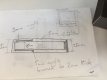
All the best designs are drawn onto a napkin..

ImageUploadedByTalk Photography Forums1440688871.933858.jpg

I reckon a holder with an external thickness of 25mm should still comfortably hold 10 sheets within the 15mm internal depth.

https://www.dropbox.com/s/9ypr9531g3gybc6/Box Design - Updated.pptx?dl=0

Looking at the comment above, it might make sense to use this stronger acrylic box for postage too if Peak etc will return it with the finished sheets. The box then becomes the mailer with a sealed lid and can be re-used in the field.
 
Last edited:
Back
Top