Large Format photography group - From "zero to hero!"

Never found any x-ray film in the UK. Looks like a cheap way to experiment.

I've yet to shoot any colour in sheet film, waiting until I can nail the focus more often and for the right subject I want to spend a fiver on. TBH I generally prefer b&w any way.
 
I think I prefer B&W as well, especially when cost is factored in. I'm really enjoying shooting Fomapan 100 with Rodinal at the moment, and it literally works out about 1/8 the cost of shooting colour. I really want to buy some Ektar but I can't seem to press the buy button when it's nearly fifty notes for a box of ten sheets!
 
Anyone know how accurate the shutter speeds are on large format lenses? I watched a video by Fred Newman who said don't trust the 60th, 125th and faster etc and said to use the 30th of a second when in doubt.
 
I think I prefer B&W as well, especially when cost is factored in. I'm really enjoying shooting Fomapan 100 with Rodinal at the moment, and it literally works out about 1/8 the cost of shooting colour. I really want to buy some Ektar but I can't seem to press the buy button when it's nearly fifty notes for a box of ten sheets!

Last night i shot 6 velvia 5x4's for this months POTY. They all came out massively underexposed so that was £30 straight in the bin!
 
Anyone know how accurate the shutter speeds are on large format lenses? I watched a video by Fred Newman who said don't trust the 60th, 125th and faster etc and said to use the 30th of a second when in doubt.

Ultimately, this will differ on a per shutter basis, so the advice by Fred is a broad generalisation. I'm sure he's probably not wrong on average. I can imagine it'd be easy enough to test though with a microphone and some simple sound editing software as the audio sampling rate would easily surpass the mechanical action at 1/400th. A more robust way would be to use light, but this sort of kit is hardly at everyones finger tips! Personally I shoot landscapes where smaller apertures are much more commonplace, and hence I find myself using the longer shutter speeds anyway.
 
Just seen this and thought it might be useful for LF shooters

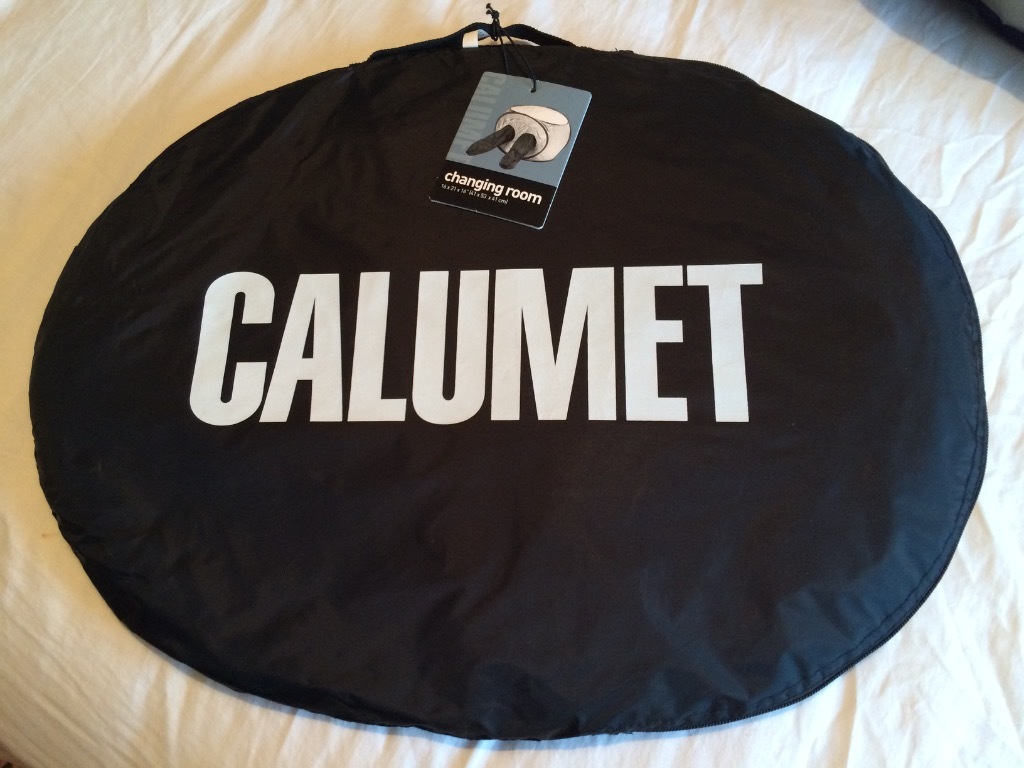
http://www.gumtree.com/p/video-camera-accessories/calumet-changing-tent/1104948158

Brand new Calumet Changing Tent for £10 if anyone is in or around Somerset.

$_86.JPG

Cheers for this Steve, I was round that side of Somerset over the weekend so I went and picked it up :) literally is brand new and I don't think it had ever even been opened up properly!
 
No problem Carl, glad someone here got some use out of it. It looked like a bargain when I saw it.
 
Received my first delivery, a Carl Zeiss Tessar 250mm f/4.5 lens. Looking forward to using this for portraits, I counted 18 aperture blades and in the pictures below they go from wide open to f/8 and f/16.


Carl Zeiss Tessar 250mm f/4.5
by Dean Varney, on Flickr

Just need to know how to fit a shutter and mount it now ... it's about 70mm across at the back so I'm not sure what size shutter will fit. I could use a Sinar shutter board but they're rather expensive with a 1/60s fastest speed so I'd like to explore the options. Any thoughts welcome :)
 
Received my first delivery, a Carl Zeiss Tessar 250mm f/4.5 lens. Looking forward to using this for portraits, I counted 18 aperture blades and in the pictures below they go from wide open to f/8 and f/16.


Carl Zeiss Tessar 250mm f/4.5
by Dean Varney, on Flickr

Just need to know how to fit a shutter and mount it now ... it's about 70mm across at the back so I'm not sure what size shutter will fit. I could use a Sinar shutter board but they're rather expensive with a 1/60s fastest speed so I'd like to explore the options. Any thoughts welcome :)

We need thé more experienced guys to help with advice but i would have thought you could mount it into a copal (3 ??) shutter then onto a suitable lens board
 
We need thé more experienced guys to help with advice but i would have thought you could mount it into a copal (3 ??) shutter then onto a suitable lens board

That's what I'm hoping to do but there are three rings that look as though a lens spanner could be used on the and there's a thread cut on the inside of one of the rings at the back; I'm not sure whether that's to mount a shutter or to unscrew the rear of the lens. My concern is that it's quite a large lens so with a shutter on the back of it and then mounted through a board it's going to be awfully front-heavy.

I haven't found a resource yet that gives a clear explanation, though it seems to be a well-regarded lens so I'm taking from those pages that it can be done at least!
 
Got any pictures from the side? The lenses I have are in two parts, that screw into opposite sides of the shutter.
 
Got any pictures from the side? The lenses I have are in two parts, that screw into opposite sides of the shutter.

That would have helped, wouldn't it. :rolleyes:

I've discovered that the front element cluster unscrews, presumably for cleaning. Or to use the front elements to start a fire when you're lost in the wilderness because your large format camera is too heavy to carry back to civilisation. Maybe.


Tessar250mm f/4.5 Sides
by Dean Varney, on Flickr

Edit to add, the outer thread on the rear is ~70mm diameter, the thread on the inner ring on the rear is ~65mm, rough measurements because my proper measuring sticks are in the garage.
 
Last edited:
That would have helped, wouldn't it. :rolleyes:

I've discovered that the front element cluster unscrews, presumably for cleaning. Or to use the front elements to start a fire when you're lost in the wilderness because your large format camera is too heavy to carry back to civilisation. Maybe.


Tessar250mm f/4.5 Sides
by Dean Varney, on Flickr

Edit to add, the outer thread on the rear is ~70mm diameter, the thread on the inner ring on the rear is ~65mm, rough measurements because my proper measuring sticks are in the garage.

Right, I think this lens needs a flange. It's screwed into the flange with those big threads at the back and the mounting flange is directly screwed to the lens board. Not sure where you'd get one, I think this is considered a barrel lens so that might help your research.
 
Is it a retaining ring you are looking for? Might be best to ask on the large format forum, there is loads of experience there and chances are with this lens.
 
Right, I think this lens needs a flange. It's screwed into the flange with those big threads at the back and the mounting flange is directly screwed to the lens board. Not sure where you'd get one, I think this is considered a barrel lens so that might help your research.

Pffft, flange :LOL:

That's confirmed by what I've found. According to this rather informative PDF, the N70 code on the aperture ring means it's a barrel lens with a 70mm diameter mount. You can fit a standard shutter but the lens will require machining to fit it. Might as well look for a separate shutter board after all, at least that means I'll be able to use any other barrel lenses.

Thanks, chaps. :)
 
Anyone know how accurate the shutter speeds are on large format lenses? I watched a video by Fred Newman who said don't trust the 60th, 125th and faster etc and said to use the 30th of a second when in doubt.


In the real world I believe I have used 1/60th of a second once. The taking aperture for most LF lenses for 5x4 is F22 some of the shorter focal length wide angles it is F16 but then you are usually contending with centre filters it is rare I use anything over 1/15th in practice and seconds is not uncommon.

I know people like to experiment but if we are taking landscapes where mostly people want things sharp and you may be using movements going lower than F22 will generally not g9ive you the rated image circle nor the best sharpness.

Pffft, flange :LOL:

That's confirmed by what I've found. According to this rather informative PDF, the N70 code on the aperture ring means it's a barrel lens with a 70mm diameter mount. You can fit a standard shutter but the lens will require machining to fit it. Might as well look for a separate shutter board after all, at least that means I'll be able to use any other barrel lenses.

Thanks, chaps. :)


I just have one lens in barrel

16742743430_cf4671e099_z.jpg


The flange just needs to be fixed to a suitably machined flat board so the lens is effectively front mounted.

The Sinar Copal shutters are a sound investment as it opens up the possibility of using db mounted lenses which sell for peanuts.

The first Sinar I brought came with one and its been in regular use since, couple of years ago I got three from Teamwork for £50 scruffy and as spares two worked fine.

It is vitally important that the shutter cable is in good condition it must have no kinks on the plunger or that will cause issues.

The top speed of only 1/60th is a non issue as pretty much you will never need it and the slower speeds out to 8 seconds are a huge advantage, if you really feel the need both the Digital shutter and the Epolux go to 1/500th of a second although these only allow flash sync at up to 1/30th a second.
 
In the real world I believe I have used 1/60th of a second once. The taking aperture for most LF lenses for 5x4 is F22 some of the shorter focal length wide angles it is F16 but then you are usually contending with centre filters it is rare I use anything over 1/15th in practice and seconds is not uncommon.

As mentioned above, I want to use this lens for portraits so I'm thinking it'll be at f/5.6 or f/8 to make the most of the round aperture in natural light. My concern was using a film such as Portra would require an ND filter to bring the speed down.
 
As mentioned above, I want to use this lens for portraits so I'm thinking it'll be at f/5.6 or f/8 to make the most of the round aperture in natural light. My concern was using a film such as Portra would require an ND filter to bring the speed down.


Over exposing porta wouldn't be a problem. Plus you can use movements to put the focus where you like so you could still stop down a bit.
 
Do copal shutters like inbetween shutter settings like 1/45th etc? I'm now getting the fear that I've underexposed my shots. Need to see what I get back from the lab.
 
In a word no.

"When changing the shutter speed, set the shutter speed accurately on the click stop. If the shutter speed is set in between the click stops, the shutter mechanism sometimes will not function properly."


You can find the manual for the Copal 0 and 1 shutters here note the advice about changing speeds when the shutter is cocked too.

There are a few shutters that effectively have in-between shutter speeds I believe Betax do but none of the more modern leaf shutters do.
 
As mentioned above, I want to use this lens for portraits so I'm thinking it'll be at f/5.6 or f/8 to make the most of the round aperture in natural light. My concern was using a film such as Portra would require an ND filter to bring the speed down.


Even assuming you wanted to pay the small fortune to have this mounted in shutter then the fastest speed of a Copal three shutter is 1/125th of a second anyway I would give it a go as such and see what shutter speed you need when actually trying to use the lens.
 
Sent my film off to Peak Imaging, fingers crossed. I'm liking the hunting down gear and all the weird and wonderful lenses and different types of film available. Photographic equipment companies not having pictures of what they are selling is a tad annoying, especially when you are interested.

Any one have any experience with a Toyo 810?
 
Got the film back from Peak today, 7 out of the 8 came out, one misfired with just a blank piece of film but I can use that to practice loading now. Thinking of maybe sending the better one to be drum scanned, is that something you guys do or just invest in an Epson?
 
Most buy an epson and then might send off the winners for a drum scan.

Or if you're mad, buy your own drum scanner :banana:
 
7 out of 8 is certainly good going.

I brought an Epson V750 in 2008 a few mouths later I picked up a drum scanner. Peoples uses / aspirations of LF vary for me it is important to be able t print large and to be able to scan transparencies well for me the Epsons do not offer the quality that I want.

You could try Tim Parkins Cheap drum scanning other wise you are looking at something in the region of £35- £50 a throw probably.

It is perfectly feasible to buy a secondhand drum scanner for less than a new Epson V750 however you may end up with something the size of an upright Piano and dealing with the unspeakable horrors of Mac OS9 .

8000dpi and A3 drum area could have been yours for £0.99

Although for a varaty of reasons I personally would not recommend one of those.
 
I'd outsource any drum scanning to someone like Tim Parkin. The thought of buying, housing and operating a drum scanner with ancient OS and dodgy drivers and keeping it dust free would send me to a mental asylum. I was looking at Imacon scanners, there is one for sale on here but it looks a bit expensive for me as I'm thinking of maybe making a jump to 10x8.
 
Last edited:
Some original Fuji Velvia 50 arrived today, took it out for a spin but couldn't find anything I wanted to photograph.
 
From memory and an approximate calculation, that's about the resolution of Tech Pan...
 
My issue is 8000 dpi is about 6 times the diffraction limit for green light and that's assume coherent green light, let alone incoherent. I highly doubt a commercial scanner would have the optical system to resolve this sort of detail, nor would a commercial camera lens focus to 3 micron spot sizes to match the film resolution.
 
I must have made a slip in my calculation. Given 8000 dpi, I divided by 25.4 to arrive at 314 dpmm, which I equated with lines per millimeter. As far as I was aware, this was well with the diffraction limited resolution of a lens.
 
My issue is 8000 dpi is about 6 times the diffraction limit for green light and that's assume coherent green light, let alone incoherent. I highly doubt a commercial scanner would have the optical system to resolve this sort of detail, nor would a commercial camera lens focus to 3 micron spot sizes to match the film resolution.

It kind of looks that you haven't looked into Drum Scanners.

Specs for the Fuji / Crossfield as mentioned above (the 315LP/mm translates to about 800dpi)

If these machines met that spec might be another matter its rare to see actual test results from USAF targets however there are published ones from some 8000dpi Drum Scanners that do at least reach a measured 7000dpi plus.

From Memory Howtelk Hiresolve / Azrek Premier, Optronics Colorgetter Pro III and later birds of Prey models, Dianippon Screen DT-S 1045AI are all also 8000dpi capable models. Then there is the Scanmate 11000 which no surprises claims 11000dpi as did a Screen model the SG 8060P which had an A2 size drum, IGC's current top model the 380 has a claimed resolution of 12000dpi no doubt there are models in the range that did 8000dpi.

All these machines used collimated light sources usually microscope objectives and apertures around the one micron mark for the higher resolution machines.

While these were commercial machines you needed deep pockets to buy them the Dianippion Screen Dt-S1045AI I have cost the original purchaser £56 000 + VAT in 1997.

It's not really worth scanning most film beyond 4000dpi with the exception of Tech Pan, but yes there were comercailly available machines that did get some where near their claimed specs at least.

Somewhere a year or two ago I did post a couple of 35mm scans done at 600dpi (my screen gets cranky if asked for more than 6000dpi)


With regard to Laudrup I would say that if you do go 10x8 you might find the Epson V750 and the ilk disappointing other than it clearly getting no where close to its claimed spec with 10x8 you have to use the film area guide ie basically tape your film to the glass this uses the lower resolution lens only and also means that you will get Newton Rings in skies unless you cough up for a large and not inexpensive piece of anti newton glass - although some have claimed good results from just cheap frosted glass.

I'm no a fan of Velvia 50 myself it does have some severe limitations although it can look ok in the right circumstances

8087592494_0810c1bf41_c.jpg


If you want to hurt your browser with the full scale you will see what I mean about the Newton Rings
 
It kind of looks that you haven't looked into Drum Scanners.

Specs for the Fuji / Crossfield as mentioned above (the 315LP/mm translates to about 800dpi)

If these machines met that spec might be another matter its rare to see actual test results from USAF targets however there are published ones from some 8000dpi Drum Scanners that do at least reach a measured 7000dpi plus.

From Memory Howtelk Hiresolve / Azrek Premier, Optronics Colorgetter Pro III and later birds of Prey models, Dianippon Screen DT-S 1045AI are all also 8000dpi capable models. Then there is the Scanmate 11000 which no surprises claims 11000dpi as did a Screen model the SG 8060P which had an A2 size drum, IGC's current top model the 380 has a claimed resolution of 12000dpi no doubt there are models in the range that did 8000dpi.

All these machines used collimated light sources usually microscope objectives and apertures around the one micron mark for the higher resolution machines.

While these were commercial machines you needed deep pockets to buy them the Dianippion Screen Dt-S1045AI I have cost the original purchaser £56 000 + VAT in 1997.

It's not really worth scanning most film beyond 4000dpi with the exception of Tech Pan, but yes there were comercailly available machines that did get some where near their claimed specs at least.

Somewhere a year or two ago I did post a couple of 35mm scans done at 600dpi (my screen gets cranky if asked for more than 6000dpi)

The thing is, among all of that, there's not a single bit of evidence that they can actually achieve this resolution, only stated specs and some mentioned evidence of them not actually getting to 8000 dpi.

In what I do, where I actually deal with real optical systems from time to time that are based exactly in this area of physics, reaching a diffraction limited spot is actually very difficult indeed, and this is using coherent light. Coherent light of very low M^2 values and good spatial coherence and well within the coherence length struggle to couple into single mode fibres for that wavelength (in the visible rather than IR) even using microscope objectives. Even with the above, the *measured* spot sizes are at best (approx)2 microns! At best, getting 80% into a fibre of core diameter of 6 microns is considered excellent.

So now take away the spatial coherence, add in a broad spectrum rather than single wavelength, add in moving parts and a host of other things all of which contribute to an increased minimum achievable resolution, and I simply fail to see how these numbers are possible. I appreciate coupling into fibres is not exactly the same as imaging, but still.

The best resolution an optical microscope can achieve is given by the Rayleigh spatial resolution of ((0.61.lambda)/NA), where NA is the numerical aperture. So about half the optical wavelength. I simply don't believe without evidence (as I am happy to stand corrected) that a scanner can even approach this as, even a perfectly aligned optical wide field microscope will not approach this limit.
 
Last edited:
I don't know anything about that technical jargon and 8000dpi claims but Tim Parkin charges £15 for a 2000dpi and 16bit which looks reasonable when I compare it to places like Metro.
 
Those are wonderful

I can't be the only one who subconsciously believes that Olden Days really were all in black and white, right?
 
I'm gunna stock up on spuds!:D:D
 
Well, had my first proper cock up today! Was taking some photos in the garden on the arca and thought "hmm what's this large flat object in my hoody pocket?" That's right, a DDS dark slide. I go back into the conservatory and there's a DDS sat on the table with a visible sheet of Fomapan smiling at me. Glad it's only fiddy pence per sheet!
 
Back
Top