Large Format photography group - From "zero to hero!"

A motor on the tilt would be a sanity saver for me. just being able to turn one knob instead of fluffing about with 2 stands makes a whole lot of sense.

*edit* thinking about it, if you could get a stepper with some sort of gearing so you could make large adjustments and then stick it into low gear for micro adjustments, that might be useful.
 
Last edited:
Cheers Andy, I appreciate the feedback and the fact I'm maybe not completely mad!

Oh no, you are completely mad... just not about this :D
 
My three main concerns would be, in no particular order:

Having motors means adding batteries which means adding weight. While the camera might be light enough as it is, on account of the modern materials, you've got to add batteries, steppers and the PCB for controlling the steppers. I, personally, would prefer the camera to be as light as possible, if indeed that's the aim of making a new camera. It further means you need to either carry a charger for the batteries if they are rechargeable, or packs of spares etc. Kinda takes the edge off the nice light system, no? This is also exaggerated in cold weather when battery capacity falls.

Secondly, would the system not need to be weather proof?

And thirdly, what if the system breaks? Are you able to manually over ride it? If not, you're kinda stuck, no? This is especially true if you do have a gearing system for angular precision which you then can no longer turn/manipulate by hand if the electronics/motor fails.

I personally would like to see a middle ground between the current methods used and your proposed method, and that is a manual gearing system for angular adjustments. By this, I mean a small but robust set of gears, operated by hand, with a clear zero position. This way, you avoid the cumbersom "undo knob, move, tighten to set" method, and gain a possibly more precise, repeatable, quantifiable (as you can calibrate for angle of tilt (etc) as a function of user operated knob turns, rather suavely with a micrometer style gauge potentially) and robust/reliable system which avoids the weight and reliability of batteries, motors and electronics. Being purely mechanical (I'd say a modern, well made, fixed ratio gear box is probably just as reliable as the current camera knob tightening system), the system still retains its reliability when out in the field.

.............That being said, this idea might be a godsend for those who only shoot indoors (studio, still life, etc)!

 
Thank for the thoughts Andy, Woodsy and Ashley. I've been thinking about this idea on and off for a while, especially about whether it's something that would actually be useful or if it's just a gimmick. To answer your questions;

Ashley - The stepper motors are geared very long by design so a full 360 degree rotation is actually around 2400 'clicks' internally. As a result, the software coding maps a single 'click' on the variable encoder (adjustment knob) to a set number or 'clicks' on the stepper motor. The example codes I've looked at show 1:50 clicks being a good average figure to get a balance on smoothness of motion and speed. For the Tilt/Swing, there wouldn't need to be any requirement to move further than say 45-80ish degrees each way depending on the image circle of the lens which means the stepper motor doesn't have to go that far for each end of the range. I wouldn't think there'd be a requirement for really fast movement on either plane but I'd need to test it out in reality. For Rise/Fall and Focusing I'm thinking more about using a rack and pinion system connected to a standard geared motor with more simplified forwards/backwards control. The gearing could be pretty long too to make the motion a little faster but I'd also want a manual override for focusing like the printed camera I linked to earlier on to get it roughly in the area before adjusting afterwards with the motor.

Woodsy - I fully agree about the weight penalty of batteries/motors/controllers etc so was thinking about housing the batteries/controller boards/controls in a separate remote unit that can be plugged in to the camera when in use. My long term goal would be replace this with an app and a bluetooth controller on board so the camera could be controlled from a smartphone/tablet but that's a way off :0) The steppers and controller boards I'm looking at are 5v and controlled by an Arduino board (like the Trinket board I've embedded in my Yashica 44) so the weight of them is minimal. By making the unit 5v, it can easily be recharged and also powered direct from an external USB Powerbank which are again very light. I could embed a solar charging function if required but would need to weigh up the benefits versus cost/weight.

I'd agree that the unit should be weatherproofed enough to handle light rain etc so all of the motors/controllers would be embedded within the frame of the body and the external controller unit could be kept in a pocket etc. If the weather gets too bad I reckon there will be more concern for the lens/bellows/ground glass/holders than the camera :0)

Manual override is something I'd need to look at. When the power is removed from the stepper motors, they will not resist manual movement but they will also not hold their position so I'd need some form of additional locking system to retain them in place. Part of me is thinking that I should focus entirely on the motorised aspect of the camera rather than trying to provide both manual and automated movement. It wouldn't be the first analogue camera that relies entirely on battery power :0)

The idea of a better mechanical system for movements is also a good call though. Potentially, could a unit be built to attach to a current body to replace the "undo knob, move, tighten" function to offer more granular movement? I realise that all field cameras are not the same so there would be no single solution but maybe a clamp type unit could be fitted in place of the tightening knob which then grips the sides of the lens board piece (for example) and has enough friction so it can just be moved and left in place. Hmm, I'll have a think about that :0)
 
Last edited:
Need a couple of lens boards for the Nagaoka and being a cheapskate I figured I'd try and make them out of some cheap plywood :D

Got the outside shape of one more or less done so far, but being useless with woodworking tools it's taken me ages to get this far haha. Only got to cut the central hole now though and I can stick a lens on. Gotta get two finished before the Peaks meet!

IMG_20160914_57140.jpg
 
For next time, I'd just laminate two bits together. Cut the larger and the smaller separately and then glue them up with good quality wood they'll be almost as strong as a single piece and much less work.
 
Yeah my original thought was to do that, and I wish I had now! The only reason that I went for the one piece method was because the thickness of the larger bit needs to be thicker at the edges than around the hole (if that makes sense!). The larger section is 6mm thick, but the threaded section of my lens will only acomodate thicknesses up to 5mm, so I'd have to route a mm or two out of the centre anyway.

This is what I'm aiming to get at the end... the key word being "aiming" because I know full well it won't be anything like this once I've finished with it :lol:

Nagaoka Board.jpg
 
That's a neat job considering it's a single piece of plywood. If have expected the layers to delaminate more so that's a good sign!
 
That's a neat job considering it's a single piece of plywood. If have expected the layers to delaminate more so that's a good sign!

That was a concern that I had as well, but a bit of Googling told me that it should be ok providing you take multiple light cuts. Eventually I'd like to get some mahogany to make a proper board, but I can't find many places that sell small pieces, and the plywood was only £2.99.

Also, my sources tell me that it's your birthday today... Happy Birthday! :beer:

this-is-dog-happy-birthday-meme.jpg
 
Last edited:
That was a concern that I had as well, but a bit of Googling told me that it should be ok providing you take multiple light cuts. Eventually I'd like to get some mahogany to make a proper board, but I can't find many places that sell small pieces, and the plywood was only £2.99.

Also, my sources tell me that it's your birthday today... Happy Birthday! :beer:

this-is-dog-happy-birthday-meme.jpg

Thanks Carl, your source is correct. I am officially 21 (ish) today!
 
21 again Steve? Happy Birthday, have a great day. There'll be a celebratory :beer: for you in the Peaks.
 
Happy birthday Steve.... someone else has a birthday today as well, who could it be? :naughty:
 
Happy birthday Steve.... someone else has a birthday today as well, who could it be? :naughty:
is it Rosemary, the telephone operator?
 
Nooooo.... Guess again. And it isn't Henry the mild-mannered janitor either. :D
 
Last edited:
:bat::banghead:
 
Interesting that someone called Jenna Marbles, of whom I know nothing except her name, has greater prominence than a prince of the realm. What a strange world we live in. And who the devil is Chelsea Kane?
 
I've been playing round with a few different ways of combining all movements and 'think' this would work :0)

IMG_1474027903.459997.jpg

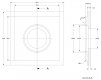
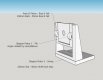
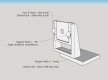
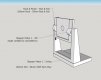
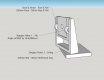
The main U-shaped uprights pivot on the centrally mounted stepper motor in the bed to give as much swing as the lens/bellows will allow. There is then a locking mechanism attaching the motor to the uprights unit which can be loosened (still need to design that but may be a standard threaded knob) and the whole unit can shift up to 80mm to the left or right;

80mm Left Shift;

IMG_1474028036.643798.jpg

80mm Right Shift;

IMG_1474028044.097612.jpg

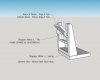
Next up is Rise and Fall which is controlled using an embedded rack in the left side upright. There is then a small motor embedded in the lens board frame with a pinion gear attached which will turn clockwise/counter-clockwise to raise/lower the whole board and frame. There is a slot on the opposite upright and a shallow dovetail on the lens board surround to keep it square to the upright.

IMG_1474028218.838412.jpg

50mm of Rise

IMG_1474028286.169420.jpg
 
Last edited:
50mm of Fall

IMG_1474028333.143166.jpg

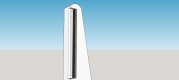
Next up is tilt which is controlled with a stepper motor embedded in the other side of the lens board frame. The rod of the motor is fixed to the lens board so can tilt it as far forwards/backwards as the lens and bellows will allow;

IMG_1474028407.379479.jpg
 
Last edited:
Stepper motor controlled swing;

15 degree Left Swing;

IMG_1474028537.496411.jpg

15 degree Right Swing;

IMG_1474028573.430862.jpg

At the moment, the whole front standard, including the bed, stands around 260mm high. This can be reduced by making the lens board smaller which will in turn shrink the surround and uprights. I've been trying to find sizes for other existing field cameras and the Intrepid appears to be a similar size and offer 43mm of Rise/Fall and 33mm of Shift so I've probably got some margin to shrink mine.
 
Wow, $24.99 for the App plus you will need a wide angle adaptor lens for the Iphone which starts around $80. It's cheaper to just carry your LF camera around and set it up as you need it!
 
If you take an empty slide mount and hold it up in front of you; you can look through it. So what, I hear you say. Actually, I don't because I've currently got the speakers turned off on my computer... Seriously though, the angle of view that you can see depends on how far away you hold it. It seems to me that if you had a small eyepiece (or viewing hole) attached to one end of a rod or ruler, and moved the slide mount along (with engravings to indicate the appropriate focal length you're simulating, it should work. Just a variable viewing mask as used from time immemorial to visualise a part of a scene cut out from its environment.
 
I’ve treated myself to a box of 4x5 Provia 100F for the Peaks meet this weekend, and I’ve been doing a bit of reading about properly exposing slide film. As usual I’ve managed to overthink it all and fog my brain, so I just wanted to make sure that I’ve made sense of it all. Each photo is quite a lot of money to balls up!

Ok, so I rock up one morning to a beautiful scene, and set up my camera. I compose an image on the glass and then set about metering the scene to find the optimum exposure. Say the foreground is metered at 1/4 sec at f/32, and the sky is 1/250 sec. That’s a difference of 6 stops. I put on a 2 stop ND grad to reduce the sky, which is now at 1/60 sec, or 4 stops above the foreground. Am I right in thinking that I set my exposure to be 1/15? This puts the highlights 2 stops above, and the shadows in the foreground 2 stops below.

Usually I use B&W which is much cheaper and harder to screw up, so I don’t have to worry so much :lol:
 
No good asking me :thinking: I have never managed to correctly expose a slide shot... I mean literally never. :D
 
I've only managed it once, but that was luck I think :lol: I took some slide 6x7's in January and they were overexposed and pretty much in the highlights... I'm keen to avoid that again! haha
 
That sounds like the way I do it Carl except I take my phone out of my pocket, open the light meter app and point it generally at the scene. I then use the settings given to expose the slide. Some people call me slapdash but I'm not sure where they get that from ;0)
 
As you say Carl, b&w ( or colour) negative film is much harder to screw up than slide.

It's pretty much known by everyone ( in f&c anyway) to expose for the shadows with (negative) film and expose for the highlights if shooting digital.

I don't shoot much slide film, that which I have has either been metered by the cameras built in meters ( Nikon FE2 / F3) or if I've used a handheld meter, then I've leaned more to ensuring the highlights are correcty exposed and thus metered as if shooting digital......The results have generally been ok.

As yet, I haven't attempted slide film in LF although I have some in the fridge for when I feel confident enough to do so.

No doubt someone will offer you much more helpful info ....possibly @StephenM or @Woodsy
 
Some people call me slapdash but I'm not sure where they get that from ;0)

All hail the slapdash approach to photography, it works for me :thumbs:
 
Back
Top