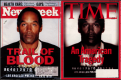
It's official... digital is crap...

....This not about new technology. I'm not sure how he exploited new technology with a 35mm camera to be honest. He has integrity. News images still require that...

He has integrity, but even he's admitted having staged an image in the past whilst working as a photo journalist.
 
Last edited:
But Reuters caught some flak here for clamping down on manipulations... https://www.talkphotography.co.uk/threads/reuters-issues-a-worldwide-ban-on-raw-photos.608326/

Yes, I know. But Reuters are not publishers, and though they're big in news photo journalism, they're a drop in the ocean of media as a whole.

And their decision is commercially led - like all business decisions. They're hoping they'll sell more pictures as a result of this policy, or at a higher rate. If that happens, other news providers will surely follow; if it doesn't, it will be quietly dropped.
 
The 'new' opportunity that McCullin exploited was a combination of the camera, the media, and altered attitudes of his generation.

The camera was not new in the 60s Richard. You're stretching a point there I think :) The media was not new either.. although it was influential because the idea of a news magazine was relatively new. Attitudes of a generation? Absolutely I agree with you here, but that's got b****r all to do with technology.


McCullin used a Nikon F, it was new and unique in the 60s,

Dude, it was a completely manual, mechanical 35mm camera. It was not unique at all. Practika, Exacta and Zeiss all had SLRs out in the 30s. Even pentaprism SLRs had been around since the early 40s. I appreciate that the Nikon F was one of the first "system" cameras with a horde of lenses and accessories for it, but it was hardly the game changer you claim it to be. The work that McCullin did in East Germany at the start of his career wasn't shot on a Nikon F, and neither was the work he shot for the Observer that got his career started. It was all equally as good as his later work, even if the subject matter wasn't as hard hitting.

The Sunday Times Magazine was new then too, and spawned a raft of quality picture-led magazines that fed the new post-war baby-boomers' appetite for McCullin's graphic images, the like of which had never been seen before. The Vietnam war was new, affordable air travel was new - McCullin's timing was perfect.

While the advent of such publications offered opportunities that traditional newspapers did not, this is not really a reflection of the equipment available to McCullin. You could say the same about new publishing technology today offering opportunities, and you'd be correct, but that doesn't mean the ethical content of the imagery needs to change.


Of course digital images do not have to be manipulated (I didn't say that!) and equally it would be a good thing of some of them weren't, but I just don't think that's ever going to happen in any significant way. It's too late.

Not in amateur circles, no, but quite frankly, no one cares what amateurs and consumers do except other amateurs. There's already a healthy rebuttal of digital imagery in the contemporary and creative scenes for example. It will never be mainstream again, no, of course not, but if you think analogue is going anywhere soon, think again. There's only so much manipulation of reality people can stand. As the ability to manipulate imagery gets ever easier and easier, eventually, even the most "like" hungry amateur must start to feel the lack of challenge implicit in such a development. You can only feel good about something if you actually had to put some effort in, and as more and more peopel are evidently being able to at least turn out reasonable photography by the countless millions of examples daily, the tipping point to where people start saying "What's the ****ing point?" can't be far away.


I would also suggest it's not really down to photographers to be our moral guardians, either. First port of call should be the media owners, newspaper and news editors,

Christ, are you serious?? You wanna leave this up to Rupert Murdoch? You mental?


but ultimately, they will publish whatever sells most.

Yeah... sensationalist crap. Fortunately there are enough intelligent people to sustain quality... for now.


And there's the rub, where the pointy finger turns right round to you, to me, and all consumers - the pictures that get published are the ones we want to see.

What's all this we, Kemosabe? LOL

Photo books are currently enjoying a massive revival. It's big business now. It's not the digitally manipulated imagery amateurs are so fond of that is selling either. Mass media will follow trends, sure, but then again, it always has. Quality work isn't dictated to quite so easily. Neither is art, or real, honest, quality journalism..... although the more Murdoch buys up, the fewer and fewer such examples of the latter are becoming.

There are always alternative markets for quality work of all genres. You don't have to be a media whore to get paid, and even if you do... just deploy our talents elsewhere. So long as photography pays your bills in one form or another, and allows you to pursue your own persona; work, who cares?

Besides... I think we're getting off track now. Even mainstream media doesn't want the hyper real, over-saturated, HDR ridden amateur crap you see on Flickr. No ****er wants that except other amateurs.
 
He has integrity, but even he's admitted having staged an image in the past whilst working as a photo journalist.

Yes your right,his shot of an dead Vietcong fighter he admitted to taking photos from his pockets of his family,and placed them next to the body for the shot.
 
The camera was not new in the 60s Richard. You're stretching a point there I think :) The media was not new either.. although it was influential because the idea of a news magazine was relatively new. Attitudes of a generation? Absolutely I agree with you here, but that's got b****r all to do with technology.

Dude, it was a completely manual, mechanical 35mm camera. It was not unique at all. Practika, Exacta and Zeiss all had SLRs out in the 30s. Even pentaprism SLRs had been around since the early 40s. I appreciate that the Nikon F was one of the first "system" cameras with a horde of lenses and accessories for it, but it was hardly the game changer you claim it to be. The work that McCullin did in East Germany at the start of his career wasn't shot on a Nikon F, and neither was the work he shot for the Observer that got his career started. It was all equally as good as his later work, even if the subject matter wasn't as hard hitting.

While the advent of such publications offered opportunities that traditional newspapers did not, this is not really a reflection of the equipment available to McCullin. You could say the same about new publishing technology today offering opportunities, and you'd be correct, but that doesn't mean the ethical content of the imagery needs to change.

Not in amateur circles, no, but quite frankly, no one cares what amateurs and consumers do except other amateurs. There's already a healthy rebuttal of digital imagery in the contemporary and creative scenes for example. It will never be mainstream again, no, of course not, but if you think analogue is going anywhere soon, think again. There's only so much manipulation of reality people can stand. As the ability to manipulate imagery gets ever easier and easier, eventually, even the most "like" hungry amateur must start to feel the lack of challenge implicit in such a development. You can only feel good about something if you actually had to put some effort in, and as more and more peopel are evidently being able to at least turn out reasonable photography by the countless millions of examples daily, the tipping point to where people start saying "What's the ****ing point?" can't be far away.

Christ, are you serious?? You wanna leave this up to Rupert Murdoch? You mental?

Yeah... sensationalist crap. Fortunately there are enough intelligent people to sustain quality... for now.

What's all this we, Kemosabe? LOL

Photo books are currently enjoying a massive revival. It's big business now. It's not the digitally manipulated imagery amateurs are so fond of that is selling either. Mass media will follow trends, sure, but then again, it always has. Quality work isn't dictated to quite so easily. Neither is art, or real, honest, quality journalism..... although the more Murdoch buys up, the fewer and fewer such examples of the latter are becoming.

There are always alternative markets for quality work of all genres. You don't have to be a media whore to get paid, and even if you do... just deploy our talents elsewhere. So long as photography pays your bills in one form or another, and allows you to pursue your own persona; work, who cares?

Besides... I think we're getting off track now. Even mainstream media doesn't want the hyper real, over-saturated, HDR ridden amateur crap you see on Flickr. No ****er wants that except other amateurs.

I don't think we're getting off track. The point I'm making is that McCullin used the technology of his day, and fully exploited it, just as others use contemporary technology now. If the Vietnam War was in a 50s, McCullin wouldn't have happened.

I think you're underestimating the significance of the original Nikon F, a bullet-proof (haha!) workhorse of a camera that had a monopoly with press photographers for over a decade. It took photography into a whole new area. Nobody went to war with a Praktica. Then check the history of rotogravure printing, that made The Sunday Times magazine etc etc possible. It could print millions of high quality colour magazines very quickly, at low cost - that was revolutionary in the 60s.

But we can agree to differ :) Personally, I give the public more credit to spot a fake and to know when they've been duped. This isn't a topic I lose any sleep over, even if I occasionally wish things were different. When change happens, you can't just take the bits that suit.
 
I don't think we're getting off track. The point I'm making is that McCullin used the technology of his day, and fully exploited it, just as others use contemporary technology now. If the Vietnam War was in a 50s, McCullin wouldn't have happened.

I disagree, so we'll have to leave it there. The cameras were crude by today's standards.. simple mechanical affairs... shutter, aperture, film.. the end. Sunday Times Magazine was not so much an advent of technology as it was editorial style. What you're suggesting is that if McCullin was still working as a photo-journalist today, he'd be manipulating his images. I don't think he would. That's an ethical choice. The only reason amateurs do so much processing is because they are not subject to any ethical constraints and the work doesn't matter to anyone except themselves.

I think you're underestimating the significance of the original Nikon F, a bullet-proof (haha!) workhorse of a camera that had a monopoly with press photographers for over a decade.

I think you're attrinuting too much to the camera, as you usually do in such debates :)


It took photography into a whole new area. Nobody went to war with a Praktica.

Robert Capa didn't have a Nikon F. Not when it mattered any way.


Then check the history of rotogravure printing, that made The Sunday Times magazine etc etc possible. It could print millions of high quality colour magazines very quickly, at low cost - that was revolutionary in the 60s.

The same editorial content could have been produced by cheaper, and already established offset printing. It was the editorial content that made the Sunday Times magazine what it was, not it's printing. :)


But we can agree to differ :) Personally, I give the public more credit to spot a fake and to know when they've been duped.

Optimistic, and probably a commendable attitude I suppose. but one I think is slightly too optimistic. I am happy to agree to disagree though, yes :)

This isn't a topic I lose any sleep over, even if I occasionally wish things were different. When change happens, you can't just take the bits that suit.

Change comes, change goes.... I'm confident that people, even the amateurs that are the purveyors of the crap these days, will ultimately tire of the ever increasing ease at which photography can be made. After all, once EVERYONE can make shiny things (and that time is not far away) then even the most ardent supporter of the cheesy processed crap on Flickr will be forced to admit it's all pointless, and go in pursuit of something else. Ultimately, talent matters over processing. That's why galleries are not full of over processed crap, and Flickr is.
 
Last edited:
He has integrity, but even he's admitted having staged an image in the past whilst working as a photo journalist.

His ethical reasons were sound though. He didn't admit to it, as if he was "found out"... he proudly explains his reasoning in his writing and interviews. It wasn't for self aggrandisement or promotion... it was through grief and the need to humanise a dead young man - to not leave him as his American colleagues had left him after looting his body and laughing and joking about his fate.
 
Last edited:
I disagree, so we'll have to leave it there. The cameras were crude by today's standards.. simple mechanical affairs... shutter, aperture, film.. the end. Sunday Times Magazine was not so much an advent of technology as it was editorial style. What you're suggesting is that if McCullin was still working as a photo-journalist today, he'd be manipulating his images. I don't think he would. That's an ethical choice. The only reason amateurs do so much processing is because they are not subject to any ethical constraints and the work doesn't matter to anyone except themselves.

If you're going to 'leave it there' please don't then go on to put words in my mouth. I rather doubt that McCullin would have been be photoshopping everything, even if he could, though those that have come after him clearly think differently about it. And manipulation is not unethical per se, it's where you draw the line.

I think you're attrinuting too much to the camera, as you usually do in such debates :)
Robert Capa didn't have a Nikon F. Not when it mattered any way.

Robert Capa (no stranger to a bit of fakery) never used a Nikon F, because he died before it was invented. The Nikon F changed photojournalism for ever. It killed Rollei, the previous press photographer's choice, and Leica has never been the same since.

The same editorial content could have been produced by cheaper, and already established offset printing. It was the editorial content that made the Sunday Times magazine what it was, not it's printing. :)

For long print runs over a few tens of thousands, web-offset was useless in the 60s and 70s. Slow, poor register, and presses needed frequent stops to change worn out plates.The Sunday supplements were printed in millions, and rotogravure was essential to that. You may know that I've spent decades in the magazine printing in publishing business. The colour supplements were originally created to attract lucrative colour advertising that couldn't run in the actual newspaper; the editorial potential was a fortunate coincidence.

Optimistic, and probably a commendable attitude I suppose. but one I think is slightly too optimistic. I am happy to agree to disagree though, yes :)

Change comes, change goes.... I'm confident that people, even the amateurs that are the purveyors of the crap these days, will ultimately tire of the ever increasing ease at which photography can be made. After all, once EVERYONE can make shiny things (and that time is not far away) then even the most ardent supporter of the cheesy processed crap on Flickr will be forced to admit it's all pointless, and go in pursuit of something else. Ultimately, talent matters over processing. That's why galleries are not full of over processed crap, and Flickr is.

Elitist nonsense. Amateurs, you say, purveyors of crap - that'll go down well with 99% of everyone on here then. And we should all go to galleries... you serious?
 
Discussing art movements that reject reality, or embracing it.. or selectively removing a part from a technical photograph for clarity is one thing.... the news is something else.
Why should the illustration to an article be given any greater credulity than the text?
I disagree.
I'm not entirely sure what you are disagreeing with, TBH.
I disagree. People still DO believe what they see.. in their hundreds of thousands... despite the extremely skill-less, shoddy photoshop work..Simply because most people see what they WANT to see.
Or see what they are encouraged to see... which was what I said.
but like Harry 8, people see what they expect to see or want to see...
It only becomes a fraud when there is deliberate intend to deceive, more profit from that deception.

More than ever do we need a treatise on the photographic image in journalism
There's a Knut Conundrum that suggestion.
The Pagan King Knut is infamously ridiculed in Christian accounts for having his throne set on the beach, and commanding the tide to return; 'how stupid of him' we are supposed to believe.
In fact, he was demonstrating to the Bishops, who he commanded to carry his throne to the beach, who wished him to 'command' all his subjects to convert to Christianity, that a Kings law is not absolute, and that 'The People' like the tide, will follow their 'nature' regardless of what is commanded in law.
It won't stop crap like this happening because........
Little has changed since Knut got the Bishops robes wet....People are still people. (I am still failing to understand what you disagree with)
If some-one can gain advantage from media manipulation.. they will.. they have been since there has bee any 'media', be it spoken language or scribblings on a cave wall!
So why get all macro on the photo, why not rack the zoom all the way to the wide end.. how does a photo get selected to illustrate an article? How does an article get selected for publication? WHY single out a picture 'massaged for effect' in a whole ruddy machine designed for that explicit purpose!
Codes of Conduct? Safe-Guards for the Stupid! HEY lets not 'educate them'.. Noooooo! They might stop believing what WE tell them then, worse, heaven forbid! Thinking for themselves! Asking questions! Lets just give them some nice re-assurances we have done 'something' to help them maintain the delusions we want them to have. Preferably something that doesn't cost us anything......
Britain First are basically a bunch of knuckle dragging retards
In your opinion.Which may or may or may not have much to substantiate it, but ether way, utterly irrelevant to the subject, unless you want to 'massage the media' we are using now, in some way to influence any-one else's opinion on the.. what are they? A party? A Policy? I'd call them a 'movement' personally, to 'massage the media' for comic value; but still...
but it DOES show how easily photographs can deceive. Despite viewers being fully aware of digital manipulation, they are just as ready to believe the photographic image as they ever were.
Accepting its an example, and irrelevant who has provided, it, granted. And I'm still struggling to understand what you disagree with; but it's taking the topic into some more challenging waters.
 
Why should the illustration to an article be given any greater credulity than the text?

I never said it did. I said "Discussing art movements that reject reality, or embracing it.. or selectively removing a part from a technical photograph for clarity is one thing.... the news is something else." I never mentioned text. In fact the whole thread is about how digital has made images untrustworthy. Text is another issue.

I'm not entirely sure what you are disagreeing with, TBH.

Err... this...

Or see what they are encouraged to see... which was what I said.


I disagree with that ^

While ostensibly true, if the images has been altered from the truth to misrepresent, then it's obviously going to make it a great deal easier to make people believe what you want them to believe.


It only becomes a fraud when there is deliberate intend to deceive, more profit from that deception.

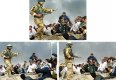
You speak as if there's been no deliberate attempts to deceive recently. Remember these?

130416BombingNYDailyNews.jpg Apr2003-LATimes.jpg economist-1-blogSpan.jpg Iran_Photoshop.jpg O.J.-Simpson-in-Time-Magazine.png

There's a Knut Conundrum that suggestion.
The Pagan King Knut is infamously ridiculed in Christian accounts for having his throne set on the beach, and commanding the tide to return; 'how stupid of him' we are supposed to believe.
In fact, he was demonstrating to the Bishops, who he commanded to carry his throne to the beach, who wished him to 'command' all his subjects to convert to Christianity, that a Kings law is not absolute, and that 'The People' like the tide, will follow their 'nature' regardless of what is commanded in law.

So it's OK if we give them a little nudge.. help persuade them a little by manipulating images? You seem to be suggesting that manipulating images doesn't matter, because people will believe what they want any way. Whether that is true or not, is irrelevant. There's no excuse for purposely changing reality in images who's purpose is to report the truth, and suggesting that the whole digital manipulation issue is nothing to worry about is worrying in itself.

Little has changed since Knut got the Bishops robes wet....People are still people. (I am still failing to understand what you disagree with)
If some-one can gain advantage from media manipulation.. they will.. they have been since there has bee any 'media', be it spoken language or scribblings on a cave wall!

Again, the fatalist attitude. I'm well aware of how large numbers of people believe what they want, whether it's images, or the written word. The Bible is a prime example of that. However, digital makes it so easy, it's becoming commonplace. Ridiculously so. Something needs to be done. Reuters have had a stab in that direction, and rightly so. You can't just shrug and say "People have always done it". People have always murdered one another to. Should we adopt the same fatalistic attitude over that?

So why get all macro on the photo, why not rack the zoom all the way to the wide end.. how does a photo get selected to illustrate an article? How does an article get selected for publication? WHY single out a picture 'massaged for effect' in a whole ruddy machine designed for that explicit purpose!

Because images are often more powerful than words when it comes to the front page of a newspaper. No one is suggesting the words are not important. The words anchor the meaning, but the "proof" is often the photograph. Even though we are aware of photoshop as a society, we still need that picture... we still want to see it, and it carries a lot of weight.

Codes of Conduct? Safe-Guards for the Stupid! HEY lets not 'educate them'.. Noooooo! They might stop believing what WE tell them then, worse, heaven forbid! Thinking for themselves! Asking questions! Lets just give them some nice re-assurances we have done 'something' to help them maintain the delusions we want them to have. Preferably something that doesn't cost us anything......

You seem to be suggesting that no one needs to bother with trying to do something about manipulated images in the news, that it's actually better if we leave it alone because somehow, people will stop thinking for themselves if we try to prevent manipulation? You're becoming a little incoherent here. You think ensuring news images are genuine is good or bad? I'm not quite sure what you're saying.


In your opinion.Which may or may or may not have much to substantiate it,

Anyone who supports Britain First is an idiot, a bigoted, hateful, ignorant knob. I'm far from alone in that opinion. Free speech is one thing. Making up s**t to spread hate and garner support for your own xenophobic ideology is entirely another thing... and it's also illegal.


but ether way, utterly irrelevant to the subject, unless you want to 'massage the media' we are using now,

Dude.. you're credibility is circling the drain..... You think trying to stop Britain First is "massaging" the media? They INVENT stories and manipulate images, and re-appropriate all manner of bulls**t to spread hate. You don't actually BELIEVE the crap they post do you? There's a whiff of defending them in that statement.


in some way to influence any-one else's opinion on the.. what are they? A party? A Policy? I'd call them a 'movement' personally, to 'massage the media' for comic value; but still...

Comic value? You may find them comical, and to an extent, so do I (I'd not be surprised to find that the whole thing is a social experiment it's so outrageous), but VAST numbers of people believe that crap they post. There's massaging the media, and there's allowing anyone to spread hate and fear through the dissemination of absolute lies. Suggesting we take teh gloves off and just let anyone print what they like, when they like with no checks and measures is just outrageously naive and idealistic... almost nihilist in approach.


Accepting its an example, and irrelevant who has provided, it, granted. And I'm still struggling to understand what you disagree with; but it's taking the topic into some more challenging waters.

I'm disagreeing with your attitude in both your posts that seems to suggest that allowing manipulated imagery to flourish would highlight how untrustworthy images are, and therefore make the whole debate moot because no one would any longer trust anything they ever saw. LOL ...because you're wrong... they would.
 
Last edited:
PH mentioned a growing form of media, self published photo books. Very interesting to see how this is currently taking off, seems to be wry popular way currently of publishing photographers work.
 
If you're going to 'leave it there' please don't then go on to put words in my mouth. I rather doubt that McCullin would have been be photoshopping everything, even if he could, though those that have come after him clearly think differently about it. And manipulation is not unethical per se, it's where you draw the line.


Duh!... yeah... like news images perhaps? LOL


Robert Capa (no stranger to a bit of fakery) never used a Nikon F, because he died before it was invented.


Errr... yeah... Kind of my point. LOL. I was suggesting he missed that boat by a few years, but regardless, he didn't seem to have suffered any as a result. (By not using a Nikon.. not being dead :))


The Nikon F changed photojournalism for ever. It killed Rollei, the previous press photographer's choice, and Leica has never been the same since.

You're just waffling like a camera anorak now. They're just tools.... who cares.


For long print runs over a few tens of thousands, web-offset was useless in the 60s and 70s. Slow, poor register, and presses needed frequent stops to change worn out plates.The Sunday supplements were printed in millions, and rotogravure was essential to that. You may know that I've spent decades in the magazine printing in publishing business. The colour supplements were originally created to attract lucrative colour advertising that couldn't run in the actual newspaper; the editorial potential was a fortunate coincidence.

Yeah.. I know... my point is though... it was editorial content that made it famous... made it work. You can attract all the advertisers you want, but you'll need people to buy it for those ads to work. People didn't buy it for adverts. My point is, despite it being technically inferior, people would have still bought it if it wasn't printed as well because they bought it for what was IN it... not to admire it's printing. That fortunate co-incidence you blithely gloss over WAS the reason it was so successful.


Elitist nonsense. Amateurs, you say, purveyors of crap - that'll go down well with 99% of everyone on here then. And we should all go to galleries... you serious?

I don't give a toss. It's true. You telling me that Flickr isn't approximately 90% crap? :) Besides, what's wrong with the suggestion that more people should go to galleries? There's a huge range of galleries, exhibitions, shows etc to suit all tastes. Most are free. What's to dislike? You seem to be suggesting that people interested in photography would not want to go somewhere to look at photography, for real... not online... for free. Why's that such an outrageous suggestion?
 
Last edited:
Last edited by a moderator:
Yup, saw lots at Format photo festival, a whole area devoted to very good chinese ones, then the east london photo festival, everyone seemed to have a self published book to accompany.

The books bring a whole new thought process on how the images are presented. Very different to how they are shown as prints. I saw one book with double spread prints that split the image with the spline which actually worked and made a single image looked like two individual ones, whilst for some others the spline ruined the image.

Some interesting books on that link - cheers - will read more later
 
Last edited:
You may want to note that link is NSFW...thankfully I work at home, so my non-existent colleagues didn't see me looking at a photo of guy with a flower up the crack of his arse! He he!
...I'm not going to look at that now.
 
Duh!... yeah... like news images perhaps? LOL

Errr... yeah... Kind of my point. LOL. I was suggesting he missed that boat by a few years, but regardless, he didn't seem to have suffered any as a result. (By not using a Nikon.. not being dead :))

You're just waffling like a camera anorak now. They're just tools.... who cares.

Yeah.. I know... my point is though... it was editorial content that made it famous... made it work. You can attract all the advertisers you want, but you'll need people to buy it for those ads to work. People didn't buy it for adverts. My point is, despite it being technically inferior, people would have still bought it if it wasn't printed as well because they bought it for what was IN it... not to admire it's printing. That fortunate co-incidence you blithely gloss over WAS the reason it was so successful.

I don't give a toss. It's true. You telling me that Flickr isn't approximately 90% crap? :) Besides, what's wrong with the suggestion that more people should go to galleries? There's a huge range of galleries, exhibitions, shows etc to suit all tastes. Most are free. What's to dislike? You seem to be suggesting that people interested in photography would not want to go somewhere to look at photography, for real... not online... for free. Why's that such an outrageous suggestion?

LOL "waffling like a camera anorak now. They're just tools... who cares." You're not so bad at that yourself when the fancy takes you. Are you just dismissing new tools then, and 'disruptive' technology that permanently changes our view of the world and the way we do things? Much as I like them, vanity self-published photobooks printed in tiny numbers are not in the same category as Sunday supplements were, printed in millions. Ditto exhibitions, though I enjoy those too.

It's a good debate though :)

Point of etiquette, you've somehow managed to quote Teflon Mike above, rather than me.
 
LOL "waffling like a camera anorak now. They're just tools... who cares." You're not so bad at that yourself when the fancy takes you. Are you just dismissing new tools then, and 'disruptive' technology that permanently changes our view of the world and the way we do things? Much as I like them, vanity self-published photobooks printed in tiny numbers are not in the same category as Sunday supplements were, printed in millions. Ditto exhibitions, though I enjoy those too.

It's a good debate though :)

Point of etiquette, you've somehow managed to quote Teflon Mike above, rather than me.
And Teflon Mike spent ages quoting himself earlier. Very strange. Looked like he was arguing with himself.
 
Point of etiquette, you've somehow managed to quote Teflon Mike above, rather than me.
But given how much else I haven't said he's tried to attribute to me today, it seems but small compliant.
Meanwhile.. if I really wanted to watch the Britain First soap-box, I'd just open my Face-Book Feed, I really don't want or need it shoe-horned in here as well.
 
Accepting that significant editing is both easier and more prevalent with digital, my question is "why does it matter?" If you exclude cases of extreme editing with the intent to "lie," I don't get it.

So what if a distracting element is cloned out? Or if two images of the same scene are composited together? Why should that matter?

The purpose of a photograph is to create a "connection" and to "tell a story." But a photograph doesn't really do either. In journalism the photos support the story being told, and "better" (edited) photographs will do a better job of that. If the photo does not support a story, then what it says is whatever we determine it to say...we create our own story. In either case the photo is not showing a truth or a lie... The truth or lie comes from the story it supports, or from the story we create ourselves. The edited photo is not the problem...

And of course, "truth" and "lie" is very subjective...
 
Last edited:
...I'm not going to look at that now.

or in my case....ever......

It has a picture of a man's bottom and a few women's nipples. The content changes almost daily.. it's not a porn site or anything. It's a link to a photographer's self-publishing website.
 
LOL "waffling like a camera anorak now. They're just tools... who cares." You're not so bad at that yourself when the fancy takes you. Are you just dismissing new tools then,

Nope. The Nikon F is a mechanical, manual camera with no meter (unless you bought a metering prism) and limited shutter speeds. It's hardly revolutionary, and as far as technology went, it was hardly turning the world on it;s head. You can't compare it to the technological advances made now... with hundreds of AF p[oints, lighting fast AF, 4k video, 3d colour matrix metering, and TTL flash etc etc.... it's a camera. Shutter, aperture, film.... just like they'd been for decades before.

Can you explain why the Nikon F was so revolutionary? Personally I don't see it. A bayonet mount and a pentaprism... that's pretty much all it offered over the rangefinder predecessor it was based on. 1/60th sync. 1/1000th shutter. Just a camera. Sure, it was a tough old hector, but nothing there to usher in a whole new wave of technological and creative advances as you seem to be making out.


Much as I like them, vanity self-published photobooks printed in tiny numbers are not in the same category as Sunday supplements were, printed in millions. Ditto exhibitions, though I enjoy those too.


I'm not referring to vanity publishing. I think you're confused.


Point of etiquette, you've somehow managed to quote Teflon Mike above, rather than me.

I used the forum's +quote system... don't blame me :) I'll fix it later.


You've still not answered my question:

"Besides, what's wrong with the suggestion that more people should go to galleries? There's a huge range of galleries, exhibitions, shows etc to suit all tastes. Most are free. What's to dislike? You seem to be suggesting that people interested in photography would not want to go somewhere to look at photography, for real... not online... for free. Why's that such an outrageous suggestion?"
 
Can you explain why the Nikon F was so revolutionary? Personally I don't see it. A bayonet mount and a pentaprism... that's pretty much all it offered over the rangefinder predecessor it was based on. 1/60th sync. 1/1000th shutter. Just a camera. Sure, it was a tough old hector, but nothing there to usher in a whole new wave of technological and creative advances as you seem to be making out.

It could just as easily have been the Canon F1 or the Pentax S1a. I suppose a few newspaper photographers got hold of them, perhaps were even given them by Nikon, and the rest of the sheep like herd followed.

They are nice though. I have two. But it's nothing more than a box to keep the darkness in and a hole to stick a lens into... like most cameras.


Steve.
 
It could just as easily have been the Canon F1 or the Pentax S1a. I suppose a few newspaper photographers got hold of them, perhaps were even given them by Nikon, and the rest of the sheep like herd followed.

They are nice though. I have two. But it's nothing more than a box to keep the darkness in and a hole to stick a lens into... like most cameras.


Steve.


Absolutely. Lovely cameras, as was the F2... in fact.. all Nikon F cameras. The F4 was a bit of a dog's dinner, but if you ignored the AF it was OK too.

My point was it's a very basic manual camera. I'm not sure what Hoppy thinks made it revolutionise photography in the early 60s.
 
Absolutely. Lovely cameras, as was the F2... in fact.. all Nikon F cameras. The F4 was a bit of a dog's dinner, but if you ignored the AF it was OK too.

The first time I saw an F4 I couldn't believe that something that big worked with such a tiny negative. I have smaller and lighter mediam format SLRs.

My point was it's a very basic manual camera. I'm not sure what Hoppy thinks made it revolutionise photography in the early 60s.

Something happened in the sixties but it wasn't caused by a model of camera even if that camera was the most common. I think it was an acceptance of the format and the freedom it gave over its predecessors such as the Rolleiflex. I recall seeing a documentary/dramatisation of David Bailey's early years where he had the negatives from his 35mm Pentax (not a Nikon F) copied to 120 film so his magazine editor would accept them.


Steve.
 
Nope. The Nikon F is a mechanical, manual camera with no meter (unless you bought a metering prism) and limited shutter speeds. It's hardly revolutionary, and as far as technology went, it was hardly turning the world on it;s head. You can't compare it to the technological advances made now... with hundreds of AF p[oints, lighting fast AF, 4k video, 3d colour matrix metering, and TTL flash etc etc.... it's a camera. Shutter, aperture, film.... just like they'd been for decades before.

Can you explain why the Nikon F was so revolutionary? Personally I don't see it. A bayonet mount and a pentaprism... that's pretty much all it offered over the rangefinder predecessor it was based on. 1/60th sync. 1/1000th shutter. Just a camera. Sure, it was a tough old hector, but nothing there to usher in a whole new wave of technological and creative advances as you seem to be making out.

Google it https://en.wikipedia.org/wiki/Nikon_F Ask the press photographers of the day who, pretty much to a man, dropped their cumbersome Rolleis and toted Nikon F systems around the globe as never before. Ask Don. Or feel free to disagree on the impact that had on photo journalism and news reporting. Nikon had that exclusively to themselves from 1959 and held it well into the 70s, when the Canon F1 arrived.

I'm not referring to vanity publishing. I think you're confused.

No confusion. Printing a few hundred copies of your own work is a wonderful thing to do, but it's pure vanity and won't change anything.

You've still not answered my question:

"Besides, what's wrong with the suggestion that more people should go to galleries? There's a huge range of galleries, exhibitions, shows etc to suit all tastes. Most are free. What's to dislike? You seem to be suggesting that people interested in photography would not want to go somewhere to look at photography, for real... not online... for free. Why's that such an outrageous suggestion?"

Life is too short for this David. I've got nothing against galleries and never walk past one, nor the little displays you see in restaurants or on market stalls etc etc. More power to them. But, like photobooks, their sphere of influence is far too small - that's my point. In your crusade to save amateur photographers from themselves and the abuses of digital imaging, they're not going to change diddly. Especially as they're more than likely to be full of digital manipulations and enhancements anyway.
 
Last edited:
Google it https://en.wikipedia.org/wiki/Nikon_F Ask the press photographers of the day who, pretty much to a man, dropped their cumbersome Rolleis and toted Nikon F systems around the globe as never before. Ask Don. Or feel free to disagree on the impact that had on photo journalism and news reporting. Nikon had that exclusively to themselves from 1959 and held it well into the 70s, when the Canon F1 arrived.

LOL... WOW!..... Wikipedia!! Ok.. I've just read it. I feel dirty for reading a Wiki article, but in the interest of fairness, I read it. I didn't see anything in there except facts about the camera. I was hoping it would educate me on why it had changed the face of photo-journalism as we know it, but I'll be damned if I can find it in there. It says photo journalist adopted it and used it widely. But they always have. They adopted and used the D4 widely too, but I didn't see any real change in the images they produce with them - and I can;t see any real change in Don McCullins when he started using one either. It's just a camera: A box to hold the film flat with a shutter in it. It had no features that would help make photography better.. in fact, it had no features. It has a shutter speed control. It had DOF preview, which I can only assume is useful as a chocolate teapot on a battlefield. Likewise with mirror lock up.

You ascribe too much importance to the camera. Has it ever occurred to you that Don McCullins work was so good because of Don McCullin? That he could have done what he did with any other 35mm camera of it's era? (Please don't trot out the "it stopped a bullet thing).


No confusion. Printing a few hundred copies of your own work is a wonderful thing to do, but it's pure vanity and won't change anything.

If you think that's what the latest drive to self-publishing is, then I'm sorry, you are confused, yes.


But, like photobooks, their sphere of influence is far too small

LOL. Clearly you weren't at Paris Photo then.... or Arles, or Photo Shanghai, or Format, or any of the other major events worldwide that get bigger and bigger each year. Yeah.... OK. I'll switch to Flickr... it's "sphere of influence" is so much more noticeable. :)
 
If you think that's what the latest drive to self-publishing is, then I'm sorry, you are confused, yes.

LOL. Clearly you weren't at Paris Photo then.... or Arles, or Photo Shanghai, or Format, or any of the other major events worldwide that get bigger and bigger each year. Yeah.... OK. I'll switch to Flickr... it's "sphere of influence" is so much more noticeable. :)

In the grand scheme of things self-published photobooks and photography festivals do next to nothing to put the pictures before the general public in the way that appearing in the Sunday Times Magazine used to. It was in the STM that I first became aware of powerful photography, in particular Eugene Smith's Minimata feature. Had that been a low print run book, or an exhibition in Arles I'd never have become aware of it. Not only would I have been ignorant of the photography, more importantly I'd have been ignorant of the story.

It seems to me that the photo world is becoming like the art world in that its occupants are increasingly making work to be looked at by its other occupants. A shame when photography is a medium ideal for broad dissemination. If photography wants to be widely appreciated and understood it ought to be democratising itself rather than becoming more introspective and elitist. Otherwise it'll disappear up it's own bum like contemporary art has done in the eyes of the greater public.
 
In the grand scheme of things self-published photobooks and photography festivals do next to nothing to put the pictures before the general public in the way that appearing in the Sunday Times Magazine used to. It was in the STM that I first became aware of powerful photography, in particular Eugene Smith's Minimata feature. Had that been a low print run book, or an exhibition in Arles I'd never have become aware of it. Not only would I have been ignorant of the photography, more importantly I'd have been ignorant of the story.

It seems to me that the photo world is becoming like the art world in that its occupants are increasingly making work to be looked at by its other occupants. A shame when photography is a medium ideal for broad dissemination. If photography wants to be widely appreciated and understood it ought to be democratising itself rather than becoming more introspective and elitist. Otherwise it'll disappear up it's own bum like contemporary art has done in the eyes of the greater public.

I agree with the first paragraph. Obviously, large print run magazines are always going to have more influence than specialist self published books or gallery exhibitions.

The second paragraph is nonsense. Name one photographer who only takes photos for the consumption of photographers and 'arty-types'. I'm not aware of any. I also can't think of another form of art which is more democratic. Are you suggesting the general public can only appreciate, and therefore should only be given art which is utterly superficial and obvious, and that those qualities make for great work that is likely to be enjoyed? Again, utter nonsense. If people are not visiting galleries and enjoying art, in whatever form, it is not for want of the artists trying to get them through the doors or to buy the books. If the general public are not going to galleries, it's their own fault, and ultimately the fault of the education system which didn't provide them with enough opportunities to consume art, and good enough teachers to help them understand and appreciate it at an early age.
 
The second paragraph is nonsense. Name one photographer who only takes photos for the consumption of photographers and 'arty-types'. I'm not aware of any. I also can't think of another form of art which is more democratic. Are you suggesting the general public can only appreciate, and therefore should only be given art which is utterly superficial and obvious, and that those qualities make for great work that is likely to be enjoyed? Again, utter nonsense. If people are not visiting galleries and enjoying art, in whatever form, it is not for want of the artists trying to get them through the doors or to buy the books. If the general public are not going to galleries, it's their own fault, and ultimately the fault of the education system which didn't provide them with enough opportunities to consume art, and good enough teachers to help them understand and appreciate it at an early age.

Your last sentence is the root of the problem.:agree:

The rest of your post seems to have misunderstood what I wrote.

I'm a great believer in making art accessible everyone because I know 'the general public' can appreciate and enjoy it given the chance and encouragement. But blaming them for their failure to visit galleries isn't goping to help. And so we're back to the education system.
 
Your last sentence is the root of the problem.:agree:

The rest of your post seems to have misunderstood what I wrote.

I'm a great believer in making art accessible everyone because I know 'the general public' can appreciate and enjoy it given the chance and encouragement. But blaming them for their failure to visit galleries isn't goping to help. And so we're back to the education system.

I think the education system is a large part of the problem, but there are other big issues. For instance, these days people are inundated with low-quality, easily-consumed entertainment options like the endless stream of Hollywood crap, reality TV, glossy magazines, 24 hour news channels etc. It's like junk food entertainment, and you know how we are with junk food. It's hard for any art to compete against that screaming noise of technicolor trash. It's MUCH easier to sit on the couch on a Saturday evening and watch The Matrix 8, than it is to get on a train and visit your nearest art gallery and spend two hours trying to get your head around something like a load of Bill Eggleston. Better art education at a young age would help break this cycle, but I honestly can't see it happening in this country, especially now everything is so target driven and politicians don't seem to value the arts in general.

I went to a fairly standard (i.e. rubbish) comprehensive school in the 70's and my art education was non-existent in terms of being exposed to and understanding art. Most classes consisted of nothing other than being told to, "Paint an apple", then, "Not bad. B minus". That was literally about it. So it's hardly a new problem in this country.
 
Better art education at a young age would help break this cycle, but I honestly can't see it happening in this country, especially now everything is so target driven and politicians don't seem to value the arts in general.

I went to a fairly standard (i.e. rubbish) comprehensive school in the 70's and my art education was non-existent in terms of being exposed to and understanding art. Most classes consisted of nothing other than being told to, "Paint an apple", then, "Not bad. B minus". That was literally about it. So it's hardly a new problem in this country.

Indeed the current box ticking target driven attitude to everything, and the lack of value that politicians ascribe to anything arts related, are a big part in it. And you're right. My art 'education' at school wasn't much better in the '70s, and that was for A level.

Still I try to do my bit to introduce friends and acquaintances to less mainstream arts. I can put up with the ridicule I get from some quarters! :D
 
Life is too short for this David. I've got nothing against galleries and never walk past one, nor the little displays you see in restaurants or on market stalls etc etc. More power to them. But, like photobooks, their sphere of influence is far too small - that's my point. In your crusade to save amateur photographers from themselves and the abuses of digital imaging, they're not going to change diddly. Especially as they're more than likely to be full of digital manipulations and enhancements anyway.

Having seen the work to put on a small exhibition of a single persons work, I'm surprised people manage. So much organisation, then deciding which images to go into a limited space. Often the larger exhibitions of many artists only allow a few images, so perhaps the impact of the series is lost.

Photobooks are an easy way to exhibit a large number of images and artists in a format pre agreed by the artist to suit their work. Sales of these can be an important part, but also the enabling of getting the work noticed. For the exhibition curators, it's a great way of including more work, assisting in validating or perhaps expanding the theme, taking it in other directions, or promoting the event (look at the number of artists...).

Is the sphere small? Perhaps compared to facebook duckface photos, or flickr, etc, but that's not the demographic they are aimed for. For the other artists, curators, picture editors and others in the art world, they are of genuine interest as a portfolio of work and enables that photographer to be noticed, attracting other commissions.
 
In the grand scheme of things self-published photobooks and photography festivals do next to nothing to put the pictures before the general public in the way that appearing in the Sunday Times Magazine used to. It was in the STM that I first became aware of powerful photography, in particular Eugene Smith's Minimata feature. Had that been a low print run book, or an exhibition in Arles I'd never have become aware of it. Not only would I have been ignorant of the photography, more importantly I'd have been ignorant of the story.


6 tables worth at Format 15 just in one location, St Walburg's church

159580073.jpg

159580076.jpg


Whilst the Spectrum section of the Sunday times is interesting at times, it's still limited, selective, and the sunday times has a distribution of around 1 million? How many flick through or not even bother with the articles in the magazine? Format had over 100,000 visitors, all with a specific interest to look at the exhibitions.
That's where the photobooks really have an impact
 
Back
Top