ISO and portraiture

ndwgolf

Suspended / Banned
Messages
4,692
Name
Neil Williams
Edit My Images
No
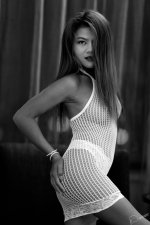
And I thought I knew it all..........a few months ago I was chatting on this forum about using high ISO for portraiture and I heard anything from 200 to 128000. The picture below was shot at ISO800 1/60 F1.2 on my Z9 and Z85:1.2 I argued the fact that I wouldn't want to go over ISO800 and someone piped up and said "Just use DXO RAW first" So that's what I did and the results are quite unbelievable.
The full size image is processed in ON1 plus Topaz (without DXO RAW).
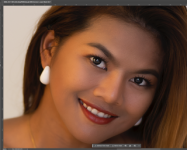
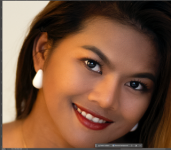
The two screen shots are zoomed in at 200%
The first without DXO RAW
The second with DXO RAW prior to running my ON1 and Topaz Action........
This image was shot in a hotel room that was not that bright

IMG_4822.jpeg

Without DXO
Screenshot 2024-05-21 at 21.55.04.png
With DXO
Screenshot 2024-05-21 at 21.40.19.png
 
Last edited:
I don't understand why you wouldn't shoot at ISO 100-200 if you are in the studio where you can control the lighting.
 
When I shot weddings, there was no ‘max’ it was a case of getting the shot (but these probably wouldn’t fit your idea of a portrait)

That said; when shooting anything posed I’d try to be in control of the lighting and probably maxed at around 800 - but I still live by the maxim that a noisy shot is better than no shot.
 
generally wouldn't you start by useing the native ISO for that particular camera as anything above or below is a manipulation by the software in the camera
 
Last edited:
In these days of ISO invariance and dual gain thingies (if that's the right term... something like two base ISO's) I think it might be worthwhile reading the specs and seeing if that affects your decision on what ISO you will or wont use.

I do like the picture above and it is lovely but the lack of depth is rather obvious to me and not really to my taste, Personally I think I'd prefer more depth even if at the expense of noise but these days great things are possible with modern cameras and noise reduction so maybe take two pictures, one with more depth and one with more of an eye on ISO and image quality and see what works.
 
generally wouldn't you start by useing the native ISO for that particular camera as anything above or below is a manipulation by the software in the camera
Looks like the voice of someone who’s never actually been tasked with shooting people in low light.

How are you dealing with your ISO200 indoor portrait?
‘Thank you madam; if you could just hold that expression for 5 seconds and remain perfectly still, that would be perfect’ :ROFLMAO:
 
I think that a lot of us are still locked into the past. Back in the day, the best (and worst) camera I owned was a Kodak DCS14N (from memory) - full frame with outstanding resolution for its time, which made it the best, but the native ISO was 80 and I think the max ISO was 200, but the image noise above 80 was just horrific and it could only be used at 80 or 100 ISO.

Before that it was film, changing the ISO meant changing the film, and the faster films had terrible grain.

Coming up to date now, there's relatively little loss of IQ at high ISO settings on modern cameras, and although there's no point in setting the ISO higher than it needs to be, there's no real downside in using high ISO, at least in terms of IQ.

But, whenever possible, we should always use artificial light, to improve the quality of the light and to create the right shadows in the right places - high ISO means that we don't actually need to do this, but it doesn't mean that we shouldn't.
 
I don't really worry about ISO anymore generally.

On the A7Riii, I will often shoot manual at 100 on a tripod, or maybe jump to 640 if I want a slightly faster shutter speed. Night sky landscapes I try to stay below 640 which isn't usually an issue..... Aside from that for general shooting I'm in Av with auto iso and a minimum shutter speed.
 
I'm going to echo Phil and say that whatever ISO is needed to get the shot is better than not taking/getting it.

I've done quite a lot of 'low' (i.e. poor natural light) portraits with my wife and when I start opening the lens to f/2.8 or wider, I start to get unreliable focus accuracy (which is on me as a photographer) to the point where the eyes are out of focus but the eyelash tips are fine, or the head is angled slightly and one eye is OOF. Over time, I've started to try and shoot narrower to have a bit more leeway with DoF (to get sharp eyes) and let the ISO fall where it may. Less of an issue these days with eye detection on AF cameras, but still a problem for MF lenses and/or older cameras without that facility.
 
At these sizes I don't see a significant difference... I do think the DXO image is a little softer in areas; and IDKW the crops are different sizes if they are both at 200%.

If you want to see just how well the Z9 can perform with high ISO; use Nikon's NX studio... but it takes a bit to learn how to use the multiple sharpening/NR settings. Personally, I just use LR; but I don't rely on default settings/processing.
 
ISO 6400

NDW_0284-NEF_DxO_DeepPRIME.jpg
I actually deleted the original so cant show you how horrendous it looked before DXO fixed it...........shot in KL the day I bought the Z9
 
Like that last shot Neil - very nice - however you do need to be careful with DXO Pure Raw - it can make the image look a bit fake especially if you are trying to restore detail - this isn't a comment about your images it' s about Pure Raw generally - it's very impressive especially when shooting high ISO with Bird photography but I do find sometimes that you have to check the image carefully as the odd area can have artifacts. Whilst I would compliment your composition my very humble critique would be that she looks a bit fake with quite a loss of texture in her face. I try to get away with as little as possible but there really is no substitute (IMHO) for getting the correct light to achieve cleanest image possible. Bumping ISO would always be a last resort for me.
 
I go as high as I need to as long as I get a shot. I think it was Phil who said a sharp noisy shot is better than a blury one. Normally I'll add flash (assuming I have it like a wedding)to keep things low, but needs must. Last time I think I went to about 800 with a small video light I carry because a guest (with learning difficulties) was frightend by the flash. Whip out video light bung up iso and Bobs your uncle.
With modern FF cameras noise at 800 is not much different to 200.
 
Back
Top