
and please use their services
You are using an out of date browser. It may not display this or other websites correctly.
You should upgrade or use an alternative browser.
You should upgrade or use an alternative browser.
Is digital ruining the challenge of photography?
- Thread starter Cockney
- Start date


- Messages
- 43,206
- Name
- Alan
- Edit My Images
- No
Considering that most of us could contruct the image with software, does that diminish the art in old photographic processes?
They're completely different things. I don't want to sit at a computer and invent a fake image. The whole point of photography for me is to capture a picture of something that means something to me. Something that I will want to look at again and when I do it'll evoke a memory and a feeling. Sitting at a computer faking it just doesn't get me anywhere near that.
Good luck to those who want to go that way and at least it doesn't involve cameras and lenses and going outside.
I've seen a lot of AI pictures that've made me laugh out loud but it's a million miles away from any photography I want to do.
Last edited:

ancient_mariner
Moderator
- Messages
- 27,780
- Name
- Toni
- Edit My Images
- No
I've 'always' developed my own pictures, it's just less inconvenient these days. However if I generated a composite image then integrity requires that I mention it, rather than pretend it was a clever capture.

ancient_mariner
Moderator
- Messages
- 27,780
- Name
- Toni
- Edit My Images
- No
No a lack of imagination is ruining photography, some people would rather create copycat images seen a thousand times before they even release the shutter rather than come with something of their own.
Interesting perspective. Perhaps they want an image like they've seen, but their own rather than someone else's? Otherwise all landscape photography should stop right now.

Brazo
Suspended / Banned
- Messages
- 3,687
- Name
- Mark
- Edit My Images
- Yes
No I think there’s plenty of scope left for non derivative landscape photography and of course if someone wishes to copy another pic that’s their own right but it will always be just another copycat pic in the pool of billions!Interesting perspective. Perhaps they want an image like they've seen, but their own rather than someone else's? Otherwise all landscape photography should stop right now.
Just to add to the above the image can be copied easily digitally or via traditional photographic methods that’s the only reason we are talking about it as it’s easily copied. So either no skill either way or the same amount of skill either way.
Last edited:

LeeRatters
Suspended / Banned
- Messages
- 7,354
- Name
- Lee
- Edit My Images
- Yes
For me, as frustrating as it can be at times, the challenge of going out and getting the image (or a particular image) is a big part of the whole process.
Yes, I don't mind editing at the PC - the night sky photography is a fair bit of editing, stacking, panoramics etc for example, but I don't want to sit at a PC 'making' an image.
Yes, I don't mind editing at the PC - the night sky photography is a fair bit of editing, stacking, panoramics etc for example, but I don't want to sit at a PC 'making' an image.

ancient_mariner
Moderator
- Messages
- 27,780
- Name
- Toni
- Edit My Images
- No
To me, if the value in a photo is from it's uniqueness then we should put down our cameras now. If however it's the opportunity for us to create something, I'm happy to see another picture of a kingfisher or a racing car in a panning shot.

- Messages
- 17,208
- Name
- Hugh
- Edit My Images
- Yes
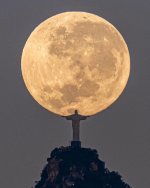
Not sure what you mean exactly. Are you comparing film photography to digital photography or film to 'manufactured on a pc' image?People put a lot of work and effort into getting images like this.
Considering that most of us could contruct the image with software, does that diminish the art in old photographic processes?
View attachment 425478
If you mean computer created image then it's no different (apart from the technology) to the work that artists, advertising studios etc. have always done in 'creating an
image'
OP

- Messages
- 10,200
- Name
- Brian
- Edit My Images
- Yes
I take pictures for various reasons. On one level I like the challenge of capturing a true likeness, a rose for example. I also like candid street photography and abstracts.
Taking landscapes and tourist views, that have been taken thousands of times before, hold no interest for me. Neither do over processed blue skies, white clouds and other elements that make cartoon images.
Taking landscapes and tourist views, that have been taken thousands of times before, hold no interest for me. Neither do over processed blue skies, white clouds and other elements that make cartoon images.
OP
- Messages
- 10,200
- Name
- Brian
- Edit My Images
- Yes
I'm comparing the process of capturing an image, as a record of a moment in time, as opposed to creating an image that may have happened, but was never actually viewed by the photographer.Not sure what you mean exactly. Are you comparing film photography to digital photography or film to 'manufactured on a pc' image?
If you mean computer created image then it's no different (apart from the technology) to the work that artists, advertising studios etc. have always done in 'creating an
image'
- Messages
- 17,208
- Name
- Hugh
- Edit My Images
- Yes
Got you, I suppose that yes it could but not for anyone who cares.
I mean, the number of people you see commenting oooh nice pic on some massively over HDR'd snapshot shows that a lot of people couldn't tell a good photograph from a hole in the ground anyway, but those who can will always appreciate the real thing and the skill it took to capture it.
I mean, the number of people you see commenting oooh nice pic on some massively over HDR'd snapshot shows that a lot of people couldn't tell a good photograph from a hole in the ground anyway, but those who can will always appreciate the real thing and the skill it took to capture it.

Dave Canon
Suspended / Banned
- Messages
- 1,980
- Name
- David
- Edit My Images
- No
I assume that you are not talking about High Dynamic range which is a means to capture the complete scene dynamic range but referring to a filter or app which creates an exaggerated mid tone effect. As my recent cameras have much higher dynamic range than in the past, I now rarely use HDR techniques but where I do I use LR (in conjunction with multiple exposures) which does not use tone mapping and thus cause this exaggerated mid tone colours and texture. How do you capture 14 stops + of dynamic range?Got you, I suppose that yes it could but not for anyone who cares.
I mean, the number of people you see commenting oooh nice pic on some massively over HDR'd snapshot shows that a lot of people couldn't tell a good photograph from a hole in the ground anyway, but those who can will always appreciate the real thing and the skill it took to capture it.
Dave
OP
- Messages
- 10,200
- Name
- Brian
- Edit My Images
- Yes
My question is, why would you? Are we talking a realistic image or some shadowless, sunny, surreal world? Are you "photographing" something that in reality is not real?How do you capture 14 stops + of dynamic range?
Dave
- Messages
- 43,206
- Name
- Alan
- Edit My Images
- No
How do you capture 14 stops + of dynamic range?
Dave
I looked up what DR my camera can capture and the review site I looked at said 14.2. So it's possible. Or am I missing something?
What I do know is that the camera can sometimes capture some detail which I can not see by eye because I'm squinting looking into the sun. With other scenes the camera clearly does not capture the full DR I can see so I do believe that there's still a way to go if only in terms of metering in different areas of the frame. That could happen.
My question is, why would you? Are we talking a realistic image or some shadowless, sunny, surreal world? Are you "photographing" something that in reality is not real?
I don't think the best cameras can match what our eye and brain can capture yet so yes, I want more DR however it is achieved. I want a level of DR that matches what a human can perceive and I want to capture a reality that I see without either losing the highlights or the shadow detail. Bring it on.
OP
- Messages
- 10,200
- Name
- Brian
- Edit My Images
- Yes
How much DR do you want? If we go to the extreme, we have no shadows or highlights. When the eyes focus on shadows or highlights, they try to adjust so we can see more, but is that the actual 'image' that's in front of us? Isn't the interest in wondering what's hidden in the shadows of a cave, rather than a super high DR showing us that theres nothing?I looked up what DR my camera can capture and the review site I looked at said 14.2. So it's possible. Or am I missing something?
What I do know is that the camera can sometimes capture some detail which I can not see by eye because I'm squinting looking into the sun. With other scenes the camera clearly does not capture the full DR I can see so I do believe that there's still a way to go if only in terms of metering in different areas of the frame. That could happen.
I don't think the best cameras can match what our eye and brain can capture yet so yes, I want more DR however it is achieved. I want a level of DR that matches what a human can perceive and I want to capture a reality that I see without either losing the highlights or the shadow detail. Bring it on.
Are we heading for an exposure quad of ss, aperture, iso and dynamic range?
PS. I'm not arguing, just exploring the concepts. I think we're in a real evolutionary period of what photography actually means now.
Last edited:
- Messages
- 43,206
- Name
- Alan
- Edit My Images
- No
How much DR do you want? If we go to the extreme, we have no shadows or highlights. When the eyes focus on shadows or highlights, they try to adjust so we can see more, but is that the actual 'image' that's in front of us? Isn't the interest in wondering what's hidden in the shadows of a cave, rather than a super high DR showing us that theres nothing?
Are we heading for an exposure quad of ss, aperture, iso and dynamic range?
PS. I'm not arguing, just exploring the concepts. I think we're in a real evolutionary period of what photography actually means now.
When you shift your gaze from highlight to shadow you or rather your eyes and your brain are doing what the camera and lens do when pointed at different parts of a scene. You're adjusting the aperture and then there's the processing too. That's different to seeing the whole DR when we look at the scene as a whole. Neither we or the camera kit can see it all and something will have to give. In the case of camera kit at the moment the biggest issue I see is visible if protecting the highlights and then trying to boost the shadows and seeing noise. Things are much better now than in the days when I had Canon DSLR's but there is IMO still room for improvement. Maybe that improvement could come with metering pixels or blocks of them? It's one possibility I've read about and it may be a more realistic possibility than getting each pixel to capture a massive DR. Who knows what developments will come? Maybe not many as the camera market is shrinking and the most popular approach is to throw a lot of software at a picture taken with a phone and its tiny sensor and a plastic(?) lens but it's something that most people seem happy with, hence the state of the camera kit industry.
Capturing more DR one way or another could I suppose end up with a picture which will look odd to us as the DR we'd see in that photograph may be more than we'd see by eye when looking at the whole scene but blowing the skies or blocking up the shadows to get to a result we'd see as more pleasing or more realistic depending on where we look would be our choice and a doddle either in camera or in post capture processing if the information is there in the first place to either include or not include. At the moment it clearly isn't all there as we sometimes blow highlights and we sometimes block up the shadows or see noise when we attempt to raise them.
So yes. I want more DR.
- Messages
- 17,208
- Name
- Hugh
- Edit My Images
- Yes
My comment was intended to point out the lack of ability? to recognise a good picture in some people and how that lack is not going to affect the artistic quality of said good picture.
Art is of course subjective and if Mrs Bloggs down the road thinks a massively over processed image of a sunset is nice then good luck to her. I'm sure it's been the same since ugh painted the first stick man chasing a stick wooly mammoth on a cave wall. The medium changes but the quality and art is still only ever appreciated by a few.
As "good images" get easier for everyone to produce then artists will seek different challenges.
Art is of course subjective and if Mrs Bloggs down the road thinks a massively over processed image of a sunset is nice then good luck to her. I'm sure it's been the same since ugh painted the first stick man chasing a stick wooly mammoth on a cave wall. The medium changes but the quality and art is still only ever appreciated by a few.
As "good images" get easier for everyone to produce then artists will seek different challenges.
ancient_mariner
Moderator
- Messages
- 27,780
- Name
- Toni
- Edit My Images
- No
In the real world our eyes continually adjust for exposure, so if you look into a shady place on a bright day you still see details rather than a black block. I would adjust for what my eyes would see - what I think makes a pleasing photo - rather than simply outputting data from the sensor.
OP
- Messages
- 10,200
- Name
- Brian
- Edit My Images
- Yes
I think capturing the example image in the first post, in camera, was quite a challenge. I think it's the challenges tham some togs enjoy. Just as others enjoy making composites.Going back to the title of the thread, why does photography have to be a challenge?
Are composite images still photography though?
ancient_mariner
Moderator
- Messages
- 27,780
- Name
- Toni
- Edit My Images
- No
Are composite images still photography though?
There's 2 processes here: taking the images used = photography, and then development and compositing which can be aspects of photography or entirely separate processes.
The question might be reframed "is a composite image a photograph?" And of course the answer is 'sometimes'.
- Messages
- 43,206
- Name
- Alan
- Edit My Images
- No
Going back to the title of the thread, why does photography have to be a challenge?
Very good point. Maybe fun and reward are more the point. TBH I always cringe a little when people describe their photography as "work" but maybe that's because of my own less than 100% positive experience of work. If it became work or anything like it for me I'd take a long hard look at what I was doing and why.
Last edited:
AndrewFlannigan
Suspended / Banned
- Messages
- 11,977
- Edit My Images
- No
That reminds me of Terry Pratchet's "Thief of Time" wherein a bunch of obsessives called "The Auditors" took a "great painting" apart at the molecular level, attempting to find out why it was "great".... but the quality and art is still only ever appreciated by a few.
As "beauty" exists solely in the eye of the beholder, that is a nicely open field of endeavour, offering hours of innocent pleasure to those who choose to participate.As "good images" get easier for everyone to produce then artists will seek different challenges.
OP
- Messages
- 10,200
- Name
- Brian
- Edit My Images
- Yes
I think people use the word 'work' because it sounds more arty.Very good point. Maybe fun and reward are more the point. TBH I always cringe a little when people describe their photography as "work" but maybe that's because of my own less than 100% positive experience of work. If it became work or anything like it for me I'd take a long hard look at what I was doing and why.
LeeRatters
Suspended / Banned
- Messages
- 7,354
- Name
- Lee
- Edit My Images
- Yes
I think people use the word 'work' because it sounds more arty.
Or, it took a lot of 'work' to end up with that particular final image.
OP
- Messages
- 10,200
- Name
- Brian
- Edit My Images
- Yes
Agreed, but not in the context of the post I was replying to.Or, it took a lot of 'work' to end up with that particular final image.

lindsay
Admin
- Messages
- 8,060
- Name
- Lindsay
- Edit My Images
- Yes
Photography to me has the scientific aspect - light capturing equipment and (in film efforts) chemistry - and an artistic aspect - trying to express an emotion, a personal reaction or interpretation, or making a record of something - and a personal fulfilment aspect - fun, enjoyment, sense of achievement, feeling of creativity. Probably that last part is the most important to me, followed by the artistic side, but mostly I love the process of photography, whether film or digital, and if I achieve a result that I and my wife like, then I've succeeded. I don't much care about the philosophical considerations of the OP, except insofar as I remain in awe of great photojournalism.
Dave Canon
Suspended / Banned
- Messages
- 1,980
- Name
- David
- Edit My Images
- No
When I visited the Canadian Rockies the measured DR was typically at least 12 stops (snow capped mountains). At that time my camera could only mange 11 stops so multiple exposures were necessary if I did not want the snow burnt out and wanted the rest of the scene to look normal. If I stood in a cathedral, I can look towards the stained glass windows which look fine as my eye adjusts to the bright light. If I look down to the pews which are in shadow, they also look normal with detail as my eyes adjust again. So I want any photograph I take to show as near as possible what I saw with my eyes/brain. Many of you will remember slides and their very poor dynamic range so we almost always had to put up with no shadow detail if we held the highlights. About 6 years ago we invited a well known nature photographer to speak at my club and he brought slides. At least half of our members had never used slides so were shocked at the lack of shadow detail. It was probably the first time slides had been shown ay the club since around 2004 when we no longer accepted them in competitions.My question is, why would you? Are we talking a realistic image or some shadowless, sunny, surreal world? Are you "photographing" something that in reality is not real?
Dave

- Messages
- 4,870
- Edit My Images
- Yes
I think this is put into perspective by the knowledge that apparently 1 in 20 American houses has a Thomas Kinkade print....shows that a lot of people couldn't tell a good photograph from a hole in the ground anyway,
- Messages
- 43,206
- Name
- Alan
- Edit My Images
- No
Or, it took a lot of 'work' to end up with that particular final image.
My comment would be the same. I know I'm only a happy snapper but if this ever turned into anything like "work" I'd likely go back to creating my pictures with paper and things that make a mark on it.
- Messages
- 43,206
- Name
- Alan
- Edit My Images
- No
I think people use the word 'work' because it sounds more arty.
I started taking pictures around the age of 10 but I was drawing years before that and continued well into my 20's with my last "commission" being in those years. I briefly returned to it in my 30's again making pictures for other people as well as for myself. At no point was it ever "work." Actually I think the only time I've ever "worked" was when my last 9-5 became a joyless slog. Other than that I enjoyed it too much and TBH would have done it for peanuts.
I can sort of see why people describe their photography as "work" and view their collection as their "life's work" but it's phraseology I could never bring myself to use.
Anyway. Sorry to derail the thread with my anti work attitude

- Messages
- 43,206
- Name
- Alan
- Edit My Images
- No
Got you, I suppose that yes it could but not for anyone who cares.
I mean, the number of people you see commenting oooh nice pic on some massively over HDR'd snapshot shows that a lot of people couldn't tell a good photograph from a hole in the ground anyway, but those who can will always appreciate the real thing and the skill it took to capture it.
I think what constitutes a "good photograph" could be debated all day and I'd argue that a "good photograph" could be something we'd want to move on from pdq if what made it "good" to one person didn't appeal to another. I see many "good" photographs which don't appeal to me and would make me rather look at a hole in the ground as at least I'd be outside.