Is AI the end of photography?

With a suitably high definition video camera you could probably get enough information to make technically good portraits. Then apply AI to make the lighting change based upon the 3D profile of the face. You wouldn't get the interaction with the photographer/vision that makes them great photographs.
I've got pretty decent still off a low end compact camera, after accidently shooting in whats called 4k burst mode. Will it replace a FF camera and an L lens, no, but for a cheap compact with a long range zoom I was amazed.
P1000533bramble.jpg
 
image.jpg

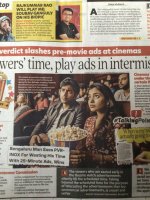
AI has started to replace photos in print as is evident in todays’s newspaper here in India.
 
If you want to feel a lot better type in "draw aeroplane without front windows" or anything else requiring similar logic step. It is still very dumb so not all is completely lost... YET.
 
There was a long time before photography, so it's also conceivable that there'll be a long time beyond. The wheel turns, but at any point in its turning I might be concerned with both the function of an image and the nature of its truth. Meanwhile, we're scoping AI out because it's new.

For myself, it seems like part of the gallopsphere - where we're all headed, like it or not. There's a lot of us on this groaning planet and I sort of think that AI is part of a general urge to virtualise ourselves, perhaps in a fantasy of escape. Or could it be part of the rocket that we escape on - many like and have liked to think so.

I got the Eagle comic as a kid and my favourite strip was Dan Dare - you youngsters won't have heard of him. It was pure fantasy.

Then years later Hawking, for all his genius, opined that humanity might survive in the universe by migration to other planets in other solar systems. Of course that could be so - what would I know? But I wouldn't count on it. Musk, of course, is running with it.

There are no answers in this post. Just a topic or two for thought. But I wouldn't be smug.
 
It won’t be the end of photography as people enjoy the process not just the final image, however we are now getting to a stage with AI where you can’t believe your own eyes anymore which is worrying.
 
It's worrying in terms of accurate reportage, yes. But whether it is in terms of art may be a separate matter to consider.

For sure an artificial brain can produce a synthetic facsimile of something, but what depth might there be in that? Such material will surely come to abound. How will we view it? We are curiously complex creatures.
 
For sure an artificial brain can produce a synthetic facsimile of something, but what depth might there be in that? Such material will surely come to abound. How will we view it? We are curiously complex creatures.

Indeed we are. Considering the direction of travel that art has taken, I could well imagine AI art having far more meaning for people than the work many artists produce.
 
Indeed we are. Considering the direction of travel that art has taken, I could well imagine AI art having far more meaning for people than the work many artists produce.
What you have referred to is more like money laundering than art.
 
But real meaning? Depth?
That raises the question: what do terms like "real meaning" or "depth" mean in this context?

I would argue that these are just camouflage for the (probably specious) claim "I know more about this subject than you do".
 
That raises the question: what do terms like "real meaning" or "depth" mean in this context?

I would argue that these are just camouflage for the (probably specious) claim "I know more about this subject than you do".
Oh, Andrew. We are meant to be able to intuit or 'see' the difference - and to describe it in plain terms without making up flannel. You have an intuitive faculty? You have language?
 
Oh, Andrew. We are meant to be able to intuit or 'see' the difference - and to describe it in plain terms without making up flannel. You have an intuitive faculty? You have language?
No flannel is required and "intuition" is a much misused word, which originally meant the process of examining or considering. How it came to be used for exactly the opposite might be a story involving the "Gypsies, Tramps and Thieves" that Cher sang about.

A picture is a picture is a picture: you like it or you don't like it.
 
No flannel is required and "intuition" is a much misused word, which originally meant the process of examining or considering. How it came to be used for exactly the opposite might be a story involving the "Gypsies, Tramps and Thieves" that Cher sang about.

A picture is a picture is a picture: you like it or you don't like it.
No flannel there, then! ;)
 
A shame it's Apple only...


Developed by ambient pioneer Brian Eno and musician / software designer Peter Chilvers, Bloom explores uncharted territory in the realm of applications for the iPhone and iPod touch. Part instrument, part composition and part artwork, Bloom's innovative controls allow anyone to create elaborate patterns and unique melodies by simply tapping the screen. A generative music player takes over when Bloom is left idle, creating an infinite selection of compositions and their accompanying visualisations.
 
Meaning isn't something the creator of a work has any control over, it is in the mind of the viewer/reader/listener.
Are you being definitive there? I would hold that a work's creator certainly can invest meaning into that work, but with no guarantee of it being recognised (or how) by any particular viewer. The creator also finally becomes a viewer of the end result at the decided stopping point, having been one organically throughout the creation process. I'm a bit puzzled by your assertion ...

No of course the author can't control the viewer's response in every detail, but provides the wherewithal (potential) for some response to be made - even for recognition of motive and process ....

Surely there's enough consensus over such things to be a validation of that.
 
But real meaning? Depth?

Where's the depth in 2 buckets? (No idea if you're a fan or not).

Whether one likes art or not, it's not hard to see why AI might be better at creating images that convey meaning that ordinary people understand and especially engage with.
 
I would hold that a work's creator certainly can invest meaning into that work, but with no guarantee of it being recognised (or how) by any particular viewer.
I thought that was what I was saying.:confused:

When a work is let loose on the world it's on its own, no matter what its creator intended.
 
Where's the depth in 2 buckets?
Hang on, I'll get my tape measure ...

The two buckets was part statement about how the mundane can be as important as the fêted, and part a direct visual caress. I'm in favour of both. Life can't be just about what's pretty.
 
Where's the depth in 2 buckets? (No idea if you're a fan or not).

Whether one likes art or not, it's not hard to see why AI might be better at creating images that convey meaning that ordinary people understand and especially engage with.
I agree, I think AI will advance to the point that it's indistuinguishable from what we as humans can do. I think they'll be able to 'create' emotion and become 'more human'. In terms of art it just needs to learn how to be pretentious ;) :p
 
In terms of art it just needs to learn how to be pretentious ;)
I'm inclined to think that it's pretentious already, that pretentiousness is inherent in it - except that it's hardly capable of will in that sense.
 
I think they'll be able to 'create' emotion and become 'more human'.
To me it'll be possible to synthesise faux emotion - but it won't be genuine, just eternally faked. Just acting. Just 'sounds like' rather than is. Emotion's an organic, human attribute.
 
Last edited:
Hang on, I'll get my tape measure ...

The two buckets was part statement about how the mundane can be as important as the fêted, and part a direct visual caress. I'm in favour of both. Life can't be just about what's pretty.

I wasn't talking about the pretty, but rather the meaningful. For me, TB has always looked like someone trying to be clever, never like it conveyed a greater meaning. It's likely I'm not the only one. It's that kind of work I expect to be displaced as irrelevant by synthetic pictures.
 
Last edited:
To me it'll be possible to synthesise faux emotion - but it won't be genuine, just eternally faked. Just acting. Just 'sounds like' rather than is. Emotion's an organic, human attribute.

The emotion such images will generate will certainly be real in the viewer, even though synthetic in the creator. Of course there's going to be a danger of manipulation, but human art always manipulated too.
 
The two buckets was part statement about how the mundane can be as important as the fêted, and part a direct visual caress. I'm in favour of both. Life can't be just about what's pretty.

I wasn't talking about the pretty, but rather the meaningful. For me, TB has always looked like someone trying to be clever, never like it conveyed a greater meaning. It's likely I'm not the only one. It's that kind of work I expect to be displaced as irrelevant by synthetic pictures.

Two blue buckets has always been about what 'blue bucket' means for me. The buckets are both blue, but different shades of blue and different designs of bucket.
 
For me, TB has always looked like someone trying to be clever
I don't feel that he (Peter Fraser) was 'trying to be clever' - but just being attentive and making a personal statement. As photographers we are all being extractive by default and he is no different in that. Give the guy a break. ;-)
 
To me it'll be possible to synthesise faux emotion - but it won't be genuine, just eternally faked. Just acting. Just 'sounds like' rather than is. Emotion's an organic, human attribute.
Of course it won’t be genuine, it’ll be AI, but I can see a point when it’s indistinguishable and the only one that will know will be the person that implemented the AI.

Emotion is a very complex thing, but we as humans can ‘fake it’, no reason to think AI can’t (y)
 
Emotion is a very complex thing, but we as humans can ‘fake it’, no reason to think AI can’t (y)
Indeed, but there's still something about it that I find regrettable - a disturbance of principle, even. A bit like cheating ...

I also tend to suspecting that the 'genuine' (produced by a human) can work in subliminal ways that the synthetic can't - but that's just a hunch that I expect to remain unprovable.
 
Last edited:
Indeed, but there's still something about it that I find regrettable - a disturbance of principle, even. A bit like cheating ...

I also tend to suspecting that the 'genuine' (produced by a human) can work in subliminal ways that the synthetic can't - but that's just a hunch that I expect to remain unprovable.

Didn't painters say something like that about photography 150 odd years ago? :D
 
urgh i just had a mental vision of the future portrait studio.... bright white and clinical like a hospital....basically the person is scanned.... from which any style of image can be produced all fake apart from the original scan of the real person.... i hope something like that does not come to pass
 
urgh i just had a mental vision of the future portrait studio.... bright white and clinical like a hospital....basically the person is scanned.... from which any style of image can be produced all fake apart from the original scan of the real person.... i hope something like that does not come to pass
Might do .... ;-(
 
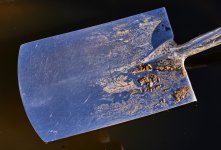
And something else for you, Toni:
View attachment 446633

So I can dig myself in a little deeper? ;)

I don't feel that he (Peter Fraser) was 'trying to be clever' - but just being attentive and making a personal statement. As photographers we are all being extractive by default and he is no different in that. Give the guy a break. ;-)

In fairness to him, the talk around the picture and then seeing it in isolation certainly poisoned my view of the image. Some pictures can generally stand alone, but that one absolutely needs context and knowledge to have value.
 
Indeed, but there's still something about it that I find regrettable - a disturbance of principle, even. A bit like cheating ...
Oh I agree, and I even prefer more natural photos to those that have clearly been heavily edited and/or composites. That's not to say that some of these aren't very nice, some of them are fantastic, but on the whole I prefer a more natural photo.
 
Back
Top