Insect decline in the UK

  • Thread starter Thread starter mex
  • Start date Start date

mex

Suspended / Banned
Messages
7,974
Name
Nigel
Edit My Images
Yes
Being an insect photographer I have noticed not so many insects around to shoot. A huge drop in insects in the UK is as much as 63%, with air pollution, insecticides, habitat loss, climate change and intensive farming being the main reasons. Surely this has to change.

https://www.theguardian.com/environ...aem_8VaIlS7JfbH6qsFyMe4RsA#Echobox=1746000553
Sadly one decline results in others i.e. the impact on bird populations and that can lead to predator declines.

It does not bode well for our survival either if we carry on blissfully thinking "it does not matter"!

Having said that, I don't know what the answer is ?
 
Certainly in my garden there are more insects than last year.

Also the front bumper of my car has insect splattered on it after a long drive last Saturday.

Been years since I've seen that.
 
Can't say I've noticed. Probably just another climate change propaganda fear story:exit:.

Never mind, we'll all, insects included, be fine when they block out the sun with dust or whatever it is they're planning. Lol.

FTH
 
I don't know how you can quantify insect numbers. 63% is such a precise number and any change will be driven by changing weather patterns (we've just had what I believe is the warmest April on record) and any insecticide use now is way better regulated than it was in the past with new products being selective rather than broad-spectrum.

There were plenty of swarming insects on the Richmond riverside on Tuesday night for sure.... not seen many wasps but plenty of bumble bees around
 
I don't know how you can quantify insect numbers.
It's difficult.

They don't have serial numbers so there's no way to know if you've already counted one. It's always possible they play the schoolboy trick and rush to the other end of the line, so they appear at both ends of the school picture. Sneaky blighters, some of them...

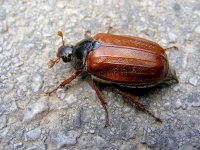
Large red Austrian Beetle Worgle NIK_1091.JPG
 
Last edited:
It does seem to be better so far this year than last. Plenty of hovers, bees and wasps so far, but not many Butterflies on our area. Midges seem to be thriving here too! Spring/Summer in the NW of England was an absolute wash out last year though, which could well have a knock on effect on this year
 
I don't know how you can quantify insect numbers. 63% is such a precise number and any change will be driven by changing weather patterns (we've just had what I believe is the warmest April on record) and any insecticide use now is way better regulated than it was in the past with new products being selective rather than broad-spectrum.

It’s an annual survey counting specifically the number of insects splatted on number plates, with thousands of data points

From the link in the OP

The long-term decline in the number of flying insects being splattered on cars after a journey is well recognised by older drivers. But the latest survey has revealed that the number of insects found on vehicle number plates has plummeted by 63% since 2021.

An analysis of records from more than 25,000 journeys across Britain since 2021 reveals an alarming apparent drop in flying insect abundance, although the rate of decrease slowed in 2024.

Bug splats on the numberplates of citizen scientists using the Bugs Matter app for the Kent Wildlife Trust and Buglife survey declined 8% from 2023 to 2024, after sharper drops of 44% in 2023 and 28% in 2022.

Important to note that it is not a claim about absolute numbers of all insects in the UK falling by 63%, just that the numbers of them colliding with cars has fallen; nevertheless it is an indicator

Edit: Notes about the methodology and a deeper dive into the numbers here

 
Last edited:
It's difficult.

They don't have serial numbers so there's no way to know if you've already counted one. It's always possible they play the schoolboy trick and rush to the other end of the line, so they appear at both ends of the school picture. Sneaky blighters, some of them...

View attachment 452099
Well if you needed to the Cockchafer is so big you could mark it to signify it had been counted :thinking:
 
My opinion , The lack is due to Farmers constantly spraying crops so they can get maximum yields , this also leeches into the rivers and does no good
 
Edit - point I was making has already been posted…
 
Last edited:
My opinion , The lack is due to Farmers constantly spraying crops so they can get maximum yields , this also leeches into the rivers and does no good
Yet those yields are required to feed us.

If you don't want that, who goes first through the gates of "Soylent Green"?
 
My opinion , The lack is due to Farmers constantly spraying crops so they can get maximum yields , this also leeches into the rivers and does no good
Things have moved on a lot since then, with Good Agricultural Practice soil residues and water leaching is something the industry is working hard to reduce...safety wise agrochem is strictly regulated in GB/EU (practice is another matter...).
 
  • Like
Reactions: mex
I would say over the last 20 years I see noticeably fewer bees, butterflies, and even crane flies around where we live. The bird population around our house has also changed and there fewer sparrows, thrushes, blackbirds, and starlings but more pigeons, magpies, and jackdaws. Hedgehogs seem very rare too. Fewer smaller birds. And we're not in an agricultural area and have a large area of uncultivated untreated land nearby that has been untouched for 40 years.
 
Things have moved on a lot since then, with Good Agricultural Practice soil residues and water leaching is something the industry is working hard to reduce...safety wise agrochem is strictly regulated in GB/EU (practice is another matter...).

I don't think 'good agricultural practices' are particularly widespread, chicken farming in the Wye valley for example, the river Wye is becoming baren and devoid of many of it's flora and fauna due to seepage of nutrients from animal manure (to a lesser degree sewerage) and is estimated to be on the brink of irreversible destruction.

Yet those yields are required to feed us.

If you don't want that, who goes first through the gates of "Soylent Green"?

Yes, those yields are required to feed us, but without the insects we are simply doomed, however I'm also of the opinion that profit comes first and the bigger the profit the better and using chemicals constantly to increase yield year on year will see the ground eventually saturated by them, leading to leaching into our waterways destroying the environment beyond repair. Our reliance on chemicals and pesticides is the easy answer, it's cheap.
 
I went south from Lancaster to Worcester (160 miles) this week with more spats on my windscreen than I've seen in years; I had to give it a good clean before heading home!

Maybe they just all moved south of me as it doesn't happen the same around here or driving north to the Lakes & back?
 
It does seem to be better so far this year than last. Plenty of hovers, bees and wasps so far, but not many Butterflies on our area. Midges seem to be thriving here too! Spring/Summer in the NW of England was an absolute wash out last year though, which could well have a knock on effect on this year
Might be because this year neonicotinoids are banned. If my memory is correct they were banned when we were in the EU and when we left we continued to support the ban.
However, under pressure from the farming lobby the last government gave an annual exemption ( repeated each year).
The current government refused this exemption and they are now banned.

This doesn't stop the farmer spraying the field where I have bees with herbicides and fungicides. He's a new farmer (to this field) so this hasn't happened yet. I hope for the best.
 
Last edited:
I went south from Lancaster to Worcester (160 miles) this week with more spats on my windscreen than I've seen in years; I had to give it a good clean before heading home!

Maybe they just all moved south of me as it doesn't happen the same around here or driving north to the Lakes & back?
Interesting, we did Lancashire down to Bristol the other week and I noticed more insect splatter than I've been used to for 20 odd years (including trips down south)
 
My opinion , The lack is due to Farmers constantly spraying crops so they can get maximum yields , this also leeches into the rivers and does no good
Also people put insecticides on their pets which gets into the water.
 
Might be because this year neonicotinoids are banned. If my memory is correct they were banned when we were in the EU and when we left we continued to support the ban.
However, under pressure from the farming lobby the last government gave an annual exemption ( repeated each year).
The current government refused this exemption and they are now banned.

This doesn't stop the farmer spraying the field where I have bees with herbicides and fungicides. He's a new farmer (to this field) so this hasn't happened yet. I hope for the best.
In the EU the ban is not 100% or wasn't


Countries across Europe are exploiting a loophole to allow widespread continued use of bee-killing neonicotinoid pesticides, two years after the EU introduced a landmark ban on their use.
The EU agreed a ban on all outdoor uses of the neonicotinoid insecticides clothianidin, imidacloprid, and thiamethoxam on 27 April 2018, in order to protect bees.

However, an Unearthed investigation has found that in the two years since the ban was agreed, EU countries have issued at least 67 different “emergency authorisations” for outdoor use of these chemicals.
 
In the EU the ban is not 100% or wasn't

This is a point I’m struggling to get my head around. When the exemption was in place how were bees annd other non target insects allegedly coming in to contact with neonicitinoids? The sole permitted use was for virus yellow causing aphids in sugar beet which is a wind pollinated crop that flowers in year two of its growth cycle but is harvested after its first year :thinking: As background I’m a farmer and like the vast majority (despite popular belief) we do strive to work with the environment rather than against it.
 
I don't think there's any definitive answer or insight to give - it very much depends on what you're photographing and how seriously you're taking it. I retired quite recently and have more time to spend on photography rather than just snapping what I see when out for a walk, hence looking at a more dedicated kit rather than the one-size-fits-all solution (eg RX10iv). Having said all that there's still a non-zero chance that I might end up selling the whole lot except the RX10 if I don't get the use of the new stuff! :LOL:

Being an insect photographer I have noticed not so many insects around to shoot. A huge drop in insects in the UK is as much as 63%, with air pollution, insecticides, habitat loss, climate change and intensive farming being the main reasons. Surely this has to change.

https://www.theguardian.com/environ...aem_8VaIlS7JfbH6qsFyMe4RsA#Echobox=1746000553
The government don't want small scale farming and are getting rid IMO. They want scale that Dyson has acquired. They're not bothered about wildlife and working along side it. It's all about quantity, money and control. However, we humans are the driving force behind all distruction.
 
Some more background on neonics.

 
This is a point I’m struggling to get my head around. When the exemption was in place how were bees annd other non target insects allegedly coming in to contact with neonicitinoids? The sole permitted use was for virus yellow causing aphids in sugar beet which is a wind pollinated crop that flowers in year two of its growth cycle but is harvested after its first year :thinking: As background I’m a farmer and like the vast majority (despite popular belief) we do strive to work with the environment rather than against it.
I don't know either a) they weren't and this exemption is fine
b) the neonicitinoids persist in the environment.
I do think calling something banned but having exemptions maybe fine for the environment but is a crime against clear communication.

Also thank you for working with the environment - farming seems very hard to me (no idea I just grow apples in the garden).
 
I too have noticed a lot more insect strikes on my car this spring than there has been in many years.
 
I too have noticed a lot more insect strikes on my car this spring than there has been in many years.

Ironically after my post a few days ago about reductions - I was about to make the same comment after doing a couple of journeys in my car where the front and windscreen were as bad as I can ever remember from the distant past.

Weird.
 
There do seem to be an awful lot of midges about and other smaller insects, which may explain the car splatter (which if nothing else will help feed the bird population)
 
I've seen debates before where it has been suggested that the streamlining of cars resulted in less insect strikes over the years. Our motorhome has two stepped out areas where the habitation body meets the cab and they have always been covered in dead insects after a long journey. But I have had the same car for over four years and the windscreen and grill have never been as bad as this spring with insect strikes. And they aren't midges either. But, France has stricter regulations on pesticides than other EU countries and I haven't noticed the same number of insect strikes down here in northern Spain even though the fields are full of low flying swifts & swallows.
 
Unfortunately agree there are less insects than there used to be
I have been interested in insects especially butterflies for 50 years and have definitely noticed a big drop in numbers
Many reasons intensive farming is one not all farmers are bad some do try to help nature
I grew up in a council estate in Basingstoke and even there I could find lots of butterflies in meadows 5 minutes from home , all those meadows are now gone and are built over
Up here in North Wales there are still wild places left but a lot of development is happening
Every spring i walk the banks of the river Dee looking for Dragonflies especially Club tails , I used to see them in good numbers but this year I haven’t been able to find a single one
I suspect it’s sewage pollution in the river not being diluted by rain as the river level and flow is very low this spring
Club tailed Dragonfly and Banded demoiselle as very susceptible to water pollution
 
Last edited:
I've seen debates before where it has been suggested that the streamlining of cars resulted in less insect strikes over the years.
That's a good point.

I swapped in my Hyundai i10 for the much more streamlined i30 about ten years ago and immediately noticed the reduction in dead insects to be cleaned off, especially after long fast drives.

I think you'd still collect plenty of carcasses, doing 70 in a car like this...

Vintage American car Nikon F 1992 02-03.jpg
 
Unfortunately agree there are less insects than there used to be
I have been interested in insects especially butterflies for 50 years and have definitely noticed a big drop in numbers
Many reasons intensive farming is one not all farmers are bad some do try to help nature
I grew up in a council estate in Basingstoke and even there I could find lots of butterflies in meadows 5 minutes from home , all those meadows are now gone and are built over
Up here in North Wales there are still wild places left but a lot of development is happening
Every spring i walk the banks of the river Dee looking for Dragonflies especially Club tails , I used to see them in good numbers but this year I haven’t been able to find a single one
I suspect it’s sewage pollution in the river not being diluted by rain as the river level and flow is very low this spring
Club tailed Dragonfly and Banded demoiselle as very susceptible to water pollution
Also insecticides applied to pets.
 
I saw a video where it was explained that the chemical pesticides sprayed on crops had been absorbed into the plants and soil and when the bees and insects collected the pollen it had been absorbed into them from the plants and that was what was killing them.
 
As both a macro photographer, and motorcyclist, there is a tremendous reduction in number of insects. Helmet used to be covered. Barely any these days which is a major shame. I turned my entire front lawn into a wildflower meadow, so hoping to see what is produced from that this year.
 
I was discussing the other day how house flies have vanished, in the 40's it was normal to see dozens of flies circling ceiling lamps in continuing spirals.
Today nothing.
 
I was discussing the other day how house flies have vanished, in the 40's it was normal to see dozens of flies circling ceiling lamps in continuing spirals.
Today nothing.

Among other reasons: Less rubbish and dog poop about and about. Food waste is more likely to be bagged and put in a lidded bin.
 
I was amazed last year at how little time I had to waste, cleaning insects off the front of my car. This year however the numbers on my car have increased substantially. Perhaps thats where they have all gone…Im to blame!
 
I was amazed last year at how little time I had to waste, cleaning insects off the front of my car. This year however the numbers on my car have increased substantially. Perhaps thats where they have all gone…Im to blame!
Perhaps the milder winter has helped. Plus, no non stop rain like last year.
 
Back
Top