

You are using an out of date browser. It may not display this or other websites correctly.
You should upgrade or use an alternative browser.
You should upgrade or use an alternative browser.
Image Stabilisation
- Thread starter keyrex
- Start date


chphoto
Suspended / Banned
- Messages
- 945
- Name
- Chris
- Edit My Images
- Yes
It's most useful at longer focal lengths where camera shake becomes more of an issue, no matter how steady your hands are. Some 'short' lenses are being made with IS now, either for allowing slower shutter speeds in low light or for video recording, where it can steady it nicely. It won't be much use on something like a 50mm f1.4, because there's very few situations where f1.4 doesn't allow a fast enough shutter speed (like 1/50s or faster) to eliminate the camera shake. Something like a 70-300mm f4-5.6 is very useful to have it, 300mm @ f5.6 can be a pain unless you're shooting something in a well-lit environment, so the IS allows you to use the slower shutter speed.
edit: If you can get to a camera shop to give a telephoto lens a try with the IS, do it and see the difference. Easiest way is to use the live view, and hold the camera up to a subject some distance away with the IS switched off, it's not going to be easy to keep it that steady! Do the same thing with IS switched on (usually need to half press the shutter to initiate it), then see the difference it makes!
edit: If you can get to a camera shop to give a telephoto lens a try with the IS, do it and see the difference. Easiest way is to use the live view, and hold the camera up to a subject some distance away with the IS switched off, it's not going to be easy to keep it that steady! Do the same thing with IS switched on (usually need to half press the shutter to initiate it), then see the difference it makes!
Last edited:
Thanks, that makes sense.
One other thing...
Some one said to step the f1.4 down to f5.6 for sharper pictures, but if I am going to shoot at f5.6 or smaller then why buy an f1.4 in the first place, I am misunderstanding something? I guess I am but I'm not sure what?
One other thing...
Some one said to step the f1.4 down to f5.6 for sharper pictures, but if I am going to shoot at f5.6 or smaller then why buy an f1.4 in the first place, I am misunderstanding something? I guess I am but I'm not sure what?
Thanks, that makes sense.
One other thing...
Some one said to step the f1.4 down to f5.6 for sharper pictures, but if I am going to shoot at f5.6 or smaller then why buy an f1.4 in the first place, I am misunderstanding something? I guess I am but I'm not sure what?
Lenses are typically not at their optimum sharpness at their widest aperture - though usually 1 stop is quite sufficient - if you have a f/1.4 that needs to be stopped down to f/5.6 to get sharp then you've got a dodgy lens!
You also tend to need to do this less with better lenses - and more with 'kit' lenses and budget telephotos (which are often those with not particularly great widest aperture to begin with)
As to why you would buy a f/1.4 only to use it at f/2 for sharpness? - well, if you apply the 'rule' across the board, because if you bought an f/2 you'd have to use it at f/2.8! - and sometimes an extra stop of light means you can get the shutter speed up enough for the shot, and the alternative of upping the ISO would give more degradation than shooting wide open.
chphoto
Suspended / Banned
- Messages
- 945
- Name
- Chris
- Edit My Images
- Yes
I've got the 50mm f1.8, which isn't the sharpest wide open, but yes if it's stopped down to f5.6 or f8 it's massively sharper. However, f8 doesn't give the kind of qualities that f1.8 does! A carefully framed shot at f1.8 gives a much more pleasing image with blurred backgrounds etc than the same shot at f8.
If you need the sharpness, say for a larger print, by all means drop it down to somewhere between f2-2.8. You'll still get a fairly pleasing background blur! I shoot most of my lenses wide open! My 17-50mm f2.8 is a lovely walkabout lens
If you need the sharpness, say for a larger print, by all means drop it down to somewhere between f2-2.8. You'll still get a fairly pleasing background blur! I shoot most of my lenses wide open! My 17-50mm f2.8 is a lovely walkabout lens

Musicman
Suspended / Banned
- Messages
- 9,866
- Name
- Rob Telford
- Edit My Images
- No
Not just for long focal lengths.
0.4s free-standing handheld, Panasonic G2 with 14-42mm IS kit lens micro 4/3 with a 2x crop factor
12mm
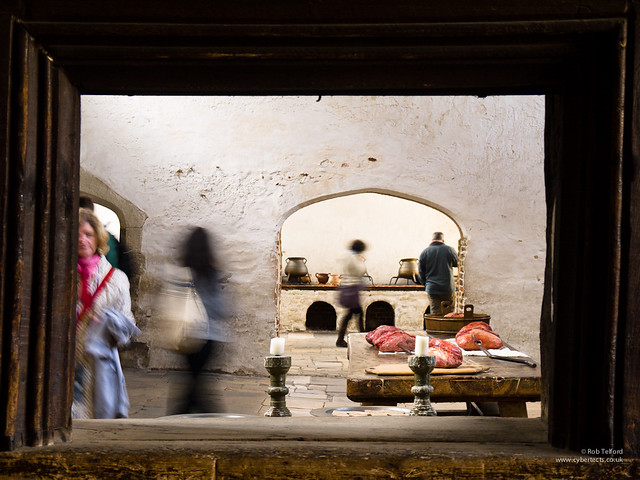
Frame by Frame by cybertect, on Flickr
37mm
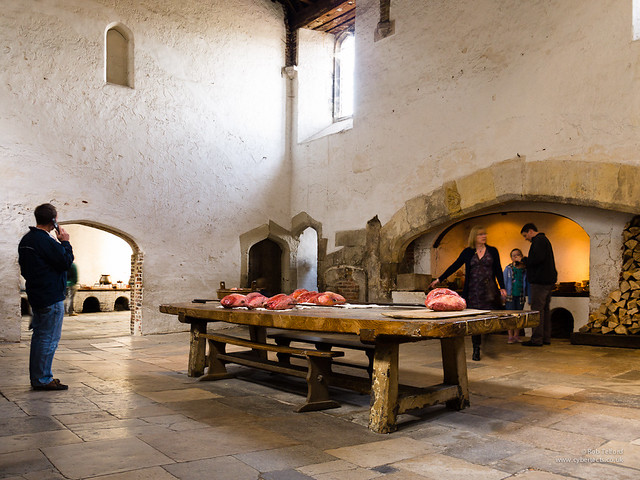
Always in the kitchen at parties by cybertect, on Flickr
QED
0.4s free-standing handheld, Panasonic G2 with 14-42mm IS kit lens micro 4/3 with a 2x crop factor
12mm
Frame by Frame by cybertect, on Flickr
37mm
Always in the kitchen at parties by cybertect, on Flickr
QED

- Messages
- 49,339
- Name
- Nod (UK)
- Edit My Images
- Yes
Michael, a very basic, rough rule of thumb is that you can handhold a shutter speed that is the reciprocal of the focal length you're shooting at, so a 50mm lens can (using the rough guide) be hand held at 1/50th of a second (in real life, the normal step that falls at is 1/60th. However, on crop bodies (sych as yours, the crop factor has to be taken into account - so your 50mm has the same field/angle of view as an 80mm lens on full frame, so (in theory) needs a faster shutter speed to hand hold - 1/80th s (probably 1/90th in the real world.
Short lenses (wide angles) generally can be handheld at relatively long exposures - at 24mm (on a 1.6 x crop), 1/38.4 s, and at 70mm, 1/112th s. Once you get into telephotos though, the hand holdable times are shorter - at 100mm, you're looking at 1/160th s and at 300mm, 1/480th s. This is why standard zooms and kit lenses often don't have IS/OS/VR/VC but longerlenses do have it, allowing them to be used in lower light without a tripod. It's also sometimes the slower lenses (the ones with a higher f stop number) that need VR/OS etc - they need more light wide open and OS can make a big difference to their useability.
Don't worry too much if your telephoto doesn't have OS (although it's worth having and can be very effective) - a good tripod will hold the camera and lens steady for longer than OS will! (Beware of cheap tripods though - often a false economy!).
Short lenses (wide angles) generally can be handheld at relatively long exposures - at 24mm (on a 1.6 x crop), 1/38.4 s, and at 70mm, 1/112th s. Once you get into telephotos though, the hand holdable times are shorter - at 100mm, you're looking at 1/160th s and at 300mm, 1/480th s. This is why standard zooms and kit lenses often don't have IS/OS/VR/VC but longerlenses do have it, allowing them to be used in lower light without a tripod. It's also sometimes the slower lenses (the ones with a higher f stop number) that need VR/OS etc - they need more light wide open and OS can make a big difference to their useability.
Don't worry too much if your telephoto doesn't have OS (although it's worth having and can be very effective) - a good tripod will hold the camera and lens steady for longer than OS will! (Beware of cheap tripods though - often a false economy!).
Thanks, so ...
I can hand hold a 50mm and get good results in the evening, what about if I buy a 24-105 f4 L with IS could I hand hold it in low light situation? ie. on holiday on the beach during dusk?
I recently sold the 17-85 f4-5.6 and I couldn't handhold that for long enough.
I want a lens that I can use everyday (because of budget) and want to be able to shoot all day into the evening (without the need to carry a tripod round with me) is there a particular lens you would recommend?
I am considering several but have not yet made up my mind because I don't enough about them individually,
These are my considerations, any help would be appreciated...
1. Ef-s 17-55 f2.8 but zoom isn't long enough (also probably going to buy FF camera early next year)
2. 24-105 f4 L not sure if F4 is wide enough
3. 50mm f1.4 worried about restricted focal length
I've been mulling over this for weeks and at the moment the only thing I am using is 100mm f2.8 macro L which is great lens but not suitable for everyday use due to its focal length.
My wife says in indecisive but I'm not sure if I agree with her not!!!
I can hand hold a 50mm and get good results in the evening, what about if I buy a 24-105 f4 L with IS could I hand hold it in low light situation? ie. on holiday on the beach during dusk?
I recently sold the 17-85 f4-5.6 and I couldn't handhold that for long enough.
I want a lens that I can use everyday (because of budget) and want to be able to shoot all day into the evening (without the need to carry a tripod round with me) is there a particular lens you would recommend?
I am considering several but have not yet made up my mind because I don't enough about them individually,
These are my considerations, any help would be appreciated...
1. Ef-s 17-55 f2.8 but zoom isn't long enough (also probably going to buy FF camera early next year)
2. 24-105 f4 L not sure if F4 is wide enough
3. 50mm f1.4 worried about restricted focal length
I've been mulling over this for weeks and at the moment the only thing I am using is 100mm f2.8 macro L which is great lens but not suitable for everyday use due to its focal length.
My wife says in indecisive but I'm not sure if I agree with her not!!!
- Messages
- 49,339
- Name
- Nod (UK)
- Edit My Images
- Yes
It's generally reckoned that OS/VR/IS etc give about 4 stops of handholdability over non stabilised lenses but that obviously depends on the user's technique. I generally restrict myself to 2-3 stops slower than the reciprocal rule would suggest and stay handholdable, depending on how puffed and tired I am.
Since you're going to upgrade to FF, don't spend any more money on EF-S lenses - you'll only have to spend more money on upgradeing them to FF compatible soon after spending a fairly substantial amount on the FF body.
Obviously, budget has to be some consideration, so have you considered 3rd party lenses (Sigma, Tamron etc)? On my D700, I mainly use a trio of Zooms - 2 Sigmas and one Nikon, in rising order of FL, a 12-24 (S), a 24-70 f/2.8 (S) and a 70-300 VR (N). That covers all the bases from quite wide enough thank you (well, I also carry an 8mm fisheye for even wider but that's my taste!) to long enough and light enough for my tastes. In an ideal world, where budget wasn't important, I would upgrade the Sigmas to the Nikon equivalent - although that would lose me 2mm at the wide end (where every mm counts!). Out of the 6 lenses I usually carry, only 2 have VR - the Macro (a Nikkor 105mm VR Micro) and the long zoom (70-300 VR). shorter lenses don't (IMO) need it so much and non VR/OS versions are cheaper!
Since you're going to upgrade to FF, don't spend any more money on EF-S lenses - you'll only have to spend more money on upgradeing them to FF compatible soon after spending a fairly substantial amount on the FF body.
Obviously, budget has to be some consideration, so have you considered 3rd party lenses (Sigma, Tamron etc)? On my D700, I mainly use a trio of Zooms - 2 Sigmas and one Nikon, in rising order of FL, a 12-24 (S), a 24-70 f/2.8 (S) and a 70-300 VR (N). That covers all the bases from quite wide enough thank you (well, I also carry an 8mm fisheye for even wider but that's my taste!) to long enough and light enough for my tastes. In an ideal world, where budget wasn't important, I would upgrade the Sigmas to the Nikon equivalent - although that would lose me 2mm at the wide end (where every mm counts!). Out of the 6 lenses I usually carry, only 2 have VR - the Macro (a Nikkor 105mm VR Micro) and the long zoom (70-300 VR). shorter lenses don't (IMO) need it so much and non VR/OS versions are cheaper!

petersmart
Suspended / Banned
- Messages
- 5,000
- Edit My Images
- Yes
I've got the 50mm f1.8, which isn't the sharpest wide open, but yes if it's stopped down to f5.6 or f8 it's massively sharper.
In fact from f2.8 the 50mm is extremely sharp, and even at f1,8 it still beats many other lenses including L glass lenses for sharpness.
.
So Peter just to get this right, are you recommending the 50mm f1.8?
I know it's only £80 or so but that go towards a different lens so I want to get my purchase right. Having said that I suppose £80 isn't too much to take a chance on
I know it's only £80 or so but that go towards a different lens so I want to get my purchase right. Having said that I suppose £80 isn't too much to take a chance on
Last edited:

fred_bt
Suspended / Banned
- Messages
- 136
- Name
- Stuart
- Edit My Images
- Yes
I can hand hold a 50mm and get good results in the evening, what about if I buy a 24-105 f4 L with IS could I hand hold it in low light situation? ie. on holiday on the beach during dusk?
I can hand hold the 24-105 with the IS on easily at 1/15s, and with a bit of a prop down to 1/5s. At long exposure times it's best to enable the mirror lock-up as well (though it takes a bit of getting used to when hand holding as opposed to a tripod).
I also have the 17-55 f2.8. Both are excellent lenses for different purposes. But if you want a cheap, good fast lens and don't mind a fixed focal length then a prime will almost always win out...

BacktotheFuji
Suspended / Banned
- Messages
- 4,918
- Name
- Graham
- Edit My Images
- No
Stabilisation is useful at shorter lengths for static subjects in low light, but otherwise a bit pointless as you'll likely see subject movement blur.
Musicman
Suspended / Banned
- Messages
- 9,866
- Name
- Rob Telford
- Edit My Images
- No
manualfocus-g said:Stabilisation is useful at shorter lengths for static subjects in low light, but otherwise a bit pointless as you'll likely see subject movement blur.
Depends entirely on what your subject is. On that basis, you might say a 10-stop ND filter is pointless as you'll see subject movement blur - although you'd use one precisely because you want to make use of movement in the scene.
To be sure, if you're taking picture of people at a party or a band in a dimly lit club, it probably won't assist much. If you're photographing a building, interior, or street scene, or even a beach landscape then it can be very useful (see my posts above).
Since the OP is a little unclear *why* he's thinking about an IS lens and what he's likely to use it for, the point is somewhat moot.

craftysnapper
Suspended / Banned
- Messages
- 255
- Name
- Paul
- Edit My Images
- No
One other thing to take into account that no one has mentioned is your age and health (and they do change has you get older) as these have a bearing on your handholding ability.
I could used to hold a equivalent 300mm focal length at 1/60sec with IS, now I need 1/300sec with IS to be absolutley sure of a shake free image, age comes to us all.
I could used to hold a equivalent 300mm focal length at 1/60sec with IS, now I need 1/300sec with IS to be absolutley sure of a shake free image, age comes to us all.