I'm glad it's not just me

Sorry.... got zero time for all this crap about bokeh and stuff that's of no importance. I lose my patience with it.
Judging by your posts in this thread, you've got oodles of time for it.
 
DSC02834_R_sized.jpg
 
It's been going on years I remember people banging on about 'perfect doughnuts' on 500mm Mirror Lenses long before the word Bokeh was even invented !

Here's a preening heron shot with a 500mm mirror lens. The background consists of blurred reeds & their reflection in the water. It's of no particular interest beyond the fact that it provides some relevent context of recognisable waterside vegetation, so ideally it should be blurred enough to reduce its attention grabbing potential, but not so much as to render it unrecognisable. The problem with the "doughnut" bokeh of mirror lenses, created by their doughnut shaped iris (actually the round obstruction of the smaller secondary mirror in the middle of the objective lens) is that it tends to sharpen the edges of blurred straight things like reeds, in effect doubling them. That lens artefact creates a "busier" looking blurred bokeh. If ever I want to put that image up for sale in a gallery I'll try blurring over some of that business in the bokeh. I had no control in camera of this blurring, since the lens has a fixed f8 aperture. So this is an example where the lens happened to introduce a useful amount of background blurring, but the character of the blur, the bokeh, spoils it a bit. Pretty much any 500mm refractor lens would have produced a nicer background.

3609669097_dd415e649a_b.jpg


But the busy bokeh of mirror lenses is not necessarily always bad. Here's a shot of a water sprinkler in which it usefully adds to the impression of ferocious water pressure.

3603670874_a07d946838_b.jpg
 
Assuming you are serious, don't you think part of the point is that if the out of focus blur is striking then it can be distracting attention from the subject - obvious example is the doughnuts from mirror lenses, already cited here.

Of course.... which is why no one uses them any more. Let's be honest though.... If I did blind tests on you, you'd not be able to identify a single lens accurately by it's "bokeh" in the real world, so it's all b******s.

So nobody could identify any lens by its bokeh, yet the bokeh of mirror lenses is so horrid nobody uses them any more? :-)

The doughnut bokeh of mirror lenses is not just the exception which "proves" the rule, in the popular misuse of that aphorism. As it happens my 500mm mirror lens, the Sony/Minolta one which is the only one with AF, is one of my favourite lenses. I often bung it in my bag just in case something unexpectedly distant and interesting turns up. I share enthusiasm for that lens with Michael Johnson of Luminous Landscape, already not quite correctly cited in this thread as the inventor of the term "bokeh", although he has written a lot about it. Despite MJ's erudite enthusiasm for bokeh, he has said of the Sony/Minolta 500mm AF mirror lens that it's such a good lens that for some enthusiasts that lens alone is a sufficiently good reason to have one of the Sony A-mount cameras which can use it.

A miror lens with all its defects a "good lens"? There are more ways a lens can be good than image quality. All mirror lenses have inherent and obvious image quality defects compared with reasonably good refractor lenses, such as low contrast and horrid bokeh. Its unique goodness is that its the only 500m AF lens small and light enough to bung in your gear bag, or even a capacious pocket, just in case something distant and interesting unexpectedly turns up. While not delivering as good an image as its much bigger and heavier (and much more expensive) refractive competitors, it's still better at delivering distant wildlife detail than the 300mm end of any zoom.

Moving away from such an extreme example, there are some photographers who have both an ancient film era 70-200 f4 lens and a modern 70-200 f2.8 who still sometimes prefer to use the old f4 lens because despite its inferior aperture, detail resolution, and chromatic aberration, it has nicer bokeh.
 
So nobody could identify any lens by its bokeh, yet the bokeh of mirror lenses is so horrid nobody uses them any more? :)

The doughnut bokeh of mirror lenses is not just the exception which "proves" the rule, in the popular misuse of that aphorism. As it happens my 500mm mirror lens, the Sony/Minolta one which is the only one with AF, is one of my favourite lenses. I often bung it in my bag just in case something unexpectedly distant and interesting turns up. I share enthusiasm for that lens with Michael Johnson of Luminous Landscape, already not quite correctly cited in this thread as the inventor of the term "bokeh", although he has written a lot about it.
.

I think that's me you're misquoting ;-) there. I struggled to characterise Mike's relationship to the word and settled on "introduced" since he commissioned articles about it in the early days and I *think* advocated the present spelling of the Japanese word(s).
BTW I would describe Michael Johnston as formerly of "LuLa" but now of TheOnlinePhotographer dot com ;-) .
 
So nobody could identify any lens by its bokeh, yet the bokeh of mirror lenses is so horrid nobody uses them any more? :)
But could you identify your beloved mirror lens against another make of mirror lens? Could you identify a 70-200 2.8 lens of one make against another? I think that was the point, not comparing apples to oranges.
 
While not delivering as good an image as its much bigger and heavier (and much more expensive) refractive competitors, it's still better at delivering distant wildlife detail than the 300mm end of any zoom.

why compare it to a 300mm zoom? Cost? Why would anyone try expect much from a heavily cropped image using a lens with almost half the reach?
These are around £630 for which I'd buy a second hand canon 100-400, on a crop sensor camera gives a much better result.

Here it is matched with a lowly 40D
108016257.jpg

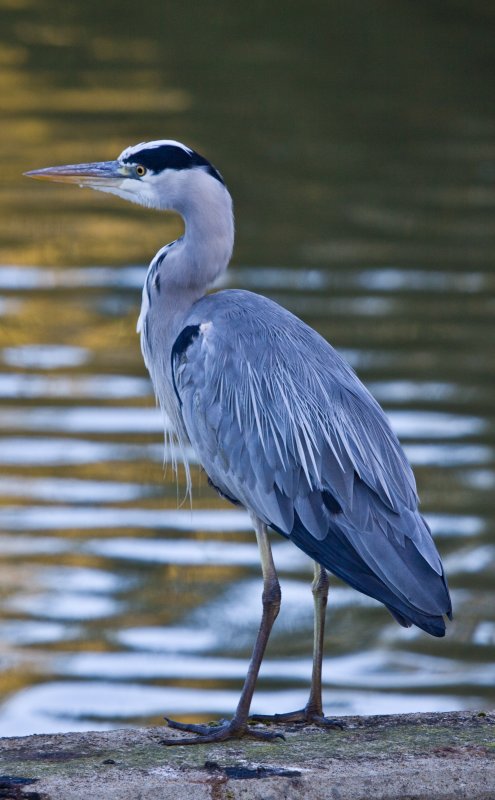
and since you like herons and blurred backgrounds
117134629.jpg
 
why compare it to a 300mm zoom? Cost? Why would anyone try expect much from a heavily cropped image using a lens with almost half the reach?
These are around £630 for which I'd buy a second hand canon 100-400, on a crop sensor camera gives a much better result....

But the Sony / Minolta 500 mirror is about £300 s/h currently - so if comparing on cost that is the 'target' price.

I think the point Chris is trying to make is that there is a place for Mirror lenses - they are much cheaper and lighter than equivalent focal length 'normal' lenses (though you do have to be careful of how the background may appear if such things concern you).
 
They certainly have their place and you don't always have to worry about doughnuts - this was about 2km away taken with a Canon FD 500mm f/8 Reflex which I think cost me about a hundred quid.


Messing about on the river
by Rob Telford, on Flickr

A little closer - about 100m away from the camera


GLA Building
by Rob Telford, on Flickr

Edit: TBH, the bigger issue at those distances often is atmospheric distortion created by rising and turbulent air.
 
Last edited:
Back
Top