You are using an out of date browser. It may not display this or other websites correctly.
You should upgrade or use an alternative browser.
You should upgrade or use an alternative browser.
Ilford XP2 Super 24 Exposure 35mm Film
- Thread starter Kiwi Paul
- Start date

Dave Canon
Suspended / Banned
- Messages
- 1,980
- Name
- David
- Edit My Images
- No
I used XP1 and XP2 many year ago. These films use dyes coupled to the latent silver halide image. Given it is for B&W, they do not need the more complex layers required for colour. The over all effect is lower grain higher ISO. It was also convenient because I was also processing colour negatives so could use the same chemicals for both. Certainly XP2 was my favourite B&W film but I am sure that many traditionalist will dislike it for various reasons. I used to dislike grainy images.
Dave
Dave
OP

Kiwi Paul
Suspended / Banned
- Messages
- 762
- Name
- Paul
- Edit My Images
- No
Thanks Dave,I used XP1 and XP2 many year ago. These films use dyes coupled to the latent silver halide image. Given it is for B&W, they do not need the more complex layers required for colour. The over all effect is lower grain higher ISO. It was also convenient because I was also processing colour negatives so could use the same chemicals for both. Certainly XP2 was my favourite B&W film but I am sure that many traditionalist will dislike it for various reasons. I used to dislike grainy images.
Dave
I guess there's only one way to find out and give it a try.
Paul

FishyFish
Suspended / Banned
- Messages
- 8,792
- Name
- Nige
- Edit My Images
- No
It supposedly has a wide exposure latitude, meaning you can shoot it rated above and below box speed on the same roll and just develop normally with good results. I've never tried this though.
I've shot it before at box speed and the results were nice.
I've shot it before at box speed and the results were nice.

Mr Perceptive
Suspended / Banned
- Messages
- 9,347
- Name
- David
- Edit My Images
- Yes
I've just bought two rolls, I and I wanted something I could get processed quickly (same day) as it will be going in a new to me camera and I'll be on holiday, and I will want to know if camera is borked before I fill it with Portra400!!!

Arkady001
Suspended / Banned
- Messages
- 151
- Name
- Rob
- Edit My Images
- No
It's fine. Especially for a quick test run... I used it a lot on deployments where only C-41 minilabs were available.
Quality will depend on the minilab used and how diligent the operator is in maintaining the chemistry.
Don't expect great scans from minilabs though... even the 'hi-res' option is poor compared to home scanning.
Quality will depend on the minilab used and how diligent the operator is in maintaining the chemistry.
Don't expect great scans from minilabs though... even the 'hi-res' option is poor compared to home scanning.
Mr Perceptive
Suspended / Banned
- Messages
- 9,347
- Name
- David
- Edit My Images
- Yes
It's fine. Especially for a quick test run... I used it a lot on deployments where only C-41 minilabs were available.
Quality will depend on the minilab used and how diligent the operator is in maintaining the chemistry.
Don't expect great scans from minilabs though... even the 'hi-res' option is poor compared to home scanning.
No I'd get small prinbts done, I'll scan the negs when I come back - just want to make sure camera works - If I get a chance to do it before I go I will.
In case you haven't seen this:Ilford XP2 Super 24 Exposure 35mm Film
This B&W film is developed using the C41 process, I already do my own C41 developing for colour negs so I'm curious to try this out, has anyone used it?
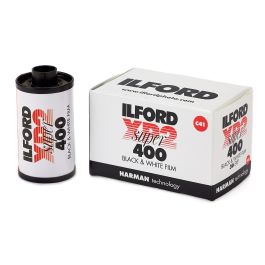
XP2 SUPER 35mm
35mm, ISO 400, fine grain, highly versatile black & white film that can be processed on the high street (in C41 chemistry). High speed ISO 400 B&W film using colour C41 processing Wide exposure latitude and well defined highlights 35mm, 120 Roll and Single Use Cameras available
 www.ilfordphoto.com

Arkady001
Suspended / Banned
- Messages
- 151
- Name
- Rob
- Edit My Images
- No
Yup, since they're printing on colour paper and most operators couldn't be bothered to go into the Minilab printer settings and change them for one roll of film. The Fuji Frontier actually does a pretty decent job of it on Fujicolor Crystal Archive paper if you tweak the settings. You can save them as a preset for customers who regularly use XP-2.I used it a lot back in the film days.
I either got a sepia or a green cast from my lab developed photos

pentaxpete
Suspended / Banned
- Messages
- 1,583
- Name
- Peter
- Edit My Images
- Yes
i regularly use it but 'Most' of mine is outdated so I downrate it to 250 ASA -- it gives good results -- I was GIVEN a FRESH 35mm 24Exp cassette by a Camera Club member which I keep in the Fridge for a 'Special Occasion Photo = Opportunity' !!
Feb 2007 dated XP2 400 Super 120 size in my 1950's British 'Ensign Selfix' 16/20 Model I with 75mm f4.5 'Ensar' lens at f5.6
Feb 2007 dated XP2 400 Super 120 size in my 1950's British 'Ensign Selfix' 16/20 Model I with 75mm f4.5 'Ensar' lens at f5.6
Attachments

Arkady001
Suspended / Banned
- Messages
- 151
- Name
- Rob
- Edit My Images
- No
I have a couple of mates who would sell their kids for that landy...i regularly use it but 'Most' of mine is outdated so I downrate it to 250 ASA -- it gives good results -- I was GIVEN a FRESH 35mm 24Exp cassette by a Camera Club member which I keep in the Fridge for a 'Special Occasion Photo = Opportunity' !!
Feb 2007 dated XP2 400 Super 120 size in my 1950's British 'Ensign Selfix' 16/20 Model I with 75mm f4.5 'Ensar' lens at f5.6

- Messages
- 7,457
- Edit My Images
- No
I also use XP2 quite often. I prefer to shoot it at 200 ISO in sunny lighting conditions as I find the shadows don't block up, but use it at the box rated 400 ISO in cloudy/dull conditions. The advantage with XP2 is that you can do this on the same roll of film, and just get it developed as normal (400 ISO). So it's a handy black and white film to have if you are shooting in mixed lighting conditions and think you might 'top out' on shutter speed if the sun comes out. If so, just switch the meter to 200 ISO and carry on shooting!
I find detail and tone nice enough too, as this home scanned 6×4.5 shot on 120 XP2 roll film (taken on a 1950s Ensign Selfix 1620 folding camera) shows (click on the image to view it at a larger size on Flickr).

I find detail and tone nice enough too, as this home scanned 6×4.5 shot on 120 XP2 roll film (taken on a 1950s Ensign Selfix 1620 folding camera) shows (click on the image to view it at a larger size on Flickr).
Last edited:

Jao
Suspended / Banned
- Messages
- 3,936
- Name
- Adrian
- Edit My Images
- Yes
I shot a lot of XP and XP2 back in the day. When there were lots of 1 hour labs you could get the results back pretty sharpish. I haven't used it for some years, but my recollection was that XP2 was even better than XP. It had great latitude and nice grain. I also liked and used Kodak's long discontinued BW400CN which was also a chromogenic film for processing in C41 chemicals. Long story short, shoot away, I doubt you will be disappointed! The image below is an old one on first generation XP