If you shoot freehand and get sharp images - you are just lucky!

FlyTVR

Suspended / Banned
Messages
4,234
Edit My Images
No
Not my words - http://www.arcurs.com/videos Episode 4.

So - and I'm sure I'm missing something here, but, if (under studio conditions) you have the ambient light under control, the effective duration of the shot is governed by the duration of the flash (1000ths of a second), why would you need a monopod?

Thoughts?

Dav
 
Perhaps the fact that he's flogging monopods for $650 may have something to do with it.
 
I'm a bit cynical too, but your premise is wrong - flash duration isn't (usually) in the thousands of a second, it's generally somewhere between 1/700th and 1/2000th.

That's at max power, flash duration is usually considerably longer at very low power settings.

And the flash duration is usually expressed as t.5 (the time it takes for half of the flash power to discharge), the t.1 time is more closely related to a shutter speed, and generally a t.5 time is about 3x as long as a t.1 time.

So, flash duration say 1/700th at t.5
Say 1/300th at minimum power
x3 because we're talking t.5 not t.1 = 1/100th second, worst case scenario
 
Perhaps the fact that he's flogging monopods for $650 may have something to do with it.

Yeah that was the first thing I spotted too ;)

Check the kit he has though. Hasselblad of some kind and what looks like the 150. Couple of things about that combo....

1. First time I ever tried it about half my pictures were "soft". It kind of redefines what sharp means.
2. Shoot all day handheld and you will feel like you've been punched in the arm a lot. I use the stupidly expensive handstrap and IMO either that or a monopod are essential.
3. Unless he's using the H4 with its Wii inspired Borg-tech focus system using a monopod could decrease sharpness. As you recompose after focusing it's easy to push the camera forward instead of tilting it down because of the ball head - tilting is bad enough, moving would be worse.

But his shots look pretty sharp and he has a nice studio - I bet he doesn't need the $650 from selling monopods.
 
What Garry said, and cameras can get quite annoying over days use. Never had experience with Hasselblad cameras that guy is using but something like Mamiya 645 or RZ67 is definitely not hand holdable for long period of time. The weight just gets annoying. :)
 
Plus this guy is operating at the very very top of his game, and producing the highest possible resolution images - as Jonathan said, it's a whole new level of sharpness needed.

He's been evangelising a similar monopod combo for years, so something tells me it's not something he's fabricated to justify selling a $650 monopod.
 
Not my words - http://www.arcurs.com/videos Episode 4.

So - and I'm sure I'm missing something here, but, if (under studio conditions) you have the ambient light under control, the effective duration of the shot is governed by the duration of the flash (1000ths of a second), why would you need a monopod?

Thoughts?

Dav

Well he's wielding a thumping great Hasselblad, with no image stabilisation. So yes, if he's not using flash (I don't think he mentions flash?) I guess a monopod is a pretty good idea.

I'm a bit cynical too, but your premise is wrong - flash duration isn't (usually) in the thousands of a second, it's generally somewhere between 1/700th and 1/2000th.

That's at max power, flash duration is usually considerably longer at very low power settings.

And the flash duration is usually expressed as t.5 (the time it takes for half of the flash power to discharge), the t.1 time is more closely related to a shutter speed, and generally a t.5 time is about 3x as long as a t.1 time.

So, flash duration say 1/700th at t.5
Say 1/300th at minimum power
x3 because we're talking t.5 not t.1 = 1/100th second, worst case scenario

I think you've got some number transposed there Garry, but do you have a link to any of this? Can you give some idea of what the Lencarta Smartflash durations are for example, at a range of powers, both at t.5 and t.1? I can't find anything on your website, and most manufacturers give very little info on this.

The figures you have quoted are all predicated on the assumption that t.1 is always three times t.5, but if that is indeed the case then in the example you've given, if you shoot at say 1/200sec you're not only going to get half the flash exposure, but the focal plane shutter will be scanning different parts of the flash pulse and you'll get uneven brightness over the frame.

That is not my experience, nor does it tally with the few examples I can remember of published flash durations at different power levels which I think have something to do with how many capacitors there are, and how they are configured to fire at different power outputs. My own very crude tests just now (Elinchrom D-Lites) at full, half and min powers suggest that the flash duration doesn't vary that much, but I need to do something more scientific with an electric fan tomorrow.

If you have some official numbers, that would be very helpful.
 
Plus this guy is operating at the very very top of his game, and producing the highest possible resolution images - as Jonathan said, it's a whole new level of sharpness needed.

He's been evangelising a similar monopod combo for years, so something tells me it's not something he's fabricated to justify selling a $650 monopod.

I agree. This chap knows what he's talking about and I doubt he's worrying about $650 monopods.

Thanks Garry for your input.
 
Richard,

A lot of the Lencarta data is on the site, in terms of both flash duration (at t.5) and colour temperature.

I agree that most manufacturers give little or no info on these things. Bowens do, which is why I know that their flash durations tend to be long.

Where data is provided, it's almost always untrue mistaken. Usually, it's from a re-seller not a manufacturer and quotes unblievably stable colour temperature, usually something like "Color temperature 5500K, variation 100K) that they've probably made up, or taken from the actual manufacturers' data, which they made up. In fact, it's difficult to get a flash tube that will give consistent colour to that level of variation, let alone in the cheap and cheerful lights.

If you want to do something scientific to test flash durations, it's best to do as I do and use an oscilliscope, it will give you actual data. Anything else is just an indicator.

Official numbers? Probably best to ask that question of the poster who said that something I said about flash durations is definately wrong as far as his own favoured make is concerned, someone else asked him for figures too...

There's a lot more to a good flash head than flash duration and colour temperature figures but, in my view at least they are important and I would like to see them all published. If people published their figures, other people could check them, which may be the reason why most don't...

I did do a series of very detailed tests on a range of different flash heads, made by different manufacturers and sold under different names, a few months back. It was incomplete because of course I could only test the ones I could get hold of, but I found the results very interesting, and useful to Lencarta too.

But I didn't publish them because I doubted whether people would believe in my impartiality and integrity, so I contacted a few different people and invited them to come to my studio so that the tests could be repeated in their presence, but nobody was able to come during the few days that I had all of these various flash heads available.


The figures you have quoted are all predicated on the assumption that t.1 is always three times t.5, but if that is indeed the case then in the example you've given, if you shoot at say 1/200sec you're not only going to get half the flash exposure, but the focal plane shutter will be scanning different parts of the flash pulse and you'll get uneven brightness over the frame
Perhaps you could explain this - I don't understand why you're saying that because the shutter always has to be fully open during the flash.
 
Hi Mike,

can I ask where you say these monopods being advertised at $650, as that's way above what they are on offer for elsewhere even though the price differs from around £98 to £150 ish for the basic monopod. The head and additional custom bracket will cost more, but the custom bracket is not essential. They will be on view on the Manfrotto stand at Focus on Imaging at the NEC from Sunday.

More info and another video at www.luminous-landscape.com/reviews/.../monopod.shtml search for Manfrotto 685B review
 
Last edited:
Oh, and if you think Yuri had a nice studio then take a look at this one...
 
I know. I meant his old one on the youtube vids isn't a patch on his new one. :D
 
I know. I meant his old one on the youtube vids isn't a patch on his new one. :D

Aha! I thought for a second that man flu you'd had or the 'argument' with Tiler had gone to your head :)

Agree - incredible studio - sort of reminds me of my living room!
 
Yeah, it's a bit like our cellar with all those extra rooms 'n' all. It's a b****r to heat this 'ere mansion...
 
Hi Mike,

can I ask where you say these monopods being advertised at $650, as that's way above what they are on offer for elsewhere even though the price differs from around £98 to £150 ish for the basic monopod. The head and additional custom bracket will cost more, but the custom bracket is not essential. They will be on view on the Manfrotto stand at Focus on Imaging at the NEC from Sunday.

More info and another video at www.luminous-landscape.com/reviews/.../monopod.shtml search for Manfrotto 685B review

There was a link on the page quoting the price.
 
Must have missed that, but it was probably quoting for the additional head and custom bracket at that price. A bit different from the actual price of the monopod itself.
 
Richard,

A lot of the Lencarta data is on the site, in terms of both flash duration (at t.5) and colour temperature.

I agree that most manufacturers give little or no info on these things. Bowens do, which is why I know that their flash durations tend to be long.

Where data is provided, it's almost always untrue mistaken. Usually, it's from a re-seller not a manufacturer and quotes unblievably stable colour temperature, usually something like "Color temperature 5500K, variation 100K) that they've probably made up, or taken from the actual manufacturers' data, which they made up. In fact, it's difficult to get a flash tube that will give consistent colour to that level of variation, let alone in the cheap and cheerful lights.

If you want to do something scientific to test flash durations, it's best to do as I do and use an oscilliscope, it will give you actual data. Anything else is just an indicator.

Official numbers? Probably best to ask that question of the poster who said that something I said about flash durations is definately wrong as far as his own favoured make is concerned, someone else asked him for figures too...

There's a lot more to a good flash head than flash duration and colour temperature figures but, in my view at least they are important and I would like to see them all published. If people published their figures, other people could check them, which may be the reason why most don't...

I did do a series of very detailed tests on a range of different flash heads, made by different manufacturers and sold under different names, a few months back. It was incomplete because of course I could only test the ones I could get hold of, but I found the results very interesting, and useful to Lencarta too.

But I didn't publish them because I doubted whether people would believe in my impartiality and integrity, so I contacted a few different people and invited them to come to my studio so that the tests could be repeated in their presence, but nobody was able to come during the few days that I had all of these various flash heads available.


Perhaps you could explain this - I don't understand why you're saying that because the shutter always has to be fully open during the flash.

Since nobody seems to publish data on studio flash durations beyond t.5 at full power (can you link me to anything from Lencarta Garry?) we are left with the popular assumption that t.1 is roughly three times longer than t.5 and also that those times are roughly doubled for a flash on minimum power.

That doesn't entirely tally with my own experience, and if it were true then we would start having difficulties with varying exposure and uneven coverage at normal x-sync speeds with studio flashes of unusually long flash duration.

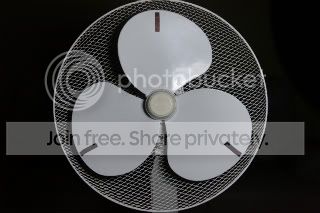
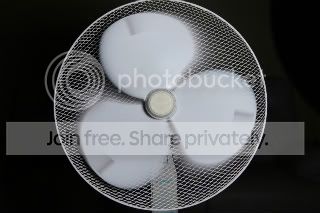
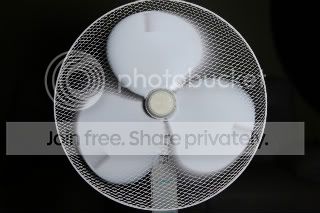
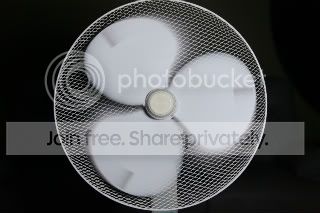
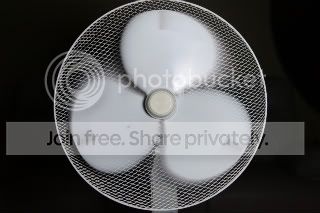
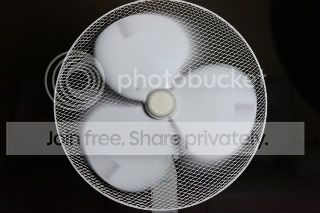
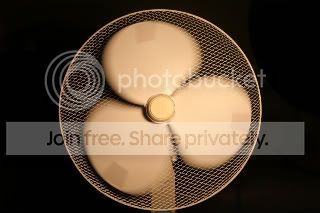
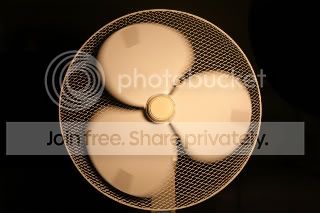
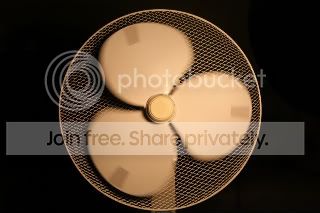
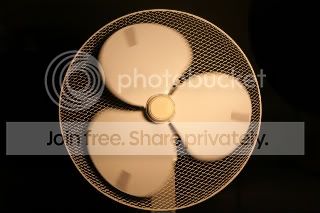
So I took some test shots of an office fan with a strip of black tape on the blades, using an Elinchrom D-Lite 2, at full power, -1 stop, -2, -3 and -4 stops minimum power. Shutter speed is 1/50sec to get the complete dump. The fan is spinning clockwise as you look at it, first curtain sync. The D-Lite 2's flash duration is quoted as 1/1200sec t.5 at full power.

There are some slight differences visible there, both in the t.5 and t.1 times, but it's not as big as those assumptions above suggest. At least not in terms of action stopping ability and, despite the slight differences, there appears to be a peak in the pulse of relatively consistent duration. So while there might be blurring either side of that, the bit that matters - the time taken for the lion's share of the light output - mostly stays at a roughtly constant level. And neither t.5 nor t.1 figures represent that accurately because it happens sometime after the the tube at first lights up at quite a low level, then builds quickly and dumps most of the light, and then takes quite a long time to decay.

I hope you can see what I mean, but for comparison I also did some shots using ambient light (the modelling light actually - and forgot to reset the white balance LOL) at various shutter speeds. The ones around 1/250sec to 1/640sec below are most relevant I think, and while it's hard to compare, overall I would put the 'effective action stopping flash duration' at roughly 1/500sec, taking into account the blurring of the black tape, the see-though ghosting and general 'shape' of the blades. Something around there, and it doesn't seem to change much at different power levels to my eye.

I don't have an oscilloscope, and while that would be very interesting, it's actual images that matter and I like a bit of rough science when it addresses the issues directly. Next time you get some kit together Garry, I'll gladly pop up to your studio as a 'witness' - it'll cost you a tank of fuel ;)

Garry, on the focal plane/x-sync thing shutter thing, the shutter is only ever fully open for a very short time, like one or two milliseconds - never more than 1/500sec. So if flash durations are as long as you say, ie perhaps as long as 1/100sec, they're going to get clipped at normal x-sync speeds. Using round numbers, with 1/200sec shutter speed, the first curtain will take about 3ms to fully open, it then stays completely open for 2ms, and then takes another 3ms to close. So the whole cycle takes about 8ms, during which time the sensor receives 5ms of exposure (1/200sec, 3+2ms). Take a look at this slow-mo video of a Nikon D3 shutter, showing the timings http://regex.info/blog/2008-09-04/925

Here are the test pics.

Fan static
IMG_9735-1.jpg


Full power D-Lite 2 (quoted flash duration 1/1200sec t.5)
IMG_9785-1.jpg


-1 stop D-Lite 2
IMG_9786-1.jpg


-2 stops D-Lite 2
IMG_9787-1.jpg


-3 stops D-Lite 2
IMG_9789-1.jpg


-4 stops (min power) D-Lite 2
IMG_9790-1.jpg
 
Last edited:
Continued from above - ambient light comparisons.


1/320sec ambient
IMG_9824-1.jpg


1/400sec ambient
IMG_9825-1.jpg


1/500sec ambient
IMG_9826-1.jpg


1/640sec ambient
IMG_9827-1.jpg
 
Any comments on these images?
 
Interesting images and pretty much in line with my (limited) understanding of it all.

It is striking how in a studio setting when photographing children how there is often movement blur when they are jumping around. Does make me wonder how people like Lois Greenfield get such crisp images of a dynamic subject like dance.
 
Sorry, didn't see your post. Will reply in full when I can

Cheers Garry ;)

Interesting images and pretty much in line with my (limited) understanding of it all.

It is striking how in a studio setting when photographing children how there is often movement blur when they are jumping around. Does make me wonder how people like Lois Greenfield get such crisp images of a dynamic subject like dance.

The point is, the flash duration is quoted by Elinchrom as 1/1200sec t.5 at full power, but that bears no relation to the actual action-stopping potential.

As I said above, the 'effective' flash duration is much longer than that - to my eye, more like double at around 1/500sec. I don't have any other studio heads to comparison test, but I have no reason to think that my D-Lites are significantly different in this respect. Maybe Garry has some info.

BTW, I forgot to include Elinchrom's claimed flash duration with the images above - now corrected.
 
Last edited:
Cheers Garry ;)


The point is, the flash duration is quoted by Elinchrom as 1/1200sec t.5 at full power, but that bears no relation to the actual action-stopping potential.

As I said above, the 'effective' flash duration is much longer than that - to my eye, more like double at around 1/500sec. I don't have any other studio heads to comparison test, but I have no reason to think that my D-Lites are significantly different in this respect. Maybe Garry has some info.BTW, I forgot to include Elinchrom's claimed flash duration with the images above - now corrected.
Not a complaint, but maybe it's a pity that you identified the flash units you used on your test, because someone is bound to infer some comment about the quality of the flash units, whether I mean to imply something or not:'(

Actually, the make does matter, or at least it matters whether it's a well designed product or not (if you assume that good design means short flash duration and that long flash duration isn't planned). A firm that I'm not going to name makes a mixture of low end and pretty good flash units. The low end ones have only 1 or 2 capacitors. In theory, flash durations at low power settings are much closer to the flash durations at high power settings in low powered units with small capacitors than with high powered flash heads with large capacitors, but in practical terms, if there are a large number of capacitors then the capacitors are smaller and the problem doesn't arise. With the firm I have in mind, their low end flashes only have a very small number of capacitors and so the flash duration at low power settings is significantly longer than flash heads that have more capacitors/better design. I include the forward slash because although having more capacitors does have real benefits when it comes to both flash duration and colour temperature consistency, there are other ways of improving both - but with most (not all) manufacturers, the number of capacitors is a fairly good indicator of the light quality. The firm I'm thinking of economises on the number of capacitors and may also economise on other aspects, because their colour temperature can very by up to 1000K - a figure that most people should find totally unacceptable.

Now I'm going to name another make - Strobex, they're no longer in business so nobody is likely to accuse me of slandering them...
Stobex made heavy duty pro flash generators of 2400j and 5000j. They were massive and not very efficient in terms of flash energy, I had both generators (the big one was called the City, can't remember the other one) and I loved them because of their energy and colour consistency and because the flash duration was incredibly long although I never actually measured the duration. I used them a lot for fashion, with models swirling around and plenty of motion blur. I normally used a speedlight too, the speedlight created a sharp underlying image and the Strobex produced a blurred one - just what I wanted for a lot of these shots. But, apart from the size, weight and cost, I bet that very few people would buy a Strobex today, simply because they couldn't produce sharp images of moving subjects.

Or, to condense my ramblings into something more succinct, if you carry out this type of test with different makes of flash head you may get very different results.

 
Not a complaint, but maybe it's a pity that you identified the flash units you used on your test, because someone is bound to infer some comment about the quality of the flash units, whether I mean to imply something or not:'(

Actually, the make does matter, or at least it matters whether it's a well designed product or not (if you assume that good design means short flash duration and that long flash duration isn't planned). A firm that I'm not going to name makes a mixture of low end and pretty good flash units. The low end ones have only 1 or 2 capacitors. In theory, flash durations at low power settings are much closer to the flash durations at high power settings in low powered units with small capacitors than with high powered flash heads with large capacitors, but in practical terms, if there are a large number of capacitors then the capacitors are smaller and the problem doesn't arise. With the firm I have in mind, their low end flashes only have a very small number of capacitors and so the flash duration at low power settings is significantly longer than flash heads that have more capacitors/better design. I include the forward slash because although having more capacitors does have real benefits when it comes to both flash duration and colour temperature consistency, there are other ways of improving both - but with most (not all) manufacturers, the number of capacitors is a fairly good indicator of the light quality. The firm I'm thinking of economises on the number of capacitors and may also economise on other aspects, because their colour temperature can very by up to 1000K - a figure that most people should find totally unacceptable.

Now I'm going to name another make - Strobex, they're no longer in business so nobody is likely to accuse me of slandering them...
Stobex made heavy duty pro flash generators of 2400j and 5000j. They were massive and not very efficient in terms of flash energy, I had both generators (the big one was called the City, can't remember the other one) and I loved them because of their energy and colour consistency and because the flash duration was incredibly long although I never actually measured the duration. I used them a lot for fashion, with models swirling around and plenty of motion blur. I normally used a speedlight too, the speedlight created a sharp underlying image and the Strobex produced a blurred one - just what I wanted for a lot of these shots. But, apart from the size, weight and cost, I bet that very few people would buy a Strobex today, simply because they couldn't produce sharp images of moving subjects.

Or, to condense my ramblings into something more succinct, if you carry out this type of test with different makes of flash head you may get very different results.


Garry, it's not about naming names or one product being better than another, it's about 1/1200sec t.5 being the only quoted flash duration (which I am sure is accurate) but that being more like 1/500sec in terms of normal shutter speed action stopping potential. In other words, in the case illustrated above, the t.5 time is meaningless.

Further, it is about the other often quoted rule of thumb that a lowest power pulse is about twice as long as a full power one, which doesn't appear to be true either.

NB If you want to do some tests, my offer above stands :)
 
Very interested in this. :)
 
dont forget he shoots mainly medium format in the studio, or failing that, heavy dslr's with high sensor resolution - picks up the flaws easier

in the same sense that downsizing an image makes it appear sharper, with more detail, the blur that isent picked up on becomes huge, unless you look at it in a small size, and if that was the case, you shouldent be using a medium format camera with probably a 60mp back

medium format changes the rules slightely, hence the tripod, id guess

also, hes a self confessed perfectionist, so who knows what his standards are
 
Not a complaint, but maybe it's a pity that you identified the flash units you used on your test, because someone is bound to infer some comment about the quality of the flash units, whether I mean to imply something or not:'(

Actually, the make does matter, or at least it matters whether it's a well designed product or not (if you assume that good design means short flash duration and that long flash duration isn't planned). A firm that I'm not going to name makes a mixture of low end and pretty good flash units. The low end ones have only 1 or 2 capacitors. In theory, flash durations at low power settings are much closer to the flash durations at high power settings in low powered units with small capacitors than with high powered flash heads with large capacitors, but in practical terms, if there are a large number of capacitors then the capacitors are smaller and the problem doesn't arise. With the firm I have in mind, their low end flashes only have a very small number of capacitors and so the flash duration at low power settings is significantly longer than flash heads that have more capacitors/better design. I include the forward slash because although having more capacitors does have real benefits when it comes to both flash duration and colour temperature consistency, there are other ways of improving both - but with most (not all) manufacturers, the number of capacitors is a fairly good indicator of the light quality. The firm I'm thinking of economises on the number of capacitors and may also economise on other aspects, because their colour temperature can very by up to 1000K - a figure that most people should find totally unacceptable.

Now I'm going to name another make - Strobex, they're no longer in business so nobody is likely to accuse me of slandering them...
Stobex made heavy duty pro flash generators of 2400j and 5000j. They were massive and not very efficient in terms of flash energy, I had both generators (the big one was called the City, can't remember the other one) and I loved them because of their energy and colour consistency and because the flash duration was incredibly long although I never actually measured the duration. I used them a lot for fashion, with models swirling around and plenty of motion blur. I normally used a speedlight too, the speedlight created a sharp underlying image and the Strobex produced a blurred one - just what I wanted for a lot of these shots. But, apart from the size, weight and cost, I bet that very few people would buy a Strobex today, simply because they couldn't produce sharp images of moving subjects.

Or, to condense my ramblings into something more succinct, if you carry out this type of test with different makes of flash head you may get very different results.
Someone has complained (off forum) that this post is critical of Elinchrom quality. It isn't, what it tries to explain (without naming brands) is that some brands produce much more consistent flash duration figures at different power settings than others.

For the avoidance of any doubt, Elinchrom is one of the brands that produces more consistent results than most. The brand that produces poor results is sold mainly in another country, in fact on another continent.

I thought that what I said was clear, maybe it wasn't.
 
Someone has complained (off forum) that this post is critical of Elinchrom quality. It isn't, what it tries to explain (without naming brands) is that some brands produce much more consistent flash duration figures at different power settings than others.

For the avoidance of any doubt, Elinchrom is one of the brands that produces more consistent results than most. The brand that produces poor results is sold mainly in another country, in fact on another continent.

I thought that what I said was clear, maybe it wasn't.

Garry, do you mean Alien Bees? If you cannot name names, and substantiate your claims, then the chances are that folks will jump to the wrong conclusions. Maybe it's not AB.

I'm still not clear what the flash durations are for Lencarta. Where are they published? How do we know they are any better, or true, or consistent, given what you say about other brands?

Do you have any comments on the images I posted above?
 
Comments on images would be great.

Can we leave product discussions out of this thread please?
 
Back
Top