If you could only...........

You don't need an exquisite location - just the ability to see the exquisite in ANY location ;)

And there lies the secret of photography.......seeing.

Not much, if any, discussion on "seeing"
 
Last edited:
Thats golf or fishing not photography. :)
For me, fly fishing (it's the only kind of fishing I've spent much time on) and photography have strong similarities.

In both, it's the "experience of being there" that is important. Bringing home a photograph or a fish for supper is an important bonus, but not an essential component for a satisfying day out.

In the film days, mainly because of cost, but also the time spent processing, it wasn't unusual to come back without making any exposures, even after spending relatively long periods of time deciding on viewpoint, setting up the tripod and camera, and waiting for the light; only to then dismantle it all without making an exposure because you decide the picture isn't as good as you first thought it was.

Today with digital, I am more "experimental" and if in doubt take the picture anyway, just to see if it works better than I think it will. For landscapes in the film days, I might come back with two or three exposures from a "good" day, but with digital, I might come back with five to thirty exposures. Sometimes it's only a single "record" shot because I use browsing through my photographs as a sort of visual journal, and this single photograph provides a reminder of the day.
 
Not much, if any, discussion on "seeing"

The technical bit that we've discussed so far is the easy part. The seeing is much more difficult to explain in a way that works for others, and the part about how to transfer what you saw in a way that lets others see it too the hardest of all.
 
The technical bit that we've discussed so far is the easy part. The seeing is much more difficult to explain in a way that works for others, and the part about how to transfer what you saw in a way that lets others see it too the hardest of all.

Its difficult to control what others see, think and feel. Surely the undoubted experts in this field are advertisers, they control things to such an extent that they make you go out there and chuck your money away on stuff.
 
Its difficult to control what others see, think and feel. Surely the undoubted experts in this field are advertisers, they control things to such an extent that they make you go out there and chuck your money away on stuff.

That's true to an extent, but they have also been conditioning the population to respond to certain stimuli for longer than we've been alive, and that is a major factor too. Plus there will be people like me without TV* and ignoring or even blocking ads on the internet who aren't affected by it. So the starting point is often ourselves, what moves us, what excites or frightens us, what do we find interesting or makes us ask questions.

In the end you can't make someone else think or feel, but you can give them an opportunity to do so.

* Advertising is mostly effective though TV I suspect, and we've seen adverts on billboards while driving through cities that are absolutely meaningless to us because we don't watch. It's also made me realise how poor current car styling and design is right now, just so deeply unattractive.
 
Because of the disparity in cost of film & processing between negatives and transparencies I now favour Kodak Pro Image for colour photos. I used to like XP2 for mono when I could develop it myself. But I have no strong preference now for any particular mono film.

At the end of the day, unless you print your own or have the means to pay a pro lab for wet printing all output ends up digitalised anyway. I remember the day when Boots changed from wet printing to digital and effectively turned all my 35mm shots into digital. It was the beginning of the end.
 
At the end of the day, unless you print your own or have the means to pay a pro lab for wet printing all output ends up digitalised anyway.
Indeed.
 
I love this thread!

On "seeing"... IMHO nothing beats taking (and looking at, really looking at) lots and lots of photos. The old "first ten thousand photos are the worst" thing. Sure, there are folk with a natural "eye" who'll get there a lot quicker. But now in my later years I find myself seeing a lot more. People look at you weirdly when you're apparently taking a close-up photo of a bramble bush or the trunk of a tree, but "their loss" is what I say!

I am conflicted on whether film photography helps or hinders here. I think it helps because there's less of a tendency to "spray and pray"; each exposure costs, I've usually only brought the one roll, need to get this exposure right and (usually) move on. I don't hav to spend my time deciding which of 20 exposures is the "better", I can spend more time working out which photos please me more. I think film hinders because the feedback loop is long, weeks sometimes for me, so remembering the initial conditions is harder. I tried taking notes in various ways, but apart from various test rolls, it never sticks. But film is my medium, so I live with that.

The Adams trilogy is good (I've only got the first two). I also like Adams "The making of 40 photographs".

On film, I used to almost exclusively use Tri-X; I'd used HP5 once and disliked the grain. Then Tri-X became stupid expensive and I tried a few frames of HP5 and it's a really lovely film, so flexible. Also FP4. But then, like Barney I started experimenting with different films. The Kentmere films are excellent low cost options (but beware some highlight blooming with K200). I still have half a dozen rolls of Acros 100 version 1, saved for long exposures (far better reciprocity than most films), but otherwise I'm not hugely keen. I've recently used Adox HR-50 and Scala 50; got the latter reversal processed, fun but I won't bother again. I should just settle down to the Ilford stuff!

Developer: I've settled on HC-100. I've almost finished the litre bottle I bought in 2018! I've got a bottle of Adox HC-110 to replace it (apparently Kodak has or had lost access to the HC-100 name in their disastrous deal with that Chinese company). I use dilution B for most low ISO films and dilution E for ISO 400 and up, or any film where the dilution B time is under 5 minutes (load/dump duration uncertainties have too big an effect).

I have heard (but never used it) that Rodinal does increase the visible signs of grain?
 
I love this thread!

On "seeing"... IMHO nothing beats taking (and looking at, really looking at) lots and lots of photos. The old "first ten thousand photos are the worst" thing. Sure, there are folk with a natural "eye" who'll get there a lot quicker. But now in my later years I find myself seeing a lot more. People look at you weirdly when you're apparently taking a close-up photo of a bramble bush or the trunk of a tree, but "their loss" is what I say!

I am conflicted on whether film photography helps or hinders here. I think it helps because there's less of a tendency to "spray and pray"; each exposure costs, I've usually only brought the one roll, need to get this exposure right and (usually) move on. I don't hav to spend my time deciding which of 20 exposures is the "better", I can spend more time working out which photos please me more. I think film hinders because the feedback loop is long, weeks sometimes for me, so remembering the initial conditions is harder. I tried taking notes in various ways, but apart from various test rolls, it never sticks. But film is my medium, so I live with that.

The Adams trilogy is good (I've only got the first two). I also like Adams "The making of 40 photographs".

On film, I used to almost exclusively use Tri-X; I'd used HP5 once and disliked the grain. Then Tri-X became stupid expensive and I tried a few frames of HP5 and it's a really lovely film, so flexible. Also FP4. But then, like Barney I started experimenting with different films. The Kentmere films are excellent low cost options (but beware some highlight blooming with K200). I still have half a dozen rolls of Acros 100 version 1, saved for long exposures (far better reciprocity than most films), but otherwise I'm not hugely keen. I've recently used Adox HR-50 and Scala 50; got the latter reversal processed, fun but I won't bother again. I should just settle down to the Ilford stuff!

Developer: I've settled on HC-100. I've almost finished the litre bottle I bought in 2018! I've got a bottle of Adox HC-110 to replace it (apparently Kodak has or had lost access to the HC-100 name in their disastrous deal with that Chinese company). I use dilution B for most low ISO films and dilution E for ISO 400 and up, or any film where the dilution B time is under 5 minutes (load/dump duration uncertainties have too big an effect).

I have heard (but never used it) that Rodinal does increase the visible signs of grain?
My Mam used to tell me two things Chris - I could talk a glass eye to sleep and that I would make the Pope swear. Bless. :)

I like Kentmere 200, not tried the other Kentmere films. but its a nightmare in high contrast bright sky situations, I am in the process of cutting development time so highlights are not affected at all. Yet to get there.

Re Rodinal, i got a few shots right with Fomapan 100 and Rodinal (Fomadon RO9) and there is just something about the highlights thats just magic to me and that I have not found in other film developer combinations so far. So after Grahams one film, one developer advice i bought a half dozen rolls in 120 and will try to get the best out if with the Rodinal and that lovely sparkle. But when I see Kevins magic with HC100 and Nigels with DDX I vacillate. There is a lot of love for FP4 so that's on my list as well. with HP5 I have reasoned that I more or less always take a tripod with me on 120 so whats the point of going high ISO? I am going to take two backs with and swap over as needed.
 
I love this thread!

On "seeing"... IMHO nothing beats taking (and looking at, really looking at) lots and lots of photos. The old "first ten thousand photos are the worst" thing. Sure, there are folk with a natural "eye" who'll get there a lot quicker. But now in my later years I find myself seeing a lot more. People look at you weirdly when you're apparently taking a close-up photo of a bramble bush or the trunk of a tree, but "their loss" is what I say!
Looking at other people's photographs and listening to what other photographers have to say is an important part of why I find photography so fascinating. Getting to "know" the person behind a particular photograph can also add to, and enhance, the viewing experience, as well as helping you better understand your own photography.
I am conflicted on whether film photography helps or hinders here. I think it helps because there's less of a tendency to "spray and pray"; each exposure costs, I've usually only brought the one roll, need to get this exposure right and (usually) move on. I don't hav to spend my time deciding which of 20 exposures is the "better", I can spend more time working out which photos please me more. I think film hinders because the feedback loop is long, weeks sometimes for me, so remembering the initial conditions is harder. I tried taking notes in various ways, but apart from various test rolls, it never sticks. But film is my medium, so I live with that.
I still have a "film" attitude with digital and rarely take that many photographs. I have been lucky with film (black and white, less so with colour) that I was processing b/w films in my bedroom (and later in a darkroom), before I even owned a camera,: so no long wait to see my results.

When I take multiple digital images, they tend to be directed at helping with a specific problem. For example I know that depth of field is going to be critical to get just the right amount of out of focus in the background. So, I might take three identical images at a range of apertures. Or the wind might be blowing grass in front of my subject, and I want the grass to be in a precise position in relationship to the subject. So I might take a short burst of pictures, rather one or two where I try to anticipate what the grass is doing. This is one of the things I like about digital; being able to experiment with no need to think about the cost. But I also miss the simplicity, and tactility (if that's a word) of a 5x4 camera, enlarger and chemicals.

With digital, I rely on the basic demosaiced digital file to trigger my memory of what I was trying to do at the time of taking, and then start again. But, I usually remember things that don't match what I'm seeing on the computer, and I go with my memory rather than what Nikon/Fuji/C1/Adobe are telling me the scene looked like.

I've also had spells of making notes and sketches at the time of taking the picture, but I think I find the photo itself, being just as useful as my notes in helping me remember what I wanted from the photograph.

The Adams trilogy is good (I've only got the first two). I also like Adams "The making of 40 photographs".
You might not be surprised to hear I also have this book :-)

On film, I used to almost exclusively use Tri-X; I'd used HP5 once and disliked the grain. Then Tri-X became stupid expensive and I tried a few frames of HP5 and it's a really lovely film, so flexible. Also FP4. But then, like Barney I started experimenting with different films. The Kentmere films are excellent low cost options (but beware some highlight blooming with K200). I still have half a dozen rolls of Acros 100 version 1, saved for long exposures (far better reciprocity than most films), but otherwise I'm not hugely keen. I've recently used Adox HR-50 and Scala 50; got the latter reversal processed, fun but I won't bother again. I should just settle down to the Ilford stuff!

Developer: I've settled on HC-100. I've almost finished the litre bottle I bought in 2018! I've got a bottle of Adox HC-110 to replace it (apparently Kodak has or had lost access to the HC-100 name in their disastrous deal with that Chinese company). I use dilution B for most low ISO films and dilution E for ISO 400 and up, or any film where the dilution B time is under 5 minutes (load/dump duration uncertainties have too big an effect).

I have heard (but never used it) that Rodinal increases the visible signs of grain?
I don't think I've ever used Rodinal, but I as I remember, one of the reasons people used it was because of its sharp and distinctive grain pattern.
 
Plus there will be people like me without TV
Well, hoorah! It escapes me how TV is so popular, given that the little I see is overproduced relative to its content, colours are brash and the sound is blarey. It's just an assault on the senses. And the format is very 'magaziney' - ie pre-packaged.

Off topic? Yes, sorry.
 
Well, hoorah! It escapes me how TV is so popular...
Oh look at that!

All those soldiers are out of step, except my little Harry .... :naughty:
 
How other people 'see' is a great mystery to me. But I've concluded that everyone 'sees' in a way that's individual to them. Luckily, though, there are various commonalities between us ...
I'm sure you know this, but, although the signals that the eye sends to the brain are very similar between people, the interpretation of those signals is unique to every individual, and affected by multiple factors.

The Muller-Lyer illusion is an interesting example where the length of line that people think needs added to make both lines the same length, varies with culture and ethnicity.

Muller-Lyer ilusion is the one where end points are inverted:

<------------>
>------------<


EDIT: The above diagram is only indicative of what the Muller-Lyer illusion looks like. It does not work the way the illusion works because it's broken up into easily interpreted segments.

I have only added it because although It's a well-known illusion, not everyone will know it by name, even if they recognise it when they see it.

If you are unfamiliar with the illusion, and want to learn more and test it for yourself, the link below is useful:

 
Last edited:
The Muller-Lyer illusion is an interesting example where the length of line that people think needs added to make both lines the same length, varies with culture and ethnicity.

<------------>
>------------<
They both look exactly the same length to me (and yes, I counted the hyphens to check)
 
Of course I didn't mean 'seeing' in a physical way, but 'seeing' psychologically - the inverted commas should have intimated that.
 
Of course I didn't mean 'seeing' in a physical way, but 'seeing' psychologically - the inverted commas should have intimated that.
I didn't think you meant the physiology of seeing and was reinforcing your point about seeing being psychological (in the brain).

Until a recent paper in Nature (this year) it was thought that the signal from eyes varied between individuals, but that paper suggested that the variation was down to the brain.
 
I think once you're in the zone, you know what is a picture and what isn't.
Digital gets you in some kind of zone far quicker and more economically than film ever could.
The difficulty is letting that go, but it does help focus the mind from a personal development perspective.
Course if you're going all Winogrand with an unlimited film supply and shooting because you want to see what the world looks like in a photograph, maybe that's a different corner of the zone I dunno.
I go out with camera and often return no shots taken, the things I mostly see I've shot a million times before, what looked like a picture years ago turned out to be ordinary and I learned from that, the opportunities to shoot something with genuine potential become fewer, I learned that too.
I'm quite happy sat on a windswept hillside, fannying about with exposure calcs and tripod angles all day, waiting for the picture I know exists, if it doesn't come....there's always tomorrow.
I'm just not going to shoot a nothing simply because I can:)
 
Looking at other people's photographs and listening to what other photographers have to say is an important part of why I find photography so fascinating. Getting to "know" the person behind a particular photograph can also add to, and enhance, the viewing experience, as well as helping you better understand your own photography.

I still have a "film" attitude with digital and rarely take that many photographs. I have been lucky with film (black and white, less so with colour) that I was processing b/w films in my bedroom (and later in a darkroom), before I even owned a camera,: so no long wait to see my results.

When I take multiple digital images, they tend to be directed at helping with a specific problem. For example I know that depth of field is going to be critical to get just the right amount of out of focus in the background. So, I might take three identical images at a range of apertures. Or the wind might be blowing grass in front of my subject, and I want the grass to be in a precise position in relationship to the subject. So I might take a short burst of pictures, rather one or two where I try to anticipate what the grass is doing. This is one of the things I like about digital; being able to experiment with no need to think about the cost. But I also miss the simplicity, and tactility (if that's a word) of a 5x4 camera, enlarger and chemicals.

With digital, I rely on the basic demosaiced digital file to trigger my memory of what I was trying to do at the time of taking, and then start again. But, I usually remember things that don't match what I'm seeing on the computer, and I go with my memory rather than what Nikon/Fuji/C1/Adobe are telling me the scene looked like.

I've also had spells of making notes and sketches at the time of taking the picture, but I think I find the photo itself, being just as useful as my notes in helping me remember what I wanted from the photograph.


You might not be surprised to hear I also have this book :)


I don't think I've ever used Rodinal, but I as I remember, one of the reasons people used it was because of its sharp and distinctive grain pattern.


This, and ChriR's comments that you are replying to resonate with me. Even with digital I am mean with my images, and now even more so with film images. George Bernard Shaw once said; " A photographer is like a cod in that it produces a million eggs in order that one may reach maturity.”. Not me. Bracketing is only done when strictly necessary and I will rather walk away from a questionable scene than waste an image on it. I try to get it right every time and am mindful that only about 40% of those images that I take eren't later discarded.

I am not technically adept. Whilst I understand the depth of field calculations in respect of focal length, aperture, etc. I find it difficult to transfer what came easily with 35mm prime lenses and split screen viewfinder to digital cameras and zoom lenses. I have a work around in using MF and using the blue focus program on my S1 to identify what is and what isn't in focus

Like both of you I find that the Ansel Adams trilogy and The Making of Forty Photographs are as relevant today in the digital age as back when glass plates were the norm. It is the foward planning of the actual photograph that saves having to take fifty to get one.

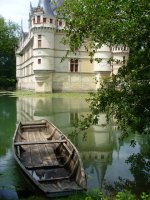
As for the related issue of 'seeing'; that comes natural to some and not to others. Fortunately I have an autistic trait that makes it easy for me to spot a good scene and get the best viewpoint. One example was at a French Chateau where I was preparing to take a shot when a bus load of Japanese tourists arrived. Each one stood in the same place and took the same landscape format shot. Once they had departed I lay on the ground and took this


Chateau de Villandry.jpg

The tourists would have literally missed the boat!

Similarly at Staithes everybody goes to the same place up Cowbar Hill and takes the same elevated shot of shot of the boats in the river and harbour. I clung to the bridge parapet and got a different angle.


Cobles on Roxby Beck colour_resize_99.jpg

I have not seen any photos from this angle since I took it around 2002 or before. The actual planning involved coinciding good weather before the boats were moved into the main harbour around the end of May and high tide between 9am and 11 am. I rode my motorbike 80 miles each way to get it.

Sometimes you have to plan and work for the right image. Other times it just seems to fall into place, but the guidelines of the rule of thirds and leading lines are never far from my thoughts and often all it takes is a few paces one way or the other, standing on a wall or laying on the ground to make all the difference.
 
Last edited:
I'm sure you know this, but, although the signals that the eye sends to the brain are very similar between people, the interpretation of those signals is unique to every individual, and affected by multiple factors.

The Muller-Lyer illusion is an interesting example where the length of line that people think needs added to make both lines the same length, varies with culture and ethnicity.

Muller-Lyer ilusion is the one where end points are inverted:

<------------>
>------------<
Its obviously a trick, and obvious both lines are the same, did not bother counting my intuition is usually correct.
 
I think once you're in the zone, you know what is a picture and what isn't.
Digital gets you in some kind of zone far quicker and more economically than film ever could.
The difficulty is letting that go, but it does help focus the mind from a personal development perspective.
Course if you're going all Winogrand with an unlimited film supply and shooting because you want to see what the world looks like in a photograph, maybe that's a different corner of the zone I dunno.
I go out with camera and often return no shots taken, the things I mostly see I've shot a million times before, what looked like a picture years ago turned out to be ordinary and I learned from that, the opportunities to shoot something with genuine potential become fewer, I learned that too.
I'm quite happy sat on a windswept hillside, fannying about with exposure calcs and tripod angles all day, waiting for the picture I know exists, if it doesn't come....there's always tomorrow.
I'm just not going to shoot a nothing simply because I can:)
Tomorrow never comes,

reminds me of one of my Poker buddies, he wont play until he gets dealt a pair of aces, the waits are long, he is quite successful though with his strategy.
 
I think once you're in the zone, you know what is a picture and what isn't.
Digital gets you in some kind of zone far quicker and more economically than film ever could.
The difficulty is letting that go, but it does help focus the mind from a personal development perspective.
Course if you're going all Winogrand with an unlimited film supply and shooting because you want to see what the world looks like in a photograph, maybe that's a different corner of the zone I dunno.
I go out with camera and often return no shots taken, the things I mostly see I've shot a million times before, what looked like a picture years ago turned out to be ordinary and I learned from that, the opportunities to shoot something with genuine potential become fewer, I learned that too.
I'm quite happy sat on a windswept hillside, fannying about with exposure calcs and tripod angles all day, waiting for the picture I know exists, if it doesn't come....there's always tomorrow.
I'm just not going to shoot a nothing simply because I can:)

One of the most important factors is to concentrate on what subjects mean most to you rather than taking photos of everything. It is easier to get 'in the zone' when you are familiar with the subject. There is probably only about three or four genres that I do and I probably have less than twenty photos with people in them in around fifty years, on and off, of photography.
 
This, and ChriR's comments that you are replying to resonate with me. Even with digital I am mean with my images, and now even more so with film images. George Bernard Shaw once said; " A photographer is like a cod in that it produces a million eggs in order that one may reach maturity.”. Not me. Bracketing is only done when strictly necessary and I will rather walk away from a questionable scene than waste an image on it. I try to get it right every time and am mindful that only about 40% of those images that I take eren't later discarded.

I am not technically adept. Whilst I understand the depth of field calculations in respect of focal length, aperture, etc. I find it difficult to transfer what came easily with 35mm prime lenses and split screen viewfinder to digital cameras and zoom lenses. I have a work around in using MF and using the blue focus program on my S1 to identify what is and what isn't in focus

Like both of you I find that the Ansel Adams trilogy and The Making of Forty Photographs are as relevant today in the digital age as back when glass plates were the norm. It is the foward planning of the actual photograph that saves having to take fifty to get one.

As for the related issue of 'seeing'; that comes natural to some and not to others. Fortunately I have an autistic trait that makes it easy for me to spot a good scene and get the best viewpoint. One example was at a French Chateau where I was preparing to take a shot when a bus load of Japanese tourists arrived. Each one stood in the same place and took the same landscape format shot. Once they had departed I lay on the ground and took this


View attachment 470074

The tourists would have literally missed the boat!

Similarly at Staithes everybody goes to the same place up Cowbar Hill and takes the same elevated shot of shot of the boats in the river and harbour. I clung to the bridge parapet and got a different angle.


View attachment 470072

I have not seen any photos from this angle since I took it around 2002 or before. The actual planning involved coinciding good weather before the boats were moved into the main harbour around the end of May and high tide between 9am and 11 am. I rode my motorbike 80 miles each way to get it.

Sometimes you have to plan and work for the right image. Other times it just seems to fall into place, but the guidelines of the rule of thirds and leading lines are never far from my thoughts and often all it takes is a few paces one way or the other, standing on a wall or laying on the ground to make all the difference.
I think photography means different things to different people and allows us all to approach it in our unique way to achieve different ends.

I rarely plan a photograph, and just react to whatever fate gives me. But I regularly go to the same places repeatedly, so I know them extremely well, and my photographs are a way of constantly reinforcing the connection I feel with them. Not all of them fall into this category, but a lot of them do.

I like seeing the same thing over and over, but in a different light from the last time I saw it. But I suspect most would look at my photographs and think "Didn't he just photograph that tree stump yesterday? "
 
Sometimes you have to be willing to burn a few frames. I had a wander around a nearby town on Thursday night trying hand-held long exposures with an 18mm lens. I knew roughly what I would get, but there is an uncontrolled aspect to this too (try hand-holding for 30sec on an escalator) and you don't know where people will be or if they'll walk through your photo unexpectedly. Out of 35 frames I have about 12 that are interesting and 5 or 6 that I most post here later.
 
But I suspect most would look at my photographs and think "Didn't he just photograph that tree stump yesterday? "
It's so common for people to think of a photograph that it's just a depiction of a 'thing' (or event). But if the whole identity & worth of the photograph is just to say that there's a such and such, it can become a tick-box exercise & nothing more. What about the light, the focus and the framing, in all of which the photograph becomes an emotionally engaging 'thing' in its own right? (Some photos, obviously, will be a hybrid of all this.)

A similar dichotomy may be true of all forms of cultural expression - music, writing, you name it - including craft pursuits such as ceramics. The counterpart of skill is intuition. In any given work, either or both of those can be lacking. Where they're both well present, the rocket booster kicks in ...
 
Last edited:
I don't know how I'd settle on a particular film. Particularly black and white. My experience is that there is always another to try, and in the end all you have to show for it are a series of experiments of varying quality. To date my observations are that Ilford are probably the best of the bunch, and I really ought to stick to HP5 and FP4.
 
I've not tried a vast amount of film......

But I think I'd go for Gold 200 or Portra 400 for what I shoot tbh

I do have an "aerochrome" LR preset though, so if I could turn back the clock I wouldn't mind trying that on actual film!
 
I think photography means different things to different people and allows us all to approach it in our unique way to achieve different ends.

I rarely plan a photograph, and just react to whatever fate gives me. But I regularly go to the same places repeatedly, so I know them extremely well, and my photographs are a way of constantly reinforcing the connection I feel with them. Not all of them fall into this category, but a lot of them do.

I like seeing the same thing over and over, but in a different light from the last time I saw it. But I suspect most would look at my photographs and think "Didn't he just photograph that tree stump yesterday? "

I do that too. The old water wheel I pass weekly on dog walks must have been taken over a hundred times. But in different seasons, light, times of day, focal lengths, film, cameras and lenses. It is a reference point that adds to my knowledge.
 
By the time I could afford Kodachrome and had the technique to use slide film properly, it was no longer available!
 
Only diehards would be able to afford it as it probably be about £50? per roll for 35mm today

Quite possibly. Allowing for real world prices, rather than the "official" inflation calculators, that's about what it cost in 1965, when you could buy 3 pounds of fillet steak or one 36 exp Kodachrome for the same amount.
 
Back
Top