ICM - Intentional Camera Movement - do you do it ???

DG Phototraining

Woof
Suspended / Banned
Messages
5,064
Name
Dave
Edit My Images
Yes
Hi all

I've been watching a few 'Creative' photography tutorials of late and the idea of Intentional Camera Movement (ICM) is cropping up time & time again

For anyone who doesn't know - its basically setting the camera to somewhere around 1-5 sec exposures then (while handheld) moving the camera about a bit, or a lot, to create more abstract images than perfectly sharp ones

I've seen a lot of tripod based panning over the years i.e. horizontally at the seaside or vertically in a wood, but just waving about is pretty new to me; its basically what we'd all call a mistake normally lol

I watched one chap who runs workshops explaining how he can take dozens even hundreds to get one worth processing further, and I admired his honesty in saying (quote) "Almost every picture you take will be rubbish"

So if you do do it, can you please share your experiences and some images too :)

Ta
Dave
 
I had a play..

5 second(ish) exposure. First curtain sync flash camera left & a halogen fresnel light camera right. Gridded gelled spot on the backdrop.


Hannah, blurred
by Simon Carter, on Flickr

Maybe 20% were interesting but perhaps only 5% had sufficient sharpness for what I was after. I did get far more interesting wavy trails than this shot but few had sharp eyes. I'd use the technique again but not where the model is making eye contact with the camera.

Remember to turn IS off first :)
 
Thanks for that - a very different take on the idea as I've, so far, only seen it applied to landscapes giving a sort of Monet-ish look :)

Dave

The ICM landscapes I've seen have all had movement applied in a single direction, then loads of photoshop. I wonder whether it would have been simpler to do it all in PS? It seems to be more difficult to add wavy trails in post, though.
 
Chris Friel is an exponent - here's a treatise by him: https://www.google.co.uk/#q=icm,+chris+friel

Another practitioner, along with multiple exposure techniques, is Rob Hudson: http://www.robhudsonlandscape.net/blog/

I haven't done it myself (yet). In most hands it'll be an occasional gimmick & little more.

... I admired his honesty in saying (quote) "Almost every picture you take will be rubbish"
That's what Martin Parr tells students, based on his own work practice ...
 
Never tried it I have enough difficulty getting a "convential shot" right. I like some of what Mr Friel has done
 
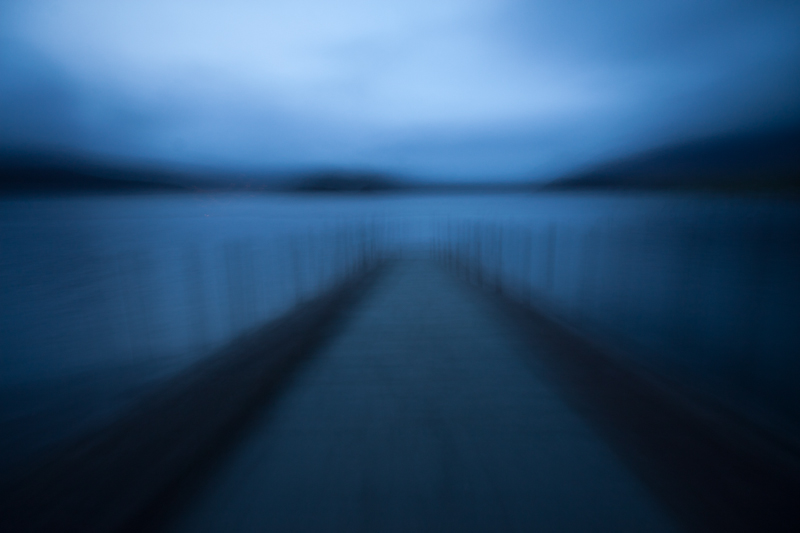
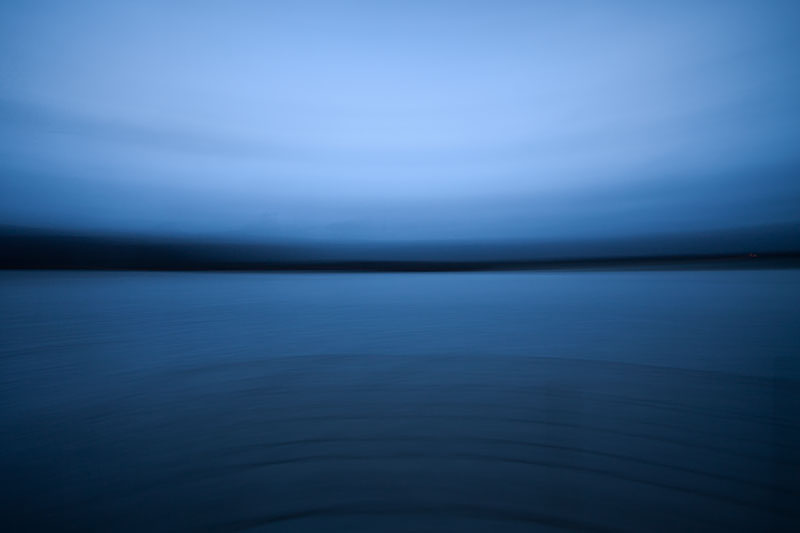
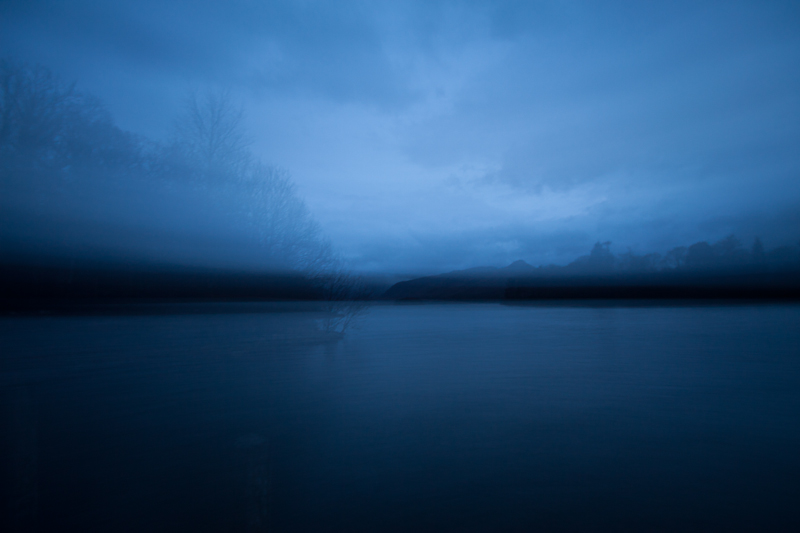
Did this a few years ago, I'd got bored doing the traditional Ashness Jetty / Lakes shots ;)

Hand held 20 ish second pans with the middle of the pan paused.

blue1.jpg


blue2.jpg


blue3.jpg
 
Did it some years ago. Not a long exposure as I was using the lights on a christmas tree.It was done to produce random back ground shots for stock.
 
Love that first one @mrgubby, it's something I keep intending to have a play with but I can't seem to break the habit of taking conventional shots.
 
ICM is a theme in the local Film POTY that @RaglanSurf is running over on the Film & Conventional sub-forum. We had a list of 72 themes that I had gleaned from various sources. I'd expected the list to be voted on to get the final themes, but there was a draw instead, and ICM and a couple of other tricky ones came out (this month it's "Beautiful Human Faces (b/w)"). Goodness knows what will happen, as it's probably hard enough to get anything decent even with digital; on film which (a) costs quite a bit per frame and (b) you can't see the result for at least a day or so, it'll be a nightmare. Probably lots of digital experiments first! Maybe no-one will enter that round...
 
Might well be worth checking out some of Freeman Patterson's stuff. Really quite interesting. I had some of his books, but lent them to someone and never seemed to get them back.
 
I have a couple of half-baked projects on going at the moment using handheld long exposures. Never called it 'ICM' though, does everything have to have a daft name attached to it these days? That's up there with 'bokeh' and 'fashionscape'. :puke:

Few random ones I had to hand:
DSCF4813_web.jpgDSCF8627_web.jpg JTP_150608_0028_web.jpg
Last one is pretty much your standard beach pan as you already mentioned. At least this was handheld though :p
JTP_150612_0005_web.jpg
 
Last edited:
I have done a bit over the last couple of years, my avatar is one of them. Contrary to one of the comments above very little of mine are photoshopped, virtually all are more or less as they come out of the camera.

As Droj mentioned, Chris Friel is well worth looking at and his work is mentioned a lot by Douglas Chinnery who is the person I suspect you referred to in your first post. Also have a look on Flickr ad there is some good stuff to be found there.

Incidentally, the Olympus EM-1 is good for this type of work as you can watch the image appear on the rear screen and end the exposure when it reaches what you want. Chris Friel has used this method (though I haven't tried with mine yet), and that info was given to me by Doug on a workshop I did with him.
 
Might well be worth checking out some of Freeman Patterson's stuff. Really quite interesting. I had some of his books, but lent them to someone and never seemed to get them back.

Had a look on his web site and also the list of books. The most relevant seems to be
Photo Impressionism and the Subjective Image (Freeman Patterson Photography)
co-autohored with Andre Gallant. You can "read inside" a bit; he mostly seems to be talking about multi-exposure techniques, AFAICS, but I think quite a lot could be applied to ICM as well. Or did you have another book in mind?
 
Had a look on his web site and also the list of books. The most relevant seems to be
Photo Impressionism and the Subjective Image (Freeman Patterson Photography)
co-autohored with Andre Gallant. You can "read inside" a bit; he mostly seems to be talking about multi-exposure techniques, AFAICS, but I think quite a lot could be applied to ICM as well. Or did you have another book in mind?

There are other books that he produced. I gave away the ones that I had, but there was definitely a large section on blur from camera motion in one of them. Some lovely images.
 
I was out experimenting yesterday (using my X10, not the film SLR yet... I don't have a DSLR). I've got a ND filter on order that should help get shutter speeds a bit slower, but even at half a second there were some interesting results... and most totally carp of course. The trouble is, having now looked at them on the laptop, I can't remember quite how I got some of the more interesting ones.

In the evening I was able to get a shutter speed around 3 seconds with a set of lights in a tree. So, you have more time than half a second (d'uh, obviously), but jerky movements show up much worse. I suspect a tripod (or at least monopod) might be really helpful, despite the paradox of using a tripod for controlled movement!
 
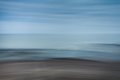
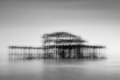
Here's a couple of mine - the West Pier, Brighton one was around six seconds if I recall correctly and I was trying to hold the camera as steady as possible while moving it in small circles. Both were using both a Lee Big Stopper and Little Stopper.

Sea1.jpg
Sea 1


West pier.jpg
West Pier
 
@byhesea - that the second one of the pier retains its shape and structure but has a sense of motion and fragility is great, for me a really good application of the technique.
 
I've done a lot of UCM... :D

But sometimes play with it deliberately when I'm bored

_7508986.jpg
 
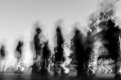
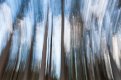
I have done some, both deliberate camera movement and zooming during exposure, though all my images are on a different computer so can't post examples right now. Fave so far was rotating the camera about the lens axis looking through some trees using a roughly 1 sec exposure.

*edit* looks nothing like Ed's image ^ that appeared just as I posted. :)
 
Last edited:
For me, only when I have had a few pints.

I did some zoom bursts many years back on film, and I like sone of the pictures on here.
Give it five years and it will be like milky waterfalls.

When I get my photo gear sorted out and get out and about, it is something I will try.

Pete
 
Here's a couple of mine - the West Pier, Brighton one was around six seconds if I recall correctly and I was trying to hold the camera as steady as possible while moving it in small circles. Both were using both a Lee Big Stopper and Little Stopper.

The pier one is really nice. I'm guessing quite a long lens, which must have made it even harder. Did you have to take many shots to get that? I'm finding a VERY low hit rate to get anything remotely interesting, let alone as good as yours!
 
I've done a lot of UCM... :D

But sometimes play with it deliberately when I'm bored

_7508986.jpg

Is that a composite, Ed? Can't see how you'd get the tree shape so clear otherwise! Very nice, though.
 
OK, I thought I'd try some experiments with my X10...

1) vertical pan, 1/2 seconds f/9, no filter, ISO 100. So quite a quick scoop upwards. Hard to control but more likely to be even than a slower vertical pan. It seems this acts a bit like having a grad ND filter on as the sky gets about 2 stops less exposure. Don't need to worry about diffraction effects! I did try on a monopod, but it wasn't as good.


2) rotation, same exposure details. Nowhere near a full circle in half a second; possibly held the camera still for a fraction at the start, otherwise I can't explain the static parts of the image.


3) zoom, camera hand held so some lateral movement as well. 2 seconds, f/5.6 with a 4 stop ND.


4) zoom, hand held, 2.5 seconds f/7.1, again 4 stop ND


5) two swans, [EDIT] pan and sharp zoom. 5 seconds, f/5.6, 4 stop ND, evening light.


I also tried some 5 second pans of ducks and swans, with the 4 stop ND on. The X10 has an OVF, which makes this a possibility; pretty difficult with an EVF or a SLR style camera, possible with a XPro 1 or a rangefinder (I gather some of the Olympus cameras have a mode that let's you see the image as it builds up, rather than blacking out until the shot is complete). It's quite difficult to get a good effect, as generally you need to be zoomed in, which magnifies the effect of camera wobble, and there's nothing in the OVF to help keep the bird centred. Too much wobble and you just get a ghost. One or two came close; if you can keep the bird in the same part of the frame you get image build up. I wasn't quite happy enough to include them here. I did also try a few with some small lights on a tree at dusk, just making small circles, which was also interesting.

To me the zoom effects are the most interesting. With longer exposure there is more opportunity to combine different movements, but it's quite difficult to visualise what you might get.

These are not included as "good", but all very interesting, to me at least.
 
Last edited:
Back
Top