

You are using an out of date browser. It may not display this or other websites correctly.
You should upgrade or use an alternative browser.
You should upgrade or use an alternative browser.
I will never tire of photographing...
- Thread starter jon ryan
- Start date
 )
)
Pookeyhead
Suspended / Banned
- Messages
- 11,746
- Name
- David
- Edit My Images
- No
I'd always get tired of shooting something over and over again, no matter what it was.


Phil V
Suspended / Banned
- Messages
- 26,303
- Name
- Phil
- Edit My Images
- No
Maybe we could add to this genres or styles that went out of fashion a long time ago and are due for a come back.
I love the Hollywood glamour style portraits from the 1940s and 1950s. Would love to have a go at that.
They're making a comeback and could possibly be the next 'big thing' in portraiture. I've seen more threads in the last year re Fresnel lenses than I had over the previous 10.
Even Beauty dishes were rarely discussed just a few years ago, it was all about softboxes, now we have more people getting into the old fashioned 'glamour' look. From the 80's 'glamour' became something of a dirty word, but its regaining its more traditional meaning.
There's also a shift towards cocktail style wedding and bridesmaid frocks (very 50's), which is great too.

Krisstiffer
Suspended / Banned
- Messages
- 722
- Name
- Chris
- Edit My Images
- No
HDR colour popped photos of babies at sunset
Especially when they're sat in milky water!

- Messages
- 28,464
- Name
- Matthew
- Edit My Images
- Yes
I'll never get tired of:
All types of light trails,
Star trails,
Wire wool,
Light Painting of most kinds,
Long Exposures at night
ND110 Photo's
I've always said if I've got a long exposure option, be sure I'll get my tripod out and slip on into bulb
All types of light trails,
Star trails,
Wire wool,
Light Painting of most kinds,
Long Exposures at night
ND110 Photo's
I've always said if I've got a long exposure option, be sure I'll get my tripod out and slip on into bulb


happygolucky
Suspended / Banned
- Messages
- 3,101
- Name
- Andrew
- Edit My Images
- No
Angles, textures, colours, sunrises, sunsets, ETC "whatever catches my eye.."
Last edited:

PMN
Suspended / Banned
- Messages
- 2,531
- Name
- Paul
- Edit My Images
- Yes
"whatever catches my eye.."
That pretty much sums it up for me too! I'm not a portrait photographer, or a landscape photographer, or an anything else photographer (apart from maybe a bad one), I just shot whatever I see and feel like shooting for whatever reason.


Astro
Suspended / Banned
- Messages
- 62
- Name
- Dave
- Edit My Images
- Yes
....... the night sky (when it isn't cloudy/raining/snowing/foggy/misty etc...:shrug
http://www.flickr.com/photos/1parsec/sets/72157623851206707/
http://www.flickr.com/photos/1parsec/sets/72157623851206707/
Pookeyhead
Suspended / Banned
- Messages
- 11,746
- Name
- David
- Edit My Images
- No
....... the night sky (when it isn't cloudy/raining/snowing/foggy/misty etc...:shrug
http://www.flickr.com/photos/1parsec/sets/72157623851206707/
Actually... I'll go with that. There's always something new to shoot as well... it's a big universe

OP

jon ryan
Suspended / Banned
- Messages
- 2,845
- Name
- Jon
- Edit My Images
- Yes
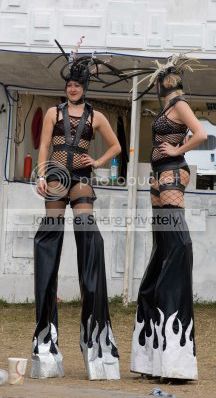
I never get tired of Photographing.....Women dressed up from Mad Max.
OK, OK, Daryl, I can take a hint...

OP
jon ryan
Suspended / Banned
- Messages
- 2,845
- Name
- Jon
- Edit My Images
- Yes
Is this not just the same thread? Because in the other, someone will cry that they like what someone else hates?
Yup. And that's sort of the point.


foggy4ever
Suspended / Banned
- Messages
- 5,735
- Name
- Storm Trooper
- Edit My Images
- Yes


redhed17
Suspended / Banned
- Messages
- 7,316
- Edit My Images
- Yes
I will never get tired of photographing Venice. (t.hough there are some Rome pics in that link ) 
It is such a different place to anywhere I've been/seen, and whilst a clichéd subject, there are reasons it has caught people's imaginations for hundreds of years. Around every corner, and along every canal it seems there is a potentially nice image. And just to go somewhere were the car isn't constantly droning in the background is very refreshing.
I'm planning another trip (fingers crossed) around Easter, as the way things are going in work, holidays could be off the agenda for many years, and I want to go again. :|
) It is such a different place to anywhere I've been/seen, and whilst a clichéd subject, there are reasons it has caught people's imaginations for hundreds of years. Around every corner, and along every canal it seems there is a potentially nice image.
And just to go somewhere were the car isn't constantly droning in the background is very refreshing. I'm planning another trip (fingers crossed) around Easter, as the way things are going in work, holidays could be off the agenda for many years, and I want to go again. :|
King Damager
Suspended / Banned
- Messages
- 40
- Edit My Images
- No
I will never get tired of photographing sunsets
kd
kd

Daryl
Suspended / Banned
- Messages
- 5,732
- Name
- Daryl
- Edit My Images
- No
I rufuse to believe that hot bloded males became photographers to take photos of trees. flowers and mountains and sunsets.......
It's just not true.
Please please I pray to the Gods there are Stereo typical photographers out there......
Except wedding togs ,we all know they are badly dressed, faff about on the job and have Horse shoe haircuts!
It's just not true.
Please please I pray to the Gods there are Stereo typical photographers out there......
Except wedding togs ,we all know they are badly dressed, faff about on the job and have Horse shoe haircuts!
London Headshots
Suspended / Banned
- Messages
- 1,340
- Name
- John
- Edit My Images
- No
Actually... I'll go with that. There's always something new to shoot as well... it's a big universe
....... the night sky (when it isn't cloudy/raining/snowing/foggy/misty etc...:shrug
http://www.flickr.com/photos/1parsec/sets/72157623851206707/
Holy crap did you take those?
Wow man. Seriously wow.


OP
jon ryan
Suspended / Banned
- Messages
- 2,845
- Name
- Jon
- Edit My Images
- Yes
....... the night sky (when it isn't cloudy/raining/snowing/foggy/misty etc...:shrug
http://www.flickr.com/photos/1parsec/sets/72157623851206707/
Bloody marvellous! I'm joining the clamour of folk asking for a run down of how you went about getting those. Please!
I love to photograph my missus in sexy lingerie. Truth.
Sorry, not clear on this; which of you is wearing the linguine?

D
Deleted member 60651
Guest
Linguine? That would be an original image!Bloody marvellous! I'm joining the clamour of folk asking for a run down of how you went about getting those. Please!
Sorry, not clear on this; which of you is wearing the linguine?
OP
jon ryan
Suspended / Banned
- Messages
- 2,845
- Name
- Jon
- Edit My Images
- Yes
Linguine? That would be an original image!
Depends where you put the prawns...
Astro
Suspended / Banned
- Messages
- 62
- Name
- Dave
- Edit My Images
- Yes
Bloody marvellous! I'm joining the clamour of folk asking for a run down of how you went about getting those. Please!
Hi, Not wanting to hi-jack the thread, but a few details on my astrophotography set up.
I use a Newtonian telescope 10" f6.3 1600mm focal length which is
mounted on a solid equatorial mount; an absolute must when shooting at 1600mm or longer.

I use dedicated mono astro camera most of the time.
The 1600mm focal length helps to minimise the effects of light pollution gradients across the field.
For the deepsky shots, 4 sets of exposures are taken through red, green and blue filters and
a clear channel too totalling several hours of exposure.
I'd take some thing like 10x10min exposures of each R G B and also 10 x 10mins with no filter.
The individual filtered frames are combined to give a master red,green and blue frame.
Then master RGB frames are combined in to a low res relatively noisy colour image.
This is layered in photoshop with a higher res, lower noise luminance channel for the final colour output image.
For the moon I take a continuous set of single 0.1 sec exposures and pick the sharpest !
Some of the moon shots are with a focal 2x multiplier to get me to 3200mm fl !
I have a an old pc outside next to the scope and drive the lot from inside my house across a network using VNC
so I can be processing the sub frame images taken while the next are being captured and keep warm too
 .
.There's some photos showing my set up here-
http://www.flickr.com/photos/1parsec/sets/72157632620575065/
Thanks, Dave.

Cagey75
Suspended / Banned
- Messages
- 17,146
- Name
- Keith
- Edit My Images
- No
Sorry, not clear on this; which of you is wearing the linguine?
Now there's an idea for a shoot
OP
jon ryan
Suspended / Banned
- Messages
- 2,845
- Name
- Jon
- Edit My Images
- Yes
Hi, Not wanting to hi-jack the thread, but a few details on my astrophotography set up.
I use a Newtonian telescope 10" f6.3 1600mm focal length which is
mounted on a solid equatorial mount; an absolute must when shooting at 1600mm or longer.
I use dedicated mono astro camera most of the time.
The 1600mm focal length helps to minimise the effects of light pollution gradients across the field.
For the deepsky shots, 4 sets of exposures are taken through red, green and blue filters and
a clear channel too totalling several hours of exposure.
I'd take some thing like 10x10min exposures of each R G B and also 10 x 10mins with no filter.
The individual filtered frames are combined to give a master red,green and blue frame.
Then master RGB frames are combined in to a low res relatively noisy colour image.
This is layered in photoshop with a higher res, lower noise luminance channel for the final colour output image.
For the moon I take a continuous set of single 0.1 sec exposures and pick the sharpest !
Some of the moon shots are with a focal 2x multiplier to get me to 3200mm fl !
I have a an old pc outside next to the scope and drive the lot from inside my house across a network using VNC
so I can be processing the sub frame images taken while the next are being captured and keep warm too
There's some photos showing my set up here-
http://www.flickr.com/photos/1parsec/sets/72157632620575065/
Thanks, Dave.
Cheers for that, Dave. Helluva set-up. Do you do this professionally?
- Messages
- 18,340
- Edit My Images
- No
Spanish architecture.