how to remove stubborn programs

realspeed

Suspended / Banned
Messages
8,827
Name
Bazza
Edit My Images
No
Can't get rid of that computer program? this is what I use


I use Revo Uninstaller pro as recommended to me by my local computer expert. So easy to use and deletes even leftover stuff in a computer memory for that program. So may other uninstall programs, even built in ones, always leave some bits in the memory, this clears everything for that particular program only.

Realspeed
 
Last edited:
thats what i use, works for me too!
 
Can't get rid of that computer program? this is what I use


I use Revo Uninstaller pro as recommended to me by my local computer expert. So easy to use and deletes even leftover stuff in a computer memory for that program. So may other uninstall programs, even built in ones, always leave some bits in the memory, this clears everything for that particular program only.

Realspeed

Your local computer expert is talking jibberish.
RAM has to have power and it is refreshed all the time whilst the computer is on. Turn off said computer and all memory us cleared.
 
ram ?
memory ?
you mean some left in the registry ?
 
If you're not installing garbage in the first place this isn't an issue...please tell me no-one is paying for it!
 
Your local computer expert is talking jibberish.

No.
Memory can be defined to be short term (RAM) or long term (HDD).

If you're talking about program uninstalls leaving records in the registry would you tell someone that didn't have a clue that it clears all redundant records in the Windows registry?
Or would you keep it simple and tell them it clears all the junk out of the computers memory?
 
Memory can be defined to be short term (RAM) or long term (HDD).

[YOUTUBE]NdREEcfaihg[/YOUTUBE]

When referring to computers, the term memory is generally accepted as being the random access memory, rather than the storage device.
 
[YOUTUBE]NdREEcfaihg[/YOUTUBE]

When referring to computers, the term memory is generally accepted as being the random access memory, rather than the storage device.

Not sure I generally accept that, RAM, HDD's and SSD's are all different kinds of memory to me.
 
No.
Memory can be defined to be short term (RAM) or long term (HDD).

If you're talking about program uninstalls leaving records in the registry would you tell someone that didn't have a clue that it clears all redundant records in the Windows registry?
Or would you keep it simple and tell them it clears all the junk out of the computers memory?

You carry on talking rubbish long enough and someone will believe it .....
You can't define a term at your own convenience. Memory is ram hdd is data
End of.......
 
[YOUTUBE]NdREEcfaihg[/YOUTUBE]

When referring to computers, the term memory is generally accepted as being the random access memory, rather than the storage device.
Ha, I did think of the IT Crowd when I posted. :D But of course saying "RAM is memory" would be more accurate. :p
Whilst it is generally accepted, it's not technically correct and the reason I'm pointing this out is to say realspeeds local computer expert isn't "talking jibberish" at all, most likely explaining it in the best possible way for it to be understood.


Not sure I generally accept that, RAM, HDD's and SSD's are all different kinds of memory to me.
That's technically correct. The best type of correct. :lol:


You carry on talking rubbish long enough and someone will believe it .....
You can't define a term at your own convenience.
I'm not talking rubbish, nor am I defining a term at my own convenience. I'm using the term as defined in technical computer architecture documentation. Look it up before you reply.

Wikipedia (for ease of quoting) says: "In computing, memory refers to the physical devices used to store programs (sequences of instructions) or data (e.g. program state information) on a temporary or permanent basis for use in a computer or other digital electronic device." (Emphasis mine)

Memory, technically, is the storage of bits in any medium for any length of time.
Volatile flash memory (RAM) is obviously memory. Non-volatile flash memory (SSDs) is obviously memory. Non-volatile Hard Disk Drive is obviously memory. Non-volatile CD-ROM is obviously memory. Volatile CPU cache is obviously memory.

In day-to-day computing you would break memory down into volatile memory which needs to be refreshed constantly (RAM, CPU cache) and your non-volatile memory (HDD, SSD) intended to keep data for a period of time which is typically called storage for easier understanding.


Memory is ram hdd is data
Incorrect.
RAM is a type of memory. You wouldn't say "sport is football", would you?
A HDD stores data. I think it's you that's using terms how you please.
Data is your actual information, a HDD is a data storage device.


End of.......
Now I think that just about clears things up, but feel free to tell me how I'm wrong. :)
 
Waiting for someone to post a full memory-tier diagram from L1 cache to tape backups :P
 
Adam
Its really a common accepted term, not the defined term on some internet site.
Memory is ram and rom
Data storage is hdd tape CD etc

I could refer you back to the complications of ms-dos and the 640k limit and virtual memory

Well just have to agree to disagree.
 
i do have to agree though. if you started talking about "memory" you could safely assume most of the time that the conversation was about RAM and not storage space.

if you're talking about storage space and not RAM when talking about "memory" then say so, otherwise you're just being vague. thats why i usually try and clarify whether someone means RAM or storage if it isnt clear.

although SSD muddy the waters as they're based on flash memory.

but its still not worth being anal about the definition..
 
Last edited:
i do have to agree though. if you started talking about "memory" you could safely assume most of the time that the conversation was about RAM and not storage space.

if you're talking about storage space and not RAM when talking about "memory" then say so, otherwise you're just being vague. thats why i usually try and clarify whether someone means RAM or storage if it isnt clear.

although SSD muddy the waters as they're based on flash memory.

but its still not worth being anal about the definition..

Thank you +1:thumbs:
 
Memory. That's the stuff that wears out the older you get..... Or at least I think it is ;)
 
Don't forget punched cards ... As memory goes I liked the fact that one could physically read the data with ones eyes and delete data with the flick of a finger (not to mention one could create stencils with rude words on them)
 
Your local computer expert is talking jibberish.
RAM has to have power and it is refreshed all the time whilst the computer is on. Turn off said computer and all memory us cleared.

I never mentioned RAM, please read the post properly, it clears out programs that can't be got rid of by other means,ie built in program removal

Realspeed
 
Last edited:
In ye old days, computer memory (e.g. RAM) and backing storage (e.g. hard disk) were two seperate things. Have things really changed, or has the confusion become the accepted norm?

User: "my computer has run out of memory, I can't install X software."

Support: "your computer has 128MB of memory, X software will run in 16MB."

User: "no it won't, my memory's full."

Support: "do you mean your hard disk is full?"

User: "Yea, the memory's full"

:bang:

Happy days. :lol:
 
Last edited:
It's still the same. I was just being pedantic over the definition because realspeeds computer expert isn't talking jibberish, just most likely explained something in the way for it to best be understood.

Generally, if you went into a shop and asked to buy more memory you'd be handed a stick of RAM. Though if you're reading technical documents or a computer science textbook memory would be described as any storage device.
 
It's still the same. I was just being pedantic over the definition because realspeeds computer expert isn't talking jibberish, just most likely explained something in the way for it to best be understood.

Generally, if you went into a shop and asked to buy more memory you'd be handed a stick of RAM. Though if you're reading technical documents or a computer science textbook memory would be described as any storage device.

I see, now I'm with you.
 
to be fair a computer "expert" (or the OP's translation of the conversation) should have been clearer as to whether they meant RAM or storage (or both) in this instance.

but either way installing more software to get rid of old software seems counterproductive. just dont install crap to start with.
 
Last edited:
Some people get there first DSLR and instantly think they are a professional wedding photographer

Some people get a computer and........
 
cant disagree there, ive met people in the industry that havent got a scooby..

b****r , never bought a Impreza either, when I worked in I.T. :)
 
Could be an IT transgender bender sex change dementure venture with no old bollx, cunningly disguised as scoobicidal consent...

Makes you wonder....
 
Some people get there first DSLR and instantly think they are a professional wedding photographer

Some people get a computer and........

and some don't

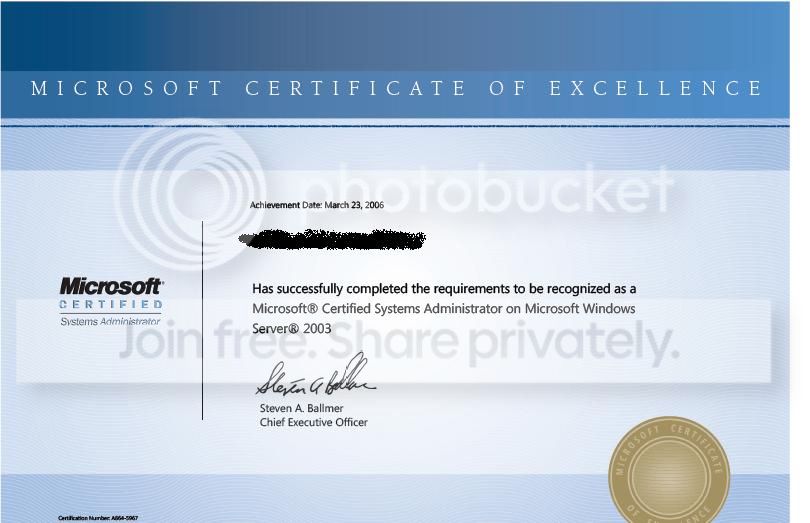
msca_zps39136b37.jpg


it may be old but its still very relevant
 
I can see where the "consultant" may be coming from ... the way Windoze works (or doesn't as the case may be) means that some "goat (sic) in the machine" left behind by a pants uninstall MAY be grabbing a chunk of memory (RAM) for it's own program's use, rendering it unavailable for others to access, despite never being needed.

Part of the problem is Microsoft's Dr Frankenstein approach to creating an OS by stitching bits on to the rotting carcass of what's gone before... and yes I AM a Linux user but we also have crApple & Windoze machines in the house (as well as Chromium, Arduino, Android and any number of "play" systems for the kids)
 
Part of the problem is Microsoft's Dr Frankenstein approach to creating an OS by stitching bits on to the rotting carcass of what's gone before... and yes I AM a Linux user but we also have crApple & Windoze machines in the house (as well as Chromium, Arduino, Android and any number of "play" systems for the kids)
I sense you are hostile ;)

I'm a big Linux user too (I've documented here before my day job is with Linux and I have way more *nix installs around here than Microsoft)... but I use Windows as my main PC simply because the UI is less buggy, and the programs I want to use are available. Using Linux and finding appropriate programs to do the job unless the job is simple tasks such as browsing can get quite tedious - especially if you need to work with other people in the world.
 
I personally find the windows bashing tiresome....
I wish I made as much money as Bill on a poor product
 
Back
Top