How the bloody hell do you photograph birds!

Pirate Neilsouth

Suspended / Banned
Messages
4,379
Edit My Images
Yes
Damn things , i nearly got some awsome shots of birds in flight one flew right towards me... What did i get a dark blurred mess :bang:. My iso was at 100 , it was a cloudy day lacking good light. I gave myself a really good shutter speed , but then it was too damn dark to see anything.


My preference is not bird photography it doesn't really interest me that much but its always handy to know just incase i see something good in a scene. :thumbs:
 
To catch birds in flight you really need some good light. Setting the ISO higher will help, but you end up with a noisy picture.

Practice your panning by taking shots of moving cars or something, this will help you to keep the camera moving steadily while pressing the shutter.

Also, try and keep the aperture wide open to let as much light in as possible.

I'm only an amature though so dont take the above as gospel, other folk might have different ideas, but thats the way I do it !!
 
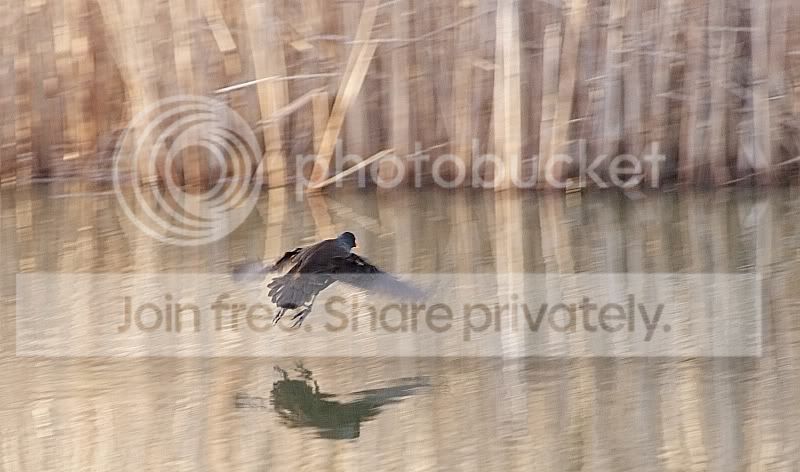
I got this BIF shot last Sunday more by luck than judgment. Just looked at the exif info- 1/100 second, ISO 400, F4.5 @ 200mm. Looking at the amount of panning on the reeds I realise I was lucky to get any sharpness on the Moorhen at all!

Dscf3704.jpg


I've done very little bird photography the things I've learned so far are:
1) Long, fast lenses help a lot- suggest a 300mm F4 lens as minimum kit.
2) Birds move quickly- make sure your autofocus is fast enough (if you've only got manual focus long lenses then you'll need loads of skill & the patience of a Saint to get good shots!).
3) Photographing birds sitting on a branch is hard enough to get right. Bird-in-flight is a different proposition as i'm sure the more experienced bird togs will tell you.
4) The other thing I would add is to be ready. You need to have the camera settings prepared for that 'grab shot' of flying action. No good fiddling about with camera settings after the bird has flown! I'd suggest leaving the camera in aperture priority mode at the widest apperture. ISO400 on most DSLRs will still give a reasonably noise free image. Maybe leave the shutter mode on the 'continuous high' setting to allow firing off a quick burst of shots in the hope that some will be good!
 
:agree: (mostly since it's only 30% to do with your kit)
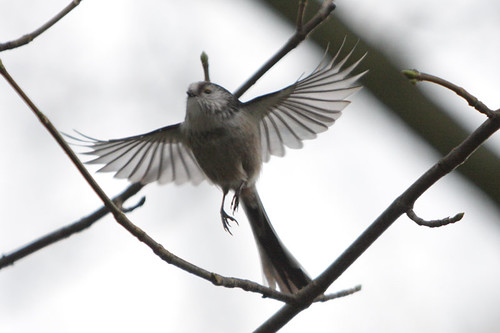
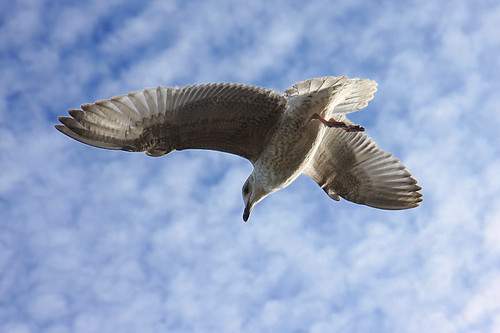
but most of all, practice, practice, practice
(and a wheelbarrow full of luck)

2219565162_a55cebc4ec.jpg


1794903283_5358642254.jpg
 
humm well I see lots of birds around 7:30am in the mornings when i've been capturing the pink sky,
my camera ISO is about 200 and f.stop is about 3.5.

Saying that on boxing day i was in st. albans catching birds in flight my ISO was 200, and f.stop was 4.5, they came out well too..

i'd never caught birds in flight until going to St. Albans, and at the time i'd only had my Canon G9 camera for a few weeks..

Any good tip, go somewhere like a local park with lots of birds, and just practice, it won't work great the first time, but you'll get them better over time

Good Luck

cya Hannah
 
Hi,
I am new here, and I love wildlife photography, including birds!

I apologise in advance, as not knowing you, I would want to teach you to suck eggs.

All the advice given is good, up the ISO, open the apperture as wide as possible as well to give you a fast a shutter speed as possible.

When you push the shutter, continue to pan as well :)

To begin with, dont zoom in too far as well, practice with a wider angle before going in for the 300mm or more.

Its worth visiting some places such as the Hawk Conservancy (not sure where you are, or if its close by) in Andover.

This is one of the shots I got there:

EurasionEagleOwlupld.jpg


As with all animals, always try and focus on the eye, and, depending on what camera you have, try the different Autofocus modes to see which suites you best, quite often its worth selecting something like servo which will enable you to continue to focus during the birds flight.

Without wishing to embarress you, it might be worth posting a picture to see what you did get (your best shot) with the exif to see if we can guide you.

Hope this helps,
Ben
 
With static birds (Relatively static anyway), you have to preempt their movement and try and take the shot when they pause for a second. Also have good long lens technique and try and minimise camera shake by usign a remote shutter, or keep the shutter speed up.

Charlotte_the_Chaffinch_by_MessiahKhan.jpg


With birds in flight, you have two options; A slower shutter speeds and pan with the bird. This takes a lot of practice, but can give some very pleasing results. Or again keep the shutter speed up to freeze the action. Even if you use this method, its still worth paning with the bird to make the shot as sharp as possible.

Clear_the_runway_by_MessiahKhan.jpg


But whichever method you use... take lots of shots. :thumbs:
 
If you're using something like Av you might want to turn the exposure compensation up a bit. Cameras have an annoying tendency to meter on the sky, leaving you with just a silhouette instead of a great shot.
 
Good thread, I tried to get some pics of birds flying at the weekend with some dire results :lol: Luckily with digital it does not cost anything to delete them.
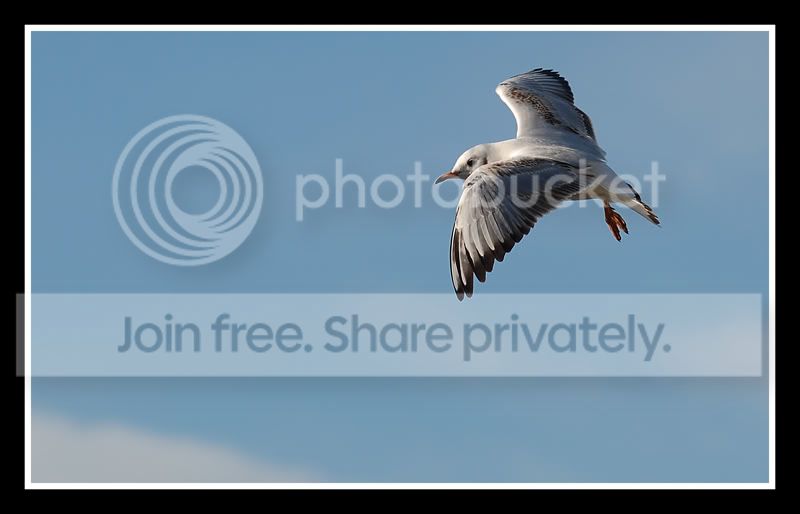
I will try again at some point with some of these ideas!
 
i try to get as fast a shutter speed as possible, and still pan with the bird, keeping my camera on continuous focus so that it can keep readjusting with teh flight of the bird. have the sun behind you so that the bird doesnt become siloetted ( sp?)

and keep your finger on your shutter to make it burst fire .

DSC_3818.jpg
 
The easiest way to get birds in flight is to pick birds that (a) are big, and (b) have relatively predictable flight paths. I couldn't get an owl or a seagull in flight, but I can do this:

160100353-L.jpg
 
The easiest way to get birds in flight is to pick birds that (a) are big, and (b) have relatively predictable flight paths. I couldn't get an owl or a seagull in flight, but I can do this:

160100353-L.jpg

thats one big Vulture!

what sort is it?
 
Turkey vulture. Wing span of at least 6, maybe 8, feet. Flies round in circles very slowly without flapping. Very easy target!

Superb!
Looks very similar to the Griffon Vulture, one of my favourites! :D
 
Back
Top