How much post processing does your average pro do?

Status
Not open for further replies.
he's done it countless times before and has annoyed me on many occasions with comments and frankly I'm not surprised he is now suspended, he's one of the most patronising people I've ever seen on any internet forum, let alone here.

I was rather hoping this would have stayed back on topic, please don't dash those hopes.
 
he's done it countless times before and has annoyed me on many occasions with comments and frankly I'm not surprised he is now suspended, he's one of the most patronising people I've ever seen on any internet forum, let alone here.

Strange how we see different things in people......
Abrasive and outspoken Pookeyhead might be, but he's far from patronising, I find him to be one of the most helpful and patient people around....
 
he's done it countless times before and has annoyed me on many occasions with comments and frankly I'm not surprised he is now suspended, he's one of the most patronising people I've ever seen on any internet forum, let alone here.

He wasn't patronising to anyone. He made a perfectly reasonable and accurate statement which was then taken to mean something else and dragged out by others.

David has a good deal of knowledge compared to most, and isn't shy of sharing it. People do seem to be fond of arguing with him though.

To the OP, there are a lot of threads on processing/editing already that may be of use to you. David covered most of it in his first reply as well, the number of shots you take and the amount of processing you do really is horses for courses.

At an average event, I may shoot 400-1,000 frames, and deliver somewhere close to 50% of those to the client. I rarely delete on camera unless I, A. have time to stop what I'm doing and review images, and B. am 100% sure I don't need the file based on the little LCD screen and my knowledge of what happened when I took the shot.

I shoot quite a lot because I'd rather have the shot to choose from than not. There is also (despite me being half decent at my job) a fair element of luck to the results ;) no matter how many years I shoot the same event, with the same performers, venue, AV crew, etc, etc. there is no way I can guarantee 100% getting the exact best pose and expression from a performer flying through the air in the dark and time that to coincide with a computer generated random spot lighting system being fired at her from 360º, whilst hoping that there isn't a big piece of confetti falling from the ceiling blocking her face at that split second, and then time all that with the actions of 30 other performers who I may want in the frame as well... So, I will take a series of shots and then pick the best one to process.

Processing an event I probably spend a few seconds on each file at first, and then go back and work on some more in-depth tweaks as needed once I've made my selection. :thumbs:
 
I was rather hoping this would have stayed back on topic, please don't dash those hopes.

you mean there's a topic ? :lol:
 
On average, I do the amount of processing the image needs. On average.
 
When I was shooting magazine features I'd probably shoot 300-500 images, depending on the number of 'how-to' sequences were required and what type of feature was required.

In reference to what Pookeyhead is saying about 'luck' I get what he's saying; things like scenics were pretty much all under my control but when it came to action it was a machine-gun approach that would help me something close to what i wanted.

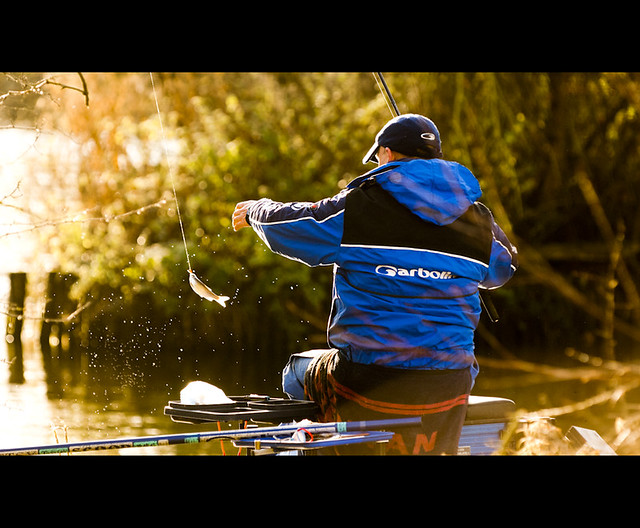
Take netting fish for example; I can usually tell if a fish is ready for the net, mainly by knowing how different fish fish and how the angler has played the fish to the net. But you can never guarantee if it'll make one last splash as it reached the lip of the net, hence why you have to fire off as many shots as you can. There could be the one shot in that sequence where the fish is sitting right, or it's making the right amount of splash. You can't predict exactly what it'll do so you rely on luck. I have enough experience in this situation to narrow down to the variables but I can't totally predict what will happen.

This shot is a perfect example of firing off a load of shots until I got the one I wanted:


Let There Be Light by Pat MacInnes, on Flickr

I knew what the light was doing and I knew the backlight would pick up any water droplets; I knew how the angler swung fish in and at what height; I knew his hand position to catch the fish; I knew the size of fish.... what I couldn't account for would be how the fish would move in the air. Roach and dace like this are reeled in fairly quickly - especially when there are a few pike around, as there were on this day- so the fish aren't 'played out' (i.e. they're not tired) and still flip about a lot. That's the 'luck' element.... no matter how experienced I am as a photographer I am still relying on fate the decide how the fish will look and how much water is coming off the fish. All I can do is fire away and hope that I get the result.

In this instance I shot one sequence and nailed it but I've had countless others where I've had to do this 10, 15, 20 times until I get the shot. Figure in that i'll be shooting 15-20 shots per sequence and you end up with a lot of shots on a memory card.

In terms of reviewing and processing, I generally do all judging of images back at base - I just prefer to go through images on a large screen at hi-res to make sure shots are good... LCDs on camera screens just aren't good enough to check sharpness etc... I just use the rating function in LR to give a 5-star rating to shots that I feel are useable.

In terms of processing, it's a case of how much PPing the shot requires. Sometimes is as easy as a quick sharpen and NR and many times I do this as a batch process. In other situations it's a case of treating every shot individually and going to town on them using all sorts of functions to fluff it up :)
 
Last edited:
You are not understanding what i`m trying to say mate and I can`t explain it any better than I have tried to.

So lets leave it that pal.................:thumbs:

I did and agree. With any kind of photography there is an element of 'luck' - for the beginner, getting a 'perfect' picture will more often than not be a huge dollop of luck [and some clever camera gadgetry :lol:] - as you get more experienced and knowledgeable you reduce the luck factor exponentially and once you have reached the years of experience level, the luck element is much much smaller, usually minimised by your planning, experience and readiness, but never the less still there. Have I had lucky wedding pictures? yes! The amount of luck involved was tiny, I was in the right place, at the right time and quick enough to react, those things come from experience and practice.
Which leads me onto the point in hand about processing - the amount done has two variables - the amount needed on a specific picture, and your own ability to do it. With practice and experience you get much quicker at it, learn better, more efficient ways of doing it and of course, the images you are producing should be better to begin with. I am guessing that I can probably cull 1200 wedding photos down to a working number quicker than a beginner can cull 200. As a few have already said, what you are shooting will also make a difference, a sports photographer will probably cull a lot more than I would [having shot a lot more] from a wedding and can probably do it at the same speed, but then probably isn't going to spend some time correcting the dreaded zit on the brides nose in a key portrait. So to summarise, there is no 'average' time spent on editing, because everyone has their own methods that work for them and it will be very dependent on what kind of photos they are taking/working on.
 
Strange how we see different things in people......
Abrasive and outspoken Pookeyhead might be, but he's far from patronising, I find him to be one of the most helpful and patient people around....

:plusone:

Getting back on topic. I'm an amateur and am shooting MF film now almost exclusively. I restrict myself to one roll of film per shoot I do, which is 12 photos.

I found the move from 35mm to MF has slowed me down to think more about composition and exposure etc. I tend to photograph things like people, landscapes, architecture etc...so it's easy for me to slow down and take my time to get it right.
 
he's done it countless times before and has annoyed me on many occasions with comments and frankly I'm not surprised he is now suspended, he's one of the most patronising people I've ever seen on any internet forum, let alone here.

And the reason I rarely post here these days.
 
Of course sports photography *involves* luck. No one, however, said that sports photography is *entirely* down to luck. You'd have to be pretty argumentative or incredibly touchy to infer that.
 
Status
Not open for further replies.
Back
Top