How much of it is: creativity / equipment / subject / technique / post processing?

LPC-6

Suspended / Banned
Messages
211
Edit My Images
No
A bit of background on me. I have always liked taking photos, really got interested in it when I got my first 2.0MP digital camera. I never really took it too seriously though. Fast forward to last year (November), I picked up a DSLR a few months before a big trip. I loved the detail the pictures were taking and was really liking the bokeh effect.

I've continued trying out different equipment (full frame, primes, m4/3, legacy lenses), reading forums, looking at other people's work, etc.

I've also recently starting using lightroom to organise my photos as well as do minor touch-ups / colour adjustments.

I've seen the marvelous pictures in the critique section and I was wondering what every thought, what are the most important components to taking one of those stunning pictures? One thing that I have not tried yet is proper post processing, so was wondering how important that is.
 
For me, it's a mixture.

Get as much right in camera as possible. Make sure the subject is an interesting one, make sure the composition fits. Make sure the image is technically correct (for the style of image) - exposure etc.

Once you've got it, bring the best out of it in PP - normally for me this just means a slight curves tweak/sharpen.

And all of the above is part of the creativity bit :)
 
Post processing can improve and image but it can't make an image, for that, most importantly, you need a good 'eye' for a subject and decent enough equipment to capture it well.
 
Do you often recompose a picture afterwards by cutting bits out etc?

Maybe it makes sense to post some of my pictures in the critique section so people can help me understand what it is I'm doing wrong. I've been trying to work myself up to posting in that forum, but it seems most of the pictures posted there are already significantly better than the things I produce
 
Post processing can improve and image but it can't make an image, for that, most importantly, you need a good 'eye' for a subject and decent enough equipment to capture it well.

This^

Post processing is to put the last 5% polish on your images.

Some people believe that you can create things in post that you failed to get in camera. They're wrong, they might fool themselves but they'll never fool anyone that understands photography.

Unless you want to do studio photography or macro you can't even buy the most important ingredient, which is light.

For a newcomer the 2nd most important ingredient is time, so to get good pictures you need to put in effort to get out and find interesting subjects.
 
I've just posted a thread in the Tutorials section about my exploration of a subject to get the best composition and end picture I could.

Bandstand: anatomy of a composition

Relatively modest equipment - a Panasonic G2 and a couple of manual focus FD primes. Probably sums up how I think about the various things that go toward my photos.
 
For me, taking landscapes, the most important element is the light, good light can make an otherwise mediocre subject so much better, similarly an amazing subject with uninspiring light can look dull.

Second most important is composition, not only what to include but what to exclude from the shot.

Thirdly is exposure, would a quick exposure be suitable or would a long exposure suit it more? Do I want front to back sharpness or some lovely shallow DoF?

Fourthly is the PP, enhancing what has already been taken in camera.

Fifth is the presentation, on screen or printed, mounted, framed etc.


Everyone is different but for me that is how I work.
 
80-90% of every good photo is the subject/light. You're stuffed without that.

Sometimes you need certain kit as well (eg long lens for wildlife) but even then the same applies.
 
markmullen said:
No but you can roll it in glitter :D

unicorn-poop-cookies.jpeg
 
Like people have said you can't make a bad picture good in post, but its a lot more important than 5-10% like others have mentioned.
 
All great views, thanks to all. Will be going out today trying to think about the composition. Weather is better than expected in London, so hopefully that'll help!
 
Just had a clap of thunder here that nearly took me out of the chair ... rapidly followed by hail.
 
It is possible to take a photo knowing that it won't look up to much until it's had a bit of work in Photoshop. Shots with a dynamic range greater than the capabilities of the camera, shots needing very high ISO that you know will need noise reduction, shots you intend to finish as mono. But this is still about learned knowledge and not hoping that it might just work. Any shot is around 20% camera, 80% photographer.

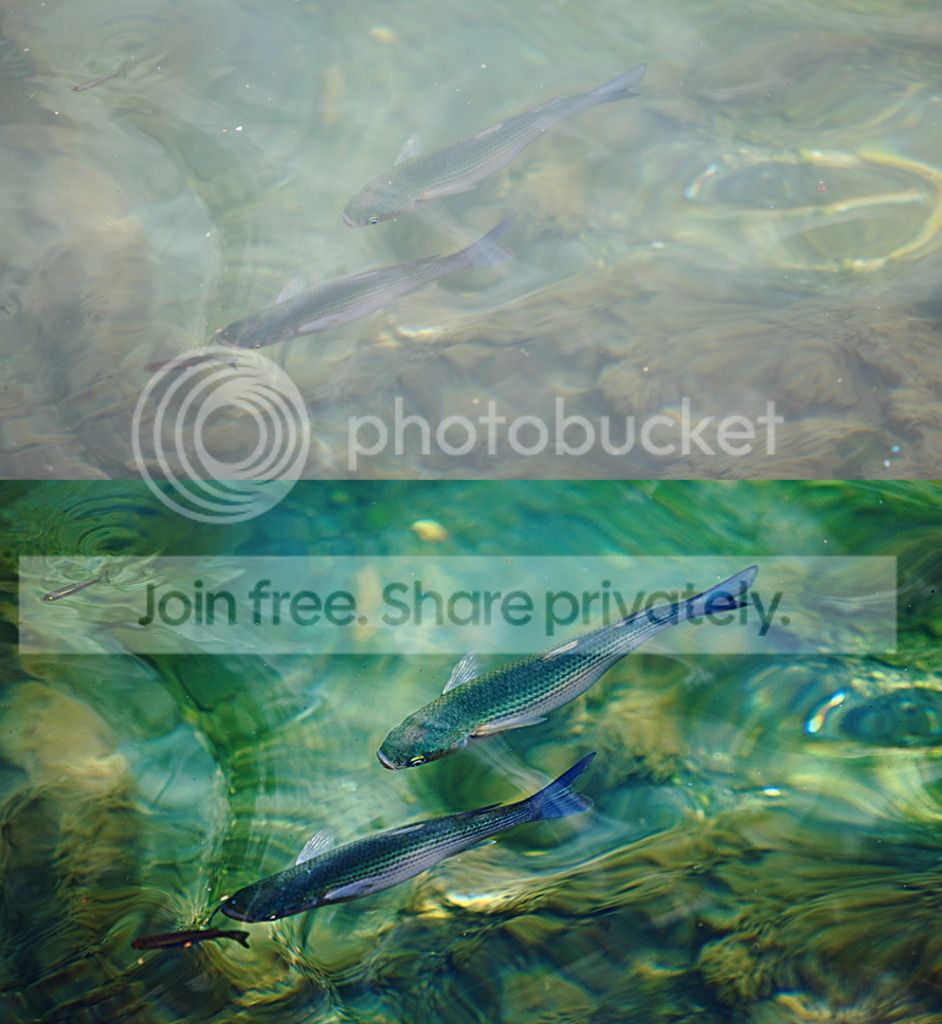
I couldn't do much about the reflections from the water when I took this shot, but was fairly confident I could get a usable image in post.

ffdd5933.jpg
 
jon ryan said:
It is possible to take a photo knowing that it won't look up to much until it's had a bit of work in Photoshop. Shots with a dynamic range greater than the capabilities of the camera, shots needing very high ISO that you know will need noise reduction, shots you intend to finish as mono. But this is still about learned knowledge and not hoping that it might just work. Any shot is around 20% camera, 80% photographer.

I couldn't do much about the reflections from the water when I took this shot, but was fairly confident I could get a usable image in post.

Wow, what did you do to that?! So much more depth and colour after PP.
 
Wow, what did you do to that?! So much more depth and colour after PP.

I'd have to dig out the original, but probably along the lines of boosting blacks, contrast & clarity in RAW, then curves and Shadows/Highlights (a very powerful tool for this sort of thing) in CS4. Some spotting out to deal with the bits floating on the surface, and, of course, some sharpening.
 
LOL - good thread this :D

My club thinks I Photoshop everything, but that's not how it is.
I know Photoshop well enough to lecture about it, but rarely use it in anger.
Knowing about something does not mean you have to use it!

The real world has extraordinary colours and contrast, no need to manufacturer anything...
1171976668_d2rd2-S.jpg
 
Agree absolutely! It's about knowing it's there when you need it and knowing you can, for instance, take a shot in light well below optimum in the knowledge that you can still get a publishable shot. A lot of my work is press. Sometimes there is no choice than to shoot in poor conditions.
 
I'm going to go against the grain here, and say that PP can make an image, even if the original image is relatively poor. It can't rescue poor focus, can rescue poor light to more of a degree than most may admit to, and can definitely rescue poor composition and framing. But even an average photo can be made much more interesting by somebody who knows what they're doing.

I barely use any PP, largely because our customers (the media) don't allow it, and largely because I'm not very good at it. But quite often I'll see images from our spotters on the fence-line that started as relatively boring shots and have been transformed into master-pieces through Photoshop.

That's not to say that you need a ridiculous amount of PP to make a good image, or that hours of Photoshop will guarantee you a good image. But just as a camera in the hands of a photographer has the potential to create something special, Photoshop in the right hands can be just as effective. I certainly wish I was better at it.
 
jokeruk said:
For me, it's a mixture.

Get as much right in camera as possible. Make sure the subject is an interesting one, make sure the composition fits. Make sure the image is technically correct (for the style of image) - exposure etc.

Once you've got it, bring the best out of it in PP - normally for me this just means a slight curves tweak/sharpen.

And all of the above is part of the creativity bit :)

Although there are many good comment this is the first one and I think it sums it up.
The more I learn the more I am starting to believe that there are a lot more people out there that spend more time with their software and less with learning photography. Flickr is a great example of it.
 
The more I learn the more I am starting to believe that there are a lot more people out there that spend more time with their software and less with learning photography. Flickr is a great example of it.

That is because they can, anybody with access to a computer can now manipulate their images whereas not many people had darkrooms or the skills previously.
It has added a new aspect to photography that a lot of people enjoy. There is more than one way to do photography and no way is the right way, it is all about the end result after all.

I never spend more than a minute tinkering with a photo and as you prefer to be out actually taking photos but that is probably at the detriment of the final image as I could get a better end result if I did spend that time.
 
Back
Top