

How important is an accurate exposure time? Considerations not only for Minox.

tjwspm

Suspended / Banned
Messages
68
Edit My Images
No
Many people who use analog cameras are concerned about whether the shutter speeds are correct and or how they can be adjusted. These are legitimate questions, especially if, like me, you enjoy working with these cameras.

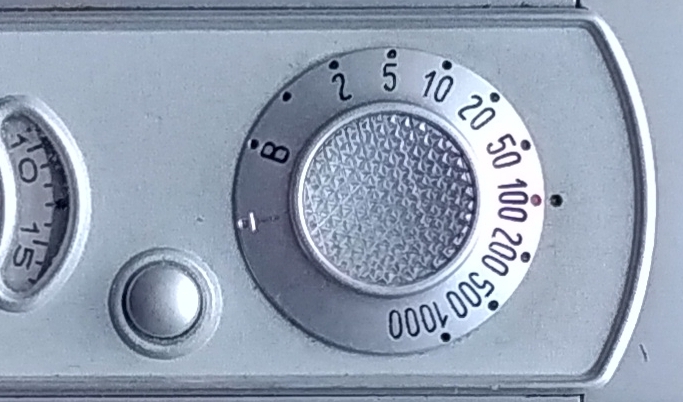
But is this question also relevant in practical terms? How important is the “correct” exposure time? I decided to investigate this issue practically and conducted some experiments with my Minox. The results may be surprising and applicable to other analog cameras:

Two photos, one of which was exposed 50 times longer than the other, produce virtually identical results.

You can find my report on this with all the photos here:
 
Your results, given a medium contrast subject, are pretty much what I would have expected.

The following applies to Black and white. When Kodak first attempted to rate their film speeds (before even ASA) they made a series of exposures, and a series of best possible prints. Then picked as the film rating that implied by the print with the minimum exposure that was just better than the next down the scale.

ASA ratings were themselves doubled overnight about 60 years ago when a built in safety margin was removed.

It's only high contrast subjects, where you have both blown highlights and featureless shadows that exposure matters.

The only difference between colour and Black and white realistically is that the three different emulsion layers in a colour film normally have different sensitivities, leading to possible complications when you start reaching the limits.

Ansel Adams measured the apertures on his lenses for accuracy; Brett Weston didn't use an exposure meter, only experience. Take your pick...
 
Last edited:
You results, given a medium contrast subject, are pretty much what I would have expected.

The following applies to Black and white. When Kodak first attempted to rate their film speeds (before even ASA) they made a series of exposures, and a series of best possible prints. Then picked as the film rating that implied by the print with the minimum exposure that was just better than the next down the scale.

ASA ratings were themselves doubled overnight about 60 years ago when a built in safety margin was removed.

It's only high contrast subjects, where you have both blown highlights and featureless shadows that exposure matters.

The only difference between colour and Black and white realistically is that the three different emulsion layers in a colour film normally have different sensitivities, leading to possible complications when you start reaching the limits.

Ansel Adams measured the apertures on his lenses for accuracy; Brett Weston didn't use an exposure meter, only experience. Take your pick...
Thanks for explaining that!

Now I finally understand where those reviews come from that say you should overexpose rather than underexpose film. So it's all down to marketing. Of course, film manufacturers wanted to advertise their films as fast as possible.

Do you know the source of the statement: “When Kodak first attempted to rate their film speeds (before even ASA) they made a series of exposures, and a series of best possible prints. Then picked as the film rating that implied by the print with the minimum exposure that was just better than the next down the scale.”?

I would like to include that in my article.
 
The statement is in one of Roger Hicks' books. From memory, he mentioned the work as being done in Rochester (he referenced the latitude, as that could affect light quality) so my assumption would be THE Rochester where Kodak had their labs. Obviously, Mr Hicks isn't the original source of the information, as he must have got it from somewhere. I suspect that to track it down to the original source would require checking both Kodak publications and the photographic literature of the time. I'd probably start with the American Almanacs, followed by the British Journal Almanacs as they both tended to notice things like this - modern developments in photography.
 
I think it possible that I you look at page 87 of Film and its techniques by Raymond Spottiswoode and Jean-Paul Ladoucer, University of California Press, 1963 you might find some clues to the source. Or research Loyd Jones of Kodak, and a 1939 report in a journal of his work. Or you might not - I haven't looked that far.
 
And Roger Hicks' book is Medium and Large Format Photography.
 
Back
Top