How do you shoot birds in flight?

Crotal Bell

Suspended / Banned
Messages
3,470
Name
Keith
Edit My Images
Yes
I've been hanging out the bedroom window and standing in the garden and hoping to get lucky, but it's almost impossible to zone in on a moving object and get the shutter going. I haven't done very well.

Many attempts and this is the best so far :( So if I want some nice shots, what do I need to do? I have a tripod and a MFT camera with 100-300 lens.
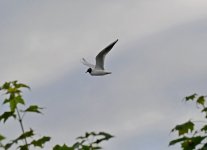
Gull in flight.jpg
 
Practice, practice, practice, head to a local park or nature reserve. Ideally somewhere with nesting gulls, they make a really good practice species. Birds in flight is really hard through a window and a tripod does not really help unless you have a specialist gimbal head. With a small camera stick to holding it by hand, make sure the shutter speed is high enough >1/1000 and try to set the aperture fairly wide f5.6-8 to make sure you have a responsible depth of field. You would be best try this on a responsibly bright day. Good luck.
 
Practice, practice, practice, head to a local park or nature reserve. Ideally somewhere with nesting gulls, they make a really good practice species. Birds in flight is really hard through a window and a tripod does not really help unless you have a specialist gimbal head. With a small camera stick to holding it by hand, make sure the shutter speed is high enough >1/1000 and try to set the aperture fairly wide f5.6-8 to make sure you have a responsible depth of field. You would be best try this on a responsibly bright day. Good luck.
Thanks Gareth that's very helpful, at least I have the shutter speed right ! I find it hard to choose between the EVF and the screen, they both seem to have advantages. The screen allows you to look all around but the EVF seems better to zoom and track when I'm firing off a shot burst.

I had a feeling you were going to tell me to set the camera on the tripod, point it in a certain area and wait, wait .........wait :)
 
Not very good at it, but a couple of things I have found help me. May or may not be of help.

Try and get them flying towards you, or as near to as possible, they move less in the frame.
Keep both eyes open (for me that goes back to 35mm film and a "sports finder")
If the sky is bright try setting the exposure compensation to around +2/3 (don't know if it is correct to do that, but it helps to get better detail on the bird, especially when the sky is bright white cloud)

As was said, keep practising. Practice on anything that flies, aircraft, helicopters, hover flies, bees, butterflies and even pigeons. Anything where you don't have to drive far and pay for petrol and parking until you have it reasonably good :)

Don't let the birds know, since I got the MFT systems, gulls have not been seen here. Definitely they have conspired against me :ROFLMAO:

Edit.
On the G80 try using the custom focus area, on the second or third setting from smallest to start with, that will give you an area in the centre rectangle of the guidelines, and avoid any trees etc that may be on the edge of the frame. (If you have not found that already)
 
Last edited:
First off your main problem is the camera , it’s not really designed for b.i.f I.e the processor is to slow . With a m.f.t camera you need a Panasonic G9 or olympus omd1-mkii or mkiii .
Your lens is again a bit slow for b.i.f .. but saying that your gear will work just don’t expect the results you see from other users with more expensive gear .
Definetly use the e.v.f all the time ,get used to it .practice practice and more practise is the key to success . If you have resident gulls then bread broken into small pieces will bring them in close the rest is up to you .
Don’t forget if your shooting into the sky don’t forget to use pos + exposure compensation to stop them becoming burned out exposure wise .
I would suggest that you use AV mode , set your i.s.o to 800 iso . Lens wide open f.6.3 I think on that lens .try different focus points not sure what you have on that camera but experiment . A shutter speed of 1/1000 is really a bit slow so try to get it higher
It will take at least a couple of months till you gel with the camera but it eventually clicks into place . Do not use a tripod not needed with that lightweight gear .
Good luck
 
Last edited:
P.s find my photos in the olympus thread below , click on one to go to my Flickr stream . All photos on there have full exif data that will help you hopefully .
I use a olympus omd1-mkiii with a 100-400 lens always handheld. ,no tripods, monopods etc . And I’m 76 + old with a dodgy ticker if I can do it you can
 
Good thread, and some useful information - thank you. I've been trying to get a picture of a particular blackbird that keeps running around my back lawn, I find it impossible to keep up with him whilst he's scampering about on his legs, and when I do manage to get a shot the focus point is generally just somewhere on the body, or the head if I'm really lucky. But to get him in the frame, focus on the eye, and take the shot feels impossible - and this is the bird on the ground! Like Keith I use a G80 and a 100-300. Will keep on practicing!

Cheers
Derek
 
Good thread, and some useful information - thank you. I've been trying to get a picture of a particular blackbird that keeps running around my back lawn, I find it impossible to keep up with him whilst he's scampering about on his legs, and when I do manage to get a shot the focus point is generally just somewhere on the body, or the head if I'm really lucky. But to get him in the frame, focus on the eye, and take the shot feels impossible - and this is the bird on the ground! Like Keith I use a G80 and a 100-300. Will keep on practicing!

Cheers
Derek
As per my posts above , it’s nothing to do with shutter speed ,though that does help .. it’s purely the time the processor takes to aquire the focus . Best way to test it is to focus on a static object in the garden and while keeping your finger on the shutter button move to a further or closer object this will make you realise how fast your camera takes to aquire focus .
P.s on my Olympus I only use a single point for static or birds on a bush shots , for b.i.f I use cluster focus I.e all focus points .
 
I find it pays not to use too long a lens and to make as many exposures as you can.

With a wider angle of view, there's more time to spot the moment you want to capture. Once you're in front of the computer you can decide which images to keep and from those, crop out the view you want.

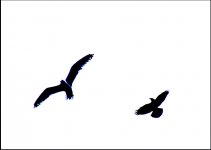
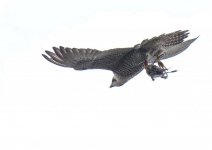
Hawk and seagull in flight DSC02269.JPG

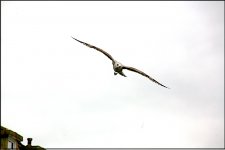
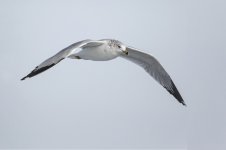
Seagull over Sidmouth Eos 5D IMG_3116.JPG

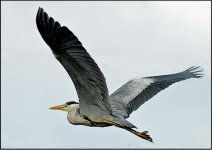
Crane in flight Swindon 10D CAN_6139.JPG
 
I find it pays not to use too long a lens and to make as many exposures as you can.

With a wider angle of view, there's more time to spot the moment you want to capture. Once you're in front of the computer you can decide which images to keep and from those, crop out the view you want.

View attachment 357167

View attachment 357168

View attachment 357169
ROFPMSL. I would be totally ashamed to post photos as bad as that .. just stick to being a barrack room lawyer
 
Last edited:
Last edited:
and a slightly more difficult subject . this shows what is possible with MFT cameras again 1-mkiii +100-400 hand held minimal adjustments done in p/p .. shot as taken with sun on the tree and background in deep shadow

october skies by jeff and jan cohen, on Flickr
 
and a slightly more difficult subject . this shows what is possible with MFT cameras again 1-mkiii +100-400 hand held minimal adjustments done in p/p .. shot as taken with sun on the tree and background in deep shadow

october skies by jeff and jan cohen, on Flickr

.... Absolutely stunning! Such a tricky subject.
 
Keeping both eyes open will make life easier for you as it's so much easier to track your target. It may take some practice, but once you've got it you'll never want to aim/focus with one eye shut again.
 
Last edited:
Not very good at it, but a couple of things I have found help me. May or may not be of help.

Try and get them flying towards you, or as near to as possible, they move less in the frame.
Keep both eyes open (for me that goes back to 35mm film and a "sports finder")
If the sky is bright try setting the exposure compensation to around +2/3 (don't know if it is correct to do that, but it helps to get better detail on the bird, especially when the sky is bright white cloud)

As was said, keep practising. Practice on anything that flies, aircraft, helicopters, hover flies, bees, butterflies and even pigeons. Anything where you don't have to drive far and pay for petrol and parking until you have it reasonably good :)

Don't let the birds know, since I got the MFT systems, gulls have not been seen here. Definitely they have conspired against me :ROFLMAO:

Edit.
On the G80 try using the custom focus area, on the second or third setting from smallest to start with, that will give you an area in the centre rectangle of the guidelines, and avoid any trees etc that may be on the edge of the frame. (If you have not found that already)
Thanks Steve.
I know what you mean about birds flying towards you, must be something to do with my garden as they mostly come from the wrong angle and I get little time to see any approach.
 
Keeping both eyes open will make life much easier for you as it's so much easier to track your target. It may take some practice, but once you've got it you'll never want to aim/focus with one eye shut again.
Both eyes open only works if you are right eye dominant at the eyepiece ~ for 'us' left eye users the right eye doesn't get much of a view ;)
 
  • Sad
Reactions: Sky
As per my posts above , it’s nothing to do with shutter speed ,though that does help .. it’s purely the time the processor takes to aquire the focus . Best way to test it is to focus on a static object in the garden and while keeping your finger on the shutter button move to a further or closer object this will make you realise how fast your camera takes to aquire focus .
P.s on my Olympus I only use a single point for static or birds on a bush shots , for b.i.f I use cluster focus I.e all focus points .
Thanks for all the comments Jeff, some very helpful advice.

I am managing my expectations and just hoping to get a few nice shots now and again, the multipoint focus is something I was wondering about and I will use that in my next practise session for bif!
 
Try shutter priorty 1/2000 th of a second auto iso plus 1 to 2 stops of exp comp as a base to start, you can go slower shutter speed for slower moving birds but generally you want fastest Shutter
you can get away with. Bif photography is one of the Hardest to Master , try zooming out to find the Bird then zoom in to follow it,A04F29C8-AAB2-4679-AFD7-42581C3F9AFE.jpeg29241221-A5C2-4246-A345-D69424969DCB.jpeg2AAA31AB-F5F3-4E7C-835F-4EC23AFF0931.jpeg
 
Practice, practice, practice, head to a local park or nature reserve. Ideally somewhere with nesting gulls, they make a really good practice species. Birds in flight is really hard through a window and a tripod does not really help unless you have a specialist gimbal head. With a small camera stick to holding it by hand, make sure the shutter speed is high enough >1/1000 and try to set the aperture fairly wide f5.6-8 to make sure you have a responsible depth of field. You would be best try this on a responsibly bright day. Good luck.

I couldn't agree more. Practice just makes things easier.
I started last September with a MFT and 100-400mm lens. At first it seemed impossible to get any bird into the frame at all at 400mm. I almost bought one of those hot-shoe mounted finder thingies. Thank God I didn't. I can now point the camera straight at a distant bird almost all the time using the EVF.

I've also found a few lakes within 10 minutes from home that are great for practice. You can easily get lots of gulls flying fast and furious with just a few pieces of bread.
 
Thanks for all the comments Jeff, some very helpful advice.

I am managing my expectations and just hoping to get a few nice shots now and again, the multipoint focus is something I was wondering about and I will use that in my next practise session for bif!
Check to see if your camera does cluster focus , usually has to be enabled .. it uses all points but just picks out the relevant ones to use
 
Indeed. Still it's true of either meaning that the more you practice, the more you'll get pictures (or dinners) that you like.

It's worth remembering an old saying: "the search for perfection leads only to failure" and just concentrate on capturing the images that please you. If they please others: fine, if they don't, that's fine too...

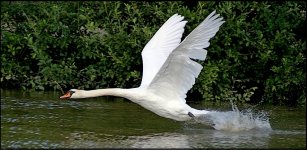
Swan taking off CAN_6112.jpg
 
This is one of the times when I shoot on Manual as the background can change from blue sky to cloudy sky to trees etc.
Assuming that you are in the same light as the bird will be, you can take an exposure reading from green grass and use that or take one from the palm of your hand and add 1 stop.
As others have said after that it is all about practicing,
 
Try shutter priorty 1/2000 th of a second auto iso plus 1 to 2 stops of exp comp as a base to start, you can go slower shutter speed for slower moving birds but generally you want fastest Shutter
you can get away with. Bif photography is one of the Hardest to Master , try zooming out to find the Bird then zoom in to follow it,View attachment 357190View attachment 357192View attachment 357193
Thank you and that's pretty much what I've been doing so at least I know I worked it out fairly well. I will adjust the exposure compensation as advised.
I will keep practising in the garden but I realise I could do with some better venues where I can see the birds coming from further away.
 
This is one of the times when I shoot on Manual as the background can change from blue sky to cloudy sky to trees etc.
Assuming that you are in the same light as the bird will be, you can take an exposure reading from green grass and use that or take one from the palm of your hand and add 1 stop.
As others have said after that it is all about practicing,
Thanks Kev
 
Indeed. Still it's true of either meaning that the more you practice, the more you'll get pictures (or dinners) that you like.

It's worth remembering an old saying: "the search for perfection leads only to failure" and just concentrate on capturing the images that please you. If they please others: fine, if they don't, that's fine too...


That so so true, I say the same thing often
I don't need or desire to impress any one, many of my photos are taken for memories, the remainder are taken for fun or to serve a particular purpose.

Photography for me has always been primarily for enjoyment.

A well known golfer once said, when someone told him he often got lucky "Yes, I have quite a bit of luck, and the strange thing is that the more I practice, the luckier I get"

It is always interesting to hear others comments, they can help you learn, but it helps to be your own biggest critic.

A good photo needs more than technical perfection, it needs something special, even if you can't immediately identify what that is, and it may not be technically perfect :)
 
That so so true, I say the same thing often
I don't need or desire to impress any one, many of my photos are taken for memories, the remainder are taken for fun or to serve a particular purpose.

Photography for me has always been primarily for enjoyment.

A well known golfer once said, when someone told him he often got lucky "Yes, I have quite a bit of luck, and the strange thing is that the more I practice, the luckier I get"

It is always interesting to hear others comments, they can help you learn, but it helps to be your own biggest critic.

A good photo needs more than technical perfection, it needs something special, even if you can't immediately identify what that is, and it may not be technically perfect :)
I've always loved photos, it's been great having some proper kit again. I tend to shoot things I want to remember, so I end up liking a lot of my photos.
So far none of my bird in flight photos have impressed me though :( But it's early days and I'll keep plugging away :)
 
The biggest issue I see based on your description is setting/technique; it sounds like you are just trying to pick them off as they fly by with limited time/opening. What you need is an area where you can pick up the bird far earlier to establish panning/tracking and give the camera some time.

I've done well enough with a 12yr old 1" sensor and 70-300mm super-zoom on occasion.

16504573615_b77cb80744_o.jpg
 
Last edited:
I tried bif photography with my G80 and 100-300 ii.
Only knocked down to number two in the failure list by my skateboarding efforts.
Both ended in dismal failure, just fell off the skateboard.
With the bif I twisted round so much that dizziness caused me to nearly topple.

Skateboard and lens are long gone, travel photography is much more enjoyable.
Only similar accident with that genre was following a visit to Maison Leffe.
The whole range of Leffe to sample and its up a reasonably steep hill.
 
Last edited:
The biggest issue I see based on your description is setting/technique; it sounds like you are just trying to pick them off as they fly by with limited time/opening. What you need is an area where you can pick up the bird far earlier to establish panning/tracking and give the camera some time.

I've done well enough with a 1" sensor and 70-300mm super-zoom.

View attachment 357213
Yes I think you're right, I need to get out in wider spaces to give myself a better chance. Great picture !
 
Yes I think you're right, I need to get out in wider spaces to give myself a better chance. Great picture !

I've read that Panasonic cameras aren't great at tracking due to their contrast based (rather than phase detect) focus system but Googling birds in flight taken with a Panasonic G80 does however show some stunning results so it must be possible.

BIF just aren't my thing at all and I've probably taken about 12 of them in my life. When I got my GM5 I mounted a 20mm f1.7 on it and took 5 pictures of BIF in multi point, single shot mode, held in one hand at arms length and using the back screen. Three are in focus and stand up to closer viewing, one is slightly off but ok as a whole picture and the last is further off and that can be seen quite easily. Given that the GM5 is a simple little thing and the 20mm f1.7 is amongst the slowest focusing lenses I've ever used (maybe the Canon 50mm f2.5 was the slowest focusing lens I've ever used) I'm sure that excellent results are possible with a G80 and 100-300mm and Gooling seems to confirm this. If tracking is indeed a problem maybe a multi point mode and burst shooting could be a good way forward?

Anyway. Just to show I haven't made all this up this is a 50% crop from my GM5 and 20mm f1.7 in multi point, single shot, f4, 1/6,400 because it was into the sun. This isn't posted with any claim it's an excellent picture and instead is maybe just pointing to the idea that you maybe can do BIF with cameras that aren't great at tracking.

mo6Jt2k.jpg


Good luck with it Keith. You seem to be able to get to grips with things pretty quickly so I'll expect some excellent BIF pictures from you tomorrow, if not later today :D
 
Yes I think you're right, I need to get out in wider spaces to give myself a better chance. Great picture !
Even though I primarily use top level equipment (Nikon Z9, 400/2.8, etc) I have taken very few successful BIF images in my yard/neighborhood... the limited space/time just makes everything much faster/harder and even flagship DSLR's can/will struggle.
About the only way to get any reliability/consistency in that kind of situation is to go to more of a trap/zone type approach.
 
I've read that Panasonic cameras aren't great at tracking due to their contrast based (rather than phase detect) focus system but Googling birds in flight taken with a Panasonic G80 does however show some stunning results so it must be possible.

BIF just aren't my thing at all and I've probably taken about 12 of them in my life. When I got my GM5 I mounted a 20mm f1.7 on it and took 5 pictures of BIF in multi point, single shot mode, held in one hand at arms length and using the back screen. Three are in focus and stand up to closer viewing, one is slightly off but ok as a whole picture and the last is further off and that can be seen quite easily. Given that the GM5 is a simple little thing and the 20mm f1.7 is amongst the slowest focusing lenses I've ever used (maybe the Canon 50mm f2.5 was the slowest focusing lens I've ever used) I'm sure that excellent results are possible with a G80 and 100-300mm and Gooling seems to confirm this. If tracking is indeed a problem maybe a multi point mode and burst shooting could be a good way forward?

Anyway. Just to show I haven't made all this up this is a 50% crop from my GM5 and 20mm f1.7 in multi point, single shot, f4, 1/6,400 because it was into the sun. This isn't posted with any claim it's an excellent picture and instead is maybe just pointing to the idea that you maybe can do BIF with cameras that aren't great at tracking.

mo6Jt2k.jpg


Good luck with it Keith. You seem to be able to get to grips with things pretty quickly so I'll expect some excellent BIF pictures from you tomorrow, if not later today :D
I would be happy with that. Not sure I can crop 50% though with 100-300 and only 16MPs ?
 
Even though I primarily use top level equipment (Nikon Z9, 400/2.8, etc) I have taken very few successful BIF images in my yard/neighborhood... the limited space/time just makes everything much faster/harder and even flagship DSLR's can/will struggle.
About the only way to get any reliability/consistency in that kind of situation is to go to more of a trap/zone type approach.
It's good to get honest comments like this that keep it in perspective. The garden is good practice and I'll view as that until I have the time to get out and have a proper go.
You've given mean idea though, get the right food on the feeder trays and try and track them as they fly off.
 
It's worth remembering an old saying: "the search for perfection leads only to failure" and just concentrate on capturing the images that please you.

TBH I'd say this is a genre where close to technical perfection was the ground floor, and everything builds from there. It's possibly the most demanding photographic discipline there is, requiring excellent kit and serious dedication from the user. It's not a genre I would attempt because I won't invest the money or time, nor do I have the interest to get it right.
 
Like Steve (sk66) says, even having high level camera equipment doesn't guarantee success with BIF. A couple of days ago I was fortunate to come across some Red Kites feeding and out of 500+ shots over a twenty minute period got less than 30 that were worthy of post processing ... and I consider myself reasonably competent at BIF.

My technique is to have the camera set to manual, with auto-iso. Depending on the bird I set the shutter to something between 1/1000 and 1/2000 (smaller bird = faster shutter) with the aperture at f/8 to give sufficient depth of field to compensate for not being able to focus on the bird's head every time. The other camera settings are continuous focus with a group of 9 focus points and continuous shooting at 6 fps and if shooting with the sky as the background I set the exposure compensation to between +1 and +2.

Keep practicing and trying different techniques and you will find the process that suits you and gives the results you are looking for (y)
 
Back
Top