Help me understand TTL flash...!

landwomble

Suspended / Banned
Messages
1,184
Edit My Images
Yes
Hi Folks
I've always used manual flash, which is fine for posed stuff, and works generally OK for me when I've been shooting live music gigs once I've got my settings dialled in.
Over the weekend I shot a birthday party which was pretty much like a wedding style setup. Lots of family members around, some shots in front of a balloon arch, some shot on dancefloor, etc and doing this with a manual flash did work, but was quite a bit of work given the vastly changing lighting.

I'm using YN 560 III manual flashes and I have a bunch of triggers for these so I was thinking of investing in the YN685 TTL flash for these kind of events, that way I have a system that's compatible for multiple light stuff but also have a new auto flash for times like this.

What I'm struggling to get my head around is how to use ETTL and balance ambient and flash exposure. What I'm wanting to achieve is the sort of glossy flash nightclub style effect where the background is subdued, the subject is brightly lit and do this with as little effort as possible during an event where the lighting changes a lot.

How do folks do this? I shoot with a Canon 6D if it makes a difference.

Do I manually set aperture/shutter/iso on camera to under expose by a couple of stops ambient light, then let the flash in ETTL mode do it's own thing to expose the image correctly?
If I leave the camera in AV, and just use FEC on the flash, how does the camera decide what the "right" mix of ambient and flash light is?
Can I leave it in auto, use exposure comp on the camera to dial down and underexpose the ambient and then expect the auto flash to make up the difference?

I'm sure there's a simple way of doing this but I think I'm missing something about how camera metering/flash metering/camera exposure comp and flash exposure comp interact!

Any pointers appreciated!
 
I would like to listen to the answers too
 
I can't find the references now but basically when I was shooting indoors using a Canon 7d the advice was -Camera to manual , SS to sync speed , ISO and Aperture to suit, ignore the meter it will show under exposure , Flash to ETTL and shoot away.
From memory when in other than M the flash acts as fill light but in M it acts as the main light.
Do I manually set aperture/shutter/iso on camera to under expose by a couple of stops ambient light, then let the flash in ETTL mode do it's own thing to expose the image correctly?

In a word -Yes
 
Fill is another question! If camera is in auto, its going to expose subject correctly, so how does the flash not over expose?
 
Fill is another question! If camera is in auto, its going to expose subject correctly, so how does the flash not over expose?

That's what TTL is for BUT in auto if the camera decides the correct SS is 0.5 secs that's what you will get which is fine if you are into camera shake .
 
Fill is another question! If camera is in auto, its going to expose subject correctly, so how does the flash not over expose?
With many cameras and TTL flash the camera will use a very weak, often unnoticeable, pre-flash to determine the exposure. The camera then controls the flash, telling it when to start and stop during the actual exposure.
 
Simple answer first:
When shooting with flash as your primary light source, always set your camera to manual. ETTL will take care of the flash exposure, and if it gets confused, there’s always FEC.

The key is to remember you’re balancing 2 separate exposures; the ambient and the flash.

So if I wanted a slightly underexposed background, I’d probably use a general aperture around 5.6 and then pick a hand holdable shutter speed and ISO combo to get the background I need, maybe 1/60 and 800. ETTL flash will just handle the flash exposure (but how you use it is another story)

Fill flash has a relationship to this; you can leave your camera to TTL meter the ambient, (which is largely measuring the ‘lit’ parts of your scene), then use ETTL flash to ‘fill’ the shadows on the unlit parts, ie ‘filling the shadows’. Doing this successfully means you’re not matching the flash to the ambient, just lifting the shadows a bit.

Once you have these recipes nailed, you can experiment with slow speed sync, 2nd curtain and HSS. But they all depend on understanding that you’re balancing your 2 light sources.
 
Last edited:
HI Phil,
I know this post is from some time ago, but it's exactly where I am at right now. The trouble I am having is that when I dial in the settings (in manual mode) to have the bg slightly under exposed (to give a nice effect to Christmas lights) the ettl is firing too much flash and raising the bg exposure too. Is it possible to have the ettl pre flash that setts the flash power to read a small point in the frame (ie the subjects face)? I know that I can use the fec but it is very much trial and error and the subjects can get bored and the moment is gone. I could really do with some good help and advice, thanks.
Simple answer first:
When shooting with flash as your primary light source, always set your camera to manual. ETTL will take care of the flash exposure, and if it gets confused, there’s always FEC.

The key is to remember you’re balancing 2 separate exposures; the ambient and the flash.

So if I wanted a slightly underexposed background, I’d probably use a general aperture around 5.6 and then pick a hand holdable shutter speed and ISO combo to get the background I need, maybe 1/60 and 800. ETTL flash will just handle the flash exposure (but how you use it is another story)

Fill flash has a relationship to this; you can leave your camera to TTL meter the ambient, (which is largely measuring the ‘lit’ parts of your scene), then use ETTL flash to ‘fill’ the shadows on the unlit parts, ie ‘filling the shadows’. Doing this successfully means you’re not matching the flash to the ambient, just lifting the shadows a bit.

Once you have these recipes nailed, you can experiment with slow speed sync, 2nd curtain and HSS. But they all depend on understanding that you’re balancing your 2 light sources.
I
 
HI Phil,
I know this post is from some time ago, but it's exactly where I am at right now. The trouble I am having is that when I dial in the settings (in manual mode) to have the bg slightly under exposed (to give a nice effect to Christmas lights) the ettl is firing too much flash and raising the bg exposure too. Is it possible to have the ettl pre flash that setts the flash power to read a small point in the frame (ie the subjects face)? I know that I can use the fec but it is very much trial and error and the subjects can get bored and the moment is gone. I could really do with some good help and advice, thanks.

I
This sounds like the flash is capable of lighting the entire scene..

The problem isn’t the flash power (though it feels like it is). The subject is close to the background, therefore illuminating the subject floods the scene. The simple (not really simple to do) solution is to flag or zoom the flash.
 
This sounds like the flash is capable of lighting the entire scene..

The problem isn’t the flash power (though it feels like it is). The subject is close to the background, therefore illuminating the subject floods the scene. The simple (not really simple to do) solution is to flag or zoom the flash.
Thanks for your quick response Phil. So would it be better at the longer end of the zoom, or back out at the shorter end?
 
I don't know how relevant this may be to create a dark background with well exposed subject via ETTL on YN system as I use SB in that situation if required,

Manual at sync speed
Base ISO
High f stop say start at f7.1
Of course its a compromise and you will lose some bokeh effect.
If the bokeh effect is needed/wanted then distance between the subject and rear specular highlights will need to be increased.

The subject will still be exposed correctly if the flash is powerful enough, it reads to me that you want to control the background and the above should get you a base from where you can adjust. It may not be the pro way of doing things but its where I would start.

Of course the obverse is true also, if you need to light a huge room with lots of people then still in manual, a high iso say 1600, low f stop say 1.8 and then bounce the flash of the ceiling, carefully balance your point of focus and subject distance, TTL will try its best.
 
Last edited:
Thanks for your quick response Phil. So would it be better at the longer end of the zoom, or back out at the shorter end?
Sorry there was wine last night, I went to solution rather than getting you to understand the problem

As @Barney has skirted round, your problem and solution are centred round the most important property of light, as described by the inverse square law (ISL).

If you understand this, it’ll make future problem solving easier.

If you’re 6” from your subject and your background is 1” from your subject, and you’re using on camera flash, then your subject and background are effectively in the same light.

If you’re keeping the flash on camera (not the best light wise), and your subject is moved to 6” from the background, with the flash pointing straight at it, your background gets 2 stops less light than your subject (double the distance 1/4 the light)
If you zoom out, and point the flash directly at the ceiling, you’re also effectively flagging the light from the background.

The better solution is to get the flash off camera, and into a better controlled modifier (soft box with deep rim), where your light is now 3” from your subject, and both by virtue of the ISL and the direction of the light, you’ve really controlled the amount of flash hitting the background down to nothing.
 
Great help and valuable advice so far folks. Another few questions:
-Are ttl and ettl the same thing?
-There was a mention of zooming the flash, am I correct in thinking that increasing the zoom would concentrate it more on the subject and less on the bg?
-what im taking about is more for an active shoot like a party, or gathering, and not a studio based setting so flash would be a godox mounted on top on the camera, as an off with softbox wouldn't be suutable.
-im aware of the effect that the different distances has on the strength of flash unrelated to Subject and bg.... thequestion I was trying to ask is... isbthere a way to metering ( using ttl ) the subject only instead of the whole scene? Like in the way that you can select small focus points or the larger area for focus? Instead of shooting, reviewing and adjusting fec before having to shoot again
Hope ive explained this ok
Thank you all soo much for your help and patience so far
 
Great help and valuable advice so far folks. Another few questions:
  • TTL (generic), ITTL (Nikon), and ETTL (Canon) are essentially the same thing
  • Zooming the flash has two potential impacts. The first is narrowing the spread. The second is reducing the power applied and thereby reducing the distance beyond the subject the light travels (increased falloff)
  • Metering the subject only would depend more on what camera system you are using. E.g. Nikon has the ability to separate flash exposure compensation for subject only vs the entire scene.
    And the metering mode has some impact as well. More specifically, the metering mode sets the recommended ambient exposure; the ITTL metering is always more of a center weighted type pattern. The combined exposures result in the total exposure. I.e. you might want to use more of a CW/Spot metering to set the ambient exposure to prevent the camera from considering a darker BG. (but if fully manual exposure it won't matter after it is set). Also, I find an approximately -1 FEC to be the preferred starting point for the flash; the TTL flash metering is not nearly as smart as the advanced metering modes the camera can use.
 
Thanks,
Thinking about this further, if i was to expose manually for the bg, and then spot meter (with the flash on ttl) would that set the flash for the area that I spot metered ( ie. The models face) ?
 
There was a mention of zooming the flash, am I correct in thinking that increasing the zoom would concentrate it more on the subject and less on the bg?
-what im taking about is more for an active shoot like a party, or gathering, and not a studio based setting so flash would be a godox mounted on top on the camera, as an off with softbox wouldn't be suutable.
-im aware of the effect that the different distances has on the strength of flash unrelated to Subject and bg.... thequestion I was trying to ask is... isbthere a way to metering ( using ttl ) the subject only instead of the whole scene? Like in the way that you can select small focus points or the larger area for focus? Instead of shooting, reviewing and adjusting fec before having to shoot again
If I’m reading this correctly, it’s the general mistake photographers make regarding light (and it’s the same issue for general ambient exposure and flash).

You’re getting hung up on the ‘amount’ of light, the way photographers obsess over the exposure triangle.

The important aspect of light isn’t the amount, it’s always the quality.

So if you’re reduced to on camera flash - the ugliest light source, the important lesson is how to make it look ‘better’ not how to localise it.

Bouncing it, means that rather than your light source being a 4 inch square above the lens, it’s a 4 ft square in the ceiling, or behind the camera, or 45 degrees to the side of the subject. None of this happens by accident, you have to work to get it. But once you understand your aim, it is actually straightforward.
 
Thanks,
Thinking about this further, if i was to expose manually for the bg, and then spot meter (with the flash on ttl) would that set the flash for the area that I spot metered ( ie. The models face) ?
The core flash technique is always that you’re balancing the 2 exposures, Ambient and flash.

But you can’t really choose a metering pattern for the flash, and back to my earlier post, it’s impossible to balance your bg and foreground flash with flash power alone (or metering), it’s about controlling the distance and direction of the light.

If your subject is close to your background, no amount of accurate metering of the flash will change the fact that your background gets the same amount of flash as your subject.

If your subject is a long way from your bg , it becomes very easy to control the amount of flash that hits the background.

In fact if you have a large distance between subject and background and you ‘want’ your background to be lit the same as your subject, you have to add another light. I don’t think this is what you want, but thinking through this solution helps to understand the principles involved.
 
Last edited:
Thanks,
Thinking about this further, if i was to expose manually for the bg, and then spot meter (with the flash on ttl) would that set the flash for the area that I spot metered ( ie. The models face) ?
You haven't said what system you are using, but in general, no. The TTL flash metering is *separate from the camera's exposure metering, and it is some form of center weighted pattern. It cannot be changed and it doesn't do any of the smart things the camera metering can do (color/scenes/subjects/highlights/etc).

TTL metering is a bit of a guess. The camera knows/calculates what the ambient exposure is going to be (e.g. 2 stops underexposed), but not for certain (aperture/SS not in effect). Then the flash puts out a tiny blip of light to see what that does. And then it calculates how much more flash is actually required; but again, not for certain. And then it puts all that together, now using the chosen aperture and shutter speed, along with the flash output, for the actual exposure. The fact it works at all is somewhat amazing; the fact that it's not 100% is not surprising at all.

What you can, and generally should do is set the flash exposure compensation on the flash head to alter the TTL metered flash exposure based on an actual exposure/result.

(*it is the same sensor and processor)
 
Last edited:
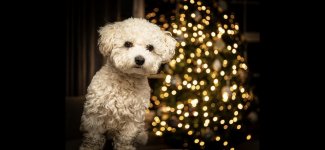
So here are a couple of pics. I've worked in Manual mode with exposure set for the bg, and then played about with flash exposure compensation on ttl mode, different angles of flash, and bouncing off the walls/ceiling. Fairly happy with this outcome, but would like to have a better understanding of what to do to get the pics took correctly, more quickly. Feels a bit like im groping in the dark and not sure if im learning as efficiency as I should. Rome wasn't built in a day I suppose, and any progress is better than none.....
 

Attachments

  • 1000083919.jpg
    1000083919.jpg
    68.4 KB · Views: 19
  • 1000083914.jpg
    1000083914.jpg
    70.3 KB · Views: 19
So here are a couple of pics. I've worked in Manual mode with exposure set for the bg, and then played about with flash exposure compensation on ttl mode, different angles of flash, and bouncing off the walls/ceiling. Fairly happy with this outcome, but would like to have a better understanding of what to do to get the pics took correctly, more quickly. Feels a bit like im groping in the dark and not sure if im learning as efficiency as I should. Rome wasn't built in a day I suppose, and any progress is better than none.....
Congratulations, I’d call those a success.

But don’t beat yourself up the only thing you’ve got wrong here is to not understand properly what you’ve learned.

You’ve learned you need to balance the 2 exposures
You’ve learned that bouncing the flash gives a nicer light
And you’ve learned roughly how much FEC (flash exposure compensation ) you need for a white dog.

If you wanted to repeat this tomorrow, you’d have a starting point, so it absolutely wouldn’t take the same trial and error to get there. And the more you do it, the more you learn, and the better your first guesses at a setup.

That’s the ‘secret’! It’s not a secret, all of our learned skills are an accumulation of knowledge based on ours and others experiences. There’s no shortcuts or magic formulas, or cheat sheets, no matter how much we’d like that to be the case.
 
So here are a couple of pics. I've worked in Manual mode with exposure set for the bg, and then played about with flash exposure compensation on ttl mode, different angles of flash, and bouncing off the walls/ceiling. Fairly happy with this outcome, but would like to have a better understanding of what to do to get the pics took correctly, more quickly. Feels a bit like im groping in the dark and not sure if im learning as efficiency as I should. Rome wasn't built in a day I suppose, and any progress is better than none.....

Think of like driving a car,

First few lessons you had to look at the gearstick to find the gears and drive the car, after a bit of practice you do it without thinking.
Everyone learns via different pathways, don't worry about the efficiency of learning. You have done it, and achieved nice pleasing results.
You should be happy. You did not crash.

Many are terrified of flash photography.
 
Many are terrified of flash photography.
Also this.

15 yrs ago, the common opinion among photographers was that ‘flash looks horrible’, where now most photographers accept that flash can look great, but it’s a whole other skill set, and there’s still plenty of photographers a bit scared of it.
 
So here are a couple of pics. I've worked in Manual mode with exposure set for the bg, and then played about with flash exposure compensation on ttl mode, different angles of flash, and bouncing off the walls/ceiling. Fairly happy with this outcome, but would like to have a better understanding of what to do to get the pics took correctly, more quickly. Feels a bit like im groping in the dark and not sure if im learning as efficiency as I should. Rome wasn't built in a day I suppose, and any progress is better than none.....
Where did you end up with the FEC? With my Nikon's and manual exposure I always wound up around -1 TTL; so that's where I would always start. And usually, that was job done.
 
Im honestly not sure. I tried direct flash (diffused) and bounced of the ceiling and walls at different angles, and that coupled with the dog being a bit crazy it was hard to say what was the best.
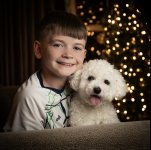
Here is another one from tonight though, with the flash off camera and using a softbox. The fec was just slightly less than zero as it was fairly close to the "models". Fairly happy with this one too and it was achieved alot quicker than last night's pics
 

Attachments

  • 1000083984.jpg
    1000083984.jpg
    131.5 KB · Views: 20
Im honestly not sure. I tried direct flash (diffused) and bounced of the ceiling and walls at different angles, and that coupled with the dog being a bit crazy it was hard to say what was the best.
Here is another one from tonight though, with the flash off camera and using a softbox. The fec was just slightly less than zero as it was fairly close to the "models". Fairly happy with this one too and it was achieved alot quicker than last night's pics
As @Phil V has pointed out, it's just a learning curve that you're beginning to climb, and practice makes perfect.
But, please don't lose sight of the fact that it's just a kind of fuzzy logic, carried out by a very basic computer to produce "acceptable" results. Useful, but nowhere near as good as our own brains, so never be afraid of overriding the decisions made by the computer.

Bounced light is always "safer" than direct light, in the sense that the results are nearly always OK. Direct flash is usually the wrong choice simply because the light is coming from the easiest but the worst place. It's OK for this particular subject because you have a hairy dog and a young child, neither of which need flattering light, but, whether diffused or not (which makes very little real difference), direct flash should be seen as a light of last resort, i.e. when you really have no other choice.
 
If I’m reading this correctly, it’s the general mistake photographers make regarding light (and it’s the same issue for general ambient exposure and flash).

You’re getting hung up on the ‘amount’ of light, the way photographers obsess over the exposure triangle.

The important aspect of light isn’t the amount, it’s always the quality.

So if you’re reduced to on camera flash - the ugliest light source, the important lesson is how to make it look ‘better’ not how to localise it.

Bouncing it, means that rather than your light source being a 4 inch square above the lens, it’s a 4 ft square in the ceiling, or behind the camera, or 45 degrees to the side of the subject. None of this happens by accident, you have to work to get it. But once you understand your aim, it is actually straightforward.
This bit has really struck me:

"Bouncing it, means that rather than your light source being a 4 inch square above the lens, it’s a 4 ft square"

So simple when its put this way, and it can also come from a better direction too to give a more flattering image.

Just need more practice now on how to use it with the correct power.
Thanks so much
 
This bit has really struck me:

"Bouncing it, means that rather than your light source being a 4 inch square above the lens, it’s a 4 ft square"

So simple when its put this way, and it can also come from a better direction too to give a more flattering image.

Just need more practice now on how to use it with the correct power.
Thanks so much
Tbf Canon ettl works pretty good for bounced flash. It usually errs on the side of a tad overexposed, so I used to dial in 1/3 or 2/3 - FEC.

So you could recreate that shot by bouncing off a reflector camera right. Just remember you’re placing a reflector exactly as you’d place a softbox.
 
Back
Top